


Likes
Comments
Share


@Troll60x60
Follow
Esta es la semana actual en la que me encuentro, con plantas recuperadas del súper cropping (cayos formados), se sigue utilizando en menor intensidad para mantener la altura del cultivo, el riego aumento en 300ml, raíces ya más fortificadas y cogollos más grandes, el crecimiento ya es mucho más notorio, seguimos aplicando floración B y engorde C.
Recordar la poda de hojas que obstaculizan la luz.


Likes
17
Share


@Mr_Motalovah
Follow
First week went good.
They're all looking healthy and reaching for that light, a bit too much actually so I lowered the light a bit.
These first days seem to take forever just have to be patient nothing else you can do..
I placed the seeds in 500ml cups with BioBizz Light Mix soil, beforehand I mixed 1 gram of Synergy per 4 liters of soil.
These are live microbes called Mycorrhiza which live in symbiotic association with the roots.
My idea is to leave them in this container for about 14-21 days until the roots develop correctly then transplant them to their final pot which will be an 11L fabric pot.
As the light mix soil comes blended for at least two week of life, no nutrients will be added until after the transplant.
Happy Growing!😃 🌱 🌿 🌲

Likes
8
Share


@FirstTime97
Follow
Left um 4 days over Christmas being a lazy bum and come back to half a tent off yellow a lot of fan leaves are looking sickly / fell off altogether most yellow leaves have been pulled off plants lost a lot of they fam leaves all in maybe abit too many , it’s hard because one person tells ya leave um all on and another person will tell ya take um all off so we just been seeing what works ourselfs and still ain’t got the foggiest , when ya rub the buds you get hints off lemon / pepper and fresh dog shit 🤣🤣 as I say we have um last feed of nutes this week and started to flush um they take about 6 litres of water through the pots untill any type of coloured run off and we only have 100l so 3 days at it we got through about 10 plants and we gave up 🤣🤣 so again intrested to see the finished prouduct if flushing does change the taste of the smoke , saying this the plants we have flushed seem to be looking alot more healthy than the ones we haven’t so deffo leaning towards a lockout or too high nutes for the girls , alot of rusting and alot of burnt frazzled tips one plant we chopped early and didn’t even get a gram of smoke able off it just alot of leaf n skinny buds , it being a first time go at this I’m not really too disappointed with the outcome but deffo kicking myself at how many I rammed in togther , some of the top Kolas are looking 10/10 but other than the top kolas the rest ain’t worth a wank to me , all in all learnt a lot though so excited to finish this one up and get cracking with number 2 I’m leaning towards bud Buddha seeds cheese puffs after smoking some zheez that’s going around the country at the minute cheese x zkittles , anyway happy growing people and don’t forget to drop a comment if you have anything to say or ask

Likes
3
Share


@GingaNinjaGenetics
Follow
Well. First week of flushing done. She looks great. Trichomes are all going cloudy, no Amber's yet though. Should be harvesting her next week. Probably going to re veg and mother her
Likes
33
Share


@Hawkbo
Follow
These have been growing kind of slowly but I got the temps up a little this week by adding some extra light and am getting vpd dialed in. These will only be in this tent for a few more days I am just starting to harvest the main tent so once that is done they will be moved to the Gorilla Grow Tent and put under the new Growlightscience LEDs so we can see how the perform full cycle. The autos will have to get moved back into this tent once I flip the main tent but the photos will prob need a few weeks of veg before that happens. Been doing foliars with the Growzyme from greenbuzz as well before lights out every other night which seems to make them happy. I think theyll take off over the next couple weeks.


Likes
13
Share


@MARLEYtheDAWG
Follow
Purple queen #1 and the watermelon are much further ahead than the rest I think, crazy to see both purples looking so different.
I did some Defoliation to most of the plants as it was getting really crowded in the tent, they seemed to love it and you can see all the new budding sites.
Wish I had more space to play with the plants as I think I was a bit gredy doing 6, I've learnt so much over this time I've loved it.
I love waking and up going to check on the progress 😌 💚 I cannot wait to smoke my own plants which I grew and know exactly how it's been grown 😝

Likes
37
Share


@Terp1
Follow
25..05.2022
die Gorilla Auto war eigentlich ein Versuchobjekt um so ein paar Dinge bei der Keimung zu testen. Ich hatte ihr die Hälfte der Pfahlwurzel schon im Papiertuch zum Keimen aus Versehen abgerissen.
Irgendwie mochte ich die kleine, behinderte Gorilla aber sehr und habe sie aufgezogen. Sie ist sehr kleinwüchsig aber sieht, trotz des massiven Schadens sehr gesund aus.
-
Ich habe ihr neues Equipment gekauft, welches ich zukünftig zur Anzucht nutzen werde.
40x40cm Zelt und SANlight Q1W 50 Watt
-
Die Gorilla hat ihre ersten Wochen im größeren Zelt erst alleine und dann ein wenig Zeit zusammen mit den Gorilla Zkittlez Automatics (ja, die mit dem beschissenen Magnesium Mangel) in meinem anderen Tagebuch verbracht.

Likes
44
Share

@Suemchen
Follow
https://2fast4buds.com/?af=216073
Harvest Day 130
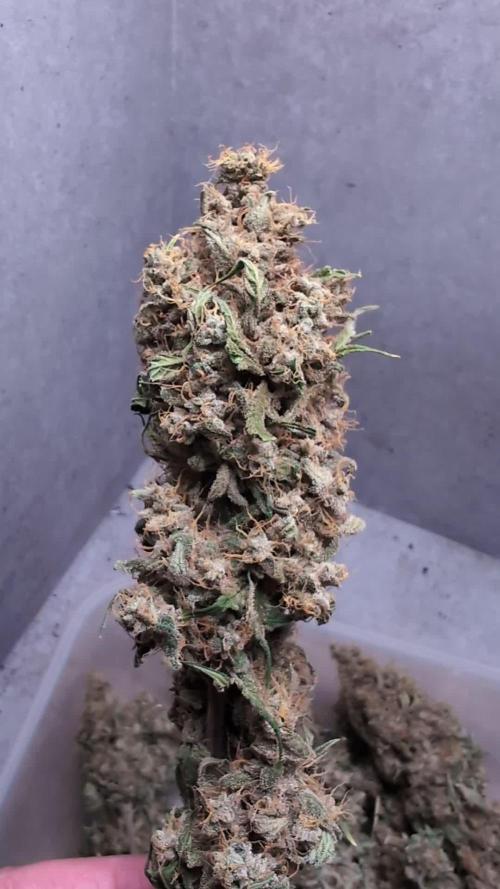
Day 130 and the Gassy One has finally reached harvest! ✂️
This plant turned out really impressive. The buds are large, extremely dense and nicely compact, with a heavy coating of frosty trichomes. The flowers have developed beautifully during the final weeks and have a really solid structure.
And the smell is absolutely insane! 🤯🔥 It is very pungent, intense and penetrating, with a strong gassy aroma that hits you immediately when you get close to the plant. Definitely one of the most powerful-smelling plants I've grown so far.
The long flowering time was definitely worth it. The buds look mature, heavy and packed with resin.
Now it's time for drying and curing. I'm really curious to see how this incredible aroma develops over the next few weeks. 😎🌿
Harvest Day: 130
Strain: Gassy One
Breeder: Super Sativa Club
Bud structure: Large & extremely dense ?
Aroma: Very pungent, intense & strongly gassy ⛽🔥
Status: Harvested ✂️
Can't wait for the final dry weight and smoke report! 🔥


Likes
18
Share


@BufoAlvarez
Follow
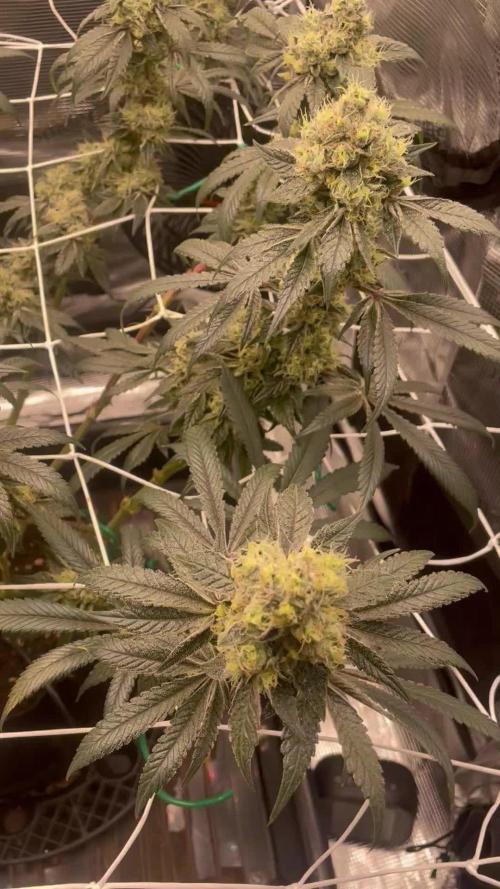
I’ve got some curling going on. Have been trying to get temp humidity stable so I got a humidity controller and now run lights on timer 6 hrs off. Also my humidity gauge I used to set in the middle of the tent but I now put directly in the pot behind the plant and different readings. It’s one of those cheap humidity temp gauges that comes with led lights. Just need to get this curling thing down. 1 of the plants shows no curl so maybe it’s the fox farm soil is too hot. Or maybe that 1plant got better plant coverage, I’ve since adjusted the fan and may get another one.

Likes
11
Share


@GrowerMario
Follow
Dievčatám očividne LST zachutilo , vypadaju nádherne zdravo a plne síl na následne kvitnutie . Svetlo @MedicGrow ide zatiaľ na 60% , postupne budem pridávať až na 100% . Taktiež vidieť , že výživa od @AdvancedNutrientsLtd im veľmi chuti a prospieva . Ďakujem aj @Fast_Buds za úžasne genetiky v tomto stane . 💚
Processing
Likes
12
Share


@Buurman
Follow
A really hot week last week, The lamp doesn’t make it any easier but steady at 28 degrees now.
OG auto in its final days I think, leaves are starting to turn yellow so I’ve started a flush, it’s a beautiful plant, 80% of the plant is covered in bud, I’ll post some good pics before harvest. Not gonna be a crazy yield but for the size of the plant really decent.
The feminized OG are all exploding with bud sites, amazing how fast it’s going the smell is getting better by the day
Gorillas are cute! Flowering a little slower but a lot bushier and the leaves are sooooo pretty!
Started to give more water and upping the dosage of nutes since I’ve not seen any signs of over feeding might as well try it out
Okloveyoubye ❤️


Likes
68
Share

@Hawkbo
Follow
Updating this 2 days late today is day 23 but the pics were taken on day 21/22. The leaf strip was a bitch, took me a day and a half to do the 5x9 and I'm still workin on the 4x8. I would have paid someone atleast $400 to do this for me it was brutal my back is toast. Hopefully it will pay off in the end 🤦♂️ everything looks promising tho.


Likes
38
Share


@Whitey307
Follow
Hi all another week done strawberry banana still hanging on ill chop her tomorrow though and hang to dry for 5 to 10 days but other plant well thats a different stroy i chopped that bitch down and dried it all lasted 6 days drying between 16 &21 degress a few warm days but nothing to mad and 55 to 62% humidity now its curing in cvault containers no smell of hay at all jst pure sticky and opened container to weight it and wife screams down stairs about the smell of house I wouldn't say it was out of container and on counter top for more than 3 mins and she roaring over smell so hopefully that a good sign 🤣🤣66 grams dried.
Now to my one criticism to myself the buds are a bit airey compared to what I was aiming and hoping for did I do anything wrong or will they dense up in curing process or do they come out same way they went in either way tho im well happy with my first run at this plus strawberry banana a much bigger plant buds look much denser and frostyer so dying to see what grams she gives out when all done
Thanks again all Keep grow and blazing.


Likes
11
Share

@420DeepGrow
Follow
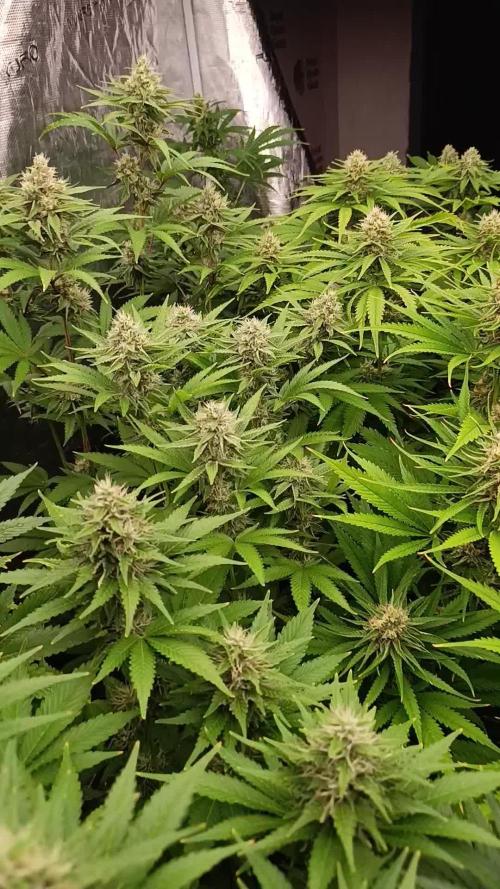
📆 Semana 6
El engorde alcanza su punto más intenso y los cogollos aumentan de volumen rápidamente. La producción de resina se acelera, los aromas se intensifican y la planta registra uno de los mayores consumos de agua y nutrientes del cultivo.
⚡ EC: 1.8–1.9
💧 pH: 6.2–6.5
🌡️ Temperatura: 21°C
🌫️ Humedad: 45–50%
💡 Intensidad: 1000–1100 PPFD
🔥 Nota: Mantener un riego, una nutrición y un clima estables será clave para maximizar el engorde, la resina y la calidad de las flores.
¡Seguimos creciendo fuerte! 💪
Likes
7
Share


@Organic473
Follow
1st sign of bud rot….hope she gets through these full-moon rains without any mould…eventually to continue growing I would need a green house because I’m noticing some croton scale pest on the stems….some were scraped off but I may have an early harvest if it gets worse.


