







@GoodTimesOrganics
Volgen
Welcome Back!💚
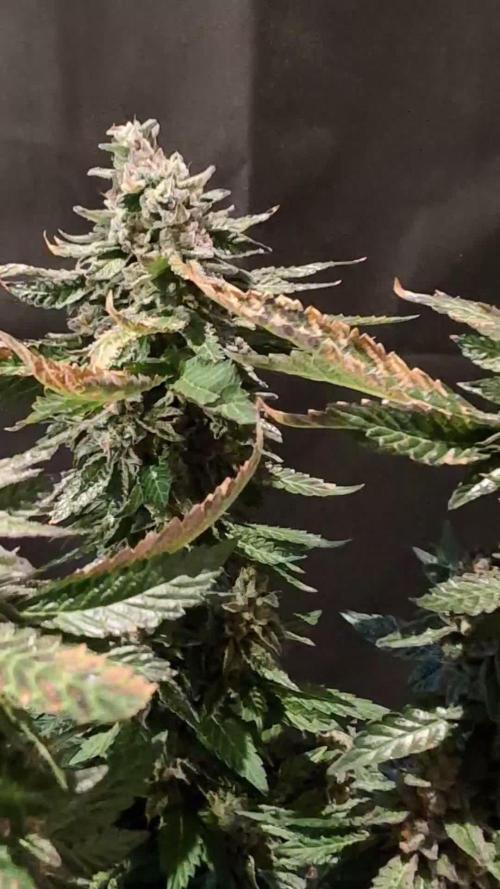
Nach der achten Blütewoche ist der Kampfzwerg allmählich fertig!
Der Trichomcheck, zeigt dass so ziemlich alle Trichome milchig sind. Nur die Bernstein Farben sind mir noch zu wenig, daher bleibt sie noch eine Woche stehen.
Sie zeigt ein schönes Blütenbild für ihr Größe. Die Buds wurden doch nochmal dicker und sind richtig fest und Kompakt.
Ihr frisches, säuerliches Aroma hat nochmal etwas an Susezdazu bekommen.
Für die Wachstumsdauert und das bisherige Resultat allerdings muss ich mich schon fragen, ob dass die Mühe Wert ist.
Schauen wir Mal wie das Geschmacksprofil sich nachher Kennzeichnet.
Die Umgebungsgegebenheiten sind richtig Hot und gerade top für die Endblüte.
—————
🌞 Temp: 27°C
🌚 Temp: 18°C bis 19°C
💨 RH: 49%
VPD: 1,42 kPa
😎 PPfD: 830 mqm
—————
Viele Grüße 👋


@jackh3rrer
Volgen
EDIT - I have killed this grow. Some hermy has pollinated my entire grow, so decided to kill them off.


@SkunkyDog
Volgen
Hallo zusammen 🤙.
Sie wächst sehr schön und macht keine Probleme.
Nachts hole ich sie jetzt immer rein.



@TrickzCutz
Volgen
Servus Moin!
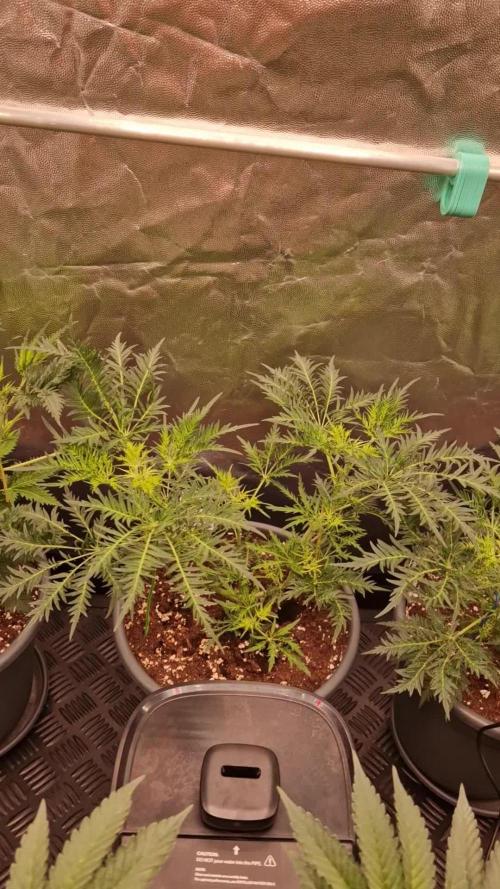
Die MDC #2 Farn macht sich auch bereits richtig gut. Sie holt langsam zur #1 und zur #3 auf. Bin gespannt welche der 3 Ladys am besten schmeckt.
Sie wurde Anfang der Woche an den beiden großen Trieben getoppt.




@GrowinSho
Volgen
I could chop them today but, I'm going to wait another week. I already chopped a few branches down they were looking at me funny.


@Barcelona_Farmers710
Volgen
Buenas Farmers!! Después del problemas de la sobre fertilización... a pesar de eso huelen espectacularmente sin hablar de la explosión de resina de nuestra Gorila Z y la Blue Gelato 41!! Un placer para el Paladar 👌🏻


@Mattyice
Volgen
Buds are definitely getting bigger the smell is so stab you in the nose potent it almost makes me sick up close. I really can't believe this is an autoflower that I barley trained. Definitely will be producing anywhere from 80-100g+ by the time its done I think is a good estimate. What I failed to mention in the first update is every branch has outgrown the main cola. It is buried but still growing strong apparently. It's impressive actually it grew like that without training. All those branches will be thicker than the main cola by far they already are. It's got me so excited this plant is frigging huge although short it is wide. It's so big the base of the main stem is probably the size of two fingers and it has roots growing out of all sides and a mess of roots underneath the cloth pot


@DrewbieDoobieNoobie
Volgen
Welcome back looks like the topping went well these ladies are going 70s porn "so bushy" the blue dream haze i will leave as is and just lst on the scrog as they grow into it. lolly popped the 3 Strawberry ice and LST them with some foam wire and clips. the reboot looks like it might be an different phenotype by the look of its leaves. just a CAL MAG watering this week one more week of veg and I will flip these into flower. I have watched a you tube video on transition and it has been stated that 36 hrs. of dark will trigger a hormone response in the plant and help it flower faster? GD peeps please chime in and let me know your thoughts. till then stay safe stay happy and stay lifted.


@Suemchen
Volgen
Sanlight evo at 100%
Day 64: watered today with supplements. Getting high humidity levels, so I sprayed purolyt. Will propably flush in a couple of days.
Day 68: flushed yesterday. One week now and then 72 hours of darkness. She is starting to fox tail... Other than that: Looks and smells really good🤙
Get 15% Off Fast Buds with Code: FBSUMO
https://2fast4buds.com/



@Chucky324
Volgen
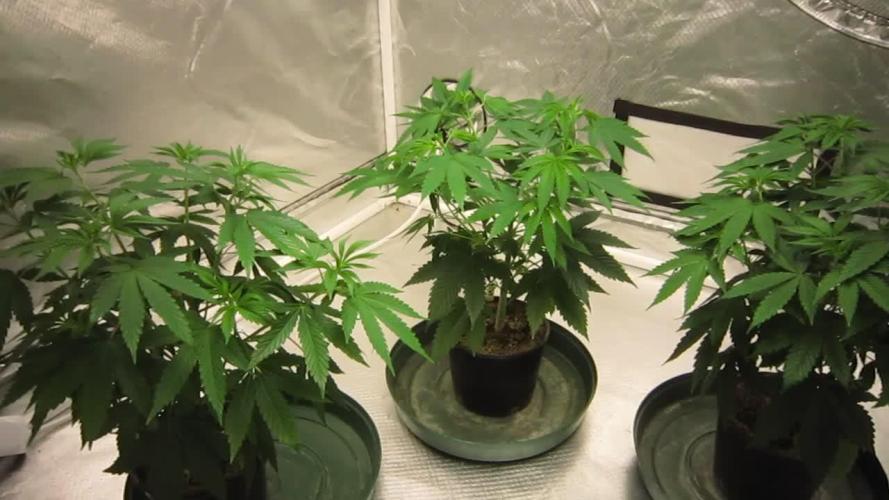
Hello. This is the end of week 5 and the beginning of week 6 of veg.
These girls got topped last week. And this week they have their branches poking up through their fan leaves.
I hope to repot these plants this week and put a tomato cage in each pot for training and to tie the big buds up to.
That time of year... the mushrooms are coming up everywhere.
OK. Keep Growing Straight.
Chuck.

shorts_status_processing


@Intence
Volgen
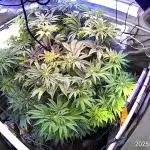
Trimmed them, everything is filling in nicely. See signs of nuet burn flushed them and they reacted nicely. Soil has poor drainage need more perlite or change the soil next time.One plant is almost finished compared to the other 2. This is partly due to air flow. Need to get another circulating fan.
Seen some fruit flies will need to deal with these so they dont eat the flowers.
Lights are close to the plants but I can not move them any further away. With a few weeks left this might cause a problem. Will have to keep an eye on it.
I will have to, for the next grow, change how I set up the tent.
Uploaded video of plants to show the progress on all 3 sharks.



@Ultraviolet
Volgen
2nd net is up. Early bud formations are promising. holding up to the extremes pretty well, some leaves taking minor damage, but overall, she is holding up, gave her 1 night at 50F see how she would react, stressful. Not advised as it messes with her metabolism, but I want to see if it triggers any anthocyanin response. Love to see her purp up but no signs yet.
My homework.
Rubisco regeneration is intrinsically linked to nitrogen supply because Rubisco is a major sink for nitrogen in plants, typically accounting for 15% to over 25% of total leaf nitrogen. The regeneration phase itself consumes nitrogen through the synthesis of the Rubisco enzyme and associated proteins (like Rubisco activase), and overall nitrogen status heavily influences the efficiency of RuBP regeneration.Structural Component: Nitrogen is an essential building block for all proteins, and the sheer abundance of the Rubisco protein makes it the single largest storage of nitrogen in the leaf.
Synthesis and Activity: Adequate nitrogen supply is crucial for the synthesis and maintenance of sufficient Rubisco enzyme and Rubisco activase (Rca), the regulatory protein responsible for maintaining Rubisco's active state. Nitrogen deficiency leads to a decrease in the content and activity of both Rubisco and Rca, which in turn limits the maximum carboxylation rate, Vmax, and the rate of RuBP regeneration Jmax, thus reducing overall photosynthetic capacity.
Nitrogen Storage and Remobilization: Rubisco can act as a temporary nitrogen storage protein, which is degraded to remobilize nitrogen to other growing parts of the plant, especially under conditions of nitrogen deficiency or senescence.
Nitrogen Use Efficiency (NUE): The allocation of nitrogen to Rubisco is a key determinant of a plant's photosynthetic nitrogen use efficiency (PNUE). In high-nitrogen conditions, plants may accumulate a surplus of Rubisco, which may not be fully activated, leading to a lower PNUE. Optimizing the amount and activity of Rubisco relative to nitrogen availability is a target for improving crop NUE.
Photorespiration and Nitrogen Metabolism: Nitrogen metabolism is also linked to the photorespiration pathway (which competes with carboxylation at the Rubisco active site), particularly in the reassimilation of ammonia released during the process.
To increase RuBisCO regeneration, which refers to the process of forming the CO2 acceptor molecule Ribulose-1,5-bisphosphate (RuBP) during photosynthesis, the primary methods involve optimizing the levels and activity of Rubisco activase (Rca) and enhancing the performance of other Calvin-Benson-Bassham (CBB) cycle enzymes.
Biochemical and Environmental Approaches:
Optimize Rubisco Activase (Rca) activity: Rca is a crucial chaperone protein that removes inhibitory sugar phosphates, such as CA1P (2-carboxy-D-arabinitol 1-phosphate), from the Rubisco active site, thus maintaining its catalytic competence.
•Ensure optimal light conditions: Rca is light-activated via the chloroplast's redox status. Adequate light intensity ensures Rca can effectively maintain Rubisco in its active, carbamylated state.
•Maintain optimal temperature: Rca is highly temperature-sensitive and can become unstable at moderately high temperatures (e.g., above 35°C/95F° in many C3 plants), which decreases its ability to activate Rubisco. Maintaining temperatures within the optimal range for a specific plant species is important.
•Optimize Mg2+ concentration: Mg2+ is a key cofactor for both Rubisco carbamylation and Rca activity. In the light, Mg2+ concentration in the chloroplast stroma increases, promoting activation.
•Manage ATP/ADP ratio: Rca activity depends on ATP hydrolysis and is inhibited by ADP. Conditions that maintain a high ATP/ADP ratio in the chloroplast stroma favor Rca activity.
Enhance Calvin-Benson-Bassham (CBB) cycle enzyme activity: The overall rate of RuBP regeneration can be limited by other enzymes in the cycle.
•Increase SBPase activity: Sedoheptulose-1,7-bisphosphatase (SBPase) is a key regulatory enzyme in the regeneration pathway, and increasing its activity can enhance RuBP regeneration and overall photosynthesis.
•Optimize other enzymes: Overexpression of other CBB cycle enzymes such as fructose-1,6-bisphosphate aldolase (FBA) and triose phosphate isomerase (TPI) can also help to balance the metabolic flux and improve RuBP regeneration capacity.
Magnesium ions, Mg2+, are specifically required for Rubisco activation because the cation plays a critical structural and chemical role in forming the active site: A specific lysine residue in the active site must be carbamylated by a CO2 molecule to activate the enzyme. The resulting negatively charged carbamyl group then facilitates the binding of the positively charged Mg2+ion. While other divalent metal ions like Mn2+ can bind to Rubisco, they alter the enzyme's substrate specificity and lead to dramatically lower activity or a higher rate of the non-productive oxygenation reaction compared to Mg2+, making them biologically unfavorable in the context of efficient carbon fixation. The concentration of Mg2+ in the chloroplast stroma naturally increases in the light due to ion potential balancing during ATP synthesis, providing a physiological mechanism to ensure the enzyme is activated when photosynthesis is possible. At the center of the porphyrin ring, nestled within its nitrogen atoms, is a Magnesium ion (Mg2+). This magnesium ion is crucial for the function of chlorophyll, and without it, the pigment cannot effectively capture and transfer light energy.
Mg acts as a cofactor: Mg2+ binds to Rubisco after an activator CO2 molecule, forming a catalytically competent complex (Enzyme-CO2-Mg2+). High light + CO2) increases demand: Under high light (60 DLI is a very high intensity, potentially saturating) and high CO2, the plant's capacity for photosynthesis is high, and thus the demand for activated Rubisco and the necessary Mg2+ cofactor increases. Mg deficiency becomes limiting: If Mg2+ is deficient under these conditions, the higher levels of Rubisco and Rubisco activase produced cannot be fully activated, leading to lower photosynthetic rates and potential photo-oxidative damage.
Optimal range: Studies show that adequate Mg2+ application can enhance Rubisco activation and stabilize net photosynthetic rates under stress conditions, but the required concentration is specific to the experimental setup.
Monitoring is key: The most effective approach in a controlled environment is to monitor the plant's physiological responses e.g., leaf Mg2+ concentration, photosynthetic rate, Rubisco activation state, and adjust the nutrient solution/fertilizer to maintain adequate levels, rather than supplementing a fixed "extra" amount.
In practice, this means ensuring that Mg2+ is not a limiting factor in the plant's standard nutrient solution when pushing the limits with high light and CO2.
Applying Mg2+ through foliar spray is beneficial to Rubisco regeneration, particularly in alleviating the negative effects of magnesium (Mg) deficiency and high-temperature stress (HTS). While Mg can be leached from soil, within the plant it is considered a mobile nutrient, particularly in the phloem. Foliar-applied Mg is quickly absorbed by the leaves and can be translocate to other plant parts, including new growth and sink organs.
Foliar application of: NATURES VERY OWN MgSO4 @ 15.0g L-1 in a spray bottle.
Foliar sprays are often recommended as a rapid rescue measure for existing deficiencies or as a supplement during critical growth stages, when demand for Mg is high. Application in the early morning or late evening can improve absorption and prevent leaf burn.
The starting point [of creativity] is curiosity: pondering why the default exists in the first place. We’re driven to question defaults when we experience vuja de, the opposite of déjà vu. Déjà vu occurs when we encounter something new, but it feels as if we’ve seen it before. Vuja de is the reverse—we face something familiar, but we see it with a fresh perspective that enables us to gain new insights into old problems. Come walk in the enchanted forest.


@DillyGenetics
Volgen
Gorilla cookies week 8 flower next week first week of flushing going to do coconut water for 3 weeks after dry back from first flush back , Tropicana Hammer F2 Next auto transplant during flowerI wouldn’t suggest it but if can stretch more from 1 gallon to -4 gallon pot with soil recharge , with fish fertilizer 1 tsp ph 5.8 for shock 🏽♂️




@hinterhofgrower
Volgen
.
📹 : Full Video on YouTube @hinterhofgrower, please like & subscribe
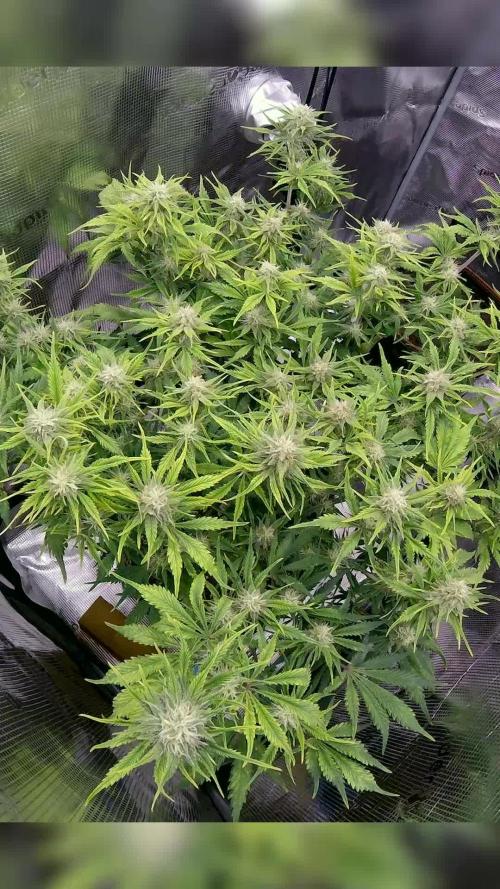
🌱 : LST & litttle defoliation on day 61
💧 : 4l day 58, 4l day 61
💡 : Dli: 45 mol/m²/d
🤔 : Week 9 was more relaxed. Just some LST (low stress training) and a little defoliation to give all the flowers more even light. She's now drinking about 1 liter of nutrient solution per day.
shorts_status_processing


@MadBumbleBee
Volgen
I wish I could've taken more picture this week and previous week but I just could'nt remember to do it. Feeling nervous, but wierdly excited. Most promising strains for big yields are Super Silver and Tangie. Girl Scout Cookies being an autoflower already started to flower, wish it would have taken more time on veg to get bigger but it is what it is.
Now starting flower. 12/12 cycle. 9 weeks


@Brothersfromweed420
Volgen
Bueno familia yo creo que ya es la última semana de este maravilloso seguimiento, para mi son unas genéticas muy buenas jamás avía provado algo de este barco de semillas y sin duda volveré a probar por que ya os digo que me encanta


