Processing
Likes
2
Share
@Vet4weed
Follow
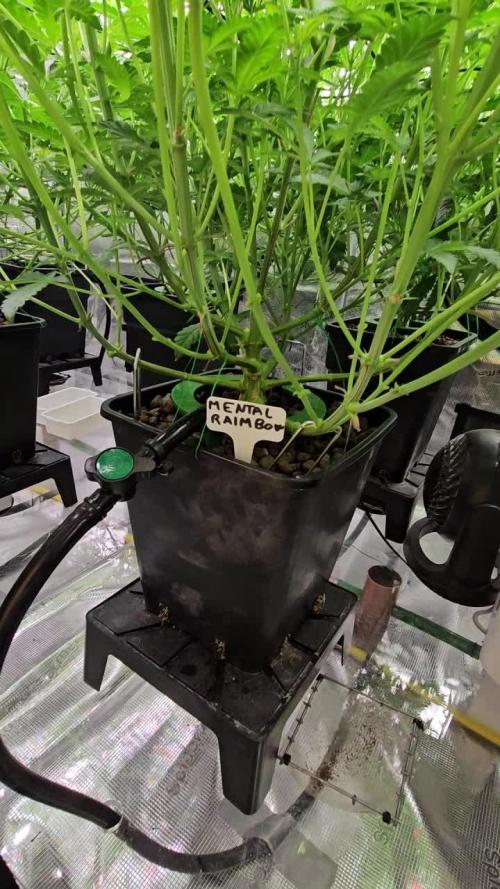
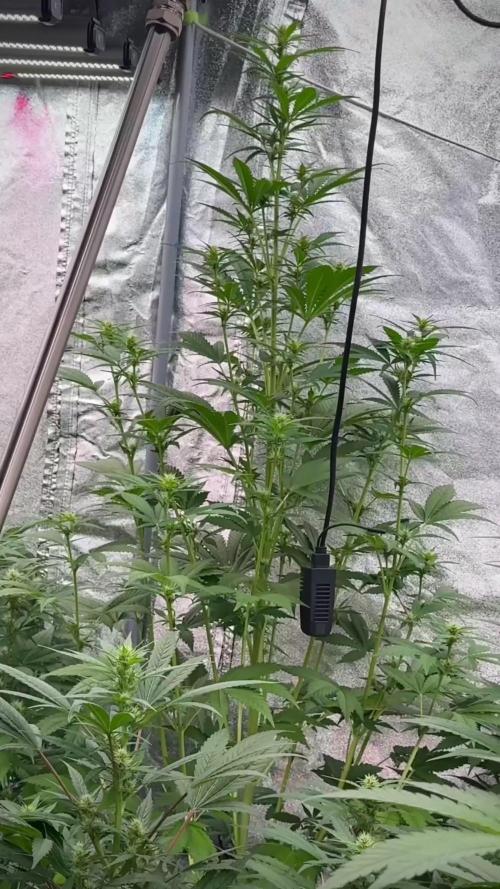
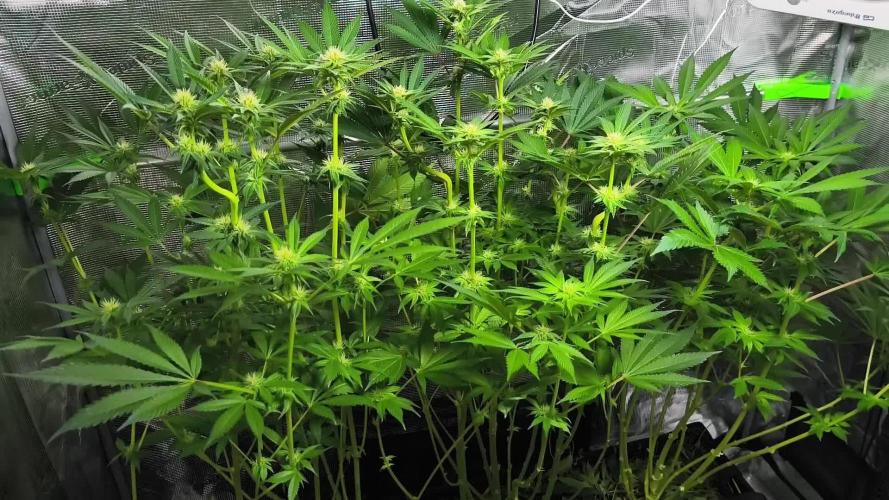
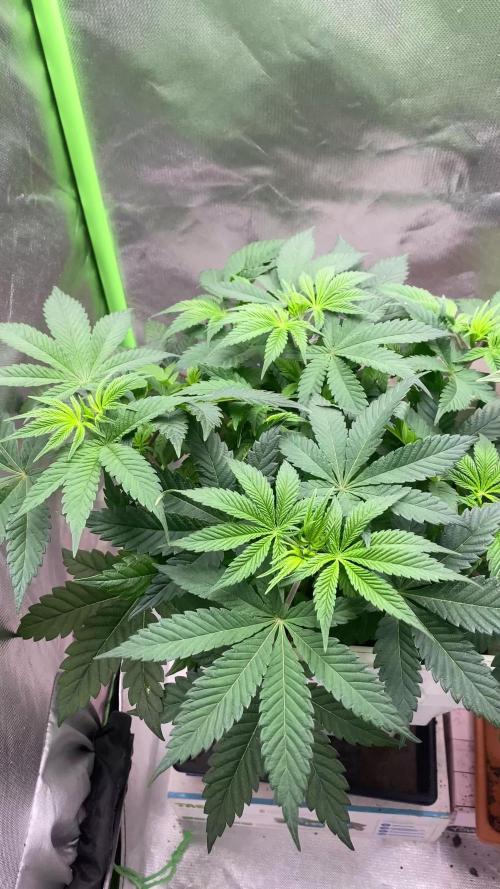
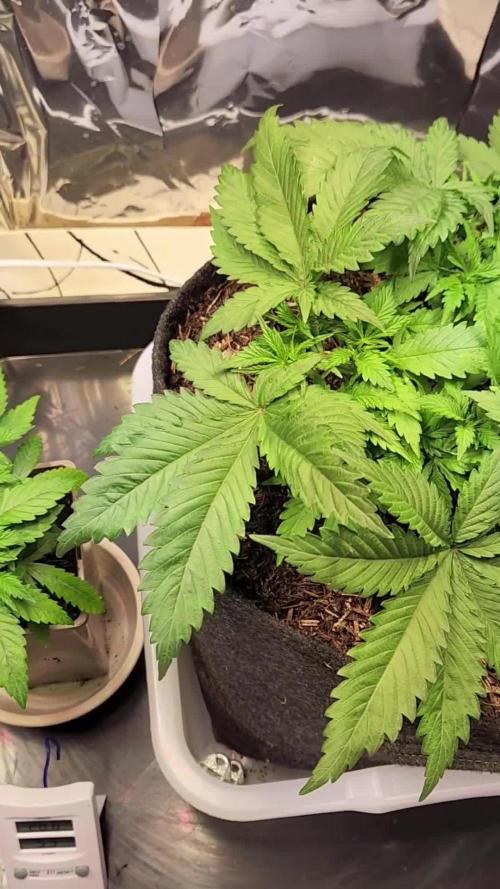
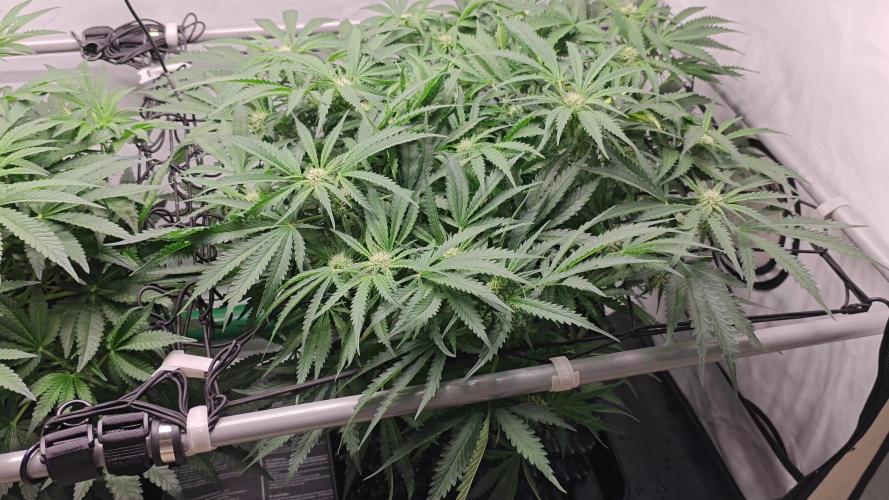
Taking it slow with the veg state to develop larger, stronger plants and it seems to be paying off. I've trimmed the lower leaves at least 3 times this week. I think I'm going to extend it out at least one more week before switching to flower state. Early in the week I switched from blue to purple to allow the branches to push through the screen more. Then mid-week blue, to rebuild the fan leaves, then back to purple once I rearranged everyone into their optimal positions for capturing light. I see a lot of potential for multiple colas. Each time I switched to purple, I raised the light up a few inches to help them stretch. As noted last week, lamp distance is being measured from top of net (not top of plant). I continue to add compost tea every Tuesday, which they love :-)
Likes
27
Share
@Hempcules
Follow
WEEK 18 Not much happened during the final week. Most of the trichomes turned milky, which was exactly what I was hoping for. PPFD: 1000µmol/m²/s Water: 2x plain water Vpd: 1,8Kpa
Likes
11
Share
Geerntet - Getrocknet - Ausgehärdet - Am 76 Blüte Tag im Dungeln geerntet. - Dann zum Trocknen für 6 Tage im Karton aufgehangen. - Danach in Gläsern ausgehärtet. Ergebnis der Ernte: Blüten: A: 56,39 g. B: 49,54 g. C: 9,46 g. Blüten gesamt gewicht (Getrocknet): 115,39 g.
Likes
33
Share
DAY 65: Whelp, 8 weeks of shaming, abuse, experimentation, more shaming, and neglect-- the Lucky Charms plant is a f***ing female! Absolutely in-shock. I was so happy to learn she's a girl, but at the same moment was filled with so much regret, for how much better I could have treated this plant/how much larger I could have grown it. Just wow. So I took a clone cutting. It was a little small, but hopefully she takes because this plant is more resilient than a cockroach!! The White Widow plant is steady bushin' in the veg area with the little ones. I really love how short and stocky I've managed to get this plant through all the LST. Its starting to feel. like a bonsai tree. It has certainly earned its adulthood after the catastrophe it endured in Week-5. DAY 68: The re-potting of the Lucky Charms stunted its growth as expected, but its got a long way to stretch, so it should be able to utilize most of the new space. Itching to repot the White Widow. She's ready. Im just short on medium and space at the moment :/
Likes
8
Share
@Cadman
Follow
Final Defoliation before I Flip to flower next Friday. Did a big cleanup under the ScrOG to direct all the energy to the tops. I also Reworked the Co2 Generator, let's call it 2.0 Generator. I know it might not be upping the Co2 tons, but some is better than none. Best part of the 2.0 you can see it working so you actually know there is some Co2 going in. Basically a 1 liter bottle with Sugar & Yeast with 1/4" tube that goes to second bottle with water in it. Tube is submerged so you can see it bubble about twice a second. the second bottle has another 1/4" tube that feeds through the grow room wall and connects to the back of a small fan that circulates the Co2 into the room. As I said not expecting a whole lot, but it can always be scaled up next round. The girls continue to grow at a good pace, 2" in 3 days and drinking about 1 gallon every 3 days as well.
Processing
Likes
13
Share
@J_diaz420
Follow
Tratando de sobrevivir a las altas temperaturas y baja humedad del verano con ayuda del humidificador y la circulación de aire. Al final de esta semana comenzamos con la primera dosis de vegetativo. Veremos como se comportan en la siguiente semana para ver que técnica usar en éste cultivo .
Likes
32
Share
Soooooo... I think I really fucked up haha. It's week 6 and they are huge... I didn't anticipate the stretch well and now I'm panicking. Any advice would be great because aside from getting an extra 8 inches from mounting all the way to the ceiling I'm at a loss. They are doing well aside from that though. a lot of dark spots where I could have trained better are just becoming more prevalent and I'm really seeing where I should have filled gaps and trained for a better light footprint. Adding top shooter for the first time at half strength this week, hoping to see results like the canna pk boost in the personal grow which is doing great. Oh and guess whos dumb pump started working for no reason after I got the replacement in the mail lol smh.
Processing
Likes
16
Share
Hello everyone, The girls are finally outside in 20 gallon fabric pots. This season I have a greenhouse for them and I hope it goes good. Still have to build the first cages around them and start stretching them. 🎊🎉 finally, summer is here 🎉🎊 See you guys next week 🤞🤞🤘🤘👊👊👊
Likes
80
Share
Hi all. Welcome to this run withbthe Viparspectra XS1500 which i was kindly sent to try by their helpful rep Valerie. As I have a fairly good space to use for my main grow , it seemed an ideal time to explore a few options while I wait for space to appear following upcoming harvests. The opportunity hit at a good time and has now driven the future play time. lol The light is a full spectrum 150W( at the socket) , Dimmable and very well made unit. As summer is here now , my concerns of more heat being an issue have stopped me from adding my other light so the smaller 2ftx2ft area covered by the XS1500 is a good option , The heatsink is built into the case design with a finned top to dissipate the heat so no noisy fans. Switching it on to full power was a nice surprise as the footprint was way wider than I had expected and the actual coverage is even better for my Nursery to harvest plan.... I am growing autos perpetually at present and have been able to throughput the plants with just 2 lights and using the overlaps at the edges to bring seedlings along to veg/flowering, as harvesting is finishing. The timing had been working well but the plants were getting smaller towards the last runs . I gave it some thought and Rh % came to mind. With the perpetual runs not having a higher rh in their veg periods due to other plants needing a lower Rh% in flower , the vapour pressure deficit (vpd) was not within veg periods healthier range. This current run has exploded and filled my normal space very quickly which in turn means I cannot use the same principle as the last perpetual run of bringing the next ones along ready for the exchanges. The XS1500 takes care of this issue with it being perfect for an initial nursery light that is easily covering all the new seedlings but is also able to cover my experimental "5 plant 1 Pot" attempt. I have placed 5 of my own autob seeds from a previous seeding in a single 60 L pot and intend to strip them to their 4th nodes and only allow 2 mains per plant to develop and flower. Inam hoping to have 10 mains growing in it that will be under the xs1500 solely as the other plants outgrow the lights footprint and space they are in. They will go into the main grow space once able so i can really see how well this new light can flower with the 10 mains to fill the space. Until that point , I will diary as we go and see what we can achieve.
Likes
8
Share
@Kirsten
Follow
12.5.25: I watered with some more Trace again. She's feeding well and needs watering more often again. I upped the dose of Trace as I've noticed that there are some purple hues coming back on the stems. 13.5.25: I have removed all fabric ties on the plant. I think we have stopped stretching, so the sooner, the better. I keep getting my watering can caught in them all, and it was only a matter of time before I ended up snapping more branches off 😅 The fewer things in my way, the better 🤫 15.5.25: I watered today as the pot had dried out almost. The plant was watered with dechlorinated water PH'd to 6.5 with the following nutrients per 6.5 litres; ♡ 7ml Trace by Ecothrive ♡ 1/2 Tsp Sea K(elp) by Greenleaf nutrients The plants received the amounts below. HULKBERRY: 1l FASTBUDS: 2l NORTHERN LIGHTS: 3.5l I am not giving any further nitrogen at this stage. They had a couple of doses in the past week or so. I'm sure they don't need any more. So, I'm just using the kelp as it's packed full of goodness and high in potassium. I also suspect an excess of phosphorus. So I'm also leaving that out for the time being. There are still some red stems on the plants. added the Ecothrive trace for the last few waterings. I'm hoping it will resolve without any further intervention. 16.5.25: I watered FastBuds Mystery seed #1 with 2trs of dechlorinated water PH'd to 6.4 with: ♡ 1/2 Tsp Sea K(elp) by Greenleaf nutrients ♡ 7ml Trace by Ecothrive Measurements per 6.5ltrs. PPM: 670 PH: 6.4 17.5.25: I watered again today with 2ltrs of the above PH'D to 6.2. Parameters remaining the same. The plant is increasingly thirsty, so the waterings have again needed to be increased. As we're reaching deep into flowering, this is par for the course. I'm mostly using coco, perlite worm cats. Etc. So it's very easy for my pots to dry out. I need to keep in top of it. As the pots dry out, the microbes are lost, and so keeping everything moist and healthy is imperative. That's why I add Ecothrive Biosys regularly to ensure I keep up with the microbial life in the soil biology. To avoid PH lockout. 18.5.25: I watered again, with the same parameters as yesterday. Instead of Sea K, I used Ecothrive Biosys: 1/2 Tsp/6.5l PPM: 550 PH: 6.4 Thanks for checking out my diary and hanging out 💚✌️ 🍃 😊 🌱
Likes
17
Share
They popped up 2nd of January after germination. Biobizz soils mixed just using oxy plus for first couple of weeks as well as silicone
Processing
Likes
52
Share
@MephistoGenetics, Hi all the happy people here in GrowDiaries. This is my second cultivation ever and it will be fun to try a bigger space than my closet grow. First, I'm just going to say I'm done with the construction of my new growroom. The room is 2.14 meters by 1.7 meters and has a ceiling height of 2 meters. It provides a floor area of ​​3.6 square meters. I use a 54 Watt Lightwawe T5 for germination and 2 Pcs 400 Watt HPS lamps. I have a channel fan that replaces the room air about 40 times an hour to get a comfortable environment in the room, the air enters a fresh air intake from the outside. The air is purified through a carbon filter to then leave the room to the rest of the basement. Then I use that heat to heat the rest of the basement. I will use 10 pcs 15 liter Autopots to grow with and a 100 liter water tank that supplies the pots of water and nutrition. I will grow completely organically in soil and will watercure my buds to get the best possible medicine for me. But there are no cultivation rooms to be displayed here, so I continue with what is most important. Today I have put my seeds in paper towel and hope the seeds have germinated within a few days. I am very excited to see how the new growroom will work and how this Stilton Special will turn out. Strain Name: Stilton Special F1 Genetic heritage - Sour Livers F3 x Northern Cheese Haze F3 Strain behaviour - Stilton grows well from the off, and develops into a stout but branchy specimine that leads to a fine yield of awesome flowers. She's not too stretchy but also is sizeable enough with good growth, to train and shape to your liking. Flowers develop pretty fast and grow to a good size, it may to advised to clear out some undergrowth and if needs be a very gentle defoliation mid-way through the grow, although leaf tucking may suffice well enough.The end product is of top shelf quality and she doesn't lack in yield either.Give your garden, nose, and body a treat and be sure to indulge in a slice of Stilton this year, You won't regret it. Size - 50 - 70 cm Structure - Medium height but bushy Flower Density - 9/10 Indica/Sativa - 65/35 Cycle Time - 65 to 70 days from sprout Yield - 90 to 140 grams as a single plant Best Method for overall high yield - 9-12 per 1,2m x 1,2m sq in 10-15 Liter pots (Soil) Aroma - Very strong, Cheesey/fruity/sour/spicey/ with a dash of coffee. Taste - Dank berries Effect - Good hybrid powerful but balanced effect Medicinal Benefits - TBA Best Grown - Indoor/Greenhouse Cannabinoids - TBA Extract information - Ideal extract candidate - High in resin, oil and terps. ................................................................................................................................................................................................................................................................................................................................................. 2017-08-21. Started to germinate the seed. ..................................................................................................................................................................................................................................................................................................................................................... 2017-08-23. Seed germinated and put in small pot in the humidity dome. ......................................................................................................................................................................................................................................................................................................................................................... 2017-08-27. Slow and steady she grows. ---------------------------------------------------------------------------------------------------------------------------------------------------------------------------------------------------- 2017-08-28. Transplanted to the 15 liter autopot. -------------------------------------------------------------------------------------------------------------------------------------------------------------------------------------------------------------- 2017-08-29. New movie of the girl and a new pic of the grow room from now. ------------------------------------------------------------------------------------------------------------------------------------------------------------------------------------------------------------- 2017-08-29. Hello to you who read my diary, I just want to say that I am pleased that you have chosen to check in with me and in my diary. I just want to say that I do this for myself and for a steady flow of my medicine. Everything you read and see in my diary is 100% honest and I will never distort or beautify anything here. I document my crops so that I can learn from my mistakes and also to look back at those different crops. I try to update with pictures every day and with text if something special has happened in the garden. This is my strainhunt for the best medicine and the beginning of my journey with cannabis and the cultivation of it. ----------------------------------------------------------------------------------------------------------------------------------------------------------------------- 2017-08-30. Cleaned the room this morning, just vacuuming and cleaning with chlorine solution. Im testing the fan to control temp and humidity, it works great. Added a movie. Everything is looking great right now. ------------------------------------------------------------------------------------------------------------------------------------------------------------------------------------------ 2017-08-31. 3 new pics. -------------------------------------------------------------------------------------------------------------------------------- 2017-09-01. New pics and a video of the room from today. ----------------------------------------------------------------------------------------------- 2017-09-02. New pic ---------------------------------------------------------------- 2017-09-03. Video of the girl this morning. ---------------------------------------------------------------------------------------------------------------------- 2017-09-04. Week 2 starts, new pics. ---------------------------------------------------------------------------------------------------- 2017-09-05. KL 08.00. Cleaned the room this morning, just vacuuming and cleaning with chlorine solution. KL 12.00. The girl got 2 liters of water with nutes in it, added a video. ---------------------------------------------------------------------------------------------------------------------- 2017-09-06. KL 08.00. The girls woke up after their beauty sleep, the leaves are always a bit down after 6 h of darkness, but they will stretch now when the HPS lamp starts. Everything looks good and I keep trying to tuck the leaves so they get the maximum amount of light where needed. Added pics and video. -------------------------------------------------------------------------------------------------------------------------------------------------------- 2017-09-07. Day 17 from sprouting. I have never tested PH in my grows, when growing organic in soil iv learned that it adapt PH by it self. But im curious by nature so i had to test. Kl 10.00 Tested PH in the soil, it was 6.9 and tested my tap water and it was 6.8. Added video of the girl. Kl 22.30. New pics ------------------------------------------------------------------------------------------------------------------ 2017-09-08 KL 08.00. Good morning, added new video. 2017-09-08. Kl 23.50. Gave every girl 3 liters of water and nutes, added new video. -------------------------------------------------------------------------------------------------- 2017-09-09. Kl 21.00. Defoliated a lot and added pics. ------------------------------------------------------------------------------------ 2017-09-10. Kl 08.00. Last day of week 2. New video. 2017-09-10. Kl 23.00. 3 new videos. -----------------------------------------------------------------------------------
Likes
19
Share
Yellow butterfly came to see me the other day; that was nice. Starting to show signs of stress on the odd leaf, localized isolated blips, blemishes, who said growing up was going to be easy! Smaller leaves have less surface area for stomata to occupy, so the stomata are packed more densely to maintain adequate gas exchange. Smaller leaves might have higher stomatal density to compensate for their smaller size, potentially maximizing carbon uptake and minimizing water loss. Environmental conditions like light intensity and water availability can influence stomatal density, and these factors can affect leaf size as well. Leaf development involves cell division and expansion, and stomatal differentiation is sensitive to these processes. In essence, the smaller leaf size can lead to a higher stomatal density due to the constraints of available space and the need to optimize gas exchange for photosynthesis and transpiration. In the long term, UV-B radiation can lead to more complex changes in stomatal morphology, including effects on both stomatal density and size, potentially impacting carbon sequestration and water use. In essence, UV-B can be a double-edged sword for stomata: It can induce stomatal closure and potentially reduce stomatal size, but it may also trigger an increase in stomatal density as a compensatory mechanism. It is generally more efficient for gas exchange to have smaller leaves with a higher stomatal density, rather than large leaves with lower stomatal density. This is because smaller stomata can facilitate faster gas exchange due to shorter diffusion pathways, even though they may have the same total pore area as fewer, larger stomata. Leaf size tends to decrease in colder climates to reduce heat loss, while larger leaves are more common in warmer, humid environments. Plants in arid regions often develop smaller leaves with a thicker cuticle and/or hairs to minimize water loss through transpiration. Conversely, plants in wet environments may have larger leaves and drip tips to facilitate water runoff. Leaf size and shape can vary based on light availability. For example, leaves in shaded areas may be larger and thinner to maximize light absorption. Leaf mass per area (LMA) can be higher in stressful environments with limited nutrients, indicating a greater investment in structural components for protection and critical resource conservation. Wind speed, humidity, and soil conditions can also influence leaf morphology, leading to variations in leaf shape, size, and surface characteristics. Small leaves: Reduce water loss in arid or cold climates. Environmental conditions significantly affect gene expression in plants. Plants are sessile organisms, meaning they cannot move to escape unfavorable conditions, so they rely on gene expression to adapt to their surroundings. Environmental factors like light, temperature, water, and nutrient availability can trigger changes in gene expression, allowing plants to respond to and survive in diverse environments. Depending on the environment a young seedling encounters, the developmental program following seed germination could be skotomorphogenesis in the dark or photomorphogenesis in the light. Light signals are interpreted by a repertoire of photoreceptors followed by sophisticated gene expression networks, eventually resulting in developmental changes. The expression and functions of photoreceptors and key signaling molecules are highly coordinated and regulated at multiple levels of the central dogma in molecular biology. Light activates gene expression through the actions of positive transcriptional regulators and the relaxation of chromatin by histone acetylation. Small regulatory RNAs help attenuate the expression of light-responsive genes. Alternative splicing, protein phosphorylation/dephosphorylation, the formation of diverse transcriptional complexes, and selective protein degradation all contribute to proteome diversity and change the functions of individual proteins. Photomorphogenesis, the light-driven developmental changes in plants, significantly impacts gene expression. It involves a cascade of events where light signals, perceived by photoreceptors, trigger changes in gene expression patterns, ultimately leading to the development of a plant in response to its light environment. Genes are expressed, not dictated! While having the potential to encode proteins, genes are not automatically and constantly active. Instead, their expression (the process of turning them into proteins) is carefully regulated by the cell, responding to internal and external signals. This means that genes can be "turned on" or "turned off," and the level of expression can be adjusted, depending on the cell's needs and the surrounding environment. In plants, genes are not simply "on" or "off" but rather their expression is carefully regulated based on various factors, including the cell type, developmental stage, and environmental conditions. This means that while all cells in a plant contain the same genetic information (the same genes), different cells will express different subsets of those genes at different times. This regulation is crucial for the proper functioning and development of the plant. When a green plant is exposed to red light, much of the red light is absorbed, but some is also reflected back. The reflected red light, along with any blue light reflected from other parts of the plant, can be perceived by our eyes as purple. Carotenoids absorb light in blue-green region of the visible spectrum, complementing chlorophyll's absorption in the red region. They safeguard the photosynthetic machinery from excessive light by activating singlet oxygen, an oxidant formed during photosynthesis. Carotenoids also quench triplet chlorophyll, which can negatively affect photosynthesis, and scavenge reactive oxygen species (ROS) that can damage cellular proteins. Additionally, carotenoid derivatives signal plant development and responses to environmental cues. They serve as precursors for the biosynthesis of phytohormones such as abscisic acid () and strigolactones (SLs). These pigments are responsible for the orange, red, and yellow hues of fruits and vegetables, while acting as free scavengers to protect plants during photosynthesis. Singlet oxygen (¹O₂) is an electronically excited state of molecular oxygen (O₂). Singlet oxygen is produced as a byproduct during photosynthesis, primarily within the photosystem II (PSII) reaction center and light-harvesting antenna complex. This occurs when excess energy from excited chlorophyll molecules is transferred to molecular oxygen. While singlet oxygen can cause oxidative damage, plants have mechanisms to manage its production and mitigate its harmful effects. Singlet oxygen (¹O₂) is considered a reactive oxygen species (ROS). It's a form of oxygen with higher energy and reactivity compared to the more common triplet oxygen found in its ground state. Singlet oxygen is generated both in biological systems, such as during photosynthesis in plants, and in cellular processes, and through chemical and photochemical reactions. While singlet oxygen is a ROS, it's important to note that it differs from other ROS like superoxide (O₂⁻), hydrogen peroxide (H₂O₂), and hydroxyl radicals (OH) in its formation, reactivity, and specific biological roles. Non-photochemical quenching (NPQ) protects plants from damage caused by reactive oxygen species (ROS) by dissipating excess light energy as heat. This process reduces the overexcitation of photosynthetic pigments, which can lead to the production of ROS, thus mitigating the potential for photodamage. Zeaxanthin, a carotenoid pigment, plays a crucial role in photoprotection in plants by both enhancing non-photochemical quenching (NPQ) and scavenging reactive oxygen species (ROS). In high-light conditions, zeaxanthin is synthesized from violaxanthin through the xanthophyll cycle, and this zeaxanthin then facilitates heat dissipation of excess light energy (NPQ) and quenches harmful ROS. The Issue of Singlet Oxygen!! ROS Formation: Blue light, with its higher energy photons, can promote the formation of reactive oxygen species (ROS), including singlet oxygen, within the plant. Potential Damage: High levels of ROS can damage cellular components, including proteins, lipids, and DNA, potentially impacting plant health and productivity. Balancing Act: A balanced spectrum of light, including both blue and red light, is crucial for mitigating the harmful effects of excessive blue light and promoting optimal plant growth and stress tolerance. The Importance of Red Light: Red light (especially far-red) can help to mitigate the negative effects of excessive blue light by: Balancing the Photoreceptor Response: Red light can influence the activity of photoreceptors like phytochrome, which are involved in regulating plant responses to different light wavelengths. Enhancing Antioxidant Production: Red and blue light can stimulate the production of antioxidants, which help to neutralize ROS and protect the plant from oxidative damage. Optimizing Photosynthesis: Red light is efficiently used in photosynthesis, and its combination with blue light can lead to increased photosynthetic efficiency and biomass production. In controlled environments like greenhouses and vertical farms, optimizing the ratio of blue and red light is a key strategy for promoting healthy plant growth and yield. Understanding the interplay between blue light signaling, ROS production, and antioxidant defense mechanisms can inform breeding programs and biotechnological interventions aimed at improving plant stress resistance. In summary, while blue light is essential for plant development and photosynthesis, it's crucial to balance it with other light wavelengths, particularly red light, to prevent excessive ROS formation and promote overall plant health. Oxidative damage in plants occurs when there's an imbalance between the production of reactive oxygen species (ROS) and the plant's ability to neutralize them, leading to cellular damage. This imbalance, known as oxidative stress, can result from various environmental stressors, affecting plant growth, development, and overall productivity. Causes of Oxidative Damage: Abiotic stresses: These include extreme temperatures (heat and cold), drought, salinity, heavy metal toxicity, and excessive light. Biotic stresses: Pathogen attacks and insect infestations can also trigger oxidative stress. Metabolic processes: Normal cellular activities, particularly in chloroplasts, mitochondria, and peroxisomes, can generate ROS as byproducts. Certain chlorophyll biosynthesis intermediates can produce singlet oxygen (1O2), a potent ROS, leading to oxidative damage. ROS can damage lipids (lipid peroxidation), proteins, carbohydrates, and nucleic acids (DNA). Oxidative stress can compromise the integrity of cell membranes, affecting their function and permeability. Oxidative damage can interfere with essential cellular functions, including photosynthesis, respiration, and signal transduction. In severe cases, oxidative stress can trigger programmed cell death (apoptosis). Oxidative damage can lead to stunted growth, reduced biomass, and lower crop yields. Plants have evolved intricate antioxidant defense systems to counteract oxidative stress. These include: Enzymes like superoxide dismutase (SOD), catalase (CAT), and various peroxidases scavenge ROS and neutralize their damaging effects. Antioxidant molecules like glutathione, ascorbic acid (vitamin C), C60 fullerene, and carotenoids directly neutralize ROS. Developing plant varieties with gene expression focused on enhanced antioxidant capacity and stress tolerance is crucial. Optimizing irrigation, fertilization, and other management practices can help minimize stress and oxidative damage. Applying antioxidant compounds or elicitors can help plants cope with oxidative stress. Introducing genes for enhanced antioxidant enzymes or stress-related proteins over generations. Phytohormones, also known as plant hormones, are a group of naturally occurring organic compounds that regulate plant growth, development, and various physiological processes. The five major classes of phytohormones are: auxins, gibberellins, cytokinins, ethylene, and abscisic acid. In addition to these, other phytohormones like brassinosteroids, jasmonates, and salicylates also play significant roles. Here's a breakdown of the key phytohormones: Auxins: Primarily involved in cell elongation, root initiation, and apical dominance. Gibberellins: Promote stem elongation, seed germination, and flowering. Cytokinins: Stimulate cell division and differentiation, and delay leaf senescence. Ethylene: Regulates fruit ripening, leaf abscission, and senescence. Abscisic acid (ABA): Plays a role in seed dormancy, stomatal closure, and stress responses. Brassinosteroids: Involved in cell elongation, division, and stress responses. Jasmonates: Regulate plant defense against pathogens and herbivores, as well as other processes. Salicylic acid: Plays a role in plant defense against pathogens. 1. Red and Far-Red Light (Phytochromes): Red light: Primarily activates the phytochrome system, converting it to its active form (Pfr), which promotes processes like stem elongation and flowering. Far-red light: Inhibits the phytochrome system by converting the active Pfr form back to the inactive Pr form. This can trigger shade avoidance responses and inhibit germination. Phytohormones: Red and far-red light regulate phytohormones like auxin and gibberellins, which are involved in stem elongation and other growth processes. 2. Blue Light (Cryptochromes and Phototropins): Blue light: Activates cryptochromes and phototropins, which are involved in various processes like stomatal opening, seedling de-etiolation, and phototropism (growth towards light). Phytohormones: Blue light affects auxin levels, influencing stem growth, and also impacts other phytohormones involved in these processes. Example: Blue light can promote vegetative growth and can interact with red light to promote flowering. 3. UV-B Light (UV-B Receptors): UV-B light: Perceived by UVR8 receptors, it can affect plant growth and development and has roles in stress responses, like UV protection. Phytohormones: UV-B light can influence phytohormones involved in stress responses, potentially affecting growth and development. 4. Other Colors: Green light: Plants are generally less sensitive to green light, as chlorophyll reflects it. Other wavelengths: While less studied, other wavelengths can also influence plant growth and development through interactions with different photoreceptors and phytohormones. Key Points: Cross-Signaling: Plants often experience a mix of light wavelengths, leading to complex interactions between different photoreceptors and phytohormones. Species Variability: The precise effects of light color on phytohormones can vary between different plant species. Hormonal Interactions: Phytohormones don't act in isolation; their interactions and interplay with other phytohormones and environmental signals are critical for plant responses. The spectral ratio of light (the composition of different colors of light) significantly influences a plant's hormonal balance. Different wavelengths of light are perceived by specific photoreceptors in plants, which in turn regulate the production and activity of various plant hormones (phytohormones). These hormones then control a wide range of developmental processes.
Likes
61
Share
They smell a lot like weed and that now in the wet autumn. These varieties of super sativa seed club also grow well outdoors. I doubt if I should harvest already as it is getting wetter and colder.... So what had you done. Continue with the chance of mold or harvest a little earlier. So far, they have no mold and don't seem to be impressed by cold days and wet days. but it can always happen if you go to the max.. Beautiful plants these species of super sativa seed club. Please buy them yourself en put it to the test green greetings CaptenSmokey 😁✊
Likes
Comments
Share
Pretty much done. I think this is the prettiest plant I’ve ever grown. That purple color
Likes
Comments
Share
@Chamed33
Follow
This is for educational purposes only 04/08/24 Germination trough glass water and paper towel method 04/10/24 Started seedling
Processing
Likes
8
Share
@nyalexas
Follow
How are you guys combatting gnats?? I’ve been sprinkling cinnamon, thinking of nematodes next. Gnats are the reason I was growing outdoors to begin with