Check the winners The Grow Awards 2026 🏆
Likes
Comments
Share
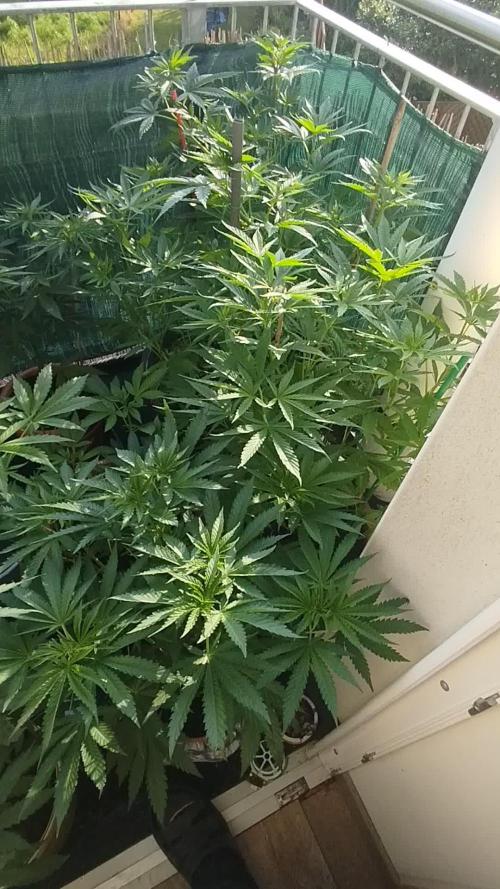
It's the same height that it was last week but I did top it this week. So she did grow I just cut her back down. I topped and defoliated every plant. I'm trying to form them into canna-bushes. Hopefully I'm doing the correct training procedures to make them all grow that way both indoors and out.
Likes
4
Share
@Lazuli
Follow
Buds finally fill up, what a smell now Very blueberry This week i poured a full 10 liter trough the coco at once to get the nutrients fresh, i also water once every day untill runoff
Likes
19
Share
👉The final dry weight, which was 369g (13oz) is just buds, no trim or larf. Just Good big buds. Great plant overall. Had a phosphorus issue that lingered, it foxtailed at the end and in the last day hermie bitz appeared on almost every branch end cola. Sturdy branches, lots of food factories. Wonderful aroma that wasn't as stanky as most. Spend 4 hours trimming. Started at the bottom and worked my way up. I put the end cola of each branch on its own label clothes pin and hung on a rack. Each cola was weighed wet and cataloged. after 24 hrs I started putting each cola in a paper bag and the net buds in a larger bag. It took 5 days to reduce the dry weight to under 30%. When they hit this mark they went into the jars which were labeled according to their documented location. I figured the weigh reduction percentage by comparing weighs from the initial wet trimmed weight. In each jar I also added a hygrometer. Surprisingly the RH of almost ever jar was under 58%. None of the jars required any burping to remove excess humidity. At that point I added moisture 62% moisture packs and put the jars in the closet. I sampled bud J till this writing. It didn't start getting tasty till the 4 week mark.
Likes
55
Share
@w33dhawk
Follow
05.04.21 Anfang der 3ten blüte Woche.Hab mich jetzt dazu entschieden das biegen und binden ein zu stellen natürlich halte ich weiter die Blätter unter dem netzt aber ich erlaube den Ladys jetzt durch das Netz auf zu steigen hab ja noch genügend Platz nach oben(hoffe ich). Das Wachstum is immer noch ziemlich stark ich denke mal das wird sich diese Woche auch nicht wirklich viel dran ändern und sie zieht vom trinken her stark an hab anfang der ersten woche 1x 4l mit Zusätzen gegossen und das hat 7 Tage gehalten bin jetzt an Tag 15 und muss alle 4 Tage 4l giessen gutes Zeichen denke ich mal..... 06.04.21 hab heute nur Blätter unters netzt gesteckt und schon von meinem nächsten Grow geträumt..... 07.04.21 wieder ein Tag vergangen und mehr als Blätter unterm Netz halten und hier und da mal ein Blatt entfernen war heut auch wieder nicht los... 08.04.21 heute war mal wieder bewässern dran und das tägliche Spiel Blätter weg stecken sonnst war nix weiter..... 09.04.21 hab das gefühl das das Wachstum anfängt sich ein zu stellen und Blätter hab ich heut wieder unters netzt gebogen was das hoch drücken der Blätter betrifft sind die Ladys ziemlich stark und eigenwillig gehe 2x täglich runter drücken unters netz werde nächstes mal eine kürzere Maschen weite fürs netz nehmen dachte 10 cm ist genug platz aber 5 cm pro Kästchen sollten sicher auch reichen das macht das spiel mit dem biegen und binden sicherlich einfacher und lässt die Blätter besser an Ort und Stelle Ach ja und ein paar Blätter hab ich heute noch entfernt ist aber auch bald mal Ende mit Blätter entfernen ich will sie nicht zu stark stressen... 10.04.21 Blätter unterm netz halten knapp 2 Std einige Blätter entfernt die von unten gegen die buds drücken sonnst war nix.... 11.04.21 hab heute wieder mal nur Blätter unters netzt gedrückt und den Pflanzen beim wachsen zu geschaut die Woche lief super bin echt stolz auf mich das ich die Finger so gut von der schere lassen könnte die letzten 21 Tage hab das netzt mal fast voll bekommen obwohl ich zu geben muss das die Masse die da wächst mir angst macht vor schimmel im späteren Verlauf des grows....
Likes
151
Share
@PapaNugs
Follow
Girls got topped this week. I decided to only top once due to the herming last time. But they are growing well after the transplant last week. I'm happy with the growth and we'll look to flip over the next couple weeks
Likes
Comments
Share
@obeee
Follow
Quelle belle semaine de récolte ! le séchage aura duré 9 jours me donnant un résultat global de 44 g de fleurs sèches pleine de résine et de saveurs. Un grand plaisir d'avoir pu partager avec vous cette belle run du Hindu Kush ! Bonne semaine à tous !
Likes
3
Share
@Ryno1990
Follow
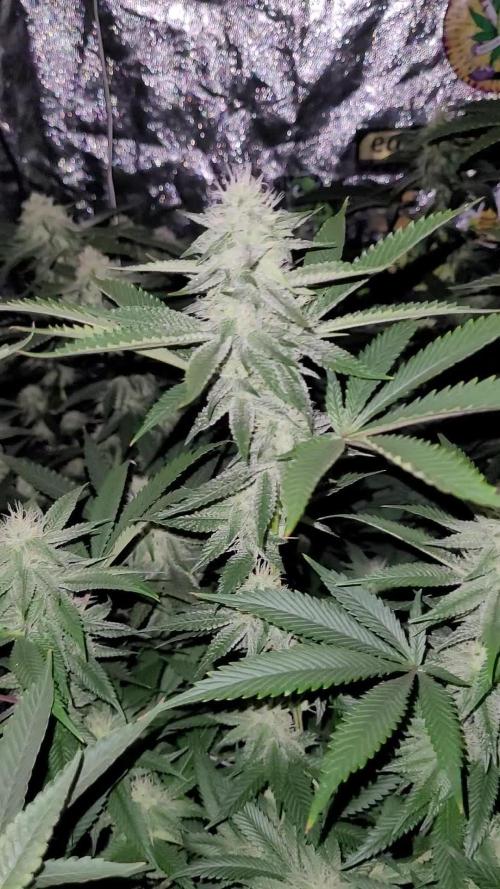
This strain came out amazing atlas seeds did an amazing job with her genetics she was frosty as can be an some of the best bud iv grown to date
Likes
112
Share
@Dunk_Junk
Follow
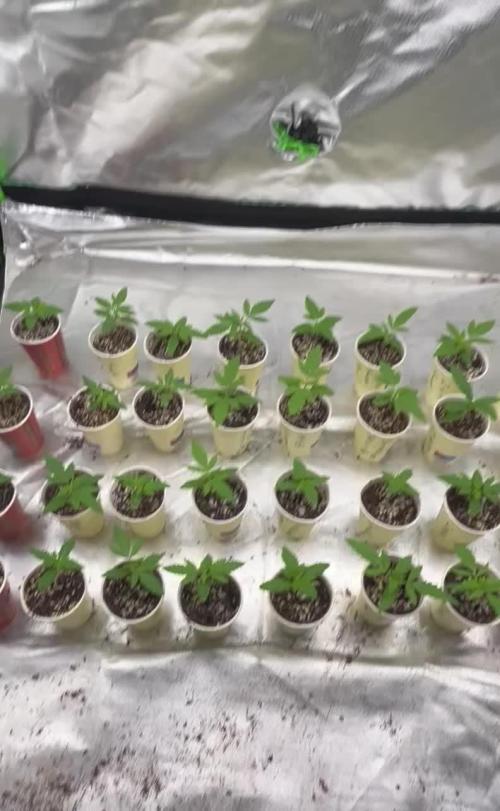
Week 2 done. She is the only one that hasn't fell over. Her stem looks the thickest of all her tentmates. She also grew the most in height this week.
Likes
5
Share
So, I start the harvest last week, but didn't get time to post here, first were the top bud, and this week I got the rest of the plant, it is a good strategy as the lower buds could develop a little more! Amazing growth! I am very happy with the wield, it was my 3 growth at all and my first LST! Great results! Thank you all for the support! Now I will stop for 3 months, going to Africa for a little bit! :-)
Likes
18
Share
-Day 84 Chopped down La Chem1 and TD2. They are drying. They were just starting to amber and GC2 potential needs more room. In the end i am going for yield and starting with 6 i knew a few might have to go early as intended. Last week feedings in ppm were the following. 1200, 700, 900, 800, Since its mainly just three plants a few of those days is double dose of same feed. Added tarantula, it might be late but worth a shot. GC1 is slight foxtail due to the heater blowing heat up under it. They lower leaves of the entire canopy was going brown due to excessive heat and bad circulation. I have since pointed my fans upwards pushing air through the canopy, and so far no complaints. New grower and lots to learn. Also learned that GC2 is a super auto. Being late to the game means late finish with huge yields as predicted. Cleaned trays and started some new seedlings for some outdoor stuff. Happy 420 Day 85 Worked on spreading out GC2, The lower cannopy has already responded in a single day. GC1 still has clear on it but its super dank sticky and smells like melon pie and skunk. Minor trim on TD1 and La Chem 1, Got about 1.5oz of la chem and 2oz of td. will weight it offical later.
Likes
8
Share
@legolas40
Follow
The plants are maturing extremly fast, the amber thricomes are apearing so fast and the flushing started to prevent to get much CBN. The BIG DAY is soon!
Likes
9
Share
So far the development of trichome production is amazing....frosty vibes looking forward to week 5, I look forward to seeing the end results everyday. One of the reasons to wake up everyday with some positivity. 😃
Likes
55
Share
What's in the soil? What's not in the soil would be an easier question to answer. 16-18 DLI @ the minute. +++ as she grows. Probably not recommended, but to get to where it needs to be, I need to start now. Vegetative @1400ppm 0.8–1.2 kPa 80–86°F (26.7–30°C) 65–75%, LST Day 10, Fim'd Day 11 CEC (Cation Exchange Capacity): This is a measure of a soil's ability to hold and exchange positively charged nutrients, like calcium, magnesium, and potassium. Soils with high CEC (more clay and organic matter) have more negative charges that attract and hold these essential nutrients, preventing them from leaching away. Biochar is highly efficient at increasing cation exchange capacity (CEC) compared to many other amendments. Biochar's high CEC potential stems from its negatively charged functional groups, and studies show it can increase CEC by over 90%. Amendments like compost also increase CEC but are often more prone to rapid biodegradation, which can make biochar's effect more long-lasting. biochar acts as a long-lasting Cation Exchange Capacity (CEC) enhancer because its porous, carbon-rich structure provides sites for nutrients to bind to, effectively improving nutrient retention in soil without relying on the short-term benefits of fresh organic matter like compost or manure. Biochar's stability means these benefits last much longer than those from traditional organic amendments, making it a sustainable way to improve soil fertility, water retention, and structure over time. Needs to be charged first, similar to Coco, or it will immobilize cations, but at a much higher ratio. a high cation exchange capacity (CEC) results in a high buffer protection, meaning the soil can better resist changes in pH and nutrient availability. This is because a high CEC soil has more negatively charged sites to hold onto essential positively charged nutrients, like calcium and magnesium, and to buffer against acid ions, such as hydrogen. EC (Electrical Conductivity): This measures the amount of soluble salts in the soil. High EC levels indicate a high concentration of dissolved salts and can be a sign of potential salinity issues that can harm plants. The stored cations associated with a medium's cation exchange capacity (CEC) do not directly contribute to a real-time electrical conductivity (EC) reading. A real-time EC measurement reflects only the concentration of free, dissolved salt ions in the water solution within the medium. 98% of a plants nutrients comes directly from the water solution. 2% come directly from soil particles. CEC is a mediums storage capacity for cations. These stored cations do not contribute to a mediums EC directly. Electrical Conductivity (EC) does not measure salt ions adsorbed (stored) onto a Cation Exchange Capacity (CEC) site, as EC measures the conductivity of ions in solution within a soil or water sample, not those held on soil particles. A medium releases stored cations to water by ion exchange, where a new, more desirable ion from the water solution temporarily displaces the stored cation from the medium's surface, a process also seen in plants absorbing nutrients via mass flow. For example, in water softeners, sodium ions are released from resin beads to bond with the medium's surface, displacing calcium and magnesium ions which then enter the water. This same principle applies when plants take up nutrients from the soil solution: the cations are released from the soil particles into the water in response to a concentration equilibrium, and then moved to the root surface via mass flow. An example of ion exchange within the context of Cation Exchange Capacity (CEC) is a soil particle with a negative charge attracting and holding positively charged nutrient ions, like potassium (K+) or calcium (Ca2+), and then exchanging them for other positive ions present in the soil solution. For instance, a negatively charged clay particle in soil can hold a K+ ion and later release it to a plant's roots when a different cation, such as calcium (Ca2+), is abundant and replaces the potassium. This process of holding and swapping positively charged ions is fundamental to soil fertility, as it provides plants with essential nutrients. Negative charges on soil particles: Soil particles, particularly clay and organic matter, have negatively charged surfaces due to their chemical structure. Attraction of cations: These negative charges attract and hold positively charged ions, or cations, such as: Potassium (K+) Calcium (Ca2+) Magnesium (Mg2+) Sodium (Na+) Ammonium (NH4+) Plant roots excrete hydrogen ions (H+) through the action of proton pumps embedded in the root cell membranes, which use ATP (energy) to actively transport H+ ions from inside the root cell into the surrounding soil. This process lowers the pH of the soil, which helps to make certain mineral nutrients, such as iron, more available for uptake by the plant. Mechanism of H+ Excretion Proton Pumps: Root cells contain specialized proteins called proton pumps (H+-ATPases) in their cell membranes. Active Transport: These proton pumps use energy from ATP to actively move H+ ions from the cytoplasm of the root cell into the soil, against their concentration gradient. Role in pH Regulation: This active excretion of H+ is a major way plants regulate their internal cytoplasmic pH. Nutrient Availability: The resulting decrease in soil pH makes certain essential mineral nutrients, like iron, more soluble and available for the root cells to absorb. Ion Exchange: The H+ ions also displace positively charged mineral cations from the soil particles, making them available for uptake. Iron Uptake: In response to iron deficiency stress, plants enhance H+ excretion and reductant release to lower the pH and convert Fe3+ to the more available form Fe2+. The altered pH can influence the activity and composition of beneficial microbes in the soil. The H+ gradient created by the proton pumps can also be used for other vital cell functions, such as ATP synthesis and the transport of other solutes. The hydrogen ions (H+) excreted during photosynthesis come from the splitting of water molecules. This splitting, called photolysis, occurs in Photosystem II to replace the electrons used in the light-dependent reactions. The released hydrogen ions are then pumped into the thylakoid lumen, creating a proton gradient that drives ATP synthesis. Plants release hydrogen ions (H+) from their roots into the soil, a process that occurs in conjunction with nutrient uptake and photosynthesis. These H+ ions compete with mineral cations for the negatively charged sites on soil particles, a phenomenon known as cation exchange. By displacing beneficial mineral cations, the excreted H+ ions make these nutrients available for the plant to absorb, which can also lower the soil pH and indirectly affect its Cation Exchange Capacity (CEC) by altering the pool of exchangeable cations in the soil solution. Plants use proton (H+) exudation, driven by the H+-ATPase enzyme, to release H+ ions into the soil, creating a more acidic rhizosphere, which enhances nutrient availability and influences nutrient cycling processes. This acidification mobilizes insoluble nutrients like iron (Fe) by breaking them down, while also facilitating the activity of beneficial microbes involved in the nutrient cycle. Therefore, H+ exudation is a critical plant strategy for nutrient acquisition and management, allowing plants to improve their access to essential elements from the soil. A lack of water splitting during photosynthesis can affect iron uptake because the resulting energy imbalance disrupts the plant's ability to produce ATP and NADPH, which are crucial for overall photosynthetic energy conversion and can trigger a deficiency in iron homeostasis pathways. While photosynthesis uses hydrogen ions produced from water splitting for the Calvin cycle, not to create a hydrogen gas deficiency, the overall process is sensitive to nutrient availability, and iron is essential for chloroplast function. In photosynthesis, water is split to provide electrons to replace those lost in Photosystem II, which is triggered by light absorption. These electrons then travel along a transport chain to generate ATP (energy currency) and NADPH (reducing power). Carbon Fixation: The generated ATP and NADPH are then used to convert carbon dioxide into carbohydrates in the Calvin cycle. Impaired water splitting (via water in or out) breaks the chain reaction of photosynthesis. This leads to an imbalance in ATP and NADPH levels, which disrupts the Calvin cycle and overall energy production in the plant. Plants require a sufficient supply of essential mineral elements like iron for photosynthesis. Iron is vital for chlorophyll formation and plays a crucial role in electron transport within the chloroplasts. The complex relationship between nutrient status and photosynthesis is evident when iron deficiency can be reverted by depleting other micronutrients like manganese. This highlights how nutrient homeostasis influences photosynthetic function. A lack of adequate energy and reducing power from photosynthesis, which is directly linked to water splitting, can trigger complex adaptive responses in the plant's iron uptake and distribution systems. Plants possess receptors called transceptors that can directly detect specific nutrient concentrations in the soil or within the plant's tissues. These receptors trigger signaling pathways, sometimes involving calcium influx or changes in protein complex activity, that then influence nutrient uptake by the roots. Plants use this information to make long-term adjustments, such as Increasing root biomass to explore more soil for nutrients. Modifying metabolic pathways to make better use of available resources. Adjusting the rate of nutrient transport into the roots. That's why I keep a high EC. Abundance resonates Abundance.
Likes
7
Share
Have to do something against the one which kisses the LED 😂 so i cropped her very hard. But she bounces back with no Problem
Likes
32
Share
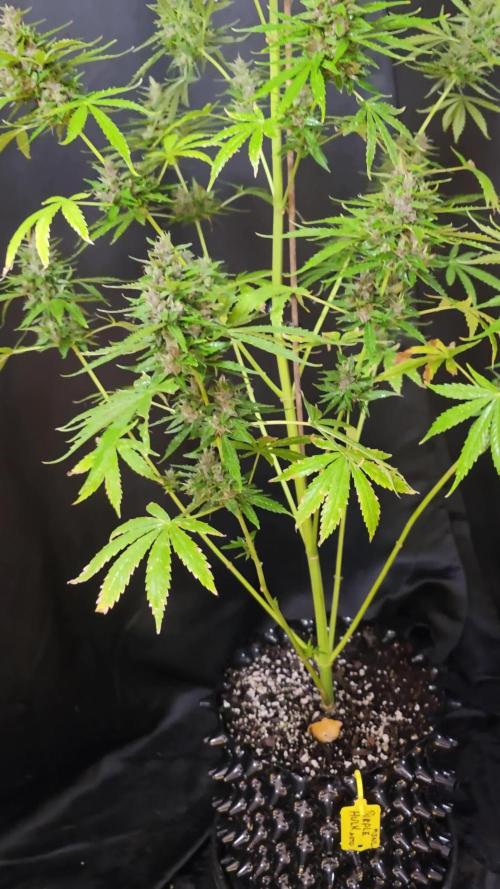
Struggled a bit with heat, had to put a fan over canopy. The hps has made a noticable difference in hardening up the buds. I rhink another 10 days to 14 days left. Update day 49: as recommended by @B4RNS I have reduced the last week of feeding to e.c 1 prior to a week of flushing! New video added with lots of heads!
Likes
14
Share
24 hrs of darkness begins. amber trichomes are hard to see under certain lights and through glasses, i dumped the glasses and moved each one to a different room and sure as shit "amber trichomes!". I just realized a jewelers lupe with a light works better without looking through reading glasses. 3 yrs of crap harvests and it aint over yet but if i get these dried at 60rh @ 70 deg F for 6-10 days APPPROX! CAREFUL FOR MOULD, and i got the 32 oz jars, belvidas and humidity guages for cure. as long as i can do that right, man things are really looking good. PRINCETON CAN USE A GUY LIKE JOEL! We'll see. I am starting another diary for the 2 gorilla glues that are growing really slow. I was going to dump them but i kept putting it off and slowly the buds started stacking up. I would love to know if this is common with all seed vendors and not just mine and why its happening like this. More important, I GREW BIG POTENT BUDS BY MYSELF!!!!!!! PRETTY HAPPY ABOUT THAT. HOURS AND HOURS OF VIDEO LESSONS, GROW DIARY QUESTIONS AND LOOKING AT OTHER PEOPLES GROWS, CONDITIONS PRODUCTS, EQUIPMENT AND RESULTS. FOR ME, GROWING WEED INDOORS IS A BIG FREAKING JOB AND I REALLY LOVE DOING IT FOR SOME REASON. IM HOOKED.
Likes
22
Share
@Siriuz
Follow
Very fast growing Great enviorment and great conditions Nice temp and humidity. 21C and 60% RH 18/6 schedule Check and support @cannagrowersiriuz Instagram official (mega mix soil w humus and other stuff)
Likes
8
Share
Day 63 What a turn around! Got my watering issues manageable. Last watering for Candace I added Mykos and Azos to my water. Switched from SimPro to Terp Tea. #GIRTH # FROST #AROMA Sheryl got that same recipe tonight. Candace didn't need water, but I splashed about 8oz in her dish for the bottom roots. Take Away? It's a weed so it's resilient. Have patience, don't panic, let the plants tell you what they need. Came back from out of town and the girls were looking famished. I put 1Tbl of Terp Tea Bloom in a gallon of rain water with Mykos, Azos, and Fish Sh!t. Fed both plants half gallon each.