



shorts_status_processing


@Grownewgenetics
Volgen
we are getting to week 3 on day 18 and 15 , the two rooms have 1 plants for each strain .
we have 150 watts room and a 250 Watts room, and we are getting the led pannels to test the Genetics of our sponsors on 3 different grow rooms. follow us also in Instagram, YouTube, Twitter,etc


@Rizza78
Volgen
Made it to harvest w 2 so far! Oozecake is a couple extra days. Boy she tastes amazing! Will ice her tomorrow and put her in 48 hrs of dark before I harvest. What an experience it has been! Can’t wait to try after the cure.





@Zurban_Poison
Volgen
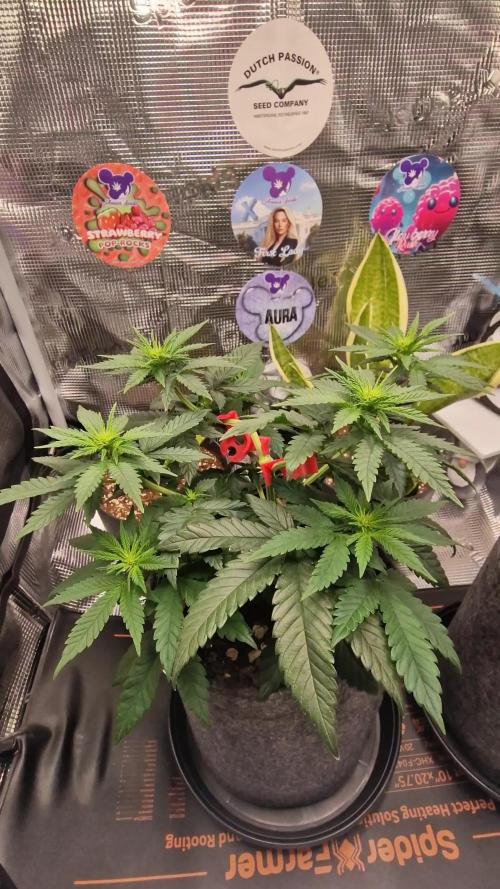
Hello friends! Our Poisonous friend moved to live, in more polka dots!) 5 liters ..
I hope she will start to grow actively! and will be ready for the next transplant into a 40 liter pot in a couple of weeks ..
as I said earlier .. I have big and interesting plans for this girl .. so don't miss the new diary ..


@RDWCGrowing
Volgen
3/25/2023
Week 6- Day 1 of Veg (Day 52 overall)
Added my first between changes SILICA Top offs. Was worried that when you add it to pre mixed Nutes that it can make the whole thing turn into a gummy looking substance. I was ready to drain the system and start it over for the week if needed, but no issues adding it to the tank. the Silica going into the Res didn't gummy the system up, it did drop my PH by quit a bit causing me to have to bring it back in balance.
36 Gallons in the Tank
Silica
Add .5mil/Gal = 18Mil
I topped some that needed to be topped, I defoliated some that needs to be defoliated. Since I have moved into Week 6 I have increased the light intensity up to just over 500 maxing it out for Veg Cycle. Next increase will be Week 1 of Flower.
3/26/2023
Week 6- Day 2 of Veg (Day 53 overall)
All conditions looked great. Other than me not putting one of the humidifiers back right which means it didn't work last night so Humidity was lower than I like. But got the Humidifier back on it's stand correctly and it is now pumping away. With that I decided to give the plants a day off from any stresses, no topping, no FIMing, no Defoliation for today. Just some good old soaking up the light rays and the ability to get all the Nutes they would like..
3/27/2023
Week 6- Day 3 of Veg (Day 54 overall)
Looking kind of Bushy today, so I defoliated some, and topped some.
3/28/2023
Week 6- Day 4 of Veg (Day 55 overall)
PH was a little lower than I like 5.74 so I added a few Mil of PH UP and brought it back up to 5.94.
Not much else at this stage, just I topped a little and I defoliated a little.
3/29/2023
Week 6- Day 5 of Veg (Day 56 overall)
Topped a little, Defoliated a little Watched them grow!!
3/30/2023
Week 6- Day 6 of Veg (Day 57 Overall)
Main action today was breaking down my old tent and setting up a new tent and getting my second RDWC system setup and ready for clones. I Topped a little, I Defoliated some and started taking a good look at what I would like to take for clones in the coming days. I have a few bottom branches that look every promising for my clone material on each.
3/31/2023
Week 6- Day 7 of Veg (Day 58 overall)
#3 is at 16" Tall
#2 is at 13" Tall


@ibbzy
Volgen
Just got back from holiday. Few days late on update.
watering system wasn’t too shabby as it was a last minute holiday ahaha.
6 days away in Greece. Lovely.
1x Sweet Mandarine Zkittlez
1x Mimosa Bruce Banner
Ready for harvest. Been put into two days of darkness!


@Basementganja
Volgen
Day 91 from seed! She's been fed/watered every 4 days (when media is 90% dry) with 2.5 gallons flood-and-drain style of the above listed nutes.
Other than that, I have only been plucking the occasional leaf that looks at me funny! :)
Next week is flush week! I'll start next week by dragging her into the bathtub, to flow 50 gallons of tap water through the roots.
Then she will be on plain tap water(2.5 gallons every 4 days) for two waterings - She should be dry on day 100, and ready for harvest!


@Heregrowsnothing
Volgen
And then there was one... This beast took over the tent and needed its own space so thats what I gave it and boy did it repay the favour! Plenty of really dense bud with a wonderful smell. It's beginning to look a lot like Christmas 💚


@mrb11
Volgen
I guess dude was right about it foxtailing but I don’t care and I don’t think I can do anything about anyway. My light is at 50%. She is only getting 600 ppfd and I’d have to check again but I know the DLI is under 30, I want to say it was 25 or 26. Temps never go above 76° lights on but typically stay at 74°. Idk if it is light stress then i don’t understand how ppl run these high wattage lights. Maybe I’ll try the co2 bottle again




@Ultraviolet
Volgen
Removed autoflower and put her in her own pot outside the tent.
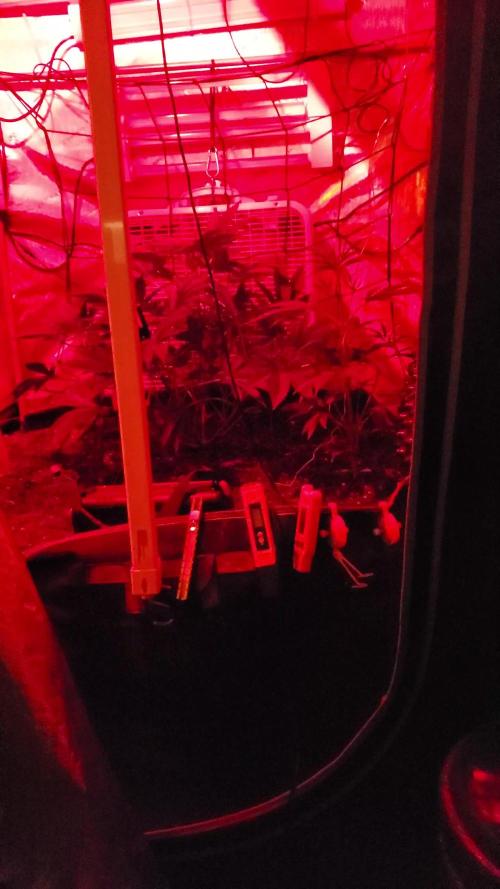
Foliars applied in strong blue 430nm with 4000Hz tone. 20-minute dose prior to application.
In essence, you're seeing a combination of the infrared light reflected by the plant, which the camera perceives as red, and any residual visible blue light the plant reflects, which results in a purple hue.
I was doing more stretching of the stems, adjusting weights, just a little too much, and it snapped almost clean. I got a little lucky in that it was still connected, wrapped her almost instantly while holding her in place with yoyo's. The core framework is now in place.
If your soil has a high pH, it's not ideal; you want a pH of 6.4, 6.5, or 6.6, which is ideal. If you are over a pH of 7, you have no hydrogen on the clay colloid. If you want your pH down, add Carbon. If you keep the pH below 7, you will unlock hydrogen, a whole host of new microbes become active and begin working, the plant will now be able to make more sugar because she has microbes giving off carbon dioxide, and the carbon you added hangs onto water. Everything has electricity in it. When you get the microbes eating carbon, breathing oxygen, giving off CO2, those aerobic soil microbes will carry about 0.5V of electricity that makes up the EC. The microorganisms will take a metal-based mineral and a non-metal-based mineral with about 1000 different combinations, and they will create an organic salt! That doesn't kill them, that the plant loves, that the plant enjoys. This creates an environment that is conducive to growing its own food.
Metal-based: Could include elements like iron, manganese, copper, or zinc, which are essential nutrients for plants but can exist in forms not readily accessible.
Non-metal-based: Examples like calcium carbonate, phosphate, or sulfur are also important for plant growth and potentially serve as building blocks for the organic salt.
Chelation in a plant medium is a chemical process where a chelating agent, a negatively charged organic compound, binds to positively charged metal ions, like iron, zinc, and manganese. This forms a stable, soluble complex that protects the micronutrient from becoming unavailable to the plant in the soil or solution. The chelate complex is then more easily absorbed by the plant's roots, preventing nutrient deficiency, improving nutrient uptake, and enhancing plant growth. Chelation is similar to how microorganisms create organic salts, as both involve using organic molecules to bind with metal ions, but chelation specifically forms ring-like structures, or chelates, while the "organic salts" of microorganisms primarily refer to metal-complexed low molecular weight organic acids like gluconic acid. Microorganisms use this process to solubilize soil phosphates by chelating cations such as iron (Fe) and calcium (Ca), increasing their availability.
Added sugars stimulate soil microbial activity, but directly applying sugar, especially in viscous form, can be tricky to dilute. Adding to the soil is generally not a beneficial practice for the plant itself and is not a substitute for fertilizer. While beneficial microbes can be encouraged by the sugar, harmful ones may also be stimulated, and the added sugar is a poor source of essential plant nutrients. Sugar in soil acts as a food source for microbes, but its effects on plants vary significantly with the sugar's form and concentration: simple sugars like glucose can quickly boost microbial activity and nutrient release. But scavenge A LOT of oxygen in the process, precious oxygen. Overly high concentrations of any sugar can attract pests, cause root rot by disrupting osmotic balance, and lead to detrimental fungal growth. If you are one who likes warm tropical high rh, dead already. Beneficial, absolutely, but only to those who don't run out of oxygen. Blackstrap is mostly glucose, iirc regular molasses is mostly sucrose. Sugars, especially sucrose, act as signaling molecules that interact with plant hormones and regulate gene expression, which are critical for triggering the floral transition. When sucrose is added to the growth medium significantly influences its effect on floral transition.
Probably wouldn't bother with blackstrap given its higher glucose content. Microbes in the soil consume the sugar and, in the process, draw nitrogen from the soil, which is the same nutrient the plant needs. Glucose is not an oxygen scavenger itself, but it acts as a substrate for the glucose oxidase (GOx) enzyme, effectively removing oxygen from a system. Regular molasses (powdered if you can), as soon as she flips to flower or a week before, the wrong form of sugar can delay flower, or worse. Wrong quantity, not great either. The timing of sucrose application is crucial. It was more complicated than I gave it credit for, that's for sure. When a medium's carbon-to-nitrogen (C:N) ratio reaches 24:1, it signifies an optimal balance for soil microbes to thrive, leading to efficient decomposition and nutrient cycling. At this ratio, soil microorganisms have enough nitrogen for their metabolic needs, allowing them to break down organic matter and release vital nutrients like phosphorus and zinc for plants. Exceeding this ratio results in slower decomposition and nitrogen immobilization, while a ratio below 24:1 leads to faster breakdown and excess nitrogen availability.
Carbon and nitrogen are two elements in soils and are required by most biology for energy. Carbon and nitrogen occur in the soil as both organic and inorganic forms. The inorganic carbon in the soil has minimal effect on soil biochemical activity, whereas the organic forms of carbon are essential for biological activity. Inorganic carbon in the soil is primarily present as carbonates, whereas organic carbon is present in many forms, including live and dead plant materials and microorganisms; some are more labile and therefore can be easily decomposed, such as sugars, amino acids, and root exudates, while others are more recalcitrant, such as lignin, humin, and humic acids. Soil nitrogen is mostly present in organic forms (usually more than 95 % of the total soil nitrogen), but also in inorganic forms, such as nitrate and ammonium. Soil biology prefers a certain ratio of carbon to nitrogen (C:N). Amino acids make up proteins and are one of the nitrogen-containing compounds in the soil that are essential for biological energy. The C:N ratio of soil microbes is about 10:1, whereas the preferred C:N ratio of their food is 24:1 (USDA Natural Resource Conservation Service 2011). Soil bacteria (3-10:1 C:N ratio) generally have a lower C:N ratio than soil fungi (4-18:1 C:N ratio) (Hoorman & Islam 2010; Zhang and Elser 2017). It is also important to mention that the ratio of carbon to other nutrients, such as sulfur (S) and phosphorous (P) also are relevant to determine net mineralization/immobilization. For example, plant material with C:S ratio smaller than 200:1 will promote mineralization of sulfate, while C:S ratio higher than 400:1 will promote immobilization (Scherer 2001).
In soil science and microbiology, the C:S ratio helps determine whether sulfur will be released (mineralized) or tied up (immobilized) by microorganisms.
A carbon-to-sulfur (C:S) ratio smaller than 200:1 promotes the mineralization of sulfate, when the C:S ratio is low, it indicates that the organic matter decomposing in the soil is rich in sulfur relative to carbon. Microorganisms require both carbon and sulfur for their metabolic processes. With an excess of sulfur, microbes take what they need and release the surplus sulfur into the soil as plant-available sulfate
A carbon-to-sulfur (C:S) ratio higher than 400:1 will promote the immobilization of sulfur from the soil. This occurs because when high-carbon, low-sulfur materials (like sawdust) are added to soil, microbes consume the carbon and pull sulfur from the soil to meet their nutritional needs, temporarily making it unavailable to plants.
200:1 C:S 400:1: In this range, both mineralization and immobilization can occur simultaneously, making the net availability of sulfur less predictable.
This dynamic is similar to how the carbon-to-nitrogen (C:N) ratio regulates the availability of nitrogen in soil. Just as microbes need a certain amount of nitrogen to process carbon, they also require a balanced amount of sulfur. Both mineralization and immobilization are driven by the metabolic needs of the soil's microbial population.
Sulfur is crucial for protein synthesis. A balanced ratio is particularly important in relation to nitrogen (N), as plants need adequate sulfur to efficiently use nitrogen. A severely imbalanced C:S ratio can hinder the efficient use of nitrogen, as seen in trials where adding nitrogen without balancing sulfur levels actually lowered crop yields.
Maintaining a balanced carbon-to-sulfur (C:S) ratio is highly beneficial for plant growth, but this happens indirectly by regulating soil microbial activity. Unlike the C:N ratio, which is widely discussed for its direct effect on nutrient availability, the C:S ratio determines whether sulfur in the soil's organic matter is released (mineralized) or temporarily locked up (immobilized).
Applied 3-day drought stress.
Glucose will hinder oxygenation more than sucrose in a solution because glucose is consumed faster and has a higher oxygen demand, leading to a more rapid decrease in oxygen levels. When cells respire, they use oxygen to break down glucose, and this process requires more oxygen for glucose than for sucrose because sucrose must first be broken down into glucose and fructose before it can be metabolized.
In a growth medium, glucose is a more immediate and universal signaling molecule for unicellular and multicellular organisms because it is directly used for energy and triggers a rapid gene expression response. In contrast, sucrose primarily acts as a signaling molecule in plants to regulate specific developmental processes by being transported or broken down, which can be a more complex and slower signaling process.
Critical stuff.
During wakefulness (DC electric current) life can not entangle electrons and protons. During the daytime, the light is sensed as multiple color frequencies in sunlight. Coherence requires monochromatic light. Therefore, at night, IR light dominates cell biology. This is another reason why the DC electric current disappears during the night. The coherence of water is maintained by using its density changes imparted by infrared light released from mitochondria in the absence of light. This density change can be examined by NMR analysis, and water is found to be in its icosahedral molecular form. This is the state that water should be in at night. This is when a light frequency is lowest and when the wave part of the photoelectric effect is in maximum use.
3600


@CanadianFillmore
Volgen
Harvest time for Mandarin dreams round 2. Both phenos did amazing during round 2 under the Mars-Hydro TSW2000 light. The buds are incredible and the way these ladies grew was very impressive. Hopefully they are heavy buds, will know in 7-10 days if they have the dry weight to back up their awesome appearance.
April 16 update - MD2 - 70 grams, MD1 - 73 grams. Again results are close to round 1. The TSW2000 light delivers!


@BillMonroe
Volgen
Instead of giving nutrients I gave only water because I noticed some yellow tips on the new growth.
The plant had been getting 700ppm feed(including 220ppm tap water). Nutrient buildup in soil?
I made the switch to 12/12 today. Since 2 days the new growth has been looking funky - the same corkscrewy thing I had in my first grow.
Overall, a lot of trimming, bending, training. It has become a cool plant in my opinion :)
Info useful for my question:
*6.2-6.4ph water every time
*giving water when the soil is dry and lower leaves start to hang a little. but i suspect it is hard to overwater with these airpots
*built up nutrients to about 720ppm until last watering


@StarLorr
Volgen
Welcome to my Lemon Mandarin 🍋🍊Diary.
In this Diary:
Seeds: Fast Buds (from contest)thanks
___________________________
Feeding:
Thu 24Apr: 3L Flawless Finish pH'd 6.5
Mon 28Apr: 3L Flawless Finish pH'd 6.5
___________________________
Final Lap🏁🏁🏁
Trichomes are milky with a few ambers,
By the end of this week, probably Friday the El Chopo will occur😋😋
_________________________
Strong citrus(orange) predominant smell.
_________________________
Thanks for stopping by, likes and comments are appreciated!👊🏻😎
Keep on growin!
Keep on tokin!!!
😙💨💨💨💨💨


shorts_status_processing


@live_canna
Volgen
Day 132 - 22.09.2020 - Pic updates. Now that my other plant got the boot, this lady has more space. I put up the trellis net to move the branches slightly and get better light penetration.
Day 134 - 24.09.2020 - Pic updates. Her lower leaves are starting to yellow which is concerning. I am keeping an eye on her.
Day 138 - 28.09.2020 - Pic updates. So definitely concerned. I went out and got the items I needed to start brewing a compost tea as she was yellowing more and looking a bit sad. Even though all my nutes have been given and the PH is right, I do not know why she is having these issues, but I am hoping a nice compost tea will get her back. Other than that she needs to put on more weight. But of the little buds that are there, they are dense as can be. So I am happy with what I see quality wise so far. I will be checking her in more detail later to see what the trichomes are doing, but when I checked quickly we were still very clear.


@BreakingBud
Volgen
Plants looking great. Final week, flushing with filtered water for 7- 10 days. Plants ripening nicely, very dense colas. I noticed a spider mite outbreak last week, it has spread from one plant to the a few others, not a bad infestation, today predator mites will be released onto every plant throughout flush. Predator mites have worked great in the past.
**predator mites phytoselius have been applied, hopefully they can clear up the infestation before harvest. When the plants are cut down and hung to drt any remaining mites will crawl up the stem as the plant dries. I will wrap the stem in double sided sticky tape.