Processing
Likes
28
Share
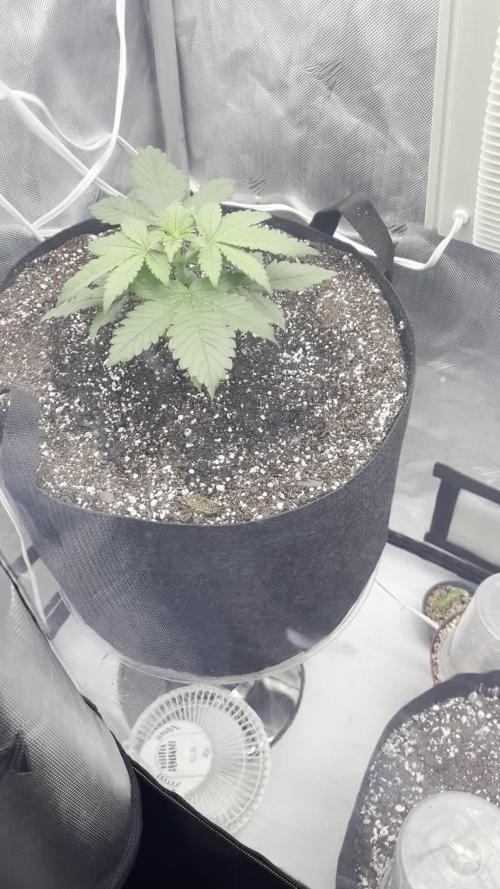
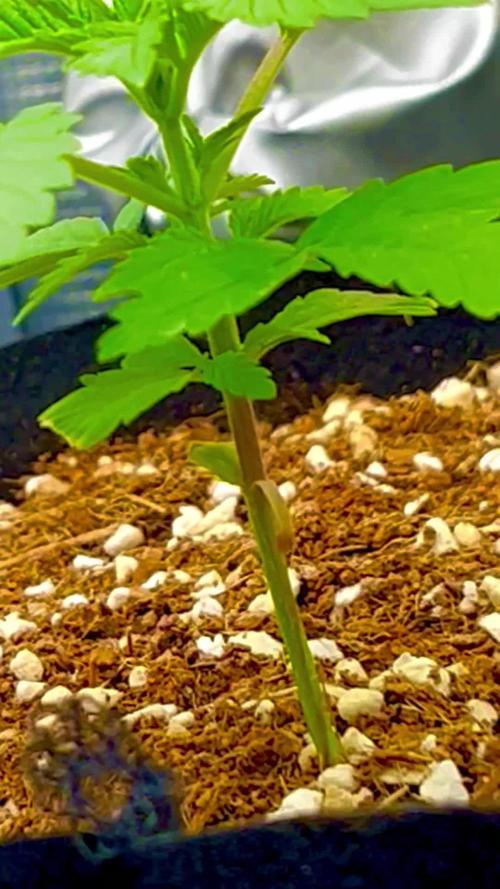
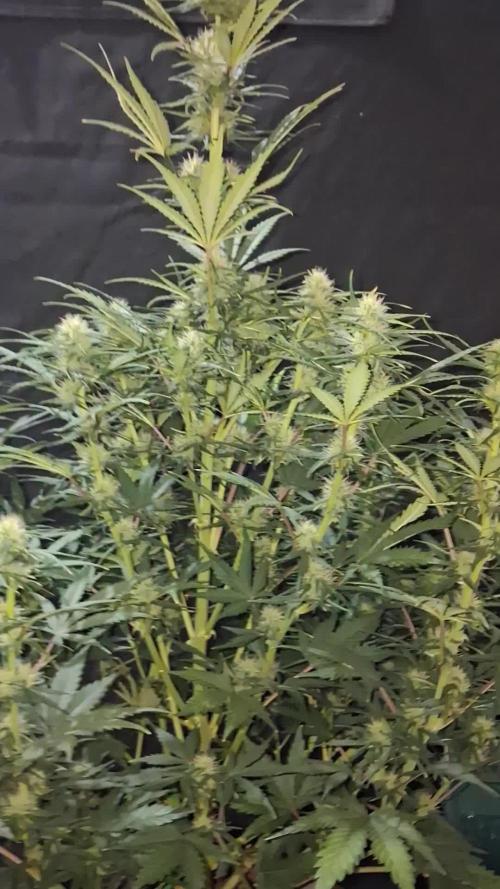
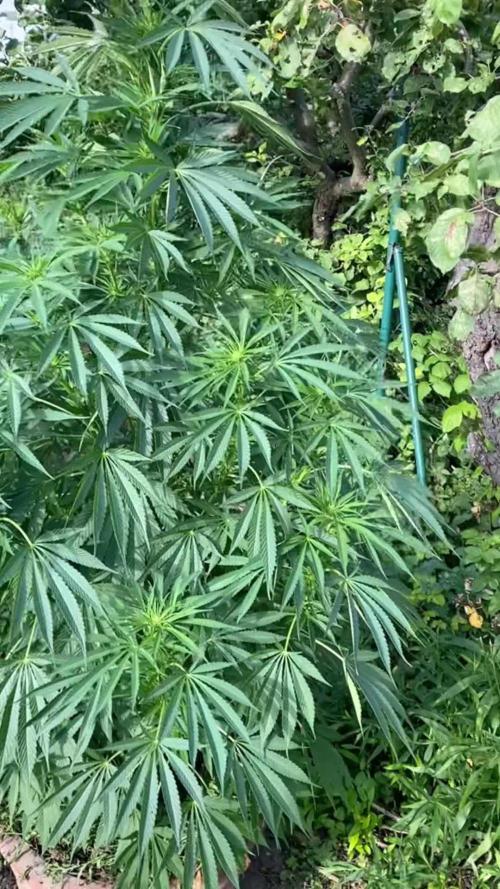
Lots going down this week! I threw up a couple pictures today (day 74) I'll add more pictures and videos later on but I wanted to get this week started... Day 70; Nothing much to report except we got the new Optic 8+ 120°lens LED installed!! We got her put up around day 69. It's the 2nd optic weve bought and love these lights! The plants reacted immediately and we only started them at 80%veg brightness 20%bloom. Increasing 10% or so a day. I also built a cloning station so I can take cuts tomorrow just incase we fide a unicorn!🤞 Day 71; Officially on 12/12 light schedule now! I've decided to keep #2 in her 3gal pot. #1 gets the 10gallon smartpot. Both are doing terrific. I top dressed with .5 table spoons per gallon of soil on both plants using Papa's Perfect Poop. Made buy Michigan made mix m3 soil company. Its 5-10-2 using 100% organic fossilized bat guano Day 72: I defoliated both plants today. Fairly heavy but not extreme. I took all the larger fan leaves out that were blocking the lower bud sites. I also took clones today. 2 off each plant. 1 of each clone went into an ez-cloner that uses spraying water to root them. The other 2 cuts I put in a hydrofarm cloner that submerges the stems in aerated water until rooting. Day 73; The girls both bounced back and are praying beautifully after the defoliation. Both loved it! I can definitely see the start of new growth already on the lowers. I'm keeping the clones on 24hr light schedule. I know its addition stress but it's easier for me. Day 74: Literally nothing happened today. I sat and stared at them for maybe 2hrs but that's about it tho lol Day 75: A bit done today. I rearranged the tent hoping to give the girls a bit more leg room(you can see #2 in the picture is growing all funny because of space) I also watered #2 tonight. I'm finding the Choc Mint OG do not like much water. I also took them out of the tent for some glamour shots. You can really see what difference 7gallons of soil can make in terms of size. #1 is nearly a foot taller. Both are starting to stretch. Curious how much that is. Put #2 out in shades place outside to harden up Day 76: Not much going on. I watered number 1. Day 77: Big day today. 3 days ago I put #2 outdoors in shade to acclimate. I know I rushed that a bit. Should have let her harden up a bit more first, but I wanted her in the ground and growing roots while she has time. Its gonna be close but I figure all my other outdoor plants are just starting to flower so why not? My tent was a little crowded so being outside will give her the best chance possible! The Gear: 4x8 grow tent 2x Optic 8+ LEDs AC Infinity t6 fan 8,000 btu portable air conditioner 50pint dehumidifier Happy Frog Soil Mother nature 1 person dedicated to the plant
Processing
Likes
11
Share
3erd week in the pocket still using Sun ligh i started giving them a root enhancer nothing else had to use mad farmer to bring the ph water down Las vegas water ph is too high my ph reader was reading 7.5 so it was adjusted to 6.5
Likes
31
Share
@BudXs
Follow
Super busy with a move and a big garden reno. Sorry, this is the only update for this week
Likes
12
Share
🌿😎. Day 50 01 Mar, Tues PM ♥️💛💚 Each got 2700 mL 1 CalMag, 0.5 Grow Big 1 Tiger Bloom, 1.5 Big Bloom Day 53 05 Mar, Thurs AM♥️💛💚 Each got 2700 mL Only put in Recharge. Day 59 07 Mar, Sat PM♥️💛💚 Each got 280 mL 1.5 CalMag, 0.5 Grow Big 1.5 Tiger Bloom, 1.2 Big Bloom Trying to water every 1.5 days at peak flower. Everything is steady, heavy indica plants. Buds look like they might get phhhaaaat!
Likes
2
Share
Remember that, however you are played, or by whom, your soul is in your keeping alone. Even though those who presume to play you be kings or men of power, when you stand before God, you cannot say, 'But I was told by others to do thus,' or that virtue was not convenient at the time. This will not suffice. Remember that. Day:18 84°F and 65% RH (VPD) for the vegetative stage. Approximately 1.15kPa(assuming leaf temperature is about 2°F cooler than the air), which falls right into the ideal vegetative sweet spot (0.8kPa to 1.2kPa). At 1.15kPa, plants can draw water and nutrients efficiently without risking stress or wilting. It keeps the leaf pores (stomata) open, allowing for ideal carbon dioxide intake and maximizing vegetative growth. VPD is determined by the leaf's temperature, not just the ambient air. Because leaves usually run 1° to 3°F cooler than room air under bright grow lights, my actual VPD will be slightly lower, closer to the 1.0kPa mark. As she transitions from vegetative growth to flowering, one can gradually lower the humidity (to around 45–60%) and drop temperatures slightly to prevent disease from settling inside dense buds when they appear. Night:6 At 70°F and 60% relative humidity, Vapor Pressure Deficit (VPD) is 0.86 kPa. This is right on the cusp of whats optimal for the vegetative stage. During the nighttime, plants generally close their stomata and undergo cellular respiration rather than photosynthesis. Transpiration slows to a near stop, making VPD less critical at night than during the day. However, maintaining a nighttime VPD between 0.8 and 1.0 kPa is highly beneficial in that it ensures the air is dry enough to prevent powdery mildew or bud rot, but moist enough to keep the plant from undergoing unnecessary stress. This range keeps the environment comfortable for cellular processes and prevents large atmospheric swings. Keeping it all flowing. (Not pushing them yet, these are photoperiods) The optimal soil (root zone) temperature for cellular root respiration and nutrient uptake in cannabis is between 68F & 72F This narrow range balances biological energy production (cellular respiration) with the dissolved oxygen levels in the soil, maximizing plant growth and health. Warmer soils hold significantly less dissolved oxygen. When soil temperature exceeds 74F oxygen depletion occurs, inhibiting cellular respiration almost entirely, At 68-72F root cells generate optimal adenosine triphosphate (ATP) via respiration to power root-tip elongation and the active transport of water and nutrients. Too Hot (Above 78F) Root respiration increases, demanding more oxygen, while the water's oxygen-carrying capacity drops. This creates a prime environment for anaerobic pathogens and Pythium (root rot). Too Cold (Below 60F) Root metabolism and cellular respiration slow to a crawl. This severely impairs nutrient and water absorption, leading to yellowing, wilting, and phosphorus deficiencies. A lot depends on whether it's automatic or photoperiod; with photoperiod, there is not as much of a need to push "hard" as the real countdown only begins once the flower is initiated. Automatics, on the other hand, the chronological "clock" begins ticking the moment the seed germinates. It is of critical importance that the seedling growth gets off to the races, understanding that early growth is like compound interest, which will pay off come harvest. This reality is why getting autoflowers "off to the races" early on yields such exponential benefits. The "compound interest" is directly related to the surface area of the leaves. Larger, faster-growing seedlings process more light and build bigger root networks early on, which translates into an explosion of vertical and lateral growth during their short vegetative window. The margins for error are so thin with autoflowers; this early-stage momentum depends on several critical practices. Seedlings exposed to increased atmospheric CO2 levels early in life will develop at an increased rate. To effectively "extend" or optimize the capacity of Photosystem II (PSII) for increased photosynthetic efficiency. In standard oxygenic photosynthesis, Photosystem II (PSII) is naturally limited to the red-light spectrum, peaking at 680nm. Extending its light-harvesting capacity past 700nm into the far-red region requires bypassing the natural limits of standard chlorophyll a. Adding 730 nm (far-red) LEDs alongside standard red/blue lights has been shown to increase canopy photosynthesis by 20–30% in several crops by acting synergistically with shorter wavelengths. However, the limitation is that excessive, pure IR/Far-red light (without accompanying red light) can trigger the "shade avoidance response," causing plants to grow tall, weak, and spindly rather than robust. Utilizing infrared light (specifically the 700-750 nm far-red range) is a viable method to boost photosynthetic efficiency. It acts as a bridge to allow PSII to utilize a broader spectrum of light, breaking the traditional 700 nm barrier. UVR8-mediated signaling (often in conjunction with CRY proteins) triggers protective mechanisms that maintain the stability of the photosynthetic apparatus (including LHCII and reaction center proteins), thus ensuring that the efficiency of Photosystem II remains higher in UV-B-exposed plants compared to plants lacking this receptor. ΦPSII indictates the rate of electron transfer from water to plastoquinone, which drives the production of ATP and NADPH. There is a close link between ΦPSII and the true rate of CO2 fixation (Φ*co2). ETR stands for Electron Transport Rate. It measures the speed at which electrons are moved through the thylakoid membranes in a plant's chloroplasts during the light-dependent reactions of photosynthesis. Infrared light (particularly Near-Infrared or NIR) improves cellular energy by interacting directly with the electron transport chain (ETC) in mitochondria. This process boosts adenosine triphosphate production, which acts as a metabolic coefficient multiplier by accelerating enzyme activity dramatically. Extend then multiply. Far-Red photons interact with plant photoreceptors to accelerate the plant’s biological "clock" or trigger a shade-avoidance response. Autoflowers don't use the plant's biological clock, although the IR will initiate a shade avoidance and make them stretchy. You can just add equal measures of 660nm-680nm to negate the shade avoidance effect. Replacing nights' "darkness" with a combination of IR+ and 660nm. Because autoflowers don't require a dark period to flower, many growers just blast them with light. 18/6 24/0. However, this ignores the plant's metabolic rhythms, where daytime photosynthesis (light reactions) must be perfectly balanced with nighttime carbon fixation and assimilation (Calvin cycle) to avoid bottlenecking plant development. Cellular respiration is a 24/7 process, but it can only function while the plant has the free oxidative capacity to do so. A 100% photosynthetically active leaf cannot perform cellular respiration. The viral trend of defoliation of every leaf that isn't "getting enough light" is of great detriment overall, putting 100% of the cellular respiratory "workload" and responsibility on the 0/4/6 hours of darkness in sub-optimal conditions for enzymatic activity. Photosynthesis captures nearly 100% of the initial energy as carbon, while cellular respiration is the process that unlocks 90% of that captured energy into usable ATP so the plant can use it. Respiration is considered only roughly 30% to 40% efficient. It captures enough of the potential energy in glucose to synthesize around 30 to 38 ATP molecules per glucose molecule. The remaining 60% to 70% of the energy in the sugar is not captured in ATP; instead, it naturally escapes into the environment as heat, which helps regulate plant temperature. In plants, the primary enzymes of the Electron Transport Chain (ETC) and the ATP synthase complexes are typically adapted to function optimally in warmer temperatures (roughly 77°F to 95°F, depending on the specific plant strain). As temperatures rise within this physiological range, molecular collisions increase, speeding up respiration and ATP production. The cannabis plant has a branched respiratory pathway. During heat or cold stress, plants activate Alternative Oxidase (AOX). AOX burns sugars to dissipate energy as heat rather than coupling it to ATP production. This pathway actually functions optimally at elevated temperatures to help protect the cell from the damaging build-up of Reactive Oxygen Species (ROS) during heat stress. Enzyme activity generally scales with heat; there is a strict biological limit. If canopy temperatures in a grow room exceed 104°F, the enzymes and their supporting lipid membranes lose stability. Not saying you need to go crazy, just optimize nights the same as we optimize days. Phosphorus is the driving force behind early seedling development. It acts as the "energy hub" of the plant, directly driving cell division, robust root growth, and the creation of DNA. Without an adequate, easily accessible supply early on, the plant's overall growth potential and final yield can suffer permanently.
Likes
15
Share
@Xpie77
Follow
Really nice that u check this page, its very much appreciated, thanks! This week all is in flowering and the flowers now quickly getting fat! Ive started with nutrition: Sea weed 15ml/10L P 8ml/10L Bloom 30ml/10L Molasse 20ml/10L Silicium 10ml/10L
Likes
63
Share
Good afternoon gromies 😄 😇 😊 Week 9 was absolutely crazy. All my girls start to achieve an about high. NYC diesel is a smallest as she was but developing beautiful small hairy flowers 💐 😍 😇 Have a good night, You Lovely Girls Growers 😇 🙏 😉
Likes
9
Share
@Xabii
Follow
Starting this week I will also add Oxygen granulate (KMPS, CAS-70693-62-8, 2KHSO₅ * KHSO₄ * K₂SO₄) I use this once a day to reach ~250 mV on my ORP meter, it is not calibrated so it more of a good guess, adding this helps to keep the reservoir stable even with higher nutrient temperatures in summer and it also adds a little Kalium/Potassium for the plants. The ORP probe is not calibrated and values are to be taken with a grain of salt. Values are average of the day. DATE - °C - RH% (Tent Temp/RH) 20240725 25.2 52.4 20240726 25.7 61.0 20240727 25.1 63.6 20240728 24.4 57.2 20240729 25.5 55.2 20240730 27.2 54.4 20240731 27.2 61.7 DATE - PH 20240725 6.16 20240726 6.05 20240727 5.88 20240728 5.90 20240729 5.92 20240730 5.94 20240731 5.95 DATE - ORP (mV) 20240725 20 20240726 23 20240727 23 20240728 19 20240729 18 20240730 18 20240731 15 DATE - EC(us/cm) 20240725 1990 20240726 2060 20240727 2137 20240728 2119 20240729 2152 20240730 2186 20240731 2211 DATE - CF 20240725 19.90 20240726 20.60 20240727 21.37 20240728 21.19 20240729 21.52 20240730 21.86 20240731 22.11 DATE - °C (Reservoir) 20240725 21.6 20240726 22.0 20240727 22.4 20240728 21.4 20240729 21.6 20240730 22.4 20240731 22.5
Likes
1
Share
Day 43 Lowered grow dose Increased bloom & top max Replaced rhino skin with big bud buds are stacking nicely, pistils are exploding, and frost is coming in. All 3 plants showing slight stress which I believe is from the strong 600w HPS light. Nothing of concern, however not a lot I can do as light is already as full height, however Will Increase air flow more upward. Day 44 Frost has arrived. Bud sites really started to fill out now. Drinking 3L every 1.5 days. Last feed was no grow as wanna cut back on N, and a 50% feed of other nutrients to reduce nute burn. Very happy with progress so far. Day 46 Increased bloom dose, and cut back on all other nutes. Very happy so far.
Likes
21
Share
🌌 Cosmic Noodles — Week 9 From Seed (≈ Week 5 Flower | 12/12 From Seed) Divided Report — Growth vs Stress ⸻ Quick Recap — How We Got Here This run continues under 12/12 from seed, now entering: • 🌱 Week 9 from seed • 🌸 ≈ Week 5 of flowering At this stage, plants are expected to be: • Fully transitioned into flower • Actively stacking buds • Stabilizing structure after stretch However, this week became something more than a standard update… 👉 It became a controlled contrast experiment We now have three distinct expressions in the same environment: • Plant A → Stretch-driven structure • Plant B → Open, balanced, high-performance plant • Overwatered Plant → Intentionally stressed (root zone) Same room. Same feed. Same conditions. Different outcomes. ⸻ 🌊 The Overwatered Plant — Controlled Stress What was done This plant was intentionally overwatered to observe: • Root response • Recovery potential • Impact on flowering progression ⸻ 🔬 What overwatering actually does • Saturated medium → oxygen depletion in root zone • Roots lose function → nutrient uptake collapses • Plant shows deficiency symptoms without deficiency • Metabolism slows → flower development stalls ⸻ 👁️ Current Observations (Week 9 / Flower Week 5) From the visual timeline: • Heavy, swollen leaf droop (not thirst-related) • Necrotic/burnt leaf edges • Weak flower formation • Overall loss of vigor • No strong signs of recovery yet 👉 This is consistent with root hypoxia stress ⸻ 🛠️ Corrective Actions Taken • ✅ Full drainage of excess water • ✅ Substrate allowed to dry • ✅ Feeding paused (critical decision) • ✅ No additional stress applied This approach respects one key principle: 🌱 “Recovery is biological, not forced.” ⸻ ⚖️ Current Status — Honest Assessment At this moment: 👉 The plant is not showing a strong rebound And that’s important to state clearly. ⸻ 🔮 Possible Outcomes 🌱 Scenario 1 — Late Recovery (possible, but limited probability) • New growth improves • Leaf degradation slows • Buds continue developing (reduced yield expected) ⸻ ☠️ Scenario 2 — Progressive Decline (more likely) • Continued leaf death • Minimal metabolic recovery • Poor flower development ⸻ 👉 Either way, this plant has already fulfilled its purpose: It became a living demonstration of root zone importance ⸻ 🌿 Plant A — Stretch Expression Structure • Taller, more vertical growth • Longer internodal spacing • More “reaching” behavior Current State (Week 5 Flower) • Healthy foliage overall • Bud sites forming consistently • No stress signals 👉 This phenotype leans toward: 🌱 Structure over density ⸻ 🌿 Plant B — The Balanced Beast This one stands out immediately. Structure • Open architecture • Excellent light penetration • Strong lateral branching Response to Defoliation • Fast recovery • No visible stress • Continued aggressive development Flowering Progress • Clean bud stacking • Strong formation across canopy • Uniform development 👉 This is: 🌿 A plant fully aligned with its environment ⸻ ✂️ Defoliation — Outcome Analysis Defoliation was applied to the healthy plants. Results: • No slowdown • No shock response • Improved light distribution • Strong continuation of flowering 👉 This confirms: • Timing ✅ • Intensity ✅ • Plant health baseline ✅ ⸻ 🌡️ Environment & Feeding — Stability Check • 🌡️ Temperature → unchanged from previous week • 💧 Feeding → same regimen maintained • ⚖️ No variable changes introduced 👉 Critical insight: Differences observed are not environmental They are root-driven and plant-specific ⸻ 🧠 Key Lesson of Week 9 🌱 “In flower, roots dictate everything.” Even under identical conditions: • Healthy roots → explosive growth • Stressed roots → systemic collapse This week shows clearly: 👉 The plant is not just what you feed… 👉 It is what it can absorb and process ⸻ 🎥 Mr. Baggy — Introduction This week also marks: 🎬 The arrival of Mr. Baggy Even if limited visually in this update, his presence is now part of the journey. And honestly… perfect timing. Because this week represents: Real growing Not just pretty plants ⸻ 🔮 What to Expect — Moving Forward 🌿 Plant A & B • Continued bud stacking • Increased density over next 1–2 weeks • Gradual nutrient demand peak • Structure already defined → now focusing on weight ⸻ 🌊 Overwatered Plant Two paths remain: • 🌱 Slow stabilization (best case) • ☠️ Continued decline (most likely) No intervention planned beyond: Observation + stability ⸻ 🙏 Closing Words — From Grower to Growers To everyone following this journey: • The supporters • The silent watchers • The experienced growers • The beginners • The sponsors • The platform • The community 👉 Thank you. Not every week is perfect. Not every plant is beautiful. But every moment teaches something. And that’s the point. 📡 DELETED @ 1K Please stay tuned.we never quit https://www.youtube.com/@thedogdoctorofficial NEW 🙏 Thank you for your patience and continued support. FOR DISCOUNT CODES AND MORE JUST FOLLOW THE LINK https://website.beacons.ai/dogdoctorofficial 📲 Don’t forget to Subscribe and follow me on Instagram and YouTube @DogDoctorOfficial for exclusive content, real-time updates, and behind-the-scenes magic. We’ve got so much more coming, including transplanting and all the amazing techniques that go along with it. You won’t want to miss it. GrowDiaries Journal: https://growdiaries.com/grower/dogdoctorofficial Instagram: https://www.instagram.com/dogdoctorofficial/ YouTube: https://www.youtube.com/@dogdoctorofficial Deleted by Youtube Vimeo : https://vimeo.com/dogdoctorofficial Under construction stay tuned ⸻ Explore the Gear that Powers My Grow If you’re curious about the tech I’m using, check out these links: 🔆 Lighting & Environmental Control • Future of Grow — Advanced LED lighting technology https://www.futureofgrow.com/ DISCOUNT CODE: DOG20 • Lumiflora — Under-canopy LED lighting https://lumiflorade.com/ • TrollMaster — Environmental controllers and automation gear (past collaboration) ⸻ Genetics • Zamnesia Seeds — Genetics used in this project https://www.zamnesia.com/ ⸻ 🌱 Soil, Substrates, Boosters & Root Support • Plagron — Substrates, bio mixes, and supportive products https://plagron.com/en/ ⸻ 🎒 Storage, Curing & Preservation • Grove Bags — Curing and storage solutions https://grovebags.com/ ⸻ 📸 Photography Equipment & Tools (Not sponsors, but part of my creative toolkit) • Sony A6700 • Sony full-frame macro lens + few more • Stacking photography workflow - learning • iPhone (for behind-the-scenes shots) We’ve got much more coming as we move through the grow cycles. Trust me, you won’t want to miss the next steps, let’s push the boundaries of indoor horticulture together! As always, this is shared for educational purposes, aiming to spread understanding and appreciation for this plant. Let’s celebrate it responsibly and continue to learn and grow together. With true love comes happiness. Always believe in yourself, and always do things expecting nothing and with an open heart. Be a giver, and the universe will give back in ways you could never imagine. 💚 Growers love to all 💚 📸 P.S. – The Eye Behind the Lens All photos in this diary (for now — except for the ones showing the camera, which I took with an iPhone) are taken with a Sony A6700 paired with a Sony full-frame macro lens and a few more. Photography is part of the story — it’s how we share the fine textures, the glow, and the quiet details that words can’t always capture. I’ve also started experimenting with photo stacking — a technique where multiple images, each taken at a slightly different focus point, are layered together to create one perfectly sharp image from front to back. It’s not digital enhancement or AI; it’s pure photography — a way to reveal the plant’s beauty in microscopic depth, from trichome to petal. You’ll even see a few shots of "ghost me" capturing the shots — camera, lens, setup — because every grow deserves not just to be cultivated, but documented like art. FOR DISCOUNT CODES AND MORE JUST FOLLOW THE LINK https://website.beacons.ai/dogdoctorofficial NEW DISCORD - Official Server Invite Link : https://discord.gg/ksjAkA5T74
Likes
167
Share
@PapaNugs
Follow
A great week overall. Self watering pots are doing great. Keeping things moist without having to water all the time. Buds are really swelling up at this point and starting to change colors. Exciting but I don't think next week will be harvest as advertised. I think it'll be two to three more weeks. Lights at 100% power. Here are the lights details: Medic Grow Mini Sun-2 150W LED Model: MN150-022 Spectrum mode: V1 Efficacy: 2.8 umol/J Thanks for stopping by! You can find the light on Grow Diaries: https://growdiaries.com/grow-lights/medic-grow/mini-sun-2-150-watts You can find the light on Medic Grow's website: https://medicgrow.com/
Likes
5
Share
@Panda207
Follow
Easy week, this was second run, unfortunately can’t find first run pics. Had to correct with a little extra fish castings for lack of nitrogen, my mistake.
Likes
2
Share
Vamos familia, actualizamos la sexta semana de floración de estas Gelato 44 de RoyalQueenSeeds. La temperatura que estuvo entre los 24-26 grados y humedad dentro de los rangos correctos. En cuanto a las plantas las veo verde sano, estiraron bien y ensancharon bastante también. Se nota que los nutrientes de la marca Agrobeta cubre todas las necesidades de cada ejemplar, empecé añadir el mega pk y el Thor. Hay que reivindicar que en este armario no tengo trips ni plagas. Las flores empezaron a engordar, por el momento todo correcto, os dejé también alguna novedad y un cambio en la sala, agradecer al equipo de Mars hydro por el nuevo TSW2000. (los últimos 5 años cultive solo con los leds de esta marca) los cuales probé, TS600, TS1000, TS3000, TSL2000. - os dejo por aquí un CÓDIGO: Eldruida Descuento para la tienda de MARS HYDRO. https://www.mars-hydro.com Hasta aquí todo, Buenos humos 💨💨💨
Likes
5
Share
Tottaly forgot to take some pics from the dutch passion strains this week... all I got is a group photo and short video! Could have been a bit more hands on with the training but seems a like a nice and even canopy it´s emerging 😍 Defoliated a bit and trimmed the lower branches.
Likes
31
Share
@valiotoro
Follow
Buds are absolutely coated in trichomes, looks like they’ve been rolled in sand lol 🤩
Likes
120
Share
These are doing awesome! We have had a little bit of a change in the weather in the last week, the nights have gotten nice and cool, and the days are still quite warm. We have also had a few showers this week which they seem to have loved. We are at about 13.5 hours of sunlight a day, and cute little buds are forming quickly. These smell peppery, sharp and sweet. One of these babes has reached 7 ft from the ground; the others are between 6.5 and 7 ft aswell. We heavily defoliated these giants today. These ladies continue to impress me as we move slowly toward the autumn equinox; and into the harvest season 🌾
Likes
16
Share
@3lementa1
Follow
I was growing in closets with the doors open - not a very sealed or sterile environment. I saw some dirt/debris on the leaves so I gave them all a preemptive bath with insecticidal soap just in case it was an early sign of an infestation
Likes
24
Share
Im soo excited for this run! This risentek soil is Amazing for starting seeds!!! 💯🌱🔥🔥✅🙌🏻💚💚😍