


Likes
Comments
Share


@SillyTrippyHippy
Follow
Watered in coconut water, microbes & aloe.
Topdressed some bloom
Fan fell on front left plant when I was moving it broke a top lol. Whoops


Likes
10
Share


@StickyFingah420
Follow
Ganadora del primer lugar en la categoría autofloreciente de la copa Litoral de Los Poetas en Chile.🏆🥇
Definitivamente en mi top 5 de preferencias ⭐️⭐️⭐️⭐️⭐️
Una genética muy estable, ya que es segunda vez que germino de estas semillas y se expresa exactamente el mismo fenotipo; tonalidades hermosas y caractericas, frutos muy apretados y macizos cubiertos de una capa de tricomas lo que le da una visual espectacular.
El aroma en frasco es una mezcla de frutilla ácida y tierra con un fondo dulce 🤤 es realmente exquisito. En la fumada se repiten gran parte de los aromas pero menos dulce y más cremoso y especioso, detodas formas es un humo genial que querrás fumar todo el día..

Processing
Likes
154
Share


@CBD_Sweden
Follow
@FAST_BUDS,
Hi all the happy people here in GrowDiaries.
This is my second cultivation ever and it will be fun to try a bigger space than my closet grow.
First, I'm just going to say I'm done with the construction of my new growroom.
I put some pictures on the construction here in week one.
The room is 2.14 meters by 1.7 meters and has a ceiling height of 2 meters.
It provides a floor area of 3.6 square meters.
I use a 54 Watt Lightwawe T5 for germination and 2 Pcs 400 Watt HPS lamps.
I have a channel fan that replaces the room air about 40 times an hour to get a comfortable environment in the room, the air enters a fresh air intake from the outside.
The air is purified through a carbon filter to then leave the room to the rest of the basement.
Then I use that heat to heat the rest of the basement.
I will use 8 pcs 15 liter Autopots to grow with and a 100 liter water tank that supplies the pots of water and nutrition.
I will grow completely organically in soil and will watercure my buds to get the best possible medicine for me.
But there are no cultivation rooms to be displayed here, so I continue with what is most important.
Today I have put my seeds in my moisture dome and hope the seeds have germinated within a few days.
I am very excited to see how the new growroom will work and how this new secret CBD plant from @FAST_BUDS, will turn out.
..............................................................................................................................................................................................................................................................................................................................................
Update 2017-08-15. Both seeds have germinated and planted in small pots inside the humidity dome.
I'm so glad it worked so well and now it's just hoping they'll start growing and become 2 big healthy girls :)
...............................................................................................................................................................................................................................................................................................................................................
Update 2017-08-16. I have mixed my own soil today. Its 40% sieved peat harrow H2-H4 0-30 mm, 45% sieved peat harrow H4-H6 0-30 mm. 5% sand and 10% of compost soil. And i use 15% of perlite and mix it all together.
....................................................................................................................................................................................................................................................................................................................................................
2017-08-21 The 2 sisters are doing great, Nr2 is a bit after Nr1 . Some new pics.
............................................................................................................................................................................................................................................................................................................................................................................
2017-08-23. Transplanted from humidity dome and the small germinating pots to 15 liter autopots.
................................................................................................................................................................................................................................................................................................................................................................................
2017-08-27. The girls have settled in to there new home of the 15 liters autopot after a little transplant chock. Now the real week 1 starts for me and the girls. 4 new pics.
---------------------------------------------------------------------------------------------------------------------------------------------------------------------------------------------------------
2017-08-29. New movie of the girls. Its no water for 3 days now so the roots develop more and match the plant above the soil. The temp controlled fan is awesome, its easy to set what temp you like to have in the room. Right now its 28 celcius. And humidity is 56%.
--------------------------------------------------------------------------------------------------------------------------------------------------------------------------------------------------------------------------------------------------
2017-08-29.
Hello to you who read my diary, I just want to say that I am pleased that you have chosen to check in with me and in my diary.
I just want to say that I do this for myself and for a steady flow of my medicine.
Everything you read and see in my diary is 100% honest and I will never distort or beautify anything here.
I document my crops so that I can learn from my mistakes and also to look back at those different crops.
I try to update with pictures every day and with text if something special has happened in the garden.
This is my strainhunt for the best medicine and the beginning of my journey with cannabis and the cultivation of it.
-----------------------------------------------------------------------------------------------------------------------------------------------------------------------
2017-08-30. Cleaned the room this morning, just vacuuming and cleaning with chlorine solution. Im testing the fan to control temp and humidity, it works great.
Added some pics with measurements and a movie. Everything is looking great right now.
-----------------------------------------------------------------------------------------------------------------------------------------------------------------------------
2017-08-31. New video of the girls.
-------------------------------------------------------------------------------------------------------------------------------------------------------------------------------
2017-09-01. New pics and videos. Gave each of the girls with 2 ml Alg-A-Mic, 4ml Bio-Grow, 4ml Bio-Heaven and 10 ml Formulex mixed in 2 liters of water.
I hope they like it :)
-------------------------------------------------------------------------------------------------------------------------------------------------------------------------------------------------------------------------------------------
2017-09-02. New pics and the girls liked the water and nutrients yesterday.
-----------------------------------------------------------------------------------------
2017-09-03. Video of the girls this morning.
Kl 16.00. Did some defoliation on the girls. Videos added.
KL. 23.00. New video.
----------------------------------------------------------------------------------
2017-09-04. The start of week 3. New pics. Im trying to LST the girls.
KL 23.00. Added new video.
--------------------------------------------------------------------------------------------
2017-09-05. KL 08.00. Cleaned the room this morning, just vacuuming and cleaning with chlorine solution.
KL 12.00. The girls got 2 liters of water each with nutes in it, added a video.
-----------------------------------------------------------------------------------------------------------------------------------
2017-09-06. KL 08.00. The girls woke up after their beauty sleep, the leaves are always a bit down after 6 h of darkness, but they will stretch now when the HPS lamp starts.
Everything looks good and I keep trying to tuck the leaves so they get the maximum amount of light where needed. Added pics and video.
KL 23.30. Did some LST and leaftucking.
--------------------------------------------------------------------------------------------------------------------------------------------
2017-09-07. This is day 21 from sprouting. I have never tested PH in my grows, when growing organic in soil iv learned that it adapt PH by it self. But im curious by nature so i had to test.
Kl 10.00 Tested PH in the soil, it was 6.9 and tested my tap water and it was 6.8. Added video/pics of the girls, its 10 H after defoliation, LST and leaftucking. I think its looking good.
Kl 22.30. New pics
-------------------------------------------------------------------------------------------------------------------------------------------------------------------------
2017-09-08 KL 08.00. Good morning, added new video.
2017-09-08. Kl 23.50. Gave every girl 3 liters of water and nutes, added new video.
-----------------------------------------------------------------------------------------
2017-09-09. Kl 21.00. Defoliated a lot today, new pics.
---------------------------------------------------------------------------------
2017-09-10. Kl 08.00. Last day of week 3. New video.
2017-09-10. Kl 23.00. 3 New videos.
---------------------------------------------------------------------------------------------


Likes
61
Share


@Hou_Stone
Follow
Semaine très tranquille, j'arrose toujours tout les 5 jours environ et en ajoutant 1 fois sur 2 sur BioEnhancer.
Intensité de FC3000: 50%
Ventilation : extracteur 6 pouce mars hydro power 2/10 ( on 24h/24h) + 1 ventilateur oscillant ( on 12h/24h)
🍊👨🚀🍋👨🚀🍋👨🚀🍋👨🚀🍋👨🚀🍋👨🚀🍋👨🚀🍋👨🚀🍋👨🚀🍋👨🚀🍋👨🚀🍋👨🚀🍋👨🚀🍋👨🚀🍋👨🚀🍋👨🚀🍋👨🚀🍋👨🚀🍋👨🚀🍋👨🚀🍊
Venez me voir sur Instagram ✌️👨🚀
https://www.instagram.com/hou_stone420/


Likes
9
Share


@Esoteric_growing
Follow
Fantastic result, super super stinky. Potency totally exceeded my expectations. This rainbow candy cut of marmalade is soooo much better than I imagined it would be.
Likes
3
Share


@Unculti_responsable
Follow
Bueno esta semana estaban muy bien la planta pero ya estaba muy alta y estaban por llegar a la altura máxima de la carpa , pusimos una malla así bajaban las ramas y podían recibir mejor luz toda la planta, estamos fertilizando con engorde y guano también abonamos con humus de lombriz, la planta está muy bien así q vamos a ir viendo como sigue


Likes
6
Share


@ForbiddenBotanist
Follow
I guess my lasts weeks post never posted. Oh well.
Today is day 1 that i switch lights to 12/1


Likes
7
Share


@Riddle
Follow
After 2 weeks I chose my favorite plant of the three and prepared her for the Autopot. Now she needs to root this pot for another 2 weeks before we can turn on the Aqua Valve and the tank.
DLI 30

Likes
37
Share


@eezeegrow
Follow
Babies are growing soooo fast. Very happy about this strain! Can't wait for a tasting session... 😉

Likes
15
Share


@Messypies
Follow
20/07/2020 - auto cinderella jack is exploding with new healthy growth.
Peanut butter cookies looks to be getting too big for its starter pot.
Auto critical cheese is lagging behind but was planted a couple of days after the rest as I was struggling to get the seed to pop


Likes
3
Share

@KovasGrows
Follow
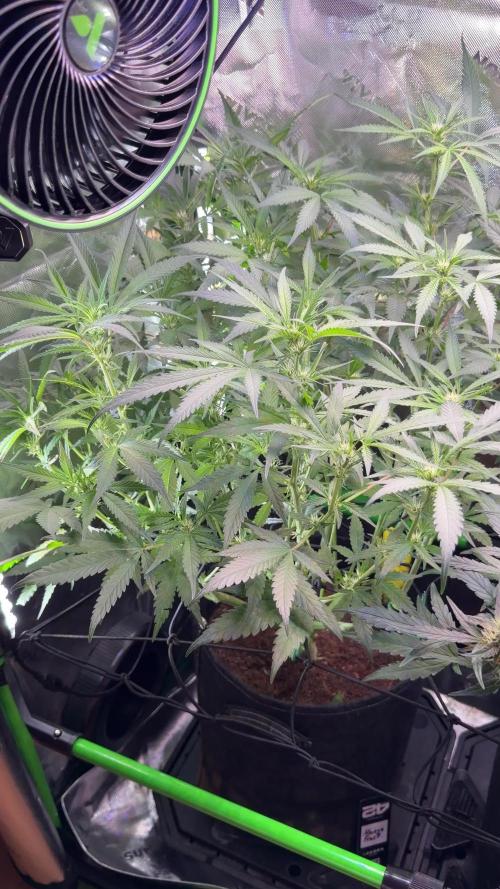
Heyho Growmies! The next week is over and a lot has happend. The Mango Frost is in stretch and starting to develop her Buds. She is getting taller and taller every Day and finally is catching up with the Mango Cherry Runtz.
Meanwhile the Mango Cherry Runtz is stacking her Buds amazingly and I’m worried a bit that her Buds are getting a little bit to big…
Just joking im pretty excited. :)
Since we have a heat wave in Europe and I don’t have air conditioning. I got some problems with heat and humidity. But the plants seem to handle it well. I defoliate every two to three days every leaf that blocks Budsides or hinders airflow. Fingers crossed the high humidity and temperatures don’t provoke budrot or powdery mildew.
The next week looks a little bit better but we still have 30+ °C so lets hope they don‘t get to many Foxtails.
Happy Growing everyone!✌️
Likes
5
Share

@connormcleod47
Follow
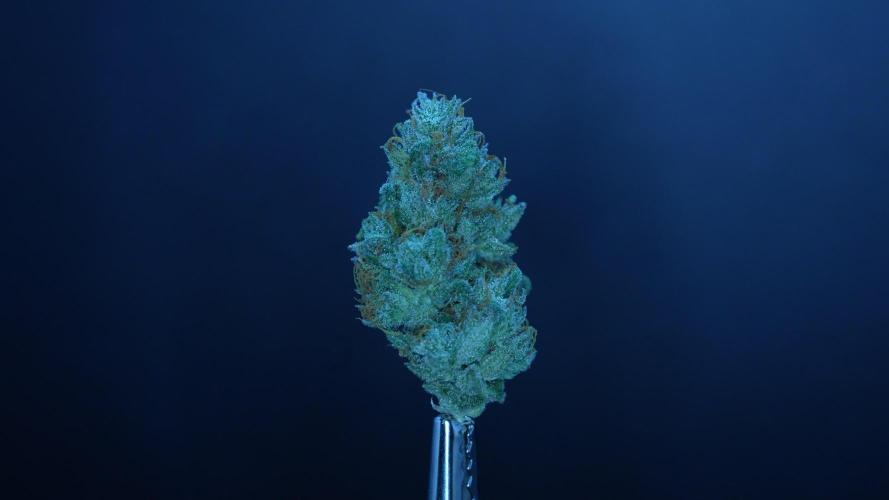
56 days from seed, soil was hot from day 1 & I ended up stunting the plants this run... Extremely low yield at 2g but still enough I will at least be able to test, even though i stunted this one & it was pulled early can tell it is something I will definitely grow again!
Heavy gas/cake on the nose, proper Wedding Cake in an autoflowering format!
Grown in Black Swallow living soil with Cronks PUUR Organics line!
Photos taken with the new Sony A7 V + 28-75mm F/2.8 Tamron Di III VXD G2 zoom lens, images are heavily cropped & could have been better, am still learning how to use the camera :P


Likes
44
Share


@Chedderbob112
Follow
Rite early days so dunno exactly wot methods a fancy trying this time maybe transplant one of the clones maybe not tho mite make an attempt at main lining but a know am goin to struggle for space so it iz wot it iz got a scrog n al squeeze a sexy as fuk sea of greenery they can lock the locks 🔐 but cannot stop the clocks ⏰ if ye know ye know @chedderbob112@s2340420 🏴


Likes
4
Share

@jdean88
Follow
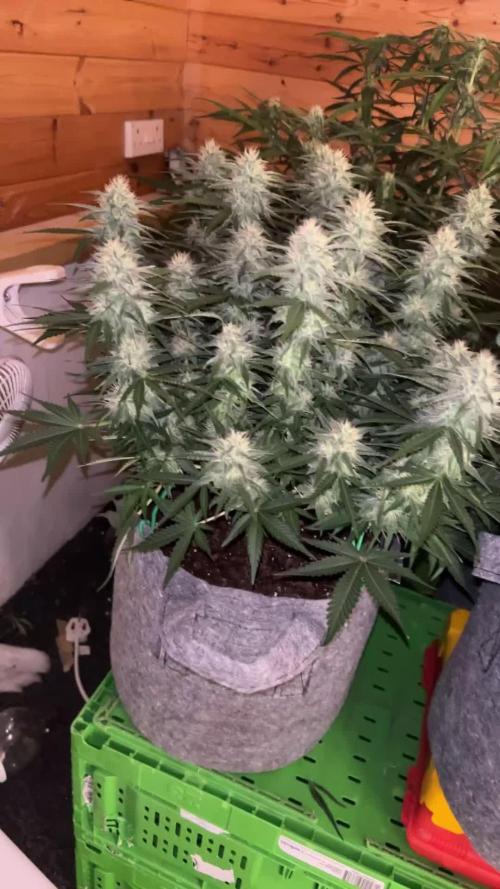
In crisis control now there doing there thing the west coast had a few calmah issues but seems to of responded well they all smell amazing but the blue dream atm smells like sweet candy blueberry’s with a slight citrus if it tastes as good as it smell I can’t wait