


Likes
Comments
Share


@MadeInGermany
Follow
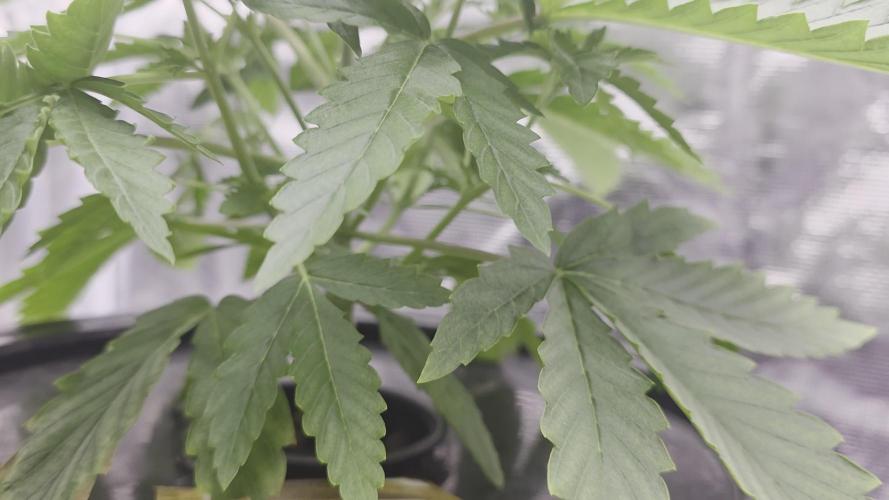
Flowering day 4
since time change
to 12 / 12 h
Hey guys :-)
This week they became in set the flower tent :-)
As soon as the first hairs appear, there is a light mixture of blossom fertilizer for the first time.
Watering was done twice this week with 1.3 l each
(nutrients see table above.
Otherwise everything was cleaned and checked and fresh osmosis water was mixed.
Stay healthy 🙏🏻💚
👇🏼👇🏼👇🏼👇🏼👇🏼👇🏼👇🏼👇🏼👇🏼👇🏼👇🏼👇🏼
You can buy this Nutrients at :
https://greenbuzzliquids.com/en/shop/
With the discount code: Made_in_Germany you get a discount of 15% on all products from an order value of 100 euros.
👇🏼👇🏼👇🏼👇🏼👇🏼👇🏼👇🏼👇🏼👇🏼👇🏼👇🏼👇🏼
You can buy this strain at :
https://www.amsterdamgenetics.com/product/kosher-tangie-kush/
Water 💧 💧💧
Osmosis water mixed with normal water (24 hours stale that the chlorine evaporates) to 0.2 EC. Add Cal / Mag to 0.4 Ec Ph with Organic Ph - to 5.8 - 6.4
MadeInGermany



Likes
6
Share


@curious_jules
Follow
She's developing quickly and well, helped by the 12/12 schedule of 600W sodium light, and the increasing ambient temperature as we head into spring.
Leaves looking healthy, though no sign yet of the roots protruding beneath the large rockwool cube.

Likes
6
Share


@Sir_scrogalot
Follow
Week has gone well, finished stretching. Flowers are developing well including lowers.

Likes
244
Share


@DogDoctorOfficial
Follow
I am absolutely thrilled to share with you all my supafreak gril and our amazing journey together. We're now in week 6 of her flowering stage, and let me tell you, she's looking more stunning than ever!
Every time I gaze upon her beautiful fruits, I can't help but smile from ear to ear. There's something so incredibly special about her that just lights up my world. Maybe it's her perfect form, her alluring aroma, or her mesmerizing colors. Whatever it is, it's got me head over heels!
And you know what? Despite all her natural beauty, she still manages to surprise me every day. Her growth has been incredible, and she's clearly thriving under my care.
I can't express enough how much I love and appreciate this plant. She's brought so much joy into my life and continues to do so with her witty sense of humor and hilarious antics. She's truly one-of-a-kind, and I feel incredibly lucky to have her in my life.
So here's to the amazing supafreak gril - may she continue to flourish and bring happiness to everyone who crosses her path. Keep growing strong, my friend!
As always thank you all for stopping by , for the love and for it all, i fell blessed to have you all with me for one more love journey, and a different one form the rest i did so far <3 <3 <3 Thank you Thank you Thank you , you guys are great and have been amazing , thank you for everything <3<3<3
#aptus #aptusplanttech #aptusgang #aptusfamily #aptustrueplantscience #inbalancewithnature #trueplantscience #dogdoctorofficial #growerslove
With true love comes happiness , Always believe in your self and always do things expecting nothing and with an open heart , be a giver and the universe will give back to you in ways you could not even imagine so <3 <3 <3
<3 <3 <3 Growers love to you all <3 <3 <3
Here are the words from this peace of art from nature creator Shapeshifter's @ HI-ELEVATION GENETICS <3 <3 <3
"FREQUENTLY ASKED QUESTIONS
Q. How did you create/breed Freakshow?
A. Methodical selection, line breeding, and culling is the short answer. Read our About page for more details.
Q. Is it an indoor or outdoor type?
A. Everything I've ever worked has been outdoors, including of course Freakshow. It has been our experience that outdoor (or sun grown, as it's recently being referred to) cultivars seem to perform extremely well under artificial conditions. This is true of seed starts or clones made from seed starts. The opposite is not always true; indoor clones often give an outdoor grower headaches because they don't always make the transition smoothly. This is due to light spectrum, temperature, and/or photoperiod changes. Yes, Freakshow will do exceedingly well indoors, and will thrive and mature just fine in a wide variety of natural environments as well, so it's definitely both and I think might even prove to be more resilient to those sorts of transitions.
Q. What are the potency and terpenoid levels?
A. Average 18-20% THCa, THC; negligible CBD, CBN with terps variable, averaging 2.5-3.5, primarily limonene and pinene, but this is variable, there was a lot of diversity in terp combinations and compositions in all the prior generations, it's just something that was left "as is" for now. The different parallel lines that we are developing can be directed in a few different pathways flavorwise.
Q. Why are the seeds white?
A. Why is the sky blue? No, the mature seeds are shrouded by a rice paper thin membrane which has coloring and mottling on it, but it's so fragile that it disintegrates in the process of shucking. Stripped of the outer layer the seeds are very pale, nearly white. It came as no surprise that this plant would have abnormal seeds.
Q. Is it a GMO?
A. Wow...? Well, it's seriously "modified" and the modifications are definitely genetic, and it is an organism. (Genuinely Modified Organically!) Uh, no. No radiation, no recombinant DNA, no gene splicing or editing, no TALEN or CRISPR! These biotechnologies don't belong in the food and medicine plant industries. Sadly, in the near future it will become commonplace and widespread in cannabis and other medicinal plants as it is already is with food crops and ornamentals. I'll avoid discussion on this topic for now, but we hope some people enjoy consuming Frankenbud!
Q. What's the floral period length?
A. 8-9 wks, finishes early Oct. at most latitudes and elevations.
Q. Is it a big producer?
A. Freakshow will produce nice, fat, dense colas (see gallery) with remarkable trichome coverage, and you can expect yields according to your veg. time, root space, and general knowledge and expertise as a gardener. The same set of variables apply to expected outcomes regarding cannabinoid levels and terpene profiles.
Q.What is the lineage?
A. (Bigbud x Skunk#1) x (Big Sur Holy Weed x Banana Kush). NLD("Sativa") dominant, but the afghanica influence is apparent. I'm pretty sure that Freakshow contains some Trainwreck and some Maui Wowie based on some research I did on the origins of the Pineapple Express. Interestingly Big Sur Holyweed, OG Kush, Banana, Trainwreck, and Maui Wowie are all of unclear origins. We have to remember that these are all just names and that they don't really mean much. The exact heritage of any cultivar today is impossible to determine accurately. Also, considering the amount of continuous shameless hybridization that has occurred in the last 40 yrs., any modern kind could easily contain over 40 kinds. In the case of Freakshow, it's much more limited because the ancestry is largely older "Sativas" that didn't go through as much outcrossing. In the 70s in Santa Cruz, Haze was a favorite among surfers for the pure energy and I still have (greatly improved) stock of it around, simply because even when I made hybrids with it I always kept the original in pure form for obvious reasons.
Q. What is the psychoactive effect like?
A. Like the flavors, many people have commented that the "buzz" is somewhat different than other mainstream types out there. It's not entirely out of the scope of imagination that given that this strain has new alleles in so many other respects, that it could also contain new, unique cannabinoids, as well as new and unique terpenoids, some of which may not even be among the standard 16 or so that the average lab is testing for. Aside from the up, cerebral, energetic boost, some report a mild time/space warp effect. Creativity and idea induction should be mentioned, for sure. Freakshow has the pure energy effect and greatly alters perception to the positive side, so definitely destroys depression. Appetite suppression is a side effect, but the enjoyment of food is enhanced. I personally will attest to all of the above. We all have different receptor profiles, so these are just generalizations. Couch unlock.
Q. Is it pest and mildew resistant?
A. Indeed it is. On many occasions in the last few years, it has been observed that when pest and mildew issues were affecting other plants adjacent to in the vicinity of Freakshow plants, for unknown reasons the freaks remained entirely unaffected. This includes 0botritis, PM, various mites and insects, soil fungus, etc. We haven't heard any complaints along those lines so far, so if anyone has any problems, especially with a rigorous IPM regimen in place, we would like to hear about it. And if anyone can attest to the extreme level of resistance it seems to have we'd love to hear about that as well.
Q. Does it contain web-leaf genetics?
A. I thought I better clarify this because there are a few people thinking that because of an article "Growing Marijuana that Doesn't look like Marijuana" that mentions that I had worked web-leaf types years ago and had eventually turned that into Freakshow. This is incorrect and I'm needing to get ahold of the writer to have him change it. When I read the piece and saw the mistake I figured it didn't matter that much, that the actual method of breeding could just remain a "trade secret". Recently, I noticed online that a posting, "Freakshow only exists because of duckfoot" by Curious Cannabis Connoisseur, where he explains how I developed Freakshow using Duckfoot. Let me explain, about 20 yrs. ago a friend gave me a jar of seeds labeled "BC Bigbud" and I sprouted flats of hundreds to look for oddities and had found one web-leaf pheno which we named Webster. It was a female so I bred it to a normal leaf male and began selecting and stabilizing a line of Webster. About 5 or 6 generations later I had nailed it to 100% webs and had also stabilized it for a deep purple color and a nice "gingerbread" terp profile. I was busy working other lines at that point so I put Webster in the library. Also, I was having a hell of a time getting a pheno of it that flowered to my satisfaction. (it seemed to finish with a limited number of calyxes). I knew I would have to outcross it to something with a big tasty bud and restabilize it for web-leaf, and I no longer had the original BC Bigbud. I still have the Webster seeds, and trust me the thought has crossed my mind to make the cross with Freakshow, but why? Why mess around crossing things just to create something even weirder? I have heard that the "Duckfoot" also doesn't bud up well so maybe there's a correlation there. Anyway, people can do what they want to and I will too, but crossing Freakshow with some low-THC crap like ABC is in my opinion idiotic. I worked extremely hard stabilizing and perfecting a beautiful new subspecies and I believe it should be kept pure. I won't go on a rant here about the rampant crossing and the lack of line-breeding in the cannabis world in the last several decades, or where this will eventually lead us, but I will say that it's not in a good direction. Bottom line....Freakshow has no web-leaf genes, it was made using top-grade tropical narrow-leaf drug (NLD) cultivars.
Q.Why is Freakshow patented?
A. Although I and most others (including all the folks at HSC) believe in and subscribe to the concept of "open sourcing" because sharing in cannabis genetics was always the cultural norm, it was decided that Freakshow should be protected (1) because it is a novel and unique, not a preexisting strain (or even subspecies), (2) To keep the greedy corporate big boys from exploiting it, (3) To maintain control of the genetic refinement of it in all future generations. We really can't wait to share it with the entire collective world of cannabis enthusiasts and invite experimental breeding for personal use and curiosity."
source https://freakshowcannabis.com

Likes
23
Share


@Cookie_thefarmer
Follow
Day 68- transplanted to 3gal smart pot
Day 69 - not sure if it’s coming into flowering or not. Think it’s close
Day 72- I think I see pistols.. but again unsure.


Likes
10
Share


@GloHoodlum
Follow
Slight nutrient burn on the super silver haze and the banana. I have backed them up in feed from 10ml per gallon back to 8, it seems to have done the trick the last couple days. Both banana and super silver haze are trucking along quite well I think otherwise. I have officially decided to start my flushing on the black domina x Scott's og, trichomes are about half milky half clear, not sure if I should be doing a full flush or continue feeding through week 7 and start flush on week 8 I'm not overly sure lol see how it goes anyway.
Cheers

Processing
Likes
6
Share


@ProfDoty
Follow
Went home for Mardi Gras for 3 and a half days and came back to ladies loving life. I kinda over watered these ladies because I knew I wasn’t gonna be able to water them while gone and it worked out perfect I guess clan ask for anything more.
The Black Cream auto shod be on the path to just focusing on bud development. She grew a half an inch this week so hopefully that the most she gonna stretch. Buds smell sweet somewhat strong.
The Green Poison is on her way to be a monster jus now entering her flower phase. She may be going for 12 weeks at this rate none the less I jus going with the flow making sure I’m paying attention to plant and how she reacting each day. I don’t really see anyone using the dry amendments ,let alone the medium I’m using, so I I’m jus doing what’s recommended on the bag and letting the plant tell me so far can’t complain


Likes
13
Share


@420DeepGrow
Follow
Gracias al equipo de AnesiaSeeds y XpertNutrients sin ellos esto no sería posible.
💐🍁 Frozen Face Auto
Nueva variedad autofloreciente, tan refrescante como una mañana helada con un toque de cereza y lavanda. Esta variedad es una auténtica obra maestra de la cría, con un linaje dominante 70% Sativa que aporta una vibración edificante y energizante a tu cultivo. Perfecta para los que aprecian la belleza veloz de las semillas autofeminizadas y la mezcla única de dicha aromática.
Con un contenido de THC del 30%, Frozen Face Auto promete una experiencia tan estimulante como una zambullida en un lago fresco, dejándote fresco y vigorizado.
Ofrece rendimientos impresionantes de 550 g/m² en interior y hasta 300 g por planta en exterior. Con un ciclo de 70-75 días.
🚀🌻 Consigue aqui tus semillas:
🍣🍦🌴 Xpert Nutrients es una empresa especializada en la producción y comercialización de fertilizantes líquidos y tierras, que garantizan excelentes cosechas y un crecimiento activo para sus plantas durante todas las fases de cultivo.
Consigue aqui tus Nutrientes:
https://xpertnutrients.com/es/shop/
📆 Semana 10:
Parece que el tiempo va mejorando, los cogollos son grandes y siguen acumulando resina.
Engorde final y lavado de raices

Likes
10
Share


@Geili_Seili_fireinfireout
Follow
Anfang w2 in flow.
Hatte die ersten tage leider ein bisschen hitze probleme. Gepaart mit zuwenig luftfeuchte.
Aaaber gefahr erkannt-gefahr gebannt.😁😇
Jetzt pfeffern sie richtig an👌😋 freu freu
Haben ähnlichen strech wie die GMOz was ich hier gepostet habe. Aber nicht gar so massiv.
Bin bis jetzt echt begeistert von den mädels
Die besten und saubersten stecklinge gibts wie immer bei ROOTS-FARMS👌🌱💚 der beste in österreich und maybe europe😉🤫

Likes
87
Share


@ThrashedTV_BakedByGlaze
Follow
Week 9 - Day 58 - 02/23 to 2/28 2021
All phone pictures. Go off site to my instagram for HD/DSLR content: https://www.instagram.com/glazedgrow/
Red Poison from @Sweet_Seeds makes my mouth water. A sweeter more candy tone overall compared to other earthy purples like the LSD-25 beside it. Great colour and cluster of bud sites on the main cola all fighting for light/chunk space so should end up with a nice amount of bag appeal/photo subjects nearing the end. Big thick white pistils with some starting to orange as it enters the 6th week of flower. Can't wait to see how the main nug looks.
Gave all the plants mostly water feeds this week in order to avoid salt build up. Some staining on the bottom of the fabric pots from the bottom feeds so just making sure the soil is fine for the final major nute feeds before flushing in a week or so.
Made some caps with homemade thc olive oil from a friend that sent me some "Intergalactic Cable" viewing materials as well 😎 Have to use them fast but been stable for a week and not just starting to come through the gel caps, will have to get something harder next time still a lot left in the bottle.
It's closest to the window and i keep my tent open so when the light is off it's getting a solid 16-18 Celcius helping out the genetic purple pop a bit more in the leaves.
Other than that, the new @MarsHydroLED TSL 2000 and @ViparSpectraLED PS1500 for veg definitely made a huge difference and the buds on the Dark Devil.
Big thanks to @ViparspectraJennie for putting a new XS1000 in the mail to test on my next grow. The FB testers finally came in so excited to get some of those in the tent and under the new tester.
*Sponsored Content*
Feel free to check out/save some money on your next @ViparSpectraLED using discount code "GLAZEDGROW" at this link: https://www.viparspectra.com/?aff=378&utm_source=affiliate
(Again check out my insta, very limited quality content will be posted here)
Thanks for checking out the latest #GlazedGrow🍩
--
Go off site and check out my Instagram for better content: https://www.instagram.com/glazedgrow/
Go off site and check out my CannaBuzz profile: https://www.cannabuzz.app/users/GlazedGrow




Likes
5
Share


@Budhunter
Follow
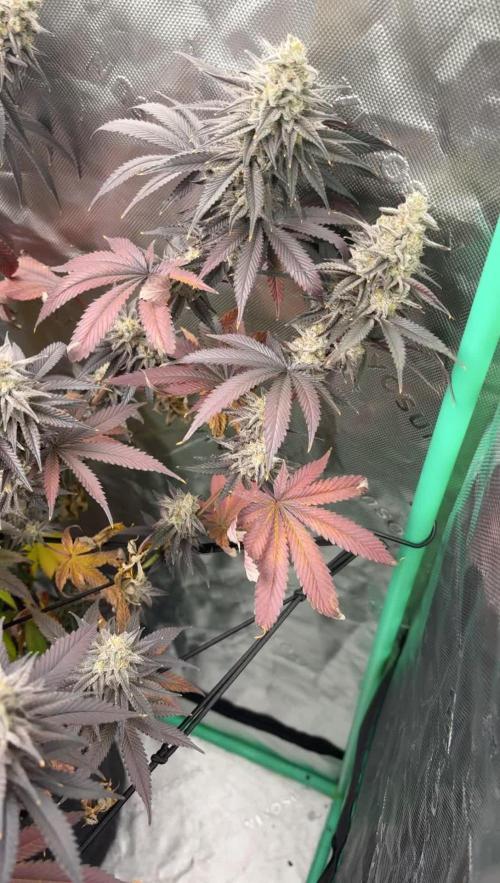
Sour diesel is such a beautiful plant, with a robust structure and strong lime flavor.. full of terps.. the main bud looks a big rock.. might be the biggest main bud I ever had.. super frosty and definitely a genetic I will want to grow again.. can’t wait to harvest this baby.. I’m gonna flush it very soon, probably next watering.. plant is definitely going to the last weeks/days.. let’s go


Processing
Likes
14
Share


@PlantGod
Follow
Day 30 Feb. 18th- I feel like everything is going great
-all plants are now in final 7 gallon containers..have used a lot of soil!
-I have been tying the plants down as much as possible
-March 2nd will be 42 days and I think that is when I will switch to 12/12
-Day 35 Feb. 24th- I need trellis netting soon
I retie branches constantly for inner growth
HULKBERRY and GREEN GELATO are growing similar...LSD and ROYAL GORILLA are growing similar!
-Very interesting!!
* I have color coated the plants like I should have a couple weeks ago
-GREEN GELATO has all green pipe cleaners now...HULKBERRY has all yellow pipe cleaners.
very long branches and small inner growth
LSD is in all purple pipe cleaners. tying it down has done wonders! it has awesome inner growth!
Now the ROYAL GORILLA in all orange pipe cleaners! This plant is a pain in the ass lol. The inner growth and spacing is insanely close!!! so many shoots all tightly together. I have tied down anything I can. Unsure how it will work in budding next week

Likes
95
Share


@Canna96
Follow
Hey now, so I am happy I finally decided to run a separate tent for seedlings. It was damn near impossible running 2 humidifiers 24x7 to keep everyone happy. I got 1 large humidifier running 24x7 in my new 2x2x3 and even with my spider farmer sf1000, and exhaust running nonstop, I am maintaining 80% rh and she is loving it as is the gorilla girl auto. She is still growing in pro mix seedling organic blend and plain water every 2-3 days. My plan is to transplant her on day 18 to an airpot full of coco coir, then top her on day 21. If all goes well I will top her twice again on day 28ish, and then just lst for about 3-5 days. I think I trained the acid dough auto for far too long, and I will adjust with this one. Planning to just lst the top 4 colas for 3-5 days to keep them from becoming dominant and then just light defoliation throughout the grow if necessary. I also just received a new grow light in the mail from Mars Hydro which I will be testing out for them on this grow once she is ready for flowering. Thanks for stopping by, I hope all your grows are 💪 strong and fast, be safe and blaze on!
Likes
3
Share


@Northern_Ent
Follow
June 28: Mimosa Shot is doing fine. will leave this as an 8 cola plant.
July 1: growing fine and it’s liking the warmer weather.
July 2: added another scrog net layer to keep the 8 colas spaced out for sunlight. She has gotten taller and has gained a bit on the Sunday Punch EV which is also in the hybrid wagon. I think this MS just prefers overnight temperatures to be a bit warmer.

Likes
29
Share


@GermanGrow182
Follow
Läuft prima. 2 fat banana legen sehr gut los. Hab sie entlaubt, damit sie in der Blüte Sonne an den richtigen Stellen bekommt und sie gut belüftet bleibt. Auf den Bildern noch mit Laub. Orion macht weiter ihr turboDing ,ich füttere sie jetzt mehr.sie will es und ich glaub, bei dem Wachstum brauch sie es auch. Also läuft mit den verbliebenen mädels🙂 bis nächste Woche ✌️