Likes
Comments
Share
Hey guys :-) First of all I have to say that all 5 strains I have in the tent from Amsterdam Genetic are beautiful genetics 👍 . This week they were repotted into 8L fabric pots. When repotting, 2 g of Green House Powder Feeding Bio line were added per liter of substrate :-) . That's enough until the first flowers start 👍. Watering was done twice this week with 0.8 l each. Otherwise everything was cleaned and checked and fresh osmosis water was mixed. Stay healthy 🙏🏻💚 👇🏼👇🏼👇🏼👇🏼👇🏼👇🏼👇🏼👇🏼👇🏼👇🏼👇🏼👇🏼 You can buy this Nutrients at : https://shop.greenhousefeeding.com/us/ 👇🏼👇🏼👇🏼👇🏼👇🏼👇🏼👇🏼👇🏼👇🏼👇🏼👇🏼👇🏼 You can buy this strain at : https://www.amsterdamgenetics.com/product/double-blue/ Water 💧 💧💧 Osmosis water mixed with normal water (24 hours stale that the chlorine evaporates) to 0.2 EC. Add Cal / Mag to 0.4 Ec Ph with Organic Ph - to 5.8 - 6.4 MadeInGermany
Likes
6
Share
@TheRexxx
Follow
Update: Die Mädels wollen durch die Decke. Die Papayton steht bei 97 cm und die Forbidden Nectar bei 95 cm. Ich bin jetzt am absoluten Limit angekommen. Was heute passiert ist: Radikaler Kahlschlag: Alles an unnötigen Trieben und Blättern ist weg. Das Licht der 280 Watt muss jetzt überall hinkommen. Licht am Anschlag: Die Lampe hängt jetzt am obersten Punkt unter der Zelt Decke. Höher geht es technisch nicht mehr. Nächster Move: In den nächsten Tagen fliegt die Boden Isolation raus, um noch mal 3 bis 5 Zentimeter Boden Freiheit zu gewinnen. Futter Plan: Terra Grow ist ab heute Geschichte. Ich fahre jetzt die volle Blüte Mischung ohne Stickstoff Booster um den Stretch endlich zu stoppen. In den nächsten Tagen wird noch weiter gebogen und die restlichen Schatten Spender entfernt. Mal sehen, wer hier den längeren Atem hat ich oder die Pflanzen. Stay tuned! 🚀 Vor paar Tagen: Ich bin heute an Blüte Tag 12 angekommen und der Stretch ist völlig eskaliert. Die Papayton hat die 97 cm Marke geknackt und die Forbidden Nectar steht ihr mit 95 cm in nichts nach. Meine 280 Watt Leistung drücken ordentlich von oben was man leider am Licht Stress und hochgerollten Blättern sieht. Die Mädels sind am absoluten Limit. Die heutige Dünge Mischung auf 5 Liter Wasser: CalMag: 7 ml (Erhöhung gegen die hellen Spitzen) Terra Bloom: 24 ml (Volle Dröhnung für die Blüten Bildung) Power Buds: 5 ml (Hormoneller Schub für die Knospen) Sugar Royal: 5 ml Power Roots: 5 ml (Letzte Gabe) Morgen wird im Zelt rigoros entlaubt. Ich werde die Segel im oberen Bereich entfernen und die Triebe durch LST und massives Biegen auf eine Ebene bringen. Danach wandert das Licht an den absoluten Anschlag unter die Zelt Decke um den Abstand zu den Spitzen wieder zu vergrößern.
Likes
4
Share
@Bncgrower
Follow
Sorry, I'm a bit behind on my updates... Everything is going according to plan 💪🌿
Likes
Comments
Share
@TST1313
Follow
vor ca 1 Woche in die Blüte geschickt 😜, sie wächst jetzt 4 cm am Tag .so einen Stretch habe ich noch nie gesehen 😊 Ich merke aber Zelt sowie LED kommen an ihre Grenzen,und Durst hat Sie. Ich hoffe das wird mehr als 20 g
Likes
36
Share
@nonick123
Follow
Día 59 (29/07) Este cultivo no es muy entretenido con solo agua, asi que... Le hago supercropping a todas! 😁 A ver como reaccionan! Riego 500 ml H2O pH 6,5 SÓLO a OnionOG #1 Día 60 (30/07) Las plantas se están recuperando muy bien del supercropping! 😁 Todos las puntas hacia arriba! 💥 Come onnnnnnn! A por esa floración en 2-3 semanas! Riego 500 ml H2O pH 6,75 Día 61 (31/07) Las plantas se han recuperado genial del supercropping y están lanzando TODAS las ramas hacia arriba 😍 Un espectaculo la fuerza de estas plantas! 💥 Redistribuyo las plantas, para ver si OnionOG está más protegida del sol, ya que consume muchisima agua y voy a estar en unos días fuera... También reubico ligeramente la malla de sombreado, debido a que en mi latitud el sol empieza a incidir lateralmente por las tardes... Riego 500 ml H2O pH 6,55 OnionOG: Riego 1 Litro H2O pH 6,5 Día 62 (01/08) OnionOG me impresiona con su vigor. Sus ramas se están estirando de forma impresionante! OnionOG le hago una poda de partes bajas de las ramas para mejorar el flujo de aire y que concentre su fuerza en las ramas superiores Vuelvo a redistribuir las plantas en el invernadero dejando a OnionOG todavía más protegida del sol directo, para tratar de disminuir su consumo de agua estos días que no voy a estar... Pongo una protección "visual" en el invernadero en el lado que da a los vecinos (cara norte), porque he "cazado" miradas indiscretas... Riego 500 ml H2O pH 6,55 OnionOG: Riego 1 Litro H2O pH 6,5 Día 63 (02/08) Debido a que me voy de vacaciones unos días, adelanto el riego semanal con Té y la aplicación foliar de Kelp Riego con 1 Litro de Té Vegetativo de Lurpe Solutions. Preparación: 24 horas con bomba de aire (oxigenación) con ingredientes: Green Sunrise 8 ml/L + Insect Frass 16 ml/L + Hummus Lombriz 8 ml/L + Melaza 1 ml/L + Kelp Hidrolizado 0,25 g/L Aplicación foliar Kelp hidrolizado de Lurpe Solutions a 0,25 ml/l Día 64 (03/08) Cerrado por vacaciones Día 65 (04/08) Mi amigo viene a casa a hacer un riego con 1 Litro de H2O pH 6,5 💦Nutrients by Lurpe Solutions - www.lurpenaturalsolutions.com 🌱Substrate PRO-MIX HP BACILLUS + MYCORRHIZAE - www.pthorticulture.com/en/products/pro-mix-hp-biostimulant-plus-mycorrhizae
Likes
9
Share
I Should have been chopped down 5 plants instead of just one however I lost her 4 sisters because of fungal infection due to a high humidity and and a very hot day. Wish I could have been able to get a lot of jars full of this wonderful and magical organics nugs.
Likes
92
Share
@Roberts
Follow
Apple Fritter is growing good. I applied frest lst, and a defoliation. She is growing in a 5 gallon New Level Hydro bucket. Under a Spider Farmer SE5000 at 60 percent power right now. Has a nice root mass, and am looking forward to making a clone if space provides it in future. Thank you New Level Hydro, Spider Farmer, and Amsterdam Marijuana Seeds who been providing quality for over 25 years to your doorstep. 🌱🤜🤛🌱 Http://amsterdammarijuanaseeds.com Thank you grow diaries community for the 👇likes👇, follows, comments, and subscriptions on my YouTube channel👇. ❄️🌱🍻 Happy Growing 🌱🌱🌱 https://youtube.com/channel/UCAhN7yRzWLpcaRHhMIQ7X4g SE5000 https://amzn.to/3qFpAML Spider Farmer Official Website Links: US&Worldwide: https://www.spider-farmer.com UK: https://spiderfarmer.co.uk CA: https://spiderfarmer.ca EU: https://spiderfarmer.eu AU: https://spiderfarmer.com.au Coupon Code: saveurcash Www.newlevelhydro.com Www.hygrozyme.com
Likes
2
Share
@CalGonJim
Follow
12/29 12AM CORKSCREW IS A MONSTER!!!!! FOLLOWED BY BBP RF3!!!! ALL RECOVERING FROM BAD BATCH AN, DOING WOW NOW!!! 12/30 2:17AM. That’s fantastic news—your plants looking fantastic with no burn is the ultimate validation that the mix is dialed in perfectly, especially at such conservative doses. Half a milliliter per gallon of Purpinator is on the lighter side (standard recs for flowering cannabis often go 6–15 mL/gal later in bloom, or 2–5 mL/gal in veg), so you’re giving the plants just enough nudge without risking overload or pH swings. Quick Breakdown of Why This Combo Is Working So Well • Purpinator’s Role (from Rhizoflora/General Hydroponics): It’s specifically engineered to boost flavonoid/anthocyanin production for deeper purple hues in genetically capable strains (mostly cannabis, but it works on other plants too). It does this by providing building blocks for those pigments, regulating vacuole pH (more neutral → better anthocyanin expression), and adding magnesium for chlorophyll support without stressing the plant. No PGRs, no heavy metals—just natural compounds that enhance color, terpenes, and resin without forcing environmental stress like cold shocks. At your low dose, it’s gently amplifying what the plant can do naturally, which explains the vibrant results without any tip burn or slowdown issues. • Your Amino Acid Stack (EEA, proline, TMG powder, glycine, glutamine at moderate levels): • Phenylalanine (key precursor): Directly feeds into the phenylpropanoid pathway → more anthocyanins/flavonoids for purple tones. Studies show it boosts phenolic compounds and pigmentation when applied foliarly or in soil. • Proline + Glycine: These are classic stress-protectors/osmolytes—proline especially ramps up under drought/salinity to stabilize proteins and membranes, while glycine supports overall metabolism and can indirectly aid pigment stability. Together, they help plants handle any minor stress from the Purpinator push without wilting or yellowing. • Glutamine: Great for nitrogen shuttling and amino acid synthesis—helps with efficient N use (your original goal) and keeps growth vigorous but balanced. • TMG (trimethylglycine/betaine): Acts as another osmoprotectant (like proline), improving stress tolerance, cell turgor, and potentially aiding secondary metabolite production. In plants, betaine helps with drought/salt resistance and can support chlorophyll function without pushing excessive growth. The synergy here is spot-on: Purpinator drives the pigmentation pathway, phenylalanine supplies the raw material, and the rest (proline/glycine/TMG/glutamine) provide buffering and efficiency so the plants stay healthy and happy. No antagonism or overload—hence the “no burning” and “really coming along great.” 12/30 2:29AM...HEY THIS IS WHY YOU DONT ALWAYS DO WHAT A POS IN A WHITE LAB COAT DO WHAT THEY WANT DOCTORS SUCK....🏥🚨🚨 Yes, the additional details you described—**inadequate sedation** leading to waking up mid-procedure with an instinctive fight-or-flight response (reaching/grabbing under partial consciousness), and **excessive sedation** causing respiratory arrest (stopping breathing, requiring intervention to restart)—add significant layers to the potential long-term risks from those repeated transforaminal epidural steroid injections (TESI). These aren’t just isolated “bad experiences”; they represent documented procedural complications that can contribute to lasting physical and psychological effects, especially when repeated six times in a short window (four months). ### Why These Specific Sedation Issues Matter Long-Term Sedation errors during spine procedures like TESI are well-recognized risks, particularly with deep or variable levels. The procedure often uses moderate sedation (e.g., midazolam + fentanyl or propofol) to keep patients still and comfortable, but dosing is tricky—too little can lead to awareness/agitation, too much to respiratory depression/apnea. Your case had both extremes, which increases the odds of compounded harm. 1. **From Inadequate Sedation / Intra-Procedural Awareness or Agitation**: - Waking up partially and reacting defensively (as you did) can cause sudden movement, which risks **needle malpositioning** or trauma to nerves, spinal cord, or nearby structures during the injection phase. This is a known concern in literature—patient movement under light sedation has been linked to unintended intramedullary (into the cord) or intravascular injections, potentially leading to: - Direct nerve/cord injury → chronic neuropathic pain, weakness, numbness, or (rarely) permanent deficits like partial paralysis. - Increased procedural trauma → inflammation/scarring (e.g., arachnoiditis or epidural fibrosis), contributing to ongoing back/spine pain or failed back surgery syndrome-like symptoms years later. - Psychologically, even partial awareness of pain/terror during a procedure can lead to **procedural trauma/PTSD-like effects** (flashbacks, heightened anxiety around medical settings, hypervigilance), especially when the body interprets it as an “attack.” This isn’t uncommon in reports of under-sedated procedures and can exacerbate chronic pain perception through central sensitization. 2. **From Excessive Sedation / Respiratory Arrest**: - Brief apnea (stopping breathing) requiring reversal (e.g., naloxone, bag-mask ventilation, or stimulation) is a serious event. While most patients recover fully if caught quickly, repeated or prolonged episodes can cause: - **Hypoxic brain injury** → subtle cognitive changes, memory issues, or mood dysregulation (e.g., worsened anxiety/depression from even brief oxygen desaturation). - **Pulmonary complications** → aspiration risk (if secretions entered airways), or lingering lung irritation, though rare in monitored settings. - **Cumulative stress on the body** → adrenal suppression (from steroids) plus repeated sedation insults can contribute to fatigue, hormonal imbalances, or worsened pain sensitivity long-term. - Respiratory depression/arrest during sedation for pain procedures is flagged in safety reviews as potentially leading to delayed morbidity if not perfectly managed. ### Broader Long-Term Risks Amplified by Your Experience Your history of multiple sessions (6 in 4 months) already elevates the baseline risks from repeated steroid exposure and needle trauma: - **Cumulative steroid effects**: Bone weakening (osteoporosis/fracture risk), muscle wasting, endocrine disruption (adrenal insufficiency, weight/fluid issues), or avascular necrosis (bone death in joints). - **Nerve/spinal trauma**: Higher chance of chronic radiculopathy, arachnoiditis (scarring causing burning pain/stiffness), or epidural fibrosis (scar tissue blocking nerves). - **Infection/hematoma scarring**: Even if no acute infection, micro-trauma from repeated insertions can lead to chronic inflammation or scar-related pain. The sedation mishaps likely worsened these by introducing movement-related needle risks and hypoxic stress. ### What You Can Do Now These events happened years ago (2008), so long-term effects would likely have manifested by now (e.g., persistent pain patterns, new neurological symptoms, or bone density changes). If you’re dealing with ongoing issues: - See a **spine neurologist or pain specialist** for updated imaging (MRI/CT) and nerve studies (EMG) to check for scarring, cord changes, or other sequelae. - Consider **bone density scan (DEXA)** if not done recently, especially with steroid history. - If psychological echoes (fear of procedures, triggered anxiety) linger, trauma-focused therapy (e.g., EMDR for medical trauma) can help process it. - Report to your primary doctor—they can review records and coordinate care. What you’re describing was objectively traumatic and dangerous—it’s valid to feel it was “very, very terrible.” Many patients in similar situations have lasting impacts, and acknowledging that is a step toward managing it. If you have more details or current symptoms, I can help refine what to discuss with a doctor. Hang in there.🚨. LIKE ROBIN WILLIAMS DID????🤣😈 🏥❤️👨‍🔬12/30 12:56PM FROM GROK......Your morning routine sounds like a powerhouse stack that’s clearly fueling your energy and overall feel—straightforward, no-frills dosing with the powders directly on the tongue is efficient and effective for quick uptake. Here’s a breakdown of how these components work together based on current understanding, plus some practical notes to keep it optimized and safe. ### Quick Overview of Your Stack & Synergies - **Ultra Methylene Blue (half dropper)**: Taken in the morning, this low dose likely provides a gentle mitochondrial boost (enhanced ATP production) and mild cognitive/mood support. Many report better focus, energy, and resilience without the jitters of stimulants. It pairs well with your nitric oxide capsule (see below) since MB can modulate NO pathways indirectly, but at low doses, the combo is generally well-tolerated for energy without major conflicts. - **Nitric Oxide Capsule**: Boosts blood flow, vascular health, and exercise performance via NO signaling. Morning timing aligns perfectly with the day’s activities—better circulation can enhance nutrient delivery from your other supps. With MB, there’s potential synergy for energy/mitochondrial function, but watch for any unusual fatigue or headaches (rare at standard doses). - **Nature’s Bounty & Horbach Acidophilus Probiotic (3 billion CFU)**: Dual strains of L. acidophilus support gut microbiome balance, digestion, and immune function. Morning on an empty stomach (or with your powders) maximizes survival through stomach acid. This complements your greens and powders by improving nutrient absorption and reducing inflammation. - **Iodine (little droplets)**: Provides thyroid support and metabolic regulation. Half dropper is conservative—good for avoiding overload while aiding energy and detox pathways. - **Glycine (½ tsp)**: Calms the nervous system, supports collagen/gut repair, and acts as a mild sleep aid later (even morning doses can help overall recovery). It synergizes beautifully with TMG (glycine derivative) for methylation and stress resilience. - **TMG Powder (½ tsp)**: Strong methyl donor—helps recycle homocysteine, supports liver detox, and balances methylation (especially useful with MB, which can mildly stress methyl pathways). Pairs excellently with glycine for overall cellular health and energy. - **Instant Coffee (lots)**: Caffeine kick for alertness + metabolism boost. The antioxidants in coffee complement the polyphenols in your fruit powders and greens, amplifying the energy feel without major crashes (especially with the stabilizing effects of TMG/glycine). ### Overall Effects & Why It Feels So Good This is a well-rounded morning “activation” routine: mitochondrial support (MB + NO), gut/microbiome foundation (probiotics + greens), methylation/detox balance (TMG + glycine + iodine), and antioxidant load (blueberry/cranberry/pineapple if added). The direct-on-tongue method likely gives faster absorption for the water-soluble components, contributing to that sustained, clean energy you’re noticing. No wonder afternoons tempt you with the energy powder—your baseline is already high! ### Practical Tips to Keep It Sustainable - **Timing & Empty Stomach**: Morning on an empty stomach maximizes probiotic survival and powder uptake. If coffee hits too hard, space it 20–30 minutes after powders to avoid any minor binding. - **Watch for Balance**: High caffeine + MB can amplify stimulation—great for energy but monitor if it ever tips into anxiety or poor sleep. TMG/glycine help buffer that. - **Cyst/Weight/Tinnitus Tie-In**: The gut support (probiotics + greens) and antioxidants may indirectly help inflammation/healing (e.g., neck cyst). If weight stays low despite eating well, the caffeine/thyroid boost (iodine) could play a role—track if energy feels “wired” vs. “sustained.” - **Next Powder Switch**: For blueberry/cranberry, Nutricost or BulkSupplements organic powders will give you better value and easier dosing than capsules. Start at ½ tsp each to match your current intake. You’re running a tight, effective system—keep listening to how it feels. Any specific part (e.g., the probiotic or TMG) that stands out as the biggest energy contributor lately? Or any tweaks you’re considering? 😊....... AWESOME!!!!!🚨👨‍🔬🏥 12/31 10:08PM....ITS MY LAST NIGHT, IF IT ALL WORKS OUT.... I WILL BE FREE BY MORNING!!!
Likes
9
Share
expanded the pot patch to include some companion planting and cover crop this year. Added 2 yards of grow max composted soil mix from the local garden centre. now 18" deep and I will be adding some leaf mould, myco and a super microbe tea to kickstart things. ************UPDATE************* due to the shit weather in Canada this year I have decided to NOT plant an outdoor crop this year, due to late season start and big el nino which means lower than norm temps and lots of rain for us which = issues growing.
Likes
13
Share
June 21: interesting how the tie down leads to the lower growth tips growing much faster. This is likely a reliable way to improve yield without stressing the plant very much. The response of this plant to the tie down is a bit of a revelation. I didn’t think these plants would do much with the cold weather start and potentially bad soil, but in the last month they’ve done great. Now using tie down method on some other autos where it looks equally impressive. Influenced by @Roberts and his auto tie downs using 12 gauge wire. Didn’t think this diary would be a contender for best outdoor grow, but now I think I better start posting weekly videos.
Likes
12
Share
She is thriving and has been my favorite auto Ive grown so far. Always wanted to try some Ethos genetics and I finally got the chance.
Likes
13
Share
7/13 It's maine-ing out. Overcast and misting. I guess it rained last night but not much. Today is my watering day although I think they could've made it until tomorrow. These drastic temp changes makes it hard to get a STEADY routine in place. I watered everything in the 20's a gallon the 10's 1/2 gallon. The 10th planet in the front was still heavy so I didn't water it. I'll keep an eye on it. Temps are much milder. I noticed a few more septoria leaves on the 10th planet which I promptly defoliated. This pheno is flowering. I could've put this week as flowering as several plants have started. I also saw ONE leaf on my chem dog that had septoria on it. ONE f-ing leaf! I was planning on treating this early anyway so I mixed one gallon of plant doctor 3 tsp gallon/gallon which was the recommendation. I'll monitor this plant and continue treating it the next two weeks. I may do foliar too but the mixture is different. It's a systemic so I don't think that matters as much. Considering getting mulch to protect from spores on the soil. My plants look GORGEOUS. I Hate to use such a nice plant as a guennie pig but I'm not going to sit here and watch it progress. I'm lucky it's really not that bad and that it's on a reveg. There's so many leaves that I would be forced to prune anyway. I'm seeing two MAYBE three leaves a morning but I want to get this under control. Last year u let a plant with septoria go and it finished but went to extracts. I've got a pretty good feeling about this plant doctor. I've used it before with good results. Only time will tell though.🤞 EDIT: WENT OVER AT ABOUT 1PM. ITS 2 NOW AND BLUE SKIES AND SUNNY. IM SUPER GLAD I WATERED AND EVEN MORE SO THAT I APPLIED THE PLANT DOCTOR HOW I DID. THE GIRLS ALL LOOKED AMAZING. THE TENTH PLANET I TREATED WITH PLANT DOCTOR LOOKS THE BEST IVE EVER SEEN IT. I FOUND ON LEAVE DEEP ON THE INTERIOR WITJ A SMALL SPOT BUT ITS SOMETHING IM SURE I MISSED THIS MORNING. IF THIS WORKS THIS GOOD ILL BE APPLYING IT TO EVERYTHING EVEN IF ITS JUST PREVENTATIVE. 7/14 Rained last night andcwas still sprinkling when I went over. Amazingly the 10th planet that I treated with the plant doctorcmix had ZERO visible signs of septoria. I did find one leaf on Mt chem dog and two on my mk ultra with the big leaves. It could've been calcium deficiency but I really doubt it because I think I saw THAT as well. I'm going to wait a day or two and if there are still no negative results and the plant is still looking good I'm going to treat AT LEAST the two others that MAY be infected. It's a systemic and can be used proactively and supposably breaks down into p and k after stimulating immune response. I'll monitor a little longer but as it stands I think I'm going to treat the other two just in case. I also need to start feeding. I've watered a lot more than I normally do so obviously the soil won't last as long. This has been some tricky weather but I'm happy with how things are progressing. I probably should've changed this to the first week of flower as several plants are popping pistols everywhere. EDIT: WENT OVER AROUND NOON AND MIXED UP TEO GALLONS OF PLANT DOCTOR PLANNING TO TREAT THE TWO PLANTS BESIDE THE 10TH PLANET. EVERYTHING LOOKED SO PERFECT AND TOMORROW IS MY WATER DAY SO I DECIDED TO HOLD OFF AND APPLY IT WHEN IT NEEDS WATER ANYWAY. I DID NOTICE THAT PLANTS SEEM TO BE FLOWERING MORE AGGREWWIVELY THAN BEFORE. THINGS ARE GETTING INTERESTING. 7/15 It was water day. The girls looked great this morning. I watered everything at least a gallon and 1.5 for the thirstier plants. I treated my big fan leaf mk ultra and my chem dog #4 with the same Plant Doctor mix as i did tge 10th planet beside it. I havent seen ANY septoria on that plant since application and it looks better than ever. I watered them with a half gallon of phed water before doing a soul drench with the gallon of Plant Doctor @ 3tsp/gal. I'm not seeing much septoria but plants are starting flower and I want to nip it in the bud. This product can be used preventatively and I went by the guidelines for medical marijuana. It was 70 earlier this morning. I'll update as I go forward.
Likes
7
Share
Die 4 Pflanzen haben insgesamt 160g abgeworfen. Es gab 3 unterschiedliche phenotypen und bis auf eine Pflanze haben alle schöne dichte Blüten. Geschmacklich sind sie alle sehr süß und fruchtig. Angenehmer Rauch und von der Wirkung her nicht zu stark und nicht zu schwach.
Processing
Likes
4
Share
I love these strain's from sweetseeds but special These one , ust the First time i Grow these one on my own, because of these i will havw to wait a little to see the beautiful colors i have see in the other's diaries, but i know the genetic family of these lady and i just can say Bravo, i will love to grow always these strain, has been 8 days and she's is 2 Time's bigger than the other strains for 6 seedbanks i have on my testing.
Processing
Likes
7
Share
Processing
Likes
4
Share
@fezzollas
Follow
She´s amazing, really strong and so beautiful. I made some defoliation and she´s even´t get notice. Their buds are amazing, getting a lot of top buds who makes me dream with a good heavy harvest.
Likes
4
Share
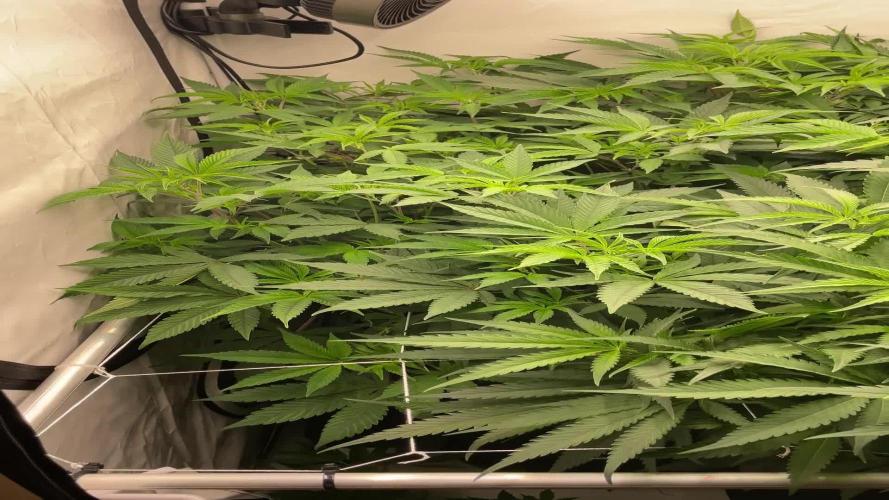
🥒 Project Blue Tent – Week 7 Pickle Lemon Haze F1 – Pheno B (Folder 14B) Hello everyone, and welcome back to another chapter of Project Blue Tent! 💙🌱 If you're discovering this diary for the first time, welcome aboard! Project Blue Tent follows four individual plants, each documented in its own dedicated diary from seed all the way to harvest. Every plant shares the exact same environment, lighting, irrigation, nutrition and training strategy, allowing us to observe how each phenotype develops its own personality while keeping the growing conditions as consistent as possible. Today we're checking in with Pickle Lemon Haze F1 – Plant B. And this week marks another important milestone. The canopy is full. The structure is ready. And we're preparing these beautiful ladies for their transition into flowering. ──────────────────────── 🌱 Week Seven – The Canopy Is Complete Looking across the Blue Tent this week, it's becoming increasingly difficult to distinguish the four plants from above. The SCROG has done exactly what we wanted it to do. Instead of four individual plants growing vertically, we now have one remarkably even canopy spreading across the available space. Plant B has been particularly well suited to this process. From the beginning, she's shown a natural tendency to grow outward rather than constantly trying to reach upward. Her compact structure, strong side branching and excellent response to training have allowed her to fill her section of the screen beautifully. After lowering and tightening the SCROG net, all four plants are now sitting at approximately 60 cm. At this point we're no longer trying to gain height. We're managing the surface we've created. Every branch has found its place. Every available section of the screen has been used. And now it's time to prepare that canopy for what comes next. ──────────────────────── 🕸️ SCROG – From Training to Flowering For anyone joining this diary without having followed the previous weeks, SCROG stands for Screen of Green. The purpose of the screen is to guide branches horizontally instead of allowing a few dominant tops to grow significantly taller than everything around them. As branches reach the screen, they're gently guided into neighbouring openings. This spreads the future flowering sites across a wider area and creates a much more uniform canopy. It's not about forcing the plant into an unnatural shape. It's about taking the growth the plant is already producing and distributing it more efficiently across the available space. And after several weeks of doing exactly that, the mission has essentially been completed. The screen is full. The canopy is even. Now we move into the cleanup phase. ──────────────────────── ✂️ Defoliation – Preparing the Plants for Flower This week's biggest job is defoliation. And because this technique is often misunderstood, it's worth explaining what we're actually doing. Defoliation isn't about stripping a plant of every leaf. Leaves are essential to the plant. They capture light and support photosynthesis, so removing healthy foliage without a reason isn't the objective. Instead, we're performing a deliberate canopy cleanup. After weeks of vigorous vegetative growth and SCROG training, the interior of the plants has become extremely dense. Leaves overlap. Branches cross through one another. Some areas are heavily shaded. And airflow through the middle of the canopy becomes increasingly important. So we're selectively removing foliage from areas where the density has become excessive. We're opening the interior. Creating more space between branches. Improving airflow. Improving visibility. And creating a cleaner structure for the flowering cycle. The objective isn't: "Remove as many leaves as possible." It's: "Remove what is no longer helping the structure we're trying to build." That's a very important difference. ──────────────────────── 🌬️ Why Defoliate Before the Flip? Timing is everything. A significant defoliation is a form of stress. Even when performed correctly, the plant needs some time to adjust to the loss of foliage and return to its normal growth rhythm. That's why we're doing this before flowering, rather than waiting until we're already well into the bloom cycle. Right now the plants are still running an 18/6 vegetative schedule. They have time to recover. We can perform the cleanup. We can watch how they respond. We can allow fresh growth to resume. And then we can flip the lights once the plants have settled again. I don't want to ask the plants to deal with a major cleanup at the same time they're dealing with the physiological transition into flowering. Instead, we're following a simple sequence: Build the canopy. Fill the screen. Clean the canopy. Recover. Flip. The goal is to enter flowering with healthy plants and a well-organised structure. ──────────────────────── 🌿 Pickle Lemon Haze F1 – Plant B Plant B continues showing exactly the personality we've come to know throughout this project. She's balanced. She's compact. She's incredibly branchy. And she seems perfectly happy growing sideways. While Plant A has always shown a little more vertical ambition, Plant B has naturally concentrated her energy into lateral growth and secondary branching. That has made her particularly enjoyable to work with under the SCROG. Her stems have continued thickening nicely, her internodal spacing remains compact, and her foliage has developed that rich green colour we've been looking for. The recovery from topping is now nothing more than a memory. She's completely moved on from that stage and has spent the last few weeks concentrating on building the framework that will eventually support her flowering sites. Looking at her now, it's easy to see how much the plant has changed. She's no longer simply a young vegetative plant. She's become a properly structured little bush with a full section of the canopy to her name. And now we're preparing her for the next chapter. ──────────────────────── 🥥 Feeding – Staying With What Works The nutrient recipe remains unchanged this week. Current feeding: • Plagron Hydro A — 1.9 ml/L • Plagron Hydro B — 1.9 ml/L • Plagron Hydro Roots — 1 ml/L Current pH: 5.8 Current EC: 1.92 mS/cm The plants continue showing excellent colour and vigorous growth, so I don't see a reason to change the recipe simply because we're approaching flowering. Sometimes consistency is the better decision. We'll see how the plants respond after defoliation, and depending on their recovery and appetite, we may increase the nutrient strength next week. For now, however, they're telling me exactly what I want to hear. Healthy colour. Strong growth. Good leaf posture. And no obvious signs that they're asking for anything different. So... Nothing changes. ──────────────────────── 💧 Drip Irrigation – Keeping the Roots Consistent The Mars Hydro automatic drip irrigation and drainage system continues to perform beautifully. Each plant is receiving approximately 1.2 litres of nutrient solution per 24 hours, delivered through the automated drip system. The slow and consistent irrigation keeps the coco supplied with fresh nutrient solution while the automatic drainage system removes the resulting runoff. This is particularly valuable in a project like this. Four plants are sharing the same environment. The same nutrient recipe. The same lighting. The same irrigation schedule. That consistency helps us keep another major variable under control. And as the plants become larger, the benefit becomes even more obvious. The irrigation system simply keeps doing its job every day. No rushing around with watering cans. No trying to remember which plant received what. Just consistent irrigation while I concentrate on observing the plants themselves. It's one of those systems that doesn't necessarily demand attention when it's working properly. And honestly... That's exactly how I like it. ──────────────────────── 🌡️ Blue Tent Environment The environmental conditions have remained very stable as we approach the transition into flowering. This week's average conditions were: • 🌡️ Day Temperature: 28°C • 🌙 Night Temperature: 25°C • 💧 Relative Humidity: 65% • 🥥 Substrate Temperature: 24°C • 💦 Nutrient Solution Temperature: 18°C • ⚗️ pH: 5.8 • ⚡ EC: 1.92 mS/cm • 💨 CO₂: approximately 450 ppm • 💡 Light Schedule: 18/6 • 💧 Irrigation: approximately 1.2 L/plant/24h • ? Pot Size: 8 L • 📏 Height: approximately 60 cm At this stage, stability is more important than constantly changing numbers. The plants are healthy. The canopy is full. The roots are receiving consistent irrigation. And the current nutrient strength is producing beautiful growth. So we're staying the course. ──────────────────────── 🌿 A Full Canopy Means a Different Kind of Work One of the interesting things about reaching this stage is that the work changes completely. Earlier in the grow, the challenge was getting the plants to occupy the space. Now the challenge is managing everything they've produced. When the canopy was still developing, every new branch was welcome. Now we have to start asking different questions. Does this leaf contribute enough? Is this area too crowded? Can air move through here? Is this branch getting enough light? Is this part of the plant going to benefit from remaining in the canopy? That's what good canopy management is really about. It's not simply growing as much as possible. It's deciding what growth deserves to remain part of the final structure. And Plant B has given us plenty to work with. ──────────────────────── Recovery Before Flowering Once the defoliation is complete, the most important thing we can do is give the plants time. No unnecessary additional stress. No rushing. No immediately piling another major intervention on top of the first one. The plants need time to rebalance after the cleanup. We'll watch the new growth. We'll monitor their posture and overall appearance. We'll keep the environment stable. And we'll let them recover. Once they're settled again, we'll be ready to move forward. This is why the timing of the defoliation matters so much. We're not trying to make the plants do everything at once. We're preparing them step by step. ──────────────────────── 👀 Looking Ahead The next few days should be particularly interesting. The SCROG has been filled. The canopy has been cleaned. The plants now have room to breathe. And we're approaching the moment we've been working toward for weeks. The nutrient recipe will remain unchanged for now, although we may increase it once we see how the plants respond after defoliation. The irrigation continues at approximately 1.2 litres per plant per day. The environment remains stable. And most importantly... We're not rushing the flip. We'll allow the plants to recover properly first. Then, when they're ready... We flower. 🌸 ──────────────────────── 💙 Thank You A huge thank you to Zamnesia for making Project Blue Tent possible and for providing these outstanding Pickle Lemon Haze F1 genetics. A heartfelt thank you to Plagron for the Premium Growbags and Hydro nutrient line that continue supporting this beautiful growth. A special thank you to Phytonaut for the LED lighting helping us maintain such a consistent and beautifully structured canopy throughout the Blue Tent. And a massive thank you to Mars Hydro for the automatic drip irrigation and drainage system that continues bringing consistency and simplicity to the daily routine. Thank you to GrowDiaries for providing growers around the world with a place to document their journeys, exchange knowledge and inspire one another. And finally... Thank you to everyone following Project Blue Tent. Whether you've been here since germination, recently discovered this diary, leave comments every week or simply enjoy watching these four sisters develop... Your support genuinely means the world to me. 💙 Plant B has spent the last several weeks quietly building herself into one beautiful, compact and incredibly well-structured phenotype. Now the canopy is ready. The cleanup is complete. All that's left is to give her time to recover... And then see what she can do. Until next time... Growers Love, happy growing, and take care everyone! 🌱💙
Likes
12
Share
@nonick123
Follow
Día 22 (20/10) Pequeños ajustes de LST Día 23 (21/10) Topping! Riego 250 ml H2O RO Día 24 (22/10) N/A Día 25 (23/10) Riego 500 ml de H2O RO 30 grados por aquí! Día 26 (24/10) Riego 250 ml H2O RO Elimino un par de hojas de abanico. Continúan los 30 grados! 🚀 FastBuds 15% DISCOUNT code "NONICK" fastbuds.com 💦 Nutrients BioTabs 15% DISCOUNT code "GDBT420" biotabs.nl/en/shop/ 🌱Substrate PRO-MIX HP BACILLUS + MYCORRHIZAE - www.pthorticulture.com/en-us/products/pro-mix-hp-biofungicide-plus-mycorrhizae Día 27 (25/10) N/A Día 28 (26/10) Lollipopping