Check the winners The Grow Awards 2026 🏆
Likes
Comments
Share
@Kynareth
Follow
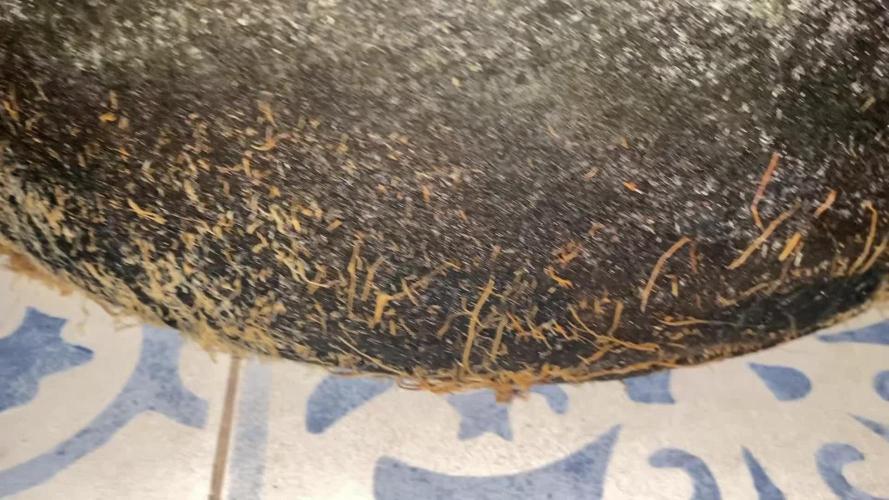
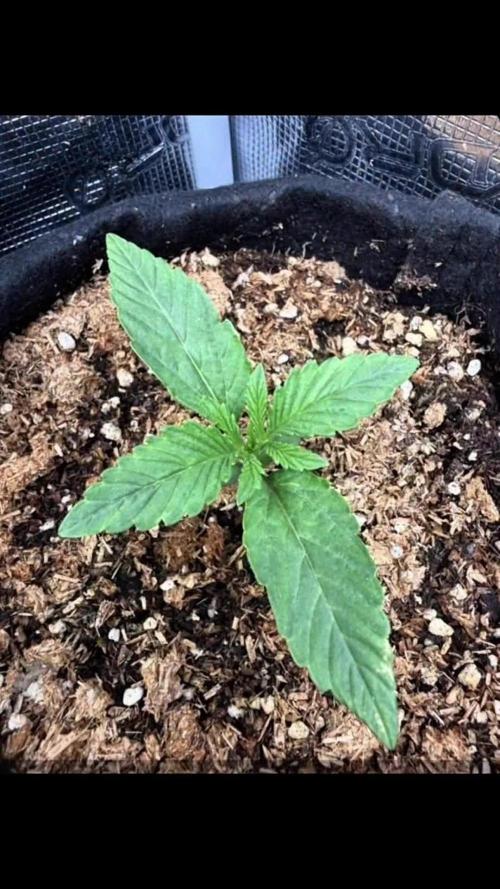
Dia 5 y las plantas ya muestran su primer par de hojas verdaderas que practicamente triplica en tamaño a los cotiledones y con un buen color verde. Pasaré a abonar conforme a la table de crecimiento y ph a 6 (algo menos realmente pero se estabilizará a 6 en las próximas horas). El ph mas y menos que uso es de boom nutrients que alguien me lo preguntó, tengo el de ghe pero como ya tengo las dosis pilladas con boom nutrients uso este, en teoría de ghe debería ser más estable pero tampoco es algo con lo que haya tenido problemas dia 10 - La planta sigue con su desarrollo, la forma de las hojas es un poco extraña pero a veces pasa en el primer o segundo par, espero que se corrija sólo y no sea una mutación extraña que vaya a mayores. He reducido un poco el riego para evitar el encharcam,iento del coco y que las raices lo tengan facil para crecer.
Likes
7
Share
Weeks 15 - It’s Ready - The 1st Gorilla Glue Is Ready To Be Havrest, I Gave It 3 Weeks Of Flushing And The Trichomes Of The Top Heads Are Most Cloudy With A Few Clear And A Little Amber Trichomes And The Bottom Buds Are Mostly Cloudy With A Few Clear And The Sceny Is Still At It’s Peak But You could Tell It Was About To Head Over The Morning And Start To Take A Downright Spiral I Will Be Hanging It To Dry For 7-9 Days At A Temperature Of 70 Degrees and 60% Humidity. The Slower It Dries The Better.
Processing
Likes
9
Share
Continued growth, feeding every 3 days as soil dries out. Nice growth spurts noted and apical dominance broken via LST as limbs/new growth reach skyward. Minor fan leaf removal to permit light saturation and airflow to lower areas. Getting a little crowded! We will let the canopy grow towards the light another inch or 2 with minor LST adjustments or at 2 weeks from now (which ever happens first,) before we will make the decision to flip to flower cycle. Feeding 3/5 gallon per plant about every 3 days.
Likes
26
Share
Day 17 17/07/24 Wednesday De-chlorinated tap water pH 6 with calmag 5ml -5L. Very humid week, noticed a green turning colour on top of soils where the humidity has been far to high. I have installed door netting and recently left open all day and night now so they can condition over night in colder temps. All are doing well, one overdose slightly behind and looking ABIT swifted. But she'll come around 💪💚 Day 19 19/07/24 Friday Lite Feed today, 250ml each pot small run off. Seeing excellent start to these babies. Let's get it 👌💚 Day 21 21/07/24 Sunday De-chlorinated tap water pH 6 with calmag 5ml to 5L. Watering in 1L each day from now. Updated video
Likes
5
Share
@Chubaka26
Follow
First day of vegetative state. I use 125 ml of spring water mixed with 0,2 ml of bio-grow( npk 3-3-3) and 0,1 Gr of rooting powder. She looks healty . This is the first day that i let her to direct aire, without protection. I am curious how She will handel the aireflow from the fan
Likes
47
Share
Friday 5th Feb starting as my week 2 ,between the set back where I need to have them both prop for a little longer in germination and there was a small growth but then this week a whole new amount of growth came ,only thing I will say is sit tight and hope for fellow G.D friends to follow and take any advice on board ...again thanks in advance 😁
Likes
9
Share
È stata una settimana bellissima! Il caldo estivo italiano finalmente è arrivato con temperature alte di giorno e fresco di notte. Queste varietà sono perfette! Ogni banca dei semi di queste varietà merita il mio applauso di cuore! Alcune sono più alte di me cioè superano il metro ed ottanta centimetri di altezza! Molto diramate tutte si stanno riempiendo di infiorescenze dure, appiccicose e molto resinose con odori intensi e fruttati! Ogni varietà sta sviluppando il suo aroma in maniera impeccabile! Gli insetti e parassiti ormai non sono più un problema, la resina appiccicosa non è gradita dagli insetti! Sono cresciute molto ed in circa tre mesi verranno raccolte, adesso si riempiono fino a che possono, le infiorescenze si stanno gonfiando ed iniziano a prendere forma. Abbiamo iniziato con un po' di Atami bloombastic assieme al top max e biobloom e se continuano così tra circa 4 settimane raccoglierò alberi XXL di altissima qualità biologica con aromi speciali! Odore nauseante in giardino! Un abbraccio a tutti e complimenti ai creatori di queste varietà!
Processing
Likes
13
Share
@MG2009
Follow
Week 3 males developing right on time! Pollen will be dispersing soon. So now trying to nail down who daddy was? Week 3 day 1 males looking very nice, no sign of either one showing female flowers( no hermaphrodite/ true male) but I will stress them more after reveg for severe stress test. For final results. Looks like I forgot to feed mom! Shit! But I did not.I used bio tone starter 5-1-1 by Espoma gonna feed in am. With tomato tone with myco 3-4-6 it's all I got and organic to boot 👍 Last grow with Captains cake went to 11 weeks 2 - 3 applications should get me to finish line. No flush should be needed, it's feeding the seeds growth. Looking at 07/01/2018 harvest. Fingers crossed! 05/05/2018 First burst of male pollen is flying in the air, gonna try to get video of it as I shake the males. I am brewing tea with worm castings unsulphured molasses,topped off with protilizer immediately after brewing it. Give them a little love (Tea) while they are making seeds👊
Likes
37
Share
This week has been a good one! Not too much more stretch just simply filling up both the spaces with foliage and swollen buds! I’m now watering 6L every 3 days and she’s soaking it all up! Will feed strong for one more week then 2 weeks of flush :) Dehumidifier turned on and set at 40%, ambient air temp dropped to 23/24 day time and 18 with lights off, air flow changed up daily to really help her. Getting keen to harvest/cure/smoke and then put in the next round! 😊 I hope all my followers and readers are well and have great holidays! Keep growing, keep smoking and most of all keep smiling! Much love! 👌✌️👍💐💨😎
Likes
18
Share
week intel: we reached the peak of flowering stage and need to cause a little more e.c stress from this week so e.c stress is twice a week i reduced the amount of Nitrogen and calcium and stopped feeding silicate in other hand i raised the amount of base nutrient and booster short story version: more K & P - less N stresses : a little E.C stress around 1.6 and 1.7 twice a week from this week feeding: i feed them 3 times this week with this order : day 1 : i feed them high with base nutrients(calcium & micros (half dose) + Bloom) about 822 ppm - 1.6 e.c to cause a little stress. day 3 : i feed them low dose of Top-Max + B-52 around 525 ppm - 1 e.c to let them recover a little but not fully recover still a little stress will caused. day 5 : i feed them high dose of Feeding Booster around 850 ppm - 1.7 e.c to cause e.c stress again guide of the week : from this week we can cause more E.C stresses. e.c stress if done correctly is one of the very few ways to increase quality in all aspects ( color , aroma , taste , bud structure , resin contents ) but if you over do it , listen carefully brother : it can reduce quality in every aspect so always look for signs and never reach the red line.
Processing
Likes
23
Share
@GrowGuy97
Follow
Everything seems to be going alright, one of my plants has extremely shiny leaves almost like oily, and some odd shaped leafs but I’m very curious to see how things go when I switch to flowering considering these are all random bag seeds! Have been trying to look for signs of sex but still can’t see anything yet!
Processing
Likes
68
Share
@Joni2017
Follow
Day 66, she continues the very healthy flowering 🙌 size 67 cm👏🏻👏🏻 temperature 24º C ☀️, humidity 60% 💧 watering 750 ml alternating one day with nutrients and another without nutrients with osmotized water 💦💦 Session 45 min. of binaural sounds for growth and healing 🎼 and music 😉👍
Likes
14
Share
@nine666
Follow
Hi growers! this is my first grow and I will try to be as detailed as possible. The first video is day 2 and the second video is day 6. The first pot is the Fast buds BlackBerry Auto, second pot is the Fast buds Zkittles Auto and the Two at the back are the SweetSeeds Honey Peach CBD. originally the back left pot was meant to be a Fast buds Tangie'matic but the seed didn't germinate so around day 4 of the grow I decided to germinate another Honey Peach CBD Seed. Equipment using is: 2 x 300w Viperspectra LED Lights 4 x 12L Fabric Pots 2 x 9" Clip Fans 1 Standing oscillating fan 1 Thermostat with RH reading and a cheapish Carbon Filter kit from EBay. As this is my first grow i have been on quite a tight budget but if things go well I will be slowly upgrading all of the equipment over time. Notes: As you can tell by the video I am very limited to space, I can't remember the exact measurements but I think its 48inches cubed
Likes
47
Share
The cannabis strain Grape Guava can be a purple strain, depending on its specific phenotype and genetic makeup. While not all phenotypes of Grape Guava are purple, some variations, such as the Zatix Grape Guava, are noted for their striking purple appearance due to the genetic expression of anthocyanin pigments. https://www.youtube.com/watch?v=cKdVmdoKJ5k In a garden of green, Grape Guava gleams, With its fruity aroma, enchanting dreams. Clusters of grapes, guava's sweetness ignite, A strain so divine, in purple and white. Euphoria whispers, a lush fruity haze, Grape Guava's embrace, a tranquil daze. Off and away.@1400ppm. The increased CO2 allows plants to thrive at higher temperatures, which in turn necessitates higher humidity to maintain the ideal VPD for healthy growth and transpiration. 80F -5F = 75F LST with 70% RH = 0.72 kPa. Higher temperatures and humidity promote rapid growth, nutrient uptake, and photosynthesis while maintaining a lower stress level. Temperature influences the rate of enzymatic reactions involved in aerobic respiration. Enzymes, such as those involved in glycolysis, the Krebs cycle, and the electron transport chain, work most efficiently at an optimal temperature range. In low temperatures, enzymatic activity will slow down, thus reducing the rate of aerobic respiration. In high temperatures, enzymes can become denatured, thus impairing their function and stopping the process of aerobic respiration. Glucose is the primary fuel for aerobic respiration. The rate of aerobic respiration increases with the availability of glucose, as it is the starting point for glycolysis. If glucose levels are low, cells may rely on alternative energy sources such as fatty acids or amino acids , but these processes may yield less ATP or be less efficient. To determine this effect, carbon dioxide volume was measured (as carbon dioxide is an output of aerobic respiration) 18/6 with the 6 being IR. The near infrared (IR-a) borders around 700nm up to 1400nm @ photon par flux density of 1.8 instead of darkness, keeping temps overnight a neat 77F-80F. Think of my tent as a lung. What goes in must come out. When the rate of air going out exceeds the amount of air coming in, it creates a negative pressure. Tent concaves (bends in). If set up correctly, your RH will begin to drop slowly to the desired level you set, and the extraction turns off when it reaches desired% RH. The plant, as it performs cellular respiration, will always be releasing more water into the air, so the RH% of the tent overnight will always increase, so long as oxidative phosphorylation is occurring. As soon as the RH% creeps back up to 55%, the extraction turns back on, over and over. This creates a strong pressure differential which will work wonders on your grow. Replicating high and low-pressure fronts in nature. Critical for oxygen diffusion at the critical time of peak cellular respiratory function.. Moisture will not transfer from a saturated atmosphere to another if that air is already at or above its saturation point, meaning the air can't hold any more water vapor. Once I understood that water is produced as a by product during cellular respiration, specifically at the very end of the electron transport chain (ETC) where electrons are finally transferred to molecular oxygen, the higher the RH of the air, the more resistance there is for more moisture to be added to that environment, and effects the ease with which it does so. But none of that water comes from the pot; it's pulled from the air. If you run high daytime RH, your medium/pot is 100% reliant on transpirational root pull to move water. ZERO evaporation happens across the atmosphere if the tent air has high RH%, the medium cannot release its water through evaporation. Once a canopy develops, light no longer slowly wicks and evaporates from the topsoil. The Soil-Plant-Atmosphere Continuum (SPAC) describes the continuous pathway and process of water movement, driven by a gradient in water potential, from the soil, through the plant's roots, stem, and leaves, and finally evaporating into the atmosphere through transpiration. There is evaporation, there is transpiration, and then there is evapotranspiration; Evapotranspiration (ET) is the combined total of two processes: evaporation (water lost directly from soil and surface water into the atmosphere) and transpiration (water released from plants to the atmosphere through their leaves). Evapotranspiration represents the total amount of water that moves from the medium into the air. There is no such thing as a medium with too much water, only a medium that retains too much for too long. The water must always flow efficiently from one atmosphere(Medium) to another(Air) in a timely manner. Moisture is a critical factor for bacterial growth and decay. Dictating how long it's allowed to sit in any one location for any given period is a key preferred control. To ensure a net reduction in a bacterial population, the rate of removal (ET) must exceed the rate of bacterial growth (decay rate), which is often modeled as a growth rate for the specific bacterium under the given conditions. By optimizing daytime VPD, we also optimize conditions for bacterial growth to explode exponentially above 77°F.. If water is allowed to sit in a medium without an escape within a timeframe, nothing good will happen. IF High RH is maintained overnight as well as during the day, placing 100% of water movement at the behest of daytime transpiration, roots can only pull where they can reach, and if soil is compressed above a certain point, moisture will become trapped in a medium with no way of moving day or night. This will begin the countdown for decay to take hold. When water stagnates in a medium, it loses oxygen, creating anaerobic conditions that foster the growth of harmful microorganisms like bacteria and fungi, which can produce toxins and disease vectors. Thigmomorphogenesis, the process by which plants respond to mechanical stimuli like touch by altering their growth and development, results in significant morphological changes to improve survival against mechanical perturbations. This complex response involves sensing touch and initiating physiological and genetic responses, leading to changes in form and structure over days or weeks. The process is triggered by physical forces such as wind, rain, or touch. Plants adapt to these stimuli by changing their shape and structure, which may include slower growth, thickened stems, or altered leaf development. Plants possess sophisticated mechanisms to detect even subtle mechanical stimuli and initiate responses. A variety of molecules, including calcium ions, jasmonates, ethylene, and nitric oxide, are involved in signaling these mechanical inputs. Touch can induce the expression of genes that encode proteins for calcium sensing, cell wall modification, and defense mechanisms. A plant exposed to constant wind may become shorter and sturdier. A plant that is touched frequently might grow more slowly to conserve energy and develop thicker cell walls. These changes increase a plant's resilience and ability to survive in harsh environments. Let's get Thiggy with it.
Likes
3
Share
@Acardiac
Follow
Eine Pflanze hat etwas länger gedauert. Ich habe sie knapp eine Woche länger stehen lassen, damit ich mehr bernsteinfarbene trichom bekomme. Die anderen beiden waren für mich nach blühte Woche 10 reif.
Likes
14
Share
Ok here we are, bloom begins. All running smooth. Veggie was crazy hope to keep it up. Pheno #1 (right) seems to be more sativa than #2 love this 💐
Likes
4
Share
Week 6 Flower – A Hard Lesson: Bud Rot Quick Recap – From Seed to Here This Lava Cake run started beautifully: • Germination was smooth and fast using the Cannakan with Aptus Regulator and Start Booster. • Veg went strong, with both phenos thriving under the Black Series LED and later joined by ThinkGrow and Lumatek support. • Transplants into 11L fabric pots gave them space to expand, roots looked stunning. • Early flower (weeks 1–4) brought explosive growth, thick white hairs, and dense colas forming under carefully tuned nutrition — Aptus base inputs with Plagron complements. But the same density that made these flowers shine also made them vulnerable. High humidity swings and airflow inconsistencies created the perfect conditions for bud rot (Botrytis cinerea) to sneak in. What Happened This Week Despite our best efforts, phenotype two (Lava Cake #2) showed visible signs of bud rot. To protect the garden, she was harvested early. Infected material was thrown straight into the trash (not compost — spores spread too easily), and the healthy parts are now drying in a separate, controlled space. Phenotype one (Lava Cake #1) remains in the tent. She has minor spots, but overall is swelling and pushing forward. She’ll be closely monitored daily to make sure the infection doesn’t spread. 👉 Full educational article from Zamnesia: 🔗 Bud Rot Cannabis Grower Guide – Zamnesia https://www.zamnesia.com/grow-weed/563-bud-rot-cannabis-grower-guide What Bud Rot Is • Caused by Botrytis cinerea, a fungus that thrives in warm, humid, poorly ventilated conditions. • Begins inside dense buds, hidden from sight, and by the time it appears on the surface, the inner cola is usually already compromised. • Spreads quickly if unchecked, especially in crowded flowering rooms. Why It Happened • Humidity spikes during flower. • Airflow not perfectly balanced, leaving “dead spots” in the canopy. • Dense colas trapping moisture. • Temperature swings stressing the balance further. Prevention Tips (for us and for everyone reading) • Lower humidity in mid/late flower (40–50%, then 35–40% near harvest). • Strong airflow: oscillating fans above and below canopy + efficient extraction/intake. need improving in here for my next run • Regular defoliation to open the canopy. • Daily inspections of the biggest buds. • Harvest at the right time — pushing too long in risky environments can invite problems. What to Expect / Not to Expect Going Forward • Lava Cake #2: She’s drying now. Expect about 2 weeks of slow, careful drying under controlled temps and humidity. With bud rot, extra caution is needed — we won’t rush, but we’ll also make sure nothing risky makes it through. Expect reduced yield because of the early cut and loss of infected colas, but quality and safety will come first. • Lava Cake #1: She will continue swelling in the tent. Expect daily monitoring, improved airflow, and cautious optimism. If she stays strong, she could still finish beautifully. • The Room: We’ll dial in airflow and humidity management even tighter, keeping CO₂ and temps in check, and prepare the AC unit to avoid these swings in the future. Closing Thoughts Bud rot is a tough enemy, but also one of the most important teachers in growing. It reminds us that environment control is just as vital as genetics or nutrients. Yes, we lost part of this run, but we also gained experience that will make every future run stronger. And sharing this openly might help others spot it sooner, act faster, and maybe even save their crop. At the end of the day, that’s what these diaries are for: to celebrate the wins, learn from the losses, and keep growing together. 🌱💚 📲 Don’t forget to Subscribe and follow me on Instagram and YouTube @DogDoctorOfficial for exclusive content, real-time updates, and behind-the-scenes magic. We’ve got so much more coming, including transplanting and all the amazing techniques that go along with it. You won’t want to miss it. • GrowDiaries Journal: https://growdiaries.com/grower/dogdoctorofficial • Instagram: https://www.instagram.com/dogdoctorofficial/ • YouTube: https://www.youtube.com/@dogdoctorofficial ⸻ Explore the Gear that Powers My Grow If you’re curious about the tech I’m using, check out these links: • Genetics, gear, nutrients, and more – Zamnesia: https://www.zamnesia.com/ • Environmental control & automation – TrolMaster: https://www.trolmaster.eu/ • Advanced LED lighting – Future of Grow: https://www.futureofgrow.com/ • Root and growth nutrition – Aptus Holland: https://aptus-holland.com/ • Nutrient systems & boosters – Plagron: https://plagron.com/en/ • Soil & substrate excellence – PRO-MIX BX: https://www.pthorticulture.com/en-us/products/pro-mix-bx-mycorrhizae • Curing and storage – Grove Bags: https://grovebags.com/ ⸻ We’ve got much more coming as we move through the grow cycles. Trust me, you won’t want to miss the next steps, let’s push the boundaries of indoor horticulture together! As always, this is shared for educational purposes, aiming to spread understanding and appreciation for this plant. Let’s celebrate it responsibly and continue to learn and grow together. With true love comes happiness. Always believe in yourself, and always do things expecting nothing and with an open heart. Be a giver, and the universe will give back in ways you could never imagine. 💚 Growers love to all 💚 P.S. – Drying After Bud Rot Harvest For Lava Cake #2, we harvested the entire plant and are drying her whole. Because bud rot was present, we’re being extra careful: • Drying in a separate, controlled space, away from the main room. • Temperature kept around 18–20°C, with humidity 50–55% — steady and stable. • Gentle airflow moving through the room, never directly on the buds. • Daily inspections to ensure no hidden spots continue developing. The goal is a slow 10–14 day dry, preserving as much aroma and quality as possible, while making absolutely sure nothing unhealthy makes it through. With bud rot, safety comes first — anything questionable goes straight to the trash. 👉 Why whole-plant drying? By leaving the plant intact, moisture moves more gradually from stems and inner tissues to the buds. This slows down the drying process, prevents overdrying, and helps preserve delicate terpenes and flavonoids that give Lava Cake her unique flavor. Especially after a bud rot scare, a steady, controlled dry is essential for both safety and quality.
Likes
21
Share
@Elgar
Follow
I bought a Mars hydro 600 and she has loved it! I think she’s close, one more week my guess. I will give her some nutes in a couple days. A huge branch decided to leave the plant, so I got it to dry and then I’ll compare the high from each chop time. The trichromes are clear to milky. I think she’ll have time to get mostly milky and a bit amber in a week, I want an up high and not at all couchlock.
Likes
22
Share
Hallo zusammen 🤙. Sie wächst sehr schön und macht keine Umstände.