Likes
Comments
Share
@SooSan
Follow
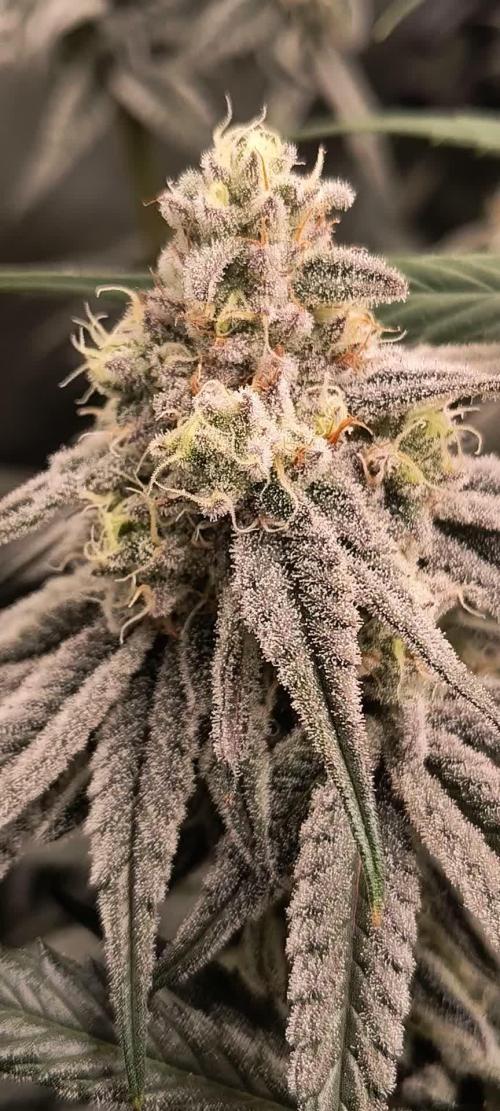
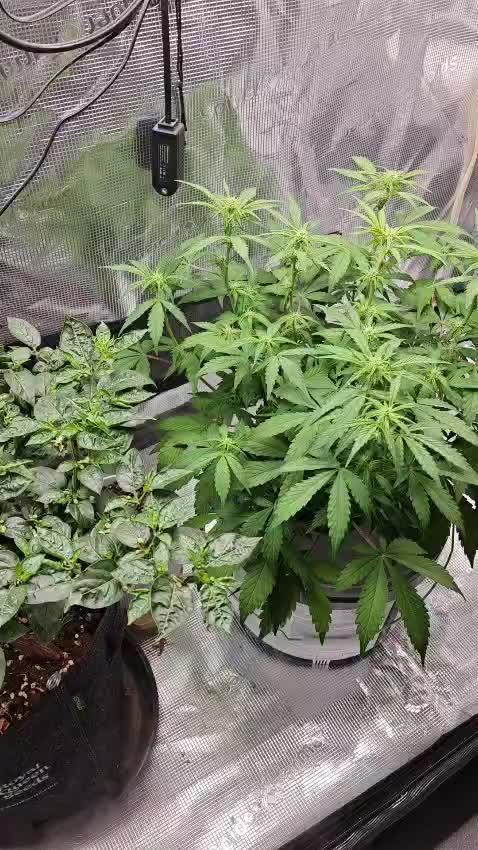
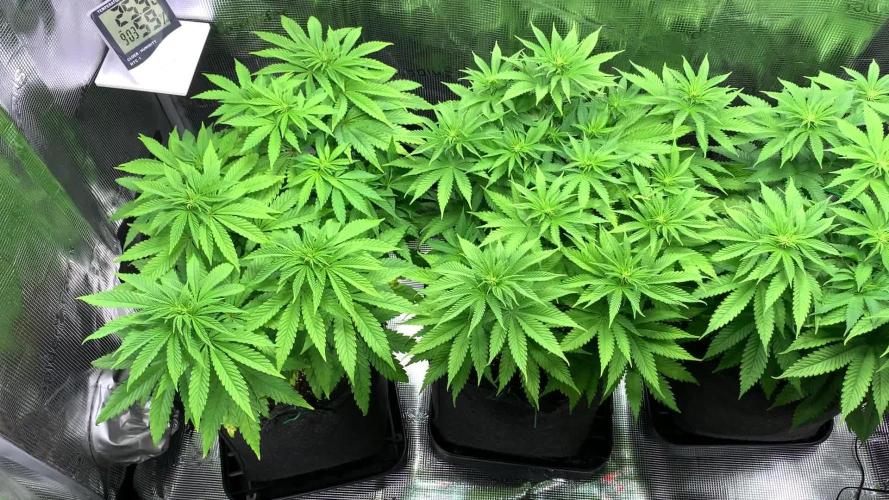
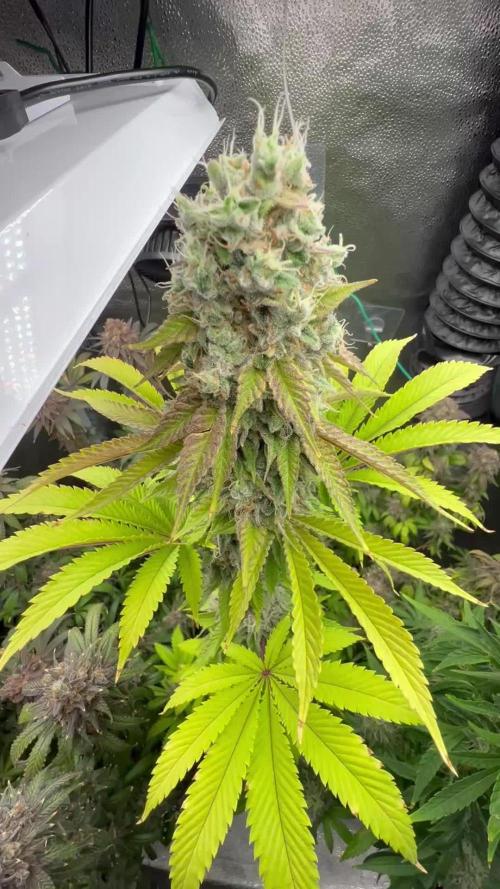
12/12 + 123 jours Vu qu’il y a 16 plantes mais que sur growdiaries on ne peut mettre que 8 variétés j'ai divisé en 2 diaries pour le bas de la tente 1️⃣ 🏠 90x60x90 ☀️ FC-E 4800 => puissance a 60% 🍁 Black Bomb / Philosopher Seed Amnesia Lemon / PEV Seeds Amnesia Lemon /PEV Seeds Blueberry / PEV Seeds Blueberry / 00 Seeds = 17g Wappa / Paradise Seed = 11g Dark Phoenix / Green House Seed Quick Sherbet / Exotic Seeds = 14,5 Mango Cream / Exotic Seeds Banana Frosting / Sensi Seed = 11g Hindu Kush / Sensi Seed Mix 1 / Sweet Seed = 26,5g Mix 2 / Sweet Seed = 15g Mix 3 / Sweet Seed = 22,5g Mix 4 / Sweet Seed = 📎 https://growdiaries.com/diaries/122084-grow-journal-by-soosan 📎https://growdiaries.com/diaries/124052-grow-journal-by-soosan 2️⃣ 🏠 30x60x50 ☀️TS1000 => 100w = 54g 🍁 Quick Sherbet - Exotic Seed = 12g Quick Sherbet - Exotic Seed = 12g Quick Sherbet - Exotic Seed = 17,5g Quick Sherbet - Exotic Seed = 12,5g 📎 https://growdiaries.com/diaries/122080-grow-journal-by-soosan
Processing
Likes
28
Share
New weekly video uploads and more! See what’s happening in the Cabbage Patch! Day 14 Flower! Plants looking very h@ppy. Can’t wait to get in there and give it’s last defoliation. Day 16 - She’s stacking up nice! Just need to water when dry. She’s on cruise control! Day 20 - Defoliation video for ya! Cheers 🍻
Likes
55
Share
2nd net is up. Early bud formations are promising. holding up to the extremes pretty well, some leaves taking minor damage, but overall, she is holding up, gave her 1 night at 50F see how she would react, stressful. Not advised as it messes with her metabolism, but I want to see if it triggers any anthocyanin response. Love to see her purp up but no signs yet. Remember, For every molecule of glucose produced during photosynthesis, a plant needs to split six molecules of water. This process provides the hydrogen needed for synthesizing glucose and other organic compounds, while oxygen is released as a byproduct. Homework. If Rubisco activity is impaired and it cannot properly function or regenerate its substrate, the plant's leaves are likely to turn a pale green or lime green, a condition known as chlorosis. Essentially, Rubisco activity is highly regulated and susceptible to various environmental and metabolic factors that can cause it to become inhibited, leading to an apparent failure in RuBP regeneration due to a lack of consumption. Rubisco regeneration is intrinsically linked to nitrogen supply because Rubisco is a major sink for nitrogen in plants, typically accounting for 15% to over 25% of total leaf nitrogen. The regeneration phase itself consumes nitrogen through the synthesis of the Rubisco enzyme and associated proteins (like Rubisco activase), and overall nitrogen status heavily influences the efficiency of RuBP regeneration. RuBisCO is a very large enzyme that constitutes a significant proportion (up to 50%) of leaf soluble protein and requires large investments in nitrogen. Insufficient nitrogen supply limits the plant's ability to produce adequate amounts of RuBisCO, thereby limiting the overall capacity for photosynthesis and carbon fixation. Maintaining the optimal, slightly alkaline pH is crucial for the proper function and regeneration of Rubisco. Deviations in either direction (too high or too low) disrupt the enzyme's structure, activation state, and interaction with its substrates, leading to decreased activity and impaired RuBP regeneration. (Lime/yellowing) Structural Component: Nitrogen is an essential building block for all proteins, and the sheer abundance of the Rubisco protein makes it the single largest storage of nitrogen in the leaf. Synthesis and Activity: Adequate nitrogen supply is crucial for the synthesis and maintenance of sufficient Rubisco enzyme and Rubisco activase (Rca), the regulatory protein responsible for maintaining Rubisco's active state. Nitrogen deficiency leads to a decrease in the content and activity of both Rubisco and Rca, which in turn limits the maximum carboxylation rate, Vmax, and the rate of RuBP regeneration Jmax, thus reducing overall photosynthetic capacity. Nitrogen Storage and Remobilization: Rubisco can act as a temporary nitrogen storage protein, which is degraded to remobilize nitrogen to other growing parts of the plant, especially under conditions of nitrogen deficiency or senescence. Nitrogen Use Efficiency (NUE): The allocation of nitrogen to Rubisco is a key determinant of a plant's photosynthetic nitrogen use efficiency (PNUE). In high-nitrogen conditions, plants may accumulate a surplus of Rubisco, which may not be fully activated, leading to a lower PNUE. Optimizing the amount and activity of Rubisco relative to nitrogen availability is a target for improving crop NUE. Photorespiration and Nitrogen Metabolism: Nitrogen metabolism is also linked to the photorespiration pathway (which competes with carboxylation at the Rubisco active site), particularly in the reassimilation of ammonia released during the process. To increase RuBisCO regeneration, which refers to the process of forming the CO2 acceptor molecule Ribulose-1,5-bisphosphate (RuBP) during photosynthesis, the primary methods involve optimizing the levels and activity of Rubisco activase (Rca) and enhancing the performance of other Calvin-Benson-Bassham (CBB) cycle enzymes. Biochemical and Environmental Approaches: Optimize Rubisco Activase (Rca) activity: Rca is a crucial chaperone protein that removes inhibitory sugar phosphates, such as CA1P (2-carboxy-D-arabinitol 1-phosphate), from the Rubisco active site, thus maintaining its catalytic competence. •Ensure optimal light conditions: Rca is light-activated via the chloroplast's redox status. Adequate light intensity ensures Rca can effectively maintain Rubisco in its active, carbamylated state. •Maintain optimal temperature: Rca is highly temperature-sensitive and can become unstable at moderately high temperatures (e.g., above 35°C/95F° in many C3 plants), which decreases its ability to activate Rubisco. Maintaining temperatures within the optimal range for a specific plant species is important. •Optimize Mg2+ concentration: Mg2+ is a key cofactor for both Rubisco carbamylation and Rca activity. In the light, Mg2+ concentration in the chloroplast stroma increases, promoting activation. •Manage ATP/ADP ratio: Rca activity depends on ATP hydrolysis and is inhibited by ADP. Conditions that maintain a high ATP/ADP ratio in the chloroplast stroma favor Rca activity. Enhance Calvin-Benson-Bassham (CBB) cycle enzyme activity: The overall rate of RuBP regeneration can be limited by other enzymes in the cycle. •Increase SBPase activity: Sedoheptulose-1,7-bisphosphatase (SBPase) is a key regulatory enzyme in the regeneration pathway, and increasing its activity can enhance RuBP regeneration and overall photosynthesis. •Optimize other enzymes: Overexpression of other CBB cycle enzymes such as fructose-1,6-bisphosphate aldolase (FBA) and triose phosphate isomerase (TPI) can also help to balance the metabolic flux and improve RuBP regeneration capacity. Magnesium ions, Mg2+, are specifically required for Rubisco activation because the cation plays a critical structural and chemical role in forming the active site: A specific lysine residue in the active site must be carbamylated by a CO2 molecule to activate the enzyme. The resulting negatively charged carbamyl group then facilitates the binding of the positively charged Mg2+ion. While other divalent metal ions like Mn2+ can bind to Rubisco, they alter the enzyme's substrate specificity and lead to dramatically lower activity or a higher rate of the non-productive oxygenation reaction compared to Mg2+, making them biologically unfavorable in the context of efficient carbon fixation. The concentration of Mg2+ in the chloroplast stroma naturally increases in the light due to ion potential balancing during ATP synthesis, providing a physiological mechanism to ensure the enzyme is activated when photosynthesis is possible. At the center of the porphyrin ring, nestled within its nitrogen atoms, is a Magnesium ion (Mg2+). This magnesium ion is crucial for the function of chlorophyll, and without it, the pigment cannot effectively capture and transfer light energy. Mg acts as a cofactor: Mg2+ binds to Rubisco after an activator CO2 molecule, forming a catalytically competent complex (Enzyme-CO2-Mg2+). High light + CO2) increases demand: Under high light (60 DLI is a very high intensity, potentially saturating) and high CO2, the plant's capacity for photosynthesis is high, and thus the demand for activated Rubisco and the necessary Mg2+ cofactor increases. Mg deficiency becomes limiting: If Mg2+ is deficient under these conditions, the higher levels of Rubisco and Rubisco activase produced cannot be fully activated, leading to lower photosynthetic rates and potential photo-oxidative damage. Optimal range: Studies show that adequate Mg2+ application can enhance Rubisco activation and stabilize net photosynthetic rates under stress conditions, but the required concentration is specific to the experimental setup. Monitoring is key: The most effective approach in a controlled environment is to monitor the plant's physiological responses e.g., leaf Mg2+ concentration, photosynthetic rate, Rubisco activation state, and adjust the nutrient solution/fertilizer to maintain adequate levels, rather than supplementing a fixed "extra" amount. In practice, this means ensuring that Mg2+ is not a limiting factor in the plant's standard nutrient solution when pushing the limits with high light and CO2. Applying Mg2+ through foliar spray is beneficial to Rubisco regeneration, particularly in alleviating the negative effects of magnesium (Mg) deficiency and high-temperature stress (HTS). While Mg can be leached from soil, within the plant it is considered a mobile nutrient, particularly in the phloem. Foliar-applied Mg is quickly absorbed by the leaves and can be translocate to other plant parts, including new growth and sink organs. Foliar application of: NATURES VERY OWN MgSO4 @ 15.0g L-1 in a spray bottle. For those high-intensity workouts when 1 meal a day is just not enough! Foliar sprays are often recommended as a rapid rescue measure for existing deficiencies or as a supplement during critical growth stages, when demand for Mg is high. Application in the early morning or late evening can improve absorption and prevent leaf burn. The plant was getting a little limey yellow in the centre. Shortly thereafter, she was back in business, green mostly regenerated. The starting point [of creativity] is curiosity: pondering why the default exists in the first place. We’re driven to question defaults when we experience vuja de, the opposite of déjà vu. Déjà vu occurs when we encounter something new, but it feels as if we’ve seen it before. Vuja de is the reverse—we face something familiar, but we see it with a fresh perspective that enables us to gain new insights into old problems. Confidence is evidence... nothing more. You are confident because you have driven 10,000 times, you are confident because you have spoken 10,000 times. People think confidence is a feeling, but it's not. If you want more confidence, then you need to create evidence, take more shots, collect more data, build more experiences, take more risks; fail, confidence doesn't come first; it is the reward you get for doing the work. no one else wants to do.
Likes
2
Share
Cut back on the nutes mostly using flowering products nothing really major to report I’m happy to see the amount of frost forming on the cheesecake, and the purple squirrel are nice and chunky! Did res change last nite. Aug 23.
Likes
3
Share
First, so sorry again for the lame and horrible pictures. I lost the every single picture I took, the whole process :( and had to take a few just before harvest with a lame phone. This wasn't hard to train at all. Took all the heavy defolation I did like a champ. I just messed up with the nute intake. I can't ask more of this light so I'm quite happy with the results. I've learned so much since my first grow that I'm honestly happy with what I'm getting. I used topping in the fifth node, lst and net for scrog I later had to remove. Next time I'll repeat the same thing but I'll leave less branches and focus on getting them as fat as they can. Too many popcorn bud with so many branches, light can't go trough like with less branches. I could write so much about the smell of this one. At some point IT WAS vanilla, during the cutting process I moved it quite a bit and strangely, it was pure mint. Growing it, it was extremely sweet and a bit earthy, never leaving the vanilla touches. I'll stick with Barney's for a few more plants. It was a resistant and lovely plant to grow.
Likes
25
Share
@JonnyKush
Follow
Hello friends! day 60! following your advice I applied the cropping in order to bring the tops back into the light and I wanted to try adding ADV nutes to integrate a little! apart from this extreme elongation everything seems to be going the right way! thank you very much for stopping by, leave a like and some advice! happy day and great growth 🌱💚
Likes
6
Share
🌸 Pink Rosay Auto by Zamnesia | Pheno A | Week 7 (Flowering) 🌱 Sometimes the Quiet Ones Steal the Show One of the things I love most about growing is that plants don't compete with one another. They simply become the best version of themselves. Pink Rosay has never been the biggest lady in the room. She hasn't stretched toward the ceiling. She hasn't demanded constant attention. Instead, she's quietly transformed into one of the most elegant and captivating plants in this entire 8×8 Adventure. Standing at approximately 111 cm, she remains beautifully compact while filling her own little corner of the tent with an incredible number of perfectly formed flowering sites. She's one of those plants that makes you stop for a second every time you walk into the room. Not because she's loud. Because she's beautiful. 🌸 Week 7 – Finding Her Spotlight This week she's truly beginning to shine. The stretch is now almost completely behind her, allowing nearly all of her energy to be redirected toward flower production. Every branch seems alive. The flowers are stacking rapidly, calyxes continue swelling, and every cola is crowned with an explosion of brilliant white pistils that make the entire canopy glow beneath the lights. There is something incredibly clean about her appearance. Every branch is organised. Every flower seems perfectly positioned. Every day brings noticeably more substance. She's developing with confidence. And she's moving surprisingly fast. ✨ Already Frosty Before Her Time One detail that's impossible to ignore this week is just how quickly resin production has begun. For this stage of flowering, she's already wearing an impressive coating of trichomes. The sugar leaves are becoming increasingly dusted with sparkling resin glands, surrounding each developing flower with that unmistakable frosted appearance that every grower loves to see. It's still very early. These aren't finished flowers. They're only just getting started. Yet the genetics are already hinting at the incredible resin production waiting later in bloom. It's like watching winter slowly arrive, one crystal at a time. 🌼 The Language of White Pistils Everywhere you look... White. Fresh. Healthy pistils. One of the most rewarding parts of early flowering is watching these bright white hairs emerge across every flowering site. For newer growers, it's worth remembering that these aren't the flowers themselves. They're part of the female reproductive structure, growing from each calyx as the plant continues building her buds. They're essentially the roadmap of flower development. Today they're long, soft and brilliantly white. Over the coming weeks they'll slowly mature, change colour and retreat back into the swelling calyxes as each bud becomes larger, denser and more mature. For now, they're telling us exactly what we want to hear. "This plant is building flowers." And she's doing it beautifully. 🍃 Healthy Leaves, Vibrant Colour & Perfect Balance The foliage continues looking absolutely outstanding. The leaves display a rich, healthy green from top to bottom, maintaining excellent posture throughout the day without signs of stress or nutrient imbalance. Everything feels incredibly balanced. The stems have become thick enough to support future flower weight, while the internodal spacing remains open enough to allow excellent airflow throughout the canopy. Nothing feels crowded. Nothing feels wasted. The plant simply looks comfortable. Comfortable with her feeding. Comfortable with her environment. Comfortable becoming exactly what her genetics intended. 💡 Lighting From Every Angle Although Pink Rosay isn't the tallest plant in the room, she's receiving approximately 1,000 PPFD across the canopy from the Future of Grow Black Series LED. That level of light provides more than enough energy to support vigorous flower production while allowing this compact phenotype to maximise every square centimetre of her canopy. Below the canopy, the Lumiflora under-canopy lighting continues adding another layer to the lighting strategy. As the flowers become larger and the canopy naturally thickens, those lower branches often receive significantly less light. The additional illumination helps maintain energy deeper into the plant, giving secondary flowering sites the opportunity to continue developing alongside the upper canopy. The true difference will reveal itself at harvest. But watching the room evolve under this combination of top and under-canopy lighting has been incredibly exciting. 💧 Hand Watering – Every Plant, Every Day Like the rest of the garden, Pink Rosay is now completely hand watered. It certainly takes more time. Every plant needs individual attention. Every watering means preparing nutrients, checking EC, adjusting pH and carefully delivering exactly what each lady needs. It's more work than automation. But it's also one of my favourite parts of the day. It forces me to slow down. To observe. To notice small changes before they become big ones. And honestly... I wouldn't have it any other way. Current feeding: • Terra Grow — 2 ml/L • Pure Zym — 1 ml/L • Sugar Royal — 1 ml/L • Power Buds — 1 ml/L • Green Sensation — 1 ml/L Maintaining: • EC: 1.95 mS/cm • pH: 5.8 Consistency continues to be one of the biggest reasons this garden keeps performing so well. 🌡️ Environment The environment remains stable, allowing Pink Rosay to focus entirely on producing flowers. Current conditions: • Day temperature: 29°C • Night temperature: 25°C • Relative humidity: 60% • Solution temperature: 21°C • Root zone temperature: 21°C • CO₂: Approximately 529 ppm Healthy roots, stable temperatures and consistent environmental control continue allowing these genetics to express themselves naturally without unnecessary stress. 👀 Looking Ahead Over the next week I expect the pace of flower development to accelerate even further. The calyxes should begin stacking much more aggressively, individual flowers will gradually merge together into larger colas, and resin production should spread rapidly across the sugar leaves surrounding every bud site. The pistils will continue multiplying before eventually beginning their slow journey toward maturity later in flower. She's still far from finished. But every single day she's becoming more impressive. If she continues evolving like this, I genuinely believe she'll become one of the standout plants of this entire project. 🙏 Final Thoughts Pink Rosay continues proving that elegance doesn't need to shout. She has grown with remarkable balance from the very beginning, requiring very little intervention while rewarding that trust with beautiful structure, exceptional health and flowers that seem to become more attractive every single day. Her compact frame, brilliant white pistils and rapidly increasing layer of resin make her one of those plants that's impossible to walk past without stopping for another look. Some plants ask for attention. Others simply earn it. Pink Rosay has definitely earned hers. A huge thank you once again to Zamnesia for these incredible genetics, Plagron for providing outstanding nutrition throughout the grow, Future of Grow for powering the garden with exceptional lighting, Lumiflora for bringing additional energy beneath the canopy, TrolMaster for maintaining precise environmental control, and to everyone following this journey here on GrowDiaries. Your support, encouragement and shared passion continue making this 8×8 Adventure something truly special. Until next week... Growers Love and happy growing! 🌱💚
Likes
170
Share
Bonjour à tous les padawans et maîtres jedis Jour77 arrosage avec 30 centilitres d'eau ph6.3 Jour80 arrosage avec 40 centilitres d'eau ph6.3 Jour82 arrosage avec 30 centilitres d'eau ph6.3 Jour84 arrosage avec 25 centilitres d'eau ph6.3 J'estime à environ 10 12 jours la récolte. Comment connaître approximativement le moment d'une récolte en vue d'un rinçage ? Ou tout simplement si la plante est rincé de tout excédant d'engrais quand procédé à la récolte ? La meilleure façon de juger de la maturité des plantes est de regarder les glandes de résine, également appelées trichomes. En utilisant un microscope idéalement avec un grossissement de 100x, vous pouvez facilement déterminer l'état des glandes en résine et éviter d'avoir à deviner. Les trichomes passent par 3 étapes différentes: 1. TRANSPARENT Les trichomes transparents ne contiennent que des cannabinoïdes précurseurs qui ne sont pas psychoactifs. La récolte à ce stade ne vous donnera pas un produit très puissant. 2. MILKY Les glandes en résine laiteuse contiennent du THC entièrement mûr. Pour obtenir des têtes aussi puissantes que possible, vous devez vous rapprocher le plus possible des trichomes 100% laiteux. Notez qu'il est impossible d'obtenir 100% de trichomes laiteux, car de nouvelles glandes de résine sont produites en continu. De même, même après la récolte, les trichomes continueront de se développer. 3. AMBRE Les glandes résineuses de couleur ambre indiquent que le THC a été converti en CBN, une forme dégradée de THC. Cela signifie que votre produit a perdu une grande partie de sa puissance. Le CBN n'est souhaitable dans aucune culture, car ses effets sont plus narcotiques qu'une véritable élévation. Personnellement j'aime bien les récoltes autour de 15 à 30% d'ambre mais c'est juste une préférence Que la force soit avec vous 💪
Likes
59
Share
@ATLien415
Follow
🙏 Big thanks to Plagron and Zamnesia for putting on the Eternity Grow Cup 2025. This kind of platform means a lot to the community. The chance to push our grows, test out new techniques, and connect with other cultivators from all over has been inspiring. Appreciate the love and effort that went into making this event happen! Hope everyone enjoyed looking over my shoulder on this grow and best of luck to all participants! REVIEW - Runtz (fem., photo.) from Zamnesia: ⬛⬛⬛⬛⬛⬛⬛⬛⬜⬜ The seeds from Zamnesia germinated rapidly, rooted strongly, went wild in veg, and produced an ample amount of high-quality medicinal flower. The diary speaks for itself on that front so this space will be more of a phenotype review. The plants were labelled A, B, and C from left to right respectively in photos. A and B were the 'clasicaly-appearing' sativa-esque leaves while C was the more 'indica-appearing' phenotype. Although A and B appear the same qualitatively, they did produce substantially different amounts of flower (despite their DLI being near max out for the entire tent footprint without supplementing CO2, so I do not think just being in the middle attributed to this). Past their different yields, A and B also have vastly different profiles. A is a classic gelato/ice cream cooler/Z terps, and my personal favorite of the plants (wish I had taken a clone of this one instead). B is the most on point for what I think of with Runtz, classic Z terps but with a slight tropical/rotten/sweetness to it. C had the misfortune of being ready to chop a little earlier than the other girls so her profile is mostly just spicey kush now. I did observe intersex flower sites but given the entire context of the diary and how the plants performed, I have to assume it was user error. No pollination observed in any of the flowers, as zero additional intersex sites occurred. The distinction between A, B and C is what I would expect from a typical F1 cannabis seed. I do not enjoy growing from seed much but these girls were manageable. Add to that the relative stability of the genetics for a Runtz recreation, and well, these are good quality beans for a great price. Not only is Zamnesia responsive and available, their confidence speaks volumes. How many vendors would have an in-house Runtz, knowing how much of a genetic-gravity-well it is in, and be confident enough to let ~200 randos grow it and show it? REVIEW - Green Sensation from Plagron: ⬛⬛⬛⬛⬛⬛⬛⬛⬜⬜ I enjoyed using the green sensation, the NPK values on it make it versatile in application and a power-house in flower. I can't say I noticed anything better or dramatically improved, although comparing to Heavy 16 and asking for a marked improvement is big ask in my opinion. What I was able to do was seamlessly integrate the Green Sensation into my current routine. The additive stayed homogenous, was easily introduced into solutions with no adverse impact to the water contents or pH. Most importantly, the plants enjoyed the additive and it did accomplish the main goal of being able to wane off your primary line. In this respect, by using Green Sensation I was able to save resources by lowering my Heavy 16 inputs across the board approximately 50% and supplementing with Plagron's Green Sensation.
Processing
Likes
1
Share
24 hr light Espoma grow nutes 2-3 day watering periods Defoliation and LST
Likes
3
Share
A gorila passou e só deixou os caroços Aqui estão elas, pesadas e intermináveis. Água em abundância.
Likes
4
Share
Video is day 34. They are starting to flower now. Still in 1litre pots Which I might finish them in as I'm tight on space right now. We will see. Either easy there looking happy.
Likes
145
Share
@Kynareth
Follow
Day 81 update - as you can see at microscope pictures the buds are near to be ready for the harvest. I will stop watering for the next 24 hours the 2 biggest plants to be harvested at the weekend on days 82-84. The other one i will wait a bit more to madurating proccess.
Likes
4
Share
Autopot system was turned on day 15 !! Now everything is on automatic 🦍🍓🦍🍓 Im not touching this girl until day 50 or some like that, no LST, no topping, just a stress free VEG, lets go ! NO DEFOLIATION AT ALL
Likes
Comments
Share
This was a great weed to grow very robust would recommend any strains from barnys farm they are one off the best still got alot off learning on to nxt grow my trimming has got alot to answer but it's going in a bong or vape
Likes
30
Share
Bewässerung: 500 ml jeden 3 Tag in der siebten Woche pH-Wert: 6 EC-Wert: 1,8 mS/cm Temperatur: 30ºC Luftfeuchtigkeit: 55% Schädlingsbekämpfung: im Moment haben wir keine Anzeichen das es was zu bekämpfen gibt, sobald die ersten Anzeichen da sind werden wir handeln :), aber zur Sicherheit haben wir wieder ein paar Raubmilben an die Pflanzen gehenkt. PPFD: 600 µmol/m²/s DLI: 38 mol/m²/Tag Düngemittel: Sie bekommt CalMag von BioBizz zu Prävention. Ab Tag 18 haben wir angefangen sie mit einem Mineralischen NPK Dünger (NPK 10-4-7) zu Gießen . Besonderheiten: Sie ist nun seit einer Woche im Großen Zelt und macht sich ganz gut. -Tag 37 heute wurde sie wieder entlaubt und wir haben das LST fortgeführt, sie sieht sehr gut aus. Außerdem hat sie wieder Wasser mit Dünger bekommen 😌 -Tag 40 wie man auf den Bilder erkennen kann ist sie nun in der Vorblüte und wird die nächsten Tage in die Blüte wechseln. -Tag 41 Letztes LST angewendet nun wird nur noch entlaubt und Gegossen :) -Tag 42 Heute nur Wasser gegeben.
Processing
Likes
10
Share
@UrbanFog
Follow
Plants continued to mature this week and all the buds are getting fat they will have there last nutrient feed this week in prep for flushing and harvest next week. The Lemon Zkittles looks and smells amazing looks amazing. Nearly all the plants look and smell the small, good genetics and breading. The Cxx is again a very stable genetics and flowered and smells exactly as the last grow did. Good genetics. The Peyote Cookies and Shishkaberry also grew well and similar, good genetics. Afghan Kush amazing buds and very earthy smell.classic The gorilla cookies had a rather large variation in pheno types but all look amazing and each will be a pleasure to smoke.
Likes
14
Share
@4F1M6
Follow
I started germination of 3 Crystal Candy fv beans on 29/12/2020. I pre moistened my rockwool cubes with ph balanced water to 6.4. Made sure the plugs were just damp and not soaked. Using a small wooden dowel I increased the size of the plugs pre made holes. Than I sowed my beans into the holes. Ripped off a small piece of rockwool and mulched it up. Lightly filled the holes in with the mulched rockwool. Than stuck the plugs into a misted humidity dome, to complete germination. Shouldn't take anymore than 4-5 days to see some sprouts. Once I see some cotlydon leaves bursting to the surface. I will get the plugs planted into some 1 gallon pots. Plus get these ladies situated into their home. Cant wait! This is my first look at this variety so I have no background information on experience for this one. But I will get some from this grow, and if shes blessed. There could be a second run in the future.
Likes
14
Share
@eurorack
Follow
Red Pure CBD - Growing pretty well, I'm thinking I have some deficiencies in these now that that have properly started pushing flowers out fast, I've dosed with PK13/14 and CalMag. We are getting some colour showing too. Pink Kush CBD - Even the runt plant is growing though not as well as its neighbour or the Red Pure plants, lots of colours are coming out on the runt, colours on the better plant too but not quite as prominent. Fingers crossed the PK and CalMag will sort the Red Pure leaves.