


Likes
Comments
Share


@Silky_smooth
Follow
She is growing back out nicely and in a week or so I am starting on revealing her rootsystem
First start has begun….🙏❤️



Likes
42
Share


@Ukfarmer420
Follow
Hi guys
So I think they are laying there roots down properly now.
The ladys are all stretching nicely.
I do have a freak show the dog bitten and its growing really weired so ill keep that as a side project in the room.
I expect alot of new growth this week.
Happy growing guys 👌💪💚


Likes
4
Share


@adam_pawloski87
Follow
@twenty20mendocino Ateam R&D Update ~ Let’s go day 91 an these girls are doing amazing! Looking nice an healthy we will let these girls recover for a few more days from the heavy defoliation and on Sunday we will be giving them the big flip , Let’s go flower!! Updates coming soon !
Sangria has been doing her thing , been drying for12 days now so Sunday we will be giving her the trim and jar her up, but updates coming soon yall!! Let’s have an amazing productive day as well as a great safe weekend, peace love an positive vibes to y’all Cheers an blaze on 😶🌫️💨💨💨💨

Processing
Likes
20
Share


@Mr_nugs_lover_David
Follow
She looks really good I prepared the soil with 200g of seaweed powder,kalong powder and also veg pearls, I love to grow the organic way

Likes
5
Share


@Juiced_Up_Genetix
Follow
Week one of flower. Tied down and spread out. She took up the 4x4 by herself. I’ll scrog her next.
Likes
4
Share

@hyperborean
Follow
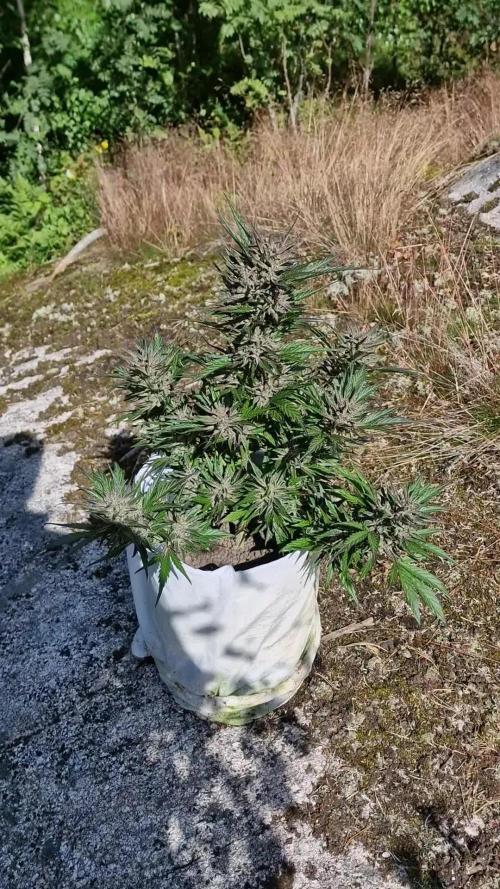
Pictures and update day 85.
Smaller lafanta harvested today. I picked bigger leafs of and will her let dry before trimming more. Only very slight mold, could've kept it for a week more, but I decided to take it down for balanced cannabinoid profile hopefully.
Lots of resin, but leafy. Not much limonene, mostly myrcene scent what I get from her.
Bigger plant will stay for another week atleast.
Thanks for being here and happy growing to you.

Likes
93
Share


@Natrona
Follow
FBA2502 Plants 1-6
Week 7 May 11– 17
FLOWER 3
Nutrients :
Micro 25 ml
Gro 10 ml
Bloom 30ml
CalMag 30 ml
Recharge 10ml
Green sensation 16.5ml
Power buds 7.5 ml
5/11 PH 6.56, PPM 1560, temp 69
2ltr each
5/12 PH 6.31, PPM 1120, temp 68
1 ltr each
5/14 PH 6.66, PPM 1280, temp 70 1 ltr each
5/15 PH 6.66, PPM 850, temp 72 1 ltr each
5/11 Defoliation, feed, pics & videos
I made 4 gallons, used 3 to water then poured the runoff back into the rest in the bucket. The next feeding, I added a gallon of tap water to residual and ph to 6,31 temp 69 & PPm 1120. Did the same on 5/14 and 15 using up the remainder of the feed solution.
I must monitor and control the tent environment manually. For the past month, the humidifier has been an issue putting out way too much humidity; often leaving water in the bottom of the tent. In addition, the temperatures are also out of control. I added an AC last week to keep the temperature below 80. I finally determined the exhaust vent is also broken and has been for some time.
I have been giving good reviews on the AC infinity system. However, during the time I’ve owned this tent (2 yrs), I had to replace the lights twice, fans, humidifier and now the vent twice also. Everything but the tent containment has been replaced. AC infinity does stand by their products, but they are in California, and it takes at least 2 weeks to receive the replacement. This is extremely frustrating at the critical transition to flower for my equipment to fail again. For the time being until a replacement arrives, I pulled the 4” exhaust vent from my 3x3 and hooked it up. I have the AC pushing air in and the exhaust pulling air out. This should create a neutral pressure tent environment-neither positive nor negative. I do have 3 circulating fans in the tent to move air around the plants.
It looks like growth spurts have slowed and plant height has been reached. Now is the time for buds to fatten and frost up. All of them (6) are short remaining less than 3 ft. They range from 15 to 31 inches. The tallest #4 &5 and #6 have very light leaves and appear nutrient deficient compared to the shorter phenotypes. Pictures taken later in the week show fading on a few the older leaves. All are receiving the same solution and are in the same soil blend. Moving the gals in and out of the tent for their glamor shots, I bent one limb and snapped another. The bent one I taped with a splint and the snapped one I medicated manuka honey and wired it back to the main stalk.
Leaves look like sativa leaning. I hope FBA2502-2 is a good daytime. I’m getting excited to see what develops in the next month or so. News Break: I’ve been informed that 2502 is FastBuds New Frostbanger and is indica for nighttime. I’m disappointed that I didn’t get a sativa to test because I really need a daytime strain. The 2 Blue Cheese plants I just grew are also nighttime.
Upon opening the tent, a faint odor was detected, and some stickiness was observed during the process of defoliation. Pictures of the puffy buds even show differences. #4 &5 buds hairs are different from the others being crinklier and the others are straighter. Some like #2 &5 are showing frost on the leaves. Wow at the beginning of flower to have that much frost. They are living up to the new strain’s name.
I’ve noticed that when I water, sometimes water shoots out of the side holes I the air pots. I will pack the soil firmly into the sides for future runs.
Measurements:
#1 15”
#2 20”
#3 17”
#4 30”
#5 31”
#6 24”
Your likes and comments are appreciated. Thanks for stopping by.
Growers love 💚🌿
💫Natrona💫
Likes
9
Share


@SimpleDiaries
Follow
They all are getting close to harvest except Gorilla Glue which decided to out grow tent. Had to open vent and add light for top cola. Ugh


Likes
3
Share


@OldskoolHed
Follow
Good week, starting to get tons of bud sites. Did a clean up of all the lower branches and foliage to keep my focus on track. Top dressed some nitro bat to help with the small nitrogen deficiency.
Likes
11
Share


@Madman2020
Follow
Day 35
Sprayed With .1 Bras
Finally LSTd the 4 main stalks of each plant.
They have rebounded from the toppings on day 34.
This week is to prepare the plants for flower
Aiming for a .95VPD
Began brewing Tricantonol, liquid Karma, Calmag and Southern Ag Microbes for a Tea later this week
The video shows the training structure.
Day 37
Gave the tric brew to the plants.
Plants responded well.
Also did a final Lollipopping before flower
Day 39
Watered with no Macro Nutes.
Taking one quart of water every 2 days

Likes
59
Share


@Rap_a_cap
Follow
Dramatic weather here, 2 violent storms have hitted my tent without mayor damages. I've bought a high density polyethylene film from farmer supplier, God blessed for this choice. Strong. But I've made a great mistake on Thursday because I was very busy cropping and curing Royal Gorilla that I've forget to water the sisters. I've watered them on Friday just before I started putting up the tent and the storm started with 90% humidity. It has become a tropical greenhouse, so to avoid mold disasters I drilled some side holes and raised the lower edge. Fortunately, on Saturday my little ones managed to dry themselves well thanks to a little sun and a dry wind. I've learned the lesson. Now that weather is a little bit better but colder I've realised that my plants now love to live under a greenhouse, flowering is accelerating.
This plant does its own thing, she started flowering very late but is now doing it very quickly. Return my hatred for her with huge frosty buds and gorgeous colors. She has boundless vigor, I don't think it's possible to burn her with fertilizers. It is not a reliable plant for flowering times but if you have extra space in the garden it is the classic plant that can give surprises. It is difficult to describe the scent, very different from what one smells in general, not pineapple but tropical, herbaceous, sweet. Hope to harvest within 15 days. Very difficult to estimate the yeld because is a huge, tall and very leafy plant. After sister's crop she will gain much more room and light.
P. S. Need some help from you guys to trim my Royal Gorilla, need to smoke less, that shit has no respect! 😁😎

Likes
6
Share


@SecretC8keSociety
Follow
Today will marked 7 weeks in flower. I believe I am going to take these girls up to 10 weeks due to being out of town for the weekend probably will flush them out for 1 week only before chopping them down.

Likes
20
Share


@NOLOGIK
Follow
1/8 prepare Easy combo bloom:
hello then this day I prepared the easy combo bloom of the royal in 6 liters of water with controlled ph, this nutrients make the flowers become big, among other things this will be like a booster! on i bud
30/07/2019
I can say that this strain drinks! in fact, he drinks a lot and the nutrients don't seem to bother even at higher doses ...
has anyone noticed the same?
17/06
if you have seen the diary from the beginning you have understood that the counting of the weeks starts when I put the seed to sprout ....
Likes
170
Share


@nonick123
Follow
Día 42 (27/02). Riego 1,25 Litro H20 + Wholly Base 2,5 ml/l + Solid Green 1,5 ml/l + Rise Up 0,5 ml/l de Gen1:11
TDS 898 PPMs - pH 6,5 (mínimo ajuste con pH+ para subirlo desde 6,2)
Plantas sedientas con un intervalo de riego cada 4 días. A partir de ahora regaré cada 3 días
Día 43 (28/02) Las ramas crecen muy rápido y se van colocando para recibir el máximo posible de luz. Es impresionante su evolución día a día!
Día 44 (29/02) Han crecido 17 cm desde que cambié a 12/12. Alucinante! 😍😍😍
Día 45 (01/03) Riego 1,25 Litro H20 + Wholly Base 2,5 ml/l + Solid Green 1,5 ml/l + Rise Up 0,5 ml/l de Gen1:11
TDS 891 PPMs - pH 6,25
Añado un poco de substrato al top y a los bordes de la maceta antes de regar, porque se ha compactado ligeramente.
Día 46 (02/03). Las plantas siguen su crecimiento imparable. 3 cm al día 😍
💦Nutrients by Gen1:11 - www.genoneeleven.com
🌱Substrate PRO-MIX HP BACILLUS + MYCORRHIZAE - www.pthorticulture.com/en/products/pro-mix-hp-biostimulant-plus-mycorrhizae
🎚️Controlled by TrolMaster TCS-1 Tent-X System Main Controller - https://www.trolmaster.com/Products/Details/TCS-1
Likes
19
Share


Likes
3
Share


@OVERFLOW
Follow
Flower Stage Week 3 to 4
Gorilla Zkittlez BARNEYS FARM
Superhero ETHOS FREEBIE
Flower Stage Week 2 to 3
Cake N Cream IN HOUSE GENETICS
Watermelon Zkittlez PYRAMID SEED
Purple Punch Cookies ETHOS FREEBIE


Likes
19
Share

@adam_pawloski87
Follow
What a fun run this was ! These Ogreberrys finished up from 81 days to 102 days with nice hints of gassy , sour purple , sweetness and glistening with frost! These ladies will cure up for a month an will be ready to test out ! So much fun , I highly recommend this strain if your looking for some oooy gooohy resiny grape smelling nugs !


Likes
57
Share


@PEAKYPLANTERS
Follow
Hi everyone, Weed brothers
Welcome to another week dedicated to the cultivation of our beloved and very esteemed plant!
There was so hot this week in this tent!
This bush is becoming very tempting !!! ; )
Happy and abundant harvesters for everyone

Likes
2
Share


