Likes
Comments
Share
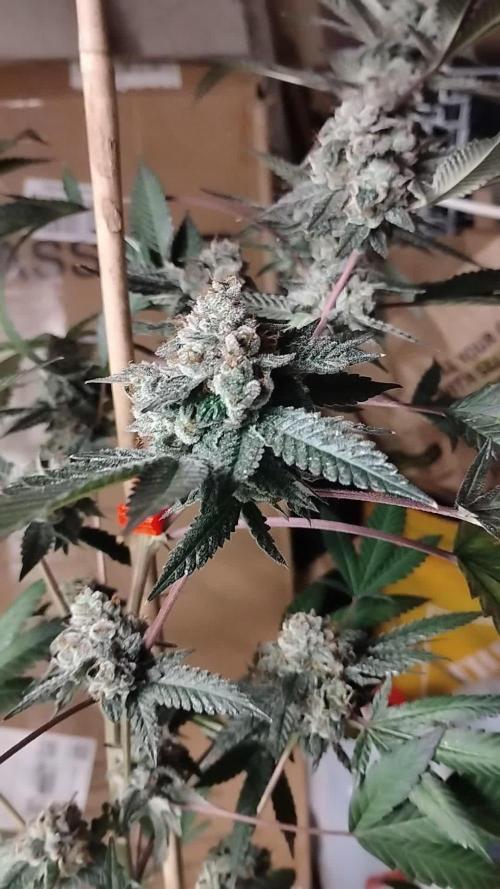
Mar 10th Week 13 CDP # 2 is doing awesome Some LST required and possibly some more defoliation this week CDP # 1 is picking up a little bit from last week but still far behind it’s sister plant Mar 13th Fresh nutrients today More defoliation CDP # 1 is still lagging behind CDP # 2 is healthy happy filling out nicely It is the biggest plant in the tent Mar 14th Defoliated CDP # 2 big time. Took me an hour or so. This is an experiment with defoliation for me. I want to see if this will help provide the stimulus to produce buds instead of leaves. All in an attempt to get the biggest nuggets I can.
Likes
6
Share
Legend Timestamp: 📅 EC - pH: ⚗️ Temp - Hum: 🌡️ Water: 🌊 Food: 🍗 pH Correction: 💧 Actions: 💼 Thoughts: 🧠 Events: 🚀 Media: 🎬 D: DAY, G: GERMINATION, V: VEGETATIVE, B: BLOOMING, R: RIPENING, D: DRYING, C: CURING ______________ 📅 D22/V18 - 07/05/24 ⚗️ EC: 0.7 pH: 5.3 🌡️ T: 22 °C H: 50% 🌊 🍗 💧 💼 🧠 🚀 🎬 1 TL video ______________ 📅 D23/V19 - 08/05/24 ⚗️ EC: 0.7 pH: 5.3 🌡️ T: 22 °C H: 50% 🌊 🍗 💧 💼 Topping and LST 🧠 🚀 🎬 1 TL video of grow and one of the topping ______________ 📅 D24/V20 - 09/05/24 ⚗️ EC: 0.9 pH: 5.4 🌡️ T: 19 °C H: 50% 🌊 🍗 💧 💼 🧠 🚀 🎬 1 TL video ______________ 📅 D25/V21 - 10/05/24 ⚗️ EC: 0.9 pH: 5.4 🌡️ T: 19 °C H: 50% 🌊 12 L 🍗 Calmag, Grow A-B, B52, Hydroguard, Rhino Skin, Bud Candy 💧 💼 🧠 🚀 🎬 1 TL video ______________ 📅 D26/V22 - 11/05/24 ⚗️ EC: 0.9 pH: 5.4 🌡️ T: 19 °C H: 50% 🌊 🍗 💧 💼 🧠 🚀 Out of Home 🎬 1 TL video ______________ 📅 D27/V23 - 12/05/24 ⚗️ EC: 1.0 pH: 5.3 🌡️ T: 20°C H: 50% 🌊 🍗 💧 💼 🧠 🚀 Out of Home 🎬 1 TL video ______________ 📅 D28/V24 - 13/05/24 ⚗️ EC: 1.0 pH: 5.2 🌡️ T: 20°C H: 50% 🌊 🍗 💧 💼 🧠 🚀 Out of Home 🎬
Likes
2
Share
Cosecha finalizada, fue una de las mejores plantas que e tenido, su aroma fuerte a menta y pegamento invadió toda mi casa, ni hablar del tamaño mounstruoso
Likes
15
Share
Flushing her as her end draws near with just PHed water.
Likes
18
Share
-Notes Green crack is over 34 inches while the La chems around 24. Next time i do a diary i will do each plant differently. Light height is 12 inches from highest colla which belongs to GC1. And let me say wow. Not only did she bounce back but she has went back to outgrowing all the other plants with stride. If a pro grower had this seed she would have got her own 3x3 cause that is a 1 pound plant. So.. I flushed TD2, GC2 and TD1. Nothing major just about 3 gallons fush each. Most of the ppm readings where already low. Its a good idea to flush out the soil. Already the lime green color is gone from gc2. Td2 is starting to frost golden brown. So far all the plants are on the road to good health. My ppm is around 600 but going to bump up to 900. We will see. We did the final defoliate. Mainly cleaned up the bottom of the plants and a few of them got pruned. Also cleaned out the tent and wiped down and moved fans around. -GC1 has grown almost 20 inches this week. Insane. I am about out of room in my tent. My light is near max and the colas are 10 inches away. Just going to have to deal with the fox tail later on those sadly. Any advice message me. Td2 has grown a few inches only in 2 weeks but the buds are fattening up. The La Chems finally started stretching. I am guessing 3 or 4 weeks on td1 and 2 weeks after gc and la chems. We will see.
Likes
8
Share
Hi growmies! This week winter started around here so the nights are colder, these lil ones aren’t growing much, im moving soon so ill probably start an idoor. I’ll keep you updated next Sunday till the goodsmokes!💨❤️🏻
Likes
4
Share
🥒 Project Blue Tent – Week 7 Pickle Lemon Haze F1 – Pheno B (Folder 14B) Hello everyone, and welcome back to another chapter of Project Blue Tent! 💙🌱 If you're discovering this diary for the first time, welcome aboard! Project Blue Tent follows four individual plants, each documented in its own dedicated diary from seed all the way to harvest. Every plant shares the exact same environment, lighting, irrigation, nutrition and training strategy, allowing us to observe how each phenotype develops its own personality while keeping the growing conditions as consistent as possible. Today we're checking in with Pickle Lemon Haze F1 – Plant B. And this week marks another important milestone. The canopy is full. The structure is ready. And we're preparing these beautiful ladies for their transition into flowering. ──────────────────────── 🌱 Week Seven – The Canopy Is Complete Looking across the Blue Tent this week, it's becoming increasingly difficult to distinguish the four plants from above. The SCROG has done exactly what we wanted it to do. Instead of four individual plants growing vertically, we now have one remarkably even canopy spreading across the available space. Plant B has been particularly well suited to this process. From the beginning, she's shown a natural tendency to grow outward rather than constantly trying to reach upward. Her compact structure, strong side branching and excellent response to training have allowed her to fill her section of the screen beautifully. After lowering and tightening the SCROG net, all four plants are now sitting at approximately 60 cm. At this point we're no longer trying to gain height. We're managing the surface we've created. Every branch has found its place. Every available section of the screen has been used. And now it's time to prepare that canopy for what comes next. ──────────────────────── 🕸️ SCROG – From Training to Flowering For anyone joining this diary without having followed the previous weeks, SCROG stands for Screen of Green. The purpose of the screen is to guide branches horizontally instead of allowing a few dominant tops to grow significantly taller than everything around them. As branches reach the screen, they're gently guided into neighbouring openings. This spreads the future flowering sites across a wider area and creates a much more uniform canopy. It's not about forcing the plant into an unnatural shape. It's about taking the growth the plant is already producing and distributing it more efficiently across the available space. And after several weeks of doing exactly that, the mission has essentially been completed. The screen is full. The canopy is even. Now we move into the cleanup phase. ──────────────────────── ✂️ Defoliation – Preparing the Plants for Flower This week's biggest job is defoliation. And because this technique is often misunderstood, it's worth explaining what we're actually doing. Defoliation isn't about stripping a plant of every leaf. Leaves are essential to the plant. They capture light and support photosynthesis, so removing healthy foliage without a reason isn't the objective. Instead, we're performing a deliberate canopy cleanup. After weeks of vigorous vegetative growth and SCROG training, the interior of the plants has become extremely dense. Leaves overlap. Branches cross through one another. Some areas are heavily shaded. And airflow through the middle of the canopy becomes increasingly important. So we're selectively removing foliage from areas where the density has become excessive. We're opening the interior. Creating more space between branches. Improving airflow. Improving visibility. And creating a cleaner structure for the flowering cycle. The objective isn't: "Remove as many leaves as possible." It's: "Remove what is no longer helping the structure we're trying to build." That's a very important difference. ──────────────────────── 🌬️ Why Defoliate Before the Flip? Timing is everything. A significant defoliation is a form of stress. Even when performed correctly, the plant needs some time to adjust to the loss of foliage and return to its normal growth rhythm. That's why we're doing this before flowering, rather than waiting until we're already well into the bloom cycle. Right now the plants are still running an 18/6 vegetative schedule. They have time to recover. We can perform the cleanup. We can watch how they respond. We can allow fresh growth to resume. And then we can flip the lights once the plants have settled again. I don't want to ask the plants to deal with a major cleanup at the same time they're dealing with the physiological transition into flowering. Instead, we're following a simple sequence: Build the canopy. Fill the screen. Clean the canopy. Recover. Flip. The goal is to enter flowering with healthy plants and a well-organised structure. ──────────────────────── 🌿 Pickle Lemon Haze F1 – Plant B Plant B continues showing exactly the personality we've come to know throughout this project. She's balanced. She's compact. She's incredibly branchy. And she seems perfectly happy growing sideways. While Plant A has always shown a little more vertical ambition, Plant B has naturally concentrated her energy into lateral growth and secondary branching. That has made her particularly enjoyable to work with under the SCROG. Her stems have continued thickening nicely, her internodal spacing remains compact, and her foliage has developed that rich green colour we've been looking for. The recovery from topping is now nothing more than a memory. She's completely moved on from that stage and has spent the last few weeks concentrating on building the framework that will eventually support her flowering sites. Looking at her now, it's easy to see how much the plant has changed. She's no longer simply a young vegetative plant. She's become a properly structured little bush with a full section of the canopy to her name. And now we're preparing her for the next chapter. ──────────────────────── 🥥 Feeding – Staying With What Works The nutrient recipe remains unchanged this week. Current feeding: • Plagron Hydro A — 1.9 ml/L • Plagron Hydro B — 1.9 ml/L • Plagron Hydro Roots — 1 ml/L Current pH: 5.8 Current EC: 1.92 mS/cm The plants continue showing excellent colour and vigorous growth, so I don't see a reason to change the recipe simply because we're approaching flowering. Sometimes consistency is the better decision. We'll see how the plants respond after defoliation, and depending on their recovery and appetite, we may increase the nutrient strength next week. For now, however, they're telling me exactly what I want to hear. Healthy colour. Strong growth. Good leaf posture. And no obvious signs that they're asking for anything different. So... Nothing changes. ──────────────────────── 💧 Drip Irrigation – Keeping the Roots Consistent The Mars Hydro automatic drip irrigation and drainage system continues to perform beautifully. Each plant is receiving approximately 1.2 litres of nutrient solution per 24 hours, delivered through the automated drip system. The slow and consistent irrigation keeps the coco supplied with fresh nutrient solution while the automatic drainage system removes the resulting runoff. This is particularly valuable in a project like this. Four plants are sharing the same environment. The same nutrient recipe. The same lighting. The same irrigation schedule. That consistency helps us keep another major variable under control. And as the plants become larger, the benefit becomes even more obvious. The irrigation system simply keeps doing its job every day. No rushing around with watering cans. No trying to remember which plant received what. Just consistent irrigation while I concentrate on observing the plants themselves. It's one of those systems that doesn't necessarily demand attention when it's working properly. And honestly... That's exactly how I like it. ──────────────────────── 🌡️ Blue Tent Environment The environmental conditions have remained very stable as we approach the transition into flowering. This week's average conditions were: • 🌡️ Day Temperature: 28°C • 🌙 Night Temperature: 25°C • 💧 Relative Humidity: 65% • 🥥 Substrate Temperature: 24°C • 💦 Nutrient Solution Temperature: 18°C • ⚗️ pH: 5.8 • ⚡ EC: 1.92 mS/cm • 💨 CO₂: approximately 450 ppm • 💡 Light Schedule: 18/6 • 💧 Irrigation: approximately 1.2 L/plant/24h • ? Pot Size: 8 L • 📏 Height: approximately 60 cm At this stage, stability is more important than constantly changing numbers. The plants are healthy. The canopy is full. The roots are receiving consistent irrigation. And the current nutrient strength is producing beautiful growth. So we're staying the course. ──────────────────────── 🌿 A Full Canopy Means a Different Kind of Work One of the interesting things about reaching this stage is that the work changes completely. Earlier in the grow, the challenge was getting the plants to occupy the space. Now the challenge is managing everything they've produced. When the canopy was still developing, every new branch was welcome. Now we have to start asking different questions. Does this leaf contribute enough? Is this area too crowded? Can air move through here? Is this branch getting enough light? Is this part of the plant going to benefit from remaining in the canopy? That's what good canopy management is really about. It's not simply growing as much as possible. It's deciding what growth deserves to remain part of the final structure. And Plant B has given us plenty to work with. ──────────────────────── Recovery Before Flowering Once the defoliation is complete, the most important thing we can do is give the plants time. No unnecessary additional stress. No rushing. No immediately piling another major intervention on top of the first one. The plants need time to rebalance after the cleanup. We'll watch the new growth. We'll monitor their posture and overall appearance. We'll keep the environment stable. And we'll let them recover. Once they're settled again, we'll be ready to move forward. This is why the timing of the defoliation matters so much. We're not trying to make the plants do everything at once. We're preparing them step by step. ──────────────────────── 👀 Looking Ahead The next few days should be particularly interesting. The SCROG has been filled. The canopy has been cleaned. The plants now have room to breathe. And we're approaching the moment we've been working toward for weeks. The nutrient recipe will remain unchanged for now, although we may increase it once we see how the plants respond after defoliation. The irrigation continues at approximately 1.2 litres per plant per day. The environment remains stable. And most importantly... We're not rushing the flip. We'll allow the plants to recover properly first. Then, when they're ready... We flower. 🌸 ──────────────────────── 💙 Thank You A huge thank you to Zamnesia for making Project Blue Tent possible and for providing these outstanding Pickle Lemon Haze F1 genetics. A heartfelt thank you to Plagron for the Premium Growbags and Hydro nutrient line that continue supporting this beautiful growth. A special thank you to Phytonaut for the LED lighting helping us maintain such a consistent and beautifully structured canopy throughout the Blue Tent. And a massive thank you to Mars Hydro for the automatic drip irrigation and drainage system that continues bringing consistency and simplicity to the daily routine. Thank you to GrowDiaries for providing growers around the world with a place to document their journeys, exchange knowledge and inspire one another. And finally... Thank you to everyone following Project Blue Tent. Whether you've been here since germination, recently discovered this diary, leave comments every week or simply enjoy watching these four sisters develop... Your support genuinely means the world to me. 💙 Plant B has spent the last several weeks quietly building herself into one beautiful, compact and incredibly well-structured phenotype. Now the canopy is ready. The cleanup is complete. All that's left is to give her time to recover... And then see what she can do. Until next time... Growers Love, happy growing, and take care everyone! 🌱💙
Likes
25
Share
She is a great strain thus far. My tent has been getting a bit hotter in the summer. Just a bit of issue though. Can't wait to try this one. Such a sweet candy smell.
Likes
4
Share
Transplanted and topped today. I always transplant and top at the same time as new shoots equals new roots! Maximize your grow! The roots are looking amazing for this transplant. I made another coco perlite and gaia green mix. This time with a 1:2 ratio of the 4-4-4 and 2-8-4 because I will be flipping to flower the week after the plants have recovered from topping. On transplant I use a mycorrhizae powder to reduce transplant shock and aid in nutrient uptake and root development. They still need some nitrogen to support them during the stretch but the added phosphorus helps with the stretch along with potassium to setting buds. I also installed my first layer of trellis to weave the plants in early. At the end of the week I got 2 autos and wanted to see what I could do with them so I planted them and then also got rid of one of the Caramel Creams (C.C) because it was lagging behind the other one a little to much.
Likes
32
Share
@S_V_F_O
Follow
in ppm 800 ph 7,5 out ppm 2000 ph 5,7 Pots 40cm Satori 50cm Blueberry 35cm Height from floor to light source 1m 25cm
Likes
43
Share
🍼Greenhouse Feeding BioGrow & Bio Enhancer ⛺️MARSHYDRO The ⛺️ has a small door 🚪 on the sides which is useful for mid section groom room work. 🤩 ☀️ MARSHYDRO FC 3000 LED 300W ☀️Also special thanks to VIPERSPECTRA P2000 (200W) & XS2000(240w) LED growlights 🌱 FastBuds 420
Likes
22
Share
Excelente resultado el que hemos obtenido con estas cepas de kannabia, pero esta se lleva la palma.. para mi, es la favorita del cultivo. Ha sido la más fácil de cultivar, la que mejor se adapto en el espacio de cultivo.. bastante productiva y con una resina brutal. Sabores cítrico y mango muy acentuado.. es una pasada fumar esta cepa. Con esto damos por terminado el cultivo con kannabia.. disculpad la tardanza en publicar... tarde o temprano siemore cumplimos! Hasta pronto amigos! Un saludo growers 💚👨‍🌾🏽
Likes
9
Share
Привет друзья. Наше знакомства продолжается с новым сортом автоцветущих растений от Smail_Seeds сорт ORIGINAL AUTO CHEMZKITTLEZ F1 reg. Сегодня растению 73 дня. Растение очень хорошо развилось, ни каких сбоев в генетике не наблюдалось за весь цикл. Шишки наливаются очень хорошо😀 Так же стрессую, что бы получить пыльцу. Скоро будут феминизированные растения. Сорт выводим сами. Смотри мой профиль, у нас всегда есть что то интересное. Не забудь поставить лайк❤️, если понравилась как прошла неделя И читайте наш TELEGRAM: https://t.me/smail_seeds #Smail_Seeds 😀
Likes
14
Share
@ggiolla
Follow
so far fully satisfied. the plant has officially entered flowering and the first buds are starting to appear. the plant begins to take on the purple aspect that corresponds to it. I notice signs of some parasites on the leaves, up to now I have only found about 4 small spiders clearly visible to the naked eye, and perhaps some other specimens of whiteflies. I accept advice on how to prevent an infestation in the best way.
Likes
8
Share
Beautiful pheno of Ak420 by seedstockers same smell as her sister, the other 2 plants of this same ak420 package, let's see how this wonderful lady keeps developing, I think I could have train this lady just like this but I should have gave her a few more weeks of growth before changing the light cycle.
Likes
24
Share
Harvested the Clones! I'm stoked how #4 grew out, I think she's the winner! With limited space in my grow, I'm only going to be able to bloom out the rest of the phenos clones to week 3-4.. The show must go on.. It's the price I must pay for using non-ideal cloning methods... Next round of phenohunting will have 100% cloning success, using my new aeroponics cloning machine.
Likes
Comments
Share
missed a whole week in this I deliberately didnt post or take any pics in week 7 because I burned my baby( used my cucumber feeding water which is stronger) so bad I was ashamed to show her to the world I did a flush but the damage done to her beautiful leaves is permanent but she still coming buds coming in nice small from the shock of the burn but still healthy plant .
Likes
2
Share
Diese Woche brachte für den Traphouse Genetics Cut eine spürbare Veränderung. Zu Beginn stand das Blattwerk noch sehr gedrungen, während die Spitzen bereits deutliche Blütenknäuel mit langen weißen Fäden zeckten. Es war an der Zeit, die Schere anzusetzen, um im Dickicht Platz zu schaffen. Der radikale Schnitt zeigt sofort Wirkung: Das untere Drittel ist nun komplett kahl und von jeglichem Kümmerwuchs befreit. Gleichzeitig wurden gezielt Sonnensegel entfernt, damit das Licht ungehindert bis zu den unteren Ansätzen der künftigen Main-Colas durchdringen kann. Diese Maßnahme sorgt für eine optimale Luftzirkulation im gesamten Profil und kanalisiert die Energie aus dem 15-Liter-Topf hocheffizient. Dank der Vitalität des Advanced Nutrients Schemas zeigt sich die Pflanze von der Prozedur völlig unbeeindruckt. Die Weichen für eine ungehindere Entwicklung und die kommende Harzbildung sind damit perfekt gestellt.