


Likes
Comments
Share


@m99smith
Follow
Afghan Hash Plant, week 6 of flower. Another frosty strain, but not quite as frosty as the Mango Merengue but still beautiful. The Afghan Hash has a sweet citrus smell with an earthy smell. Not much to do other then water since they got their last bit of slow release nutrients acouple days ago which lasts 3 weeks.

Likes
6
Share


@Dpizzle1986
Follow
Ok.. almost finished.. still some clear trichomes but she will Def be done by week 8... getting super

Likes
178
Share


@NuggetPawn
Follow
Well, this week has been eventful. What started with a fly deciding to lay eggs in my buckets with larvae swimming around and chilling on my roots turned into a bit of a disaster. I used very weak H2O2 (diluted 3% solution). To try and clean infestation, the roots didn’t like it, even though the actual concentration of H2O2 was probs less than 0.25%. Lesson learned 🙃 It has given some of them a touch of root rot (this is an assumption because I can’t figure out what else it could have been). So growth has stunted a lot. Just before the bug problem, I increased EC to 1.1, this was probably another mistake, the smaller girls at the back with a smaller root mass got massive lock out, potassium, mag and calcium by the looks of it, coupled with a few not so well timed PH swings out of the 5.5-6.5 range gave me a lot to combat this week.
But, life goes on, they’re still alive (just about)... As this is probably the hardest curve ball I’ve had thrown at me since I started growing canna, I have cut back the EC to 0.56 to allow them to heal. Probably wrongly decided to top them all as they were growing past 7th node, either it’s gonna pay off, or I’ll be posting harvest details of 0g by this time next week 👽
I am on a stay at home holiday from work for the next 3 weeks, so looks like my babies are staying in the ICU and I’ll do my best to bring them back to life 😊

Likes
1
Share


@BiggaB
Follow
Plant freshly cropped smells very gassy, big trichomes
I will post the harvest once dried✌️


Likes
79
Share


@Xonidan
Follow
Jeden Tag Schimmelkontrolle. Ich finde immer wieder kleine Schimmelstellen.Der Ventilator unter der Hutze packt die Feuchtigkeit nicht mehr.
Die Buds werden immer dicker.
14.8.25 habe einen größeren Ventilator zusätzlich zum USB-Ventilator reingehängt.
Die Feuchtigkeit unter der Hutze war minimal.

Processing
Likes
7
Share


@x_grower
Follow
Very fast seedling process, seeds stayed soaking for 24h and in the water they were already showing the first white root hair, another 48h in the paper towel and the day I potted them up they showed cotyledons. They took around 11 days to reach third node and complete germination but honestly I belive it could be faster if in better enviroment, mainly the humidity which was low and I transplanted them a day late. From day 5 I started feeding them exact same nutrients and ratio from the first vegetative week but starting at 0.4EC and increasing by 0.1EC/day until 1.1EC

Likes
2
Share

@AlpenZilla
Follow
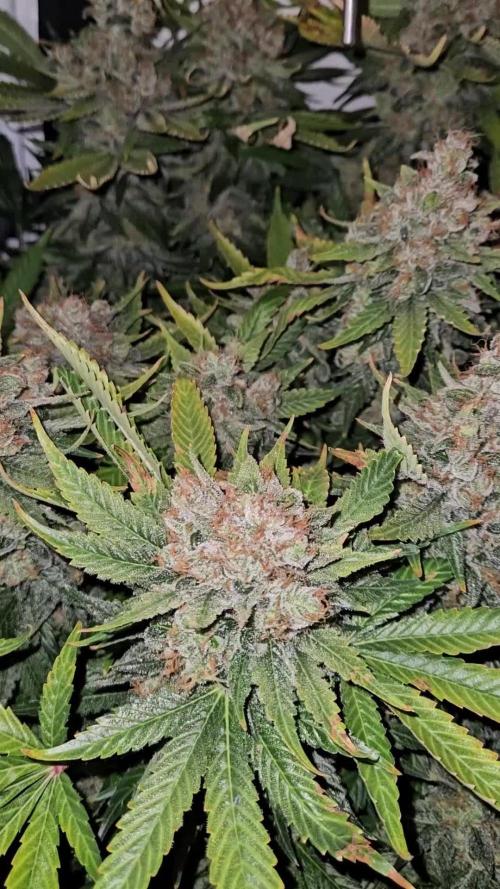
✂️ Harvest – Flowering Week 12 | Day 78 (17 weeks total)
Strawberry AK – Harvest Summary
Harvest took place today, marking 17 weeks from germination.
⚖️ Wet Weight
Strawberry AK: 1240 g
🌿 Final Impression
The Strawberry AK delivered a strong final result.
Buds appear dense, well-formed, and heavily frosted, with an overall solid finish to the run.
🧠 Post-Harvest
The plant is now hanging to dry, and final results will be determined after trimming and dry weight assessment.
Overall, a long run, but a successful outcome. 💪🌿

Likes
26
Share


@Rangaku
Follow
Apricot is a leggy little thing , doubled in size the last week .
Transplanted her into her forever home and tied her down this week and fully expect her to double in size width and height the coming week , traditionally these autos love getting spread right out .
Starting to take shape in the tent now .

Likes
1
Share

@Borberad
Follow
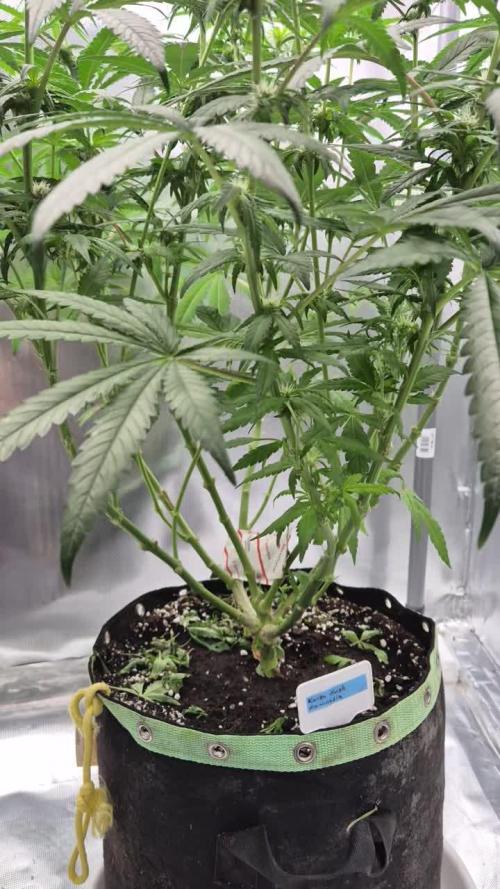
Blütewoche 3
Die Blüte ist im Gange! Die Pflanze streckt sich immer noch zaghaft. Insgesamt ist die Pflanze sehr buschig und dicht gewachsen daher muss jetzt entlaubt und aufgeastet werden.Der Düngeplan bleibt unverändert.
* Zustand der Pflanze: Mäßiger Blütestretch, schöne Blütenstände.
* Wichtige Ereignisse: Zeltwechsel, Lollipoppen
* Düngung & Messwerte:
* Gießwasser: pH ca. 6,3. Leitwert 1,4 bis 2 S.
* Drain: Wir stellen sicher, dass der pH-Wert nicht unter 5,5 und nicht über 6,8 liegt und der Leitwert die +/- 500 S Abweichung einhält.
* Anpassungen: Entlauben und Lollipoppen


Likes
44
Share


@RakonGrow
Follow
Note :
+ jegliches Zubehör wird in der GermniationsWoche aufgelistet . Zeitraffer Videos folgen immer nachträglich.
+ videos werden so geschnitten das nur ein geschlossenes Zelt erscheint , ergo Fehlen paar reale Minuten (ca 1 Std) .
++ nur probleme mit der Zeitrafferkamera . Sorry für die Schrägen und halben Aufnahmen . Vielleicht schaff ich beim nächsten Grow da abhilfe zu leisten.
Day 50:
Wachstumstillstand bei 68cm .
Day 51:
+ Höhe : 68cm
+ 2 Liter Flaschenwasser
+ + Dünger für Blühte
+ + + Canna Terrar Flores (Achtung wirkt wie PH-)
+ + + Canna Boost
+ + + Cannazym
+ + + Greenhouse Feeding BioEnhancer als PH+
Day 52:
Kleine Entlaubung .
Test MAX Licht : Main-Cola PPFD 1000 (16h) , sekundär Colas PPFD 750 (16h). Das wird mächtige Mangelerscheinungen geben . LED und Cal-Mag Probleme sind ja ein Standard Problem :)) Schauen wir mal was passiert bei so einer Autoflower.
Day 53:
+ Höhe : 68cm
+ 1.5 Liter Flaschenwasser
+ + Dünger für Blühte
+ + + Canna Terrar Flores (Achtung wirkt wie PH-)
+ + + Canna Boost
+ + + Cannazym
+ + + Canna PH+
+ + PH 5.81
Wegen Wetter Test verschiebung um ein paar Tage . Es wird hier einfach zu heiss im Zelt.
Day 54:
Weltuntergangsstimmung für meine Zoe . Dank des Super Wetters hab ich hier 77%-80% Luftfeuchtigkeit (draussen ist es noch höher ) und es wird auch noch warm . Ergo, schon gestern hat meine Pflanze extreme Probleme mit der Wurzeltemperatur bekommen und hat die Blätter hängen lassen . Ich hab das Licht runtergeschraubt und Abluft extrem erhöht. Ventilation direkt in die Pflanze sonst gibts Schimmel . Aber hilft halt nicht wirklich . Luftentfeuchter läuft auf Dauerschaltung und produziert dann auch noch Wärme, die ich überhaupt nicht gebrauchen kann bei den Temperaturen draussen lol. Ein Teufelskreis :((((((
Day 55:
+ 1.75 Liter Flaschenwasser
+ + Dünger für Blühte
+ + + Canna Terrar Flores (Achtung wirkt wie PH-)
+ + + Canna Boost
+ + + Cannazym
+ + + Canna PH+
+ + PH 5.88
Draussen sind 31 Grad , ich hab den ganzen Growroom + Vorraum (meine Wohnung ) über Nacht runtergekühlt so weit es ging (23°C und 22°C). Das Licht noch weiter reduziert dafür näher an die Planze gemacht. Das ist wirklich das mindeste was noch geht. Liegt ca bei PPFD 600 an der Spitze . Wenigstens ist hier die Luftfeuchtigkeit im Rahmen , zwar immer noch zuviel (67% im Zelt) aber besser so als das hier die Hitze in die Höhe schießt . Nach 12h Licht (19:00 Uhr) wird dann wieder aufgedreht und die letzen Stunden mit mehr intensität nachgeholt was nachzuholen geht , denn dann gehen hier erst wieder die Temperaturen runter .
Day 56:
Läuft wie gestern ab 19:00 wurde das Licht aufgedreht und DLI nachgeholt .


Processing
Likes
142
Share


@MadeInGermany
Follow
Hey everyone :-).
There is not much to tell this week :) A few came to the flowering tent, 2 are still in the vegi phase for 2 days and then come last to the flowering tent :-)
The Blue Cheese and the Kosher Tangie Kush smell very good and how they should 😍👍
It will be difficult to choose 2 mums :-).
I wish everyone a nice week 👌 Let it grow


Likes
2
Share

@DogDoctorOfficial
Follow
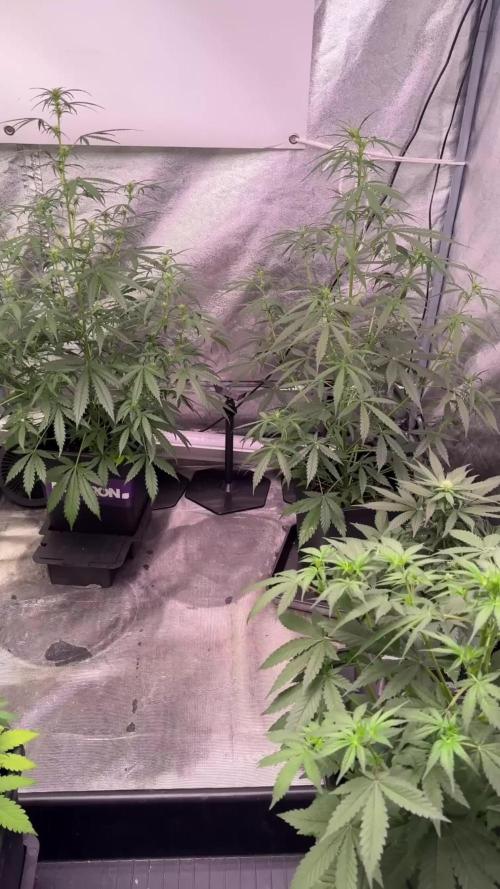
🍬 Candy Rain Auto by Zamnesia | Week 5 (Late Vegetative Growth / Pre-Flower)
🍬 The Solo Survivor – Small Setback, Big Future
Every grow has a story, and not every story begins perfectly.
Candy Rain is the only survivor from this folder. Losing her sister early in the project was entirely on me, and that’s simply part of growing. Every mistake becomes another lesson, and rather than focusing on what was lost, this diary celebrates the plant that kept pushing forward.
Despite her delayed start, she’s proving that healthy genetics and a stable environment can overcome a rough beginning remarkably quickly. She’s only a few days behind the rest of the room, yet every day she seems determined to close that gap.
This project continues documenting how autoflowers perform under a true 12/12 From Seed schedule from germination, challenging the common belief that this lighting regime prevents vigorous development. Supported by the complete Plagron feeding program, grown under the Future of Grow Black Series LED, and thriving inside the Zamnesia-sponsored 8×8 Adventure, Candy Rain is becoming another reminder that every plant deserves its own opportunity to shine.
And this week…
She absolutely deserves her spotlight.
⸻
🌱 Week 5 – Catching Up Fast
Although I’m still considering this her final week of vegetative growth for reporting purposes, the plant clearly finished the week entering pre-flower.
Fresh pistils are now appearing at the top growth, and the transition toward bloom is well underway. Rather than exploding into stretch overnight, Candy Rain is making the change gradually while continuing to build a sturdy framework for flowering.
At around 60 cm tall, she isn’t the largest plant in the room, but she’s beautifully proportioned. The internodal spacing is excellent, the main stem continues thickening nicely, and every branch is positioning itself to receive strong light as flowering progresses.
Sometimes the smaller plants end up becoming the easiest ones to manage, and she’s developing exactly that kind of balanced architecture.
⸻
🌿 Training & Plant Development
Training has remained simple and gentle throughout the grow.
Low Stress Training has helped open the canopy while preserving the plant’s natural structure. Combined with regular leaf repositioning, this has allowed light to reach developing side branches without introducing unnecessary stress.
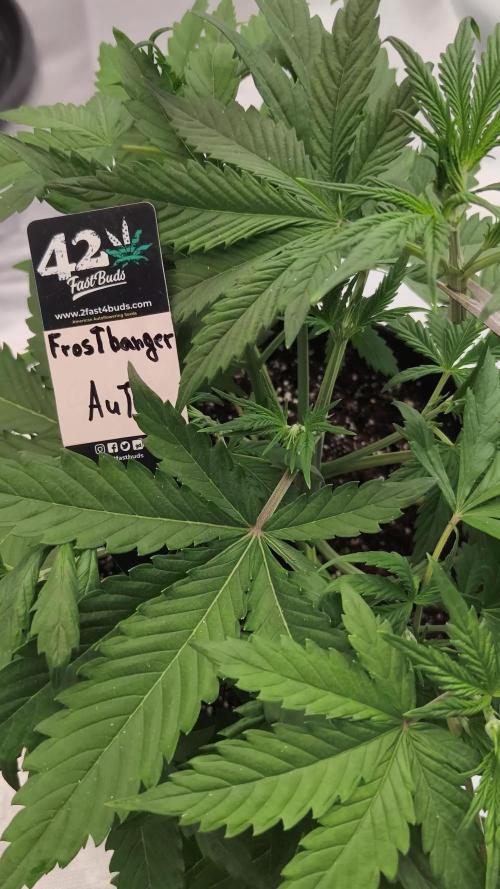
One thing visible this week is some damage on a few older leaves.
This isn’t something I’m concerned about. Between the early setbacks, a little environmental stress from airflow, and perhaps my own learning moments while dialing everything in, a handful of leaves have certainly seen better days.
The important part is what the plant is telling me now.
The newest growth is emerging vibrant, healthy, and beautifully green, showing that the current conditions are exactly where they need to be. Rather than chasing cosmetic perfection on older leaves, I’m paying attention to the fresh growth—and that’s looking fantastic.
Healthy new growth always tells the real story.
⸻
💧 Nutrition & Irrigation
Although this report still closes the vegetative chapter, the plant has already begun receiving the same flowering transition feed as the rest of the room.
Current feeding:
• Terra Grow — 1.9 ml/L
• Terra Bloom — 1.9 ml/L
• Pure Zym — 1 ml/L
• Sugar Royal — 1 ml/L
• Power Roots — 1 ml/L
• Power Buds — 1 ml/L
The transition has been smooth, with an EC around 1.83, pH maintained at 6.05.
No signs of nutrient deficiencies are developing in the new growth, giving me confidence that the plant has recovered completely from her slower beginning.
She’s now receiving exactly what the rest of the room is receiving—and she’s responding beautifully.
⸻
🌡️ Environment
Environmental conditions continue providing a stable ecosystem for every plant inside the tent.
* Day temperature: 31.1°C
* Night temperature: 25°C
* Relative humidity: 72%
* Solution temperature: 21.6°C
* Root zone temperature: 21°C
* CO₂: approximately 639 ppm
Even with the warm summer temperatures, the healthy root environment, excellent airflow, and consistent irrigation continue allowing the plants to grow vigorously while transitioning naturally into bloom.
The room continues doing exactly what it’s supposed to do.
⸻
👀 Looking Ahead
Next week marks the beginning of a completely new chapter.
The stretch should become much more noticeable as Candy Rain fully commits to flowering, and I’m excited to see how her elegant structure begins filling with bud sites over the coming weeks.
Being only slightly behind the rest of the room really isn’t a concern anymore. In fact, she seems determined to catch up one day at a time, and with every new set of leaves she’s reminding me that healthy plants don’t dwell on the past—they simply keep growing.
I’m looking forward to watching those first flower clusters begin stacking along each branch.
⸻
🙏 Final Thoughts
Not every plant starts life under perfect circumstances.
Sometimes the most rewarding grows are the ones that overcome early challenges and keep moving forward without looking back.
Candy Rain may be the solo survivor of this folder, but she’s far from being “the leftover.” She’s becoming a beautiful example of resilience, proving that a slightly delayed start doesn’t define the final harvest.
Every week she’s writing a better chapter than the last.
A huge thank you to Zamnesia for making this incredible project possible, Plagron for providing such reliable nutrition, Future of Grow for delivering outstanding lighting, and to everyone following this 8×8 Adventure here on GrowDiaries.
Your support, comments, and shared passion for growing make these weekly updates something I genuinely look forward to creating.
Until next week…
Growers love and happy growing! 🌱💚



Likes
16
Share


@MrPotHeadCol
Follow
Hola a todos los visitantes del jardín, hoy las nenas cumplen 15 días , el plantón que está deforme desde el principio continúa sin cambios , he aplicado vía foliar SAFER MIX que es una combinación de hongos benéficos , con esto me voy preparando para la flora , veo las plantas un poco amarillas asi que también se aplicó vía foliar green explosion de top crop para aportar nitrógeno , espero valla muy bien el aporte para empezar con fuerza el crecimiento , gracias por sus aportes al jardín


Likes
14
Share


@Naujas
Follow
79 days!!!!! and the harvest is already harvested :) The whole growth until week 6 went very well, then the girl got a little worse, (I think it's my mistake, which I described in previous weeks), but besides all that she managed to ripen perfectly, matured stiff flowers, full of shiny sticky trichomes with a very, very sweet aroma ;) 210 gr of wet buds, I also collected a lot of sugar leaves from which I will make bubble hash :) I can't wait to taste it :) this is my first trip with Sweetseeds Looking at the flowers I understand that I will definitely repeat it :) I will leave more feedback after the smoke review:) good luck to everyone.