


Likes
Comments
Share


@Grow_for_Happiness
Follow
Not much happening this week. WPM treatment worked like a charm and they are looking great. Flipping the lights and installing the netting in next 2-3 days just trying to hold out for some equipment to show. Adjusted ties a few times throughout the week and canopy is kept even. Gave #1-3 another round of defoliation on day 4, last one before flip. Plants really filling out tent now. Grew 4" this week, looking nice and healthy for the flip. Extended my tents exhaust to 18' and temp/humidity still holding as set.

Likes
179
Share


@Grow3rPT
Follow
Total de Dias 36 (F 06) - 07/09/2021 / Rega com nutrientes, 1ml de calmag e 1ml de Bloom. Na próxima rega ja penso aumentar um pouco o bloom.
Total de Dias 37 (F 07) - 08/09/2021
Total de Dias 38 (F 08) - 09/09/2021 / Rega apenas com agua
Total de Dias 39 (F 09) - 10/09/2021
Total de Dias 40 (F 10) - 11/09/2021 / Rega com nutrientes ( 1ml de Bloom e 1ml de micro + cal mag) e desfolhação das folhas inferiores
Total de Dias 41 (F 11) - 12/09/2021
Total de Dias 42 (F 12) - 13/09/2021 / Rega apenas com agua

Likes
152
Share


@BioBuds
Follow
How is it growing, my fun(k) loving friends?
***INFO*** For more on my setup, why it was monster cropped, and how I made the canopy, see Germination page and subsequent weeks.
They had 48 hrs of darkness, and the time has come to say goodbye to my friends.
I thanked them again, spend some time with them, and under the sound of Amazonian shaman's harvest and healing songs (will post link), asked for their gifts, and apologized for taking their lives.
I do this while in contact with the plants, touching, smelling them, observing every detail, no thoughts, just in the present moment.
I feel emotional as I do this and remember how they were a companion, a source of distraction in a time of worry, sadness, and loss.
How they already comforted me and kept me company in a time of painful insights about honesty, commitment, and staying true to myself.
I thank them again for their wisdom and gifts, viva Santa Maria, viva Planta Maestra, may the mother of all beings give us healing and protection.
And I proceed with the harvest as I visualize my intentions with every cut.
Branch by bud laden branch is tenderly untangled from the scrog net, taken with a clean-cut and immediately hung upside down in the grow tent, which will now double as a curing and drying room.
A couple more weeks and we will have the final cured and dried weight.
More photos and movies will follow, this is where we are so far!!
Thank you for checking in on our journey, all the love, support, and compliments were a true motivation, a very needed distraction, and guidance for me and for Sunshine.
Big hug, lots of love and take care!
***UPDATE***
The final weigh-in is ready. I hadn't seen them in a week, because of my vacation. The humidifier I set up, had failed. So the grow had dried in 7 days, what I wanted to be 14 at least. Thankfully, its Sativa ancestry shines through, the smoke isn't harsh, the buds a sticky and smelly, no hay smell at all.
We ended up at 246 grams, excluding a shitload of larf and popcorn bud, totaling at 310 grams all in, a first at a gram per watt for me, but for the Zambeza seed competition, I stated we would only weigh the quality bud. Overall I'm very happy!!
Guessed weights in the competition:
- @hashy : 0 grams
- @MrHyde : 198 grams
- @JamMAKEcan : 224 grams
- @TrickOrTrip : 260 grams
- @Greeneysgrow: 312.5 grams
- @Ohey_fu_kyu: 350 grams
- @Puffs4Pipes: 385 grams
- @Hempkid : 605 grams
- @DoDrugs420 : 621 grams
TrickorTrip was closest!! Congratulations!!! I will be contacting you to get the seeds with you!! Thanks for playing to all the others and better luck next time, I will give away some seeds again!!
Summary:
Cost of setup: 850 euro
Cost of nutrients and soil: 125 euro
Cost of seeds: None they were cloned
Cost of power: 150 euros in the power bill
Total cost: 1125,-- for setup and this run.
I smoke for medical reasons and it's used for ritual and healing purposes, never to be sold, as it loses its magical properties.
Should I have to buy Gelato of this quality at the dispensary that I frequent, it would cost me at least € 15,-- per gram.
246 x 15 = 3690 euros. also, 49 car rides of 25 miles there and back, 250 euros in gas saved.
Overall conclusion:
I think we can call this a succes. Made back my investment, my cost per grow and we saved the environment.
Thanks for all the love, tips and support! Couldnt have done this on my first indoor LED grow, without you!!
Wish you were here to smoke a fat one, some good conversation about our hobby and now... I'm hungry.... See you on the next one!! Hugs Bud!!!
PS. Should you be interested in Shamanism or Teacherplants by anything I mentioned. Pls watch the following documentaries or read these books:
- The Last Shaman on Netflix
- Fantastic Funghi on Netflix
- Food of the Gods, by Terrence McKenna
- The Herbal Jedi / Yarrow Willard on Youtube
- The Tao of Physics
- DMT: The Spirit Molecule on Youtube
- The Doors of Perception by Aldous Huxley
- Plants of the Gods by Richard Evans Schultes and Albert Hoffman
- What the bleep do we know - Down the rabbithole (although vague and some theories mentioned here, could not be replicated, like the water by Emoto)
- The Secret on Netflix- if you like enlightenment in bitesize, tellsell format
The link to Santo Daime hinarios for the Santa Maria cura, healing ceremony: https://www.youtube.com/watch?v=kSjNgg_-iD0&t=333s
If you want to learn more about permaculture / homesteading, see the following links:
- Pete Kanaris, Green Dreams TV, visits many permaculture farms in tropical area's, he is great!! https://www.youtube.com/user/GreenDreamsFL
- Supersoil recipe by Learn Organic gardening, take your ADD meds first, dont watch if prone to epilepsy... they like to talk... https://www.youtube.com/watch?v=z9_5iIqpTVA&t=1216s
- Mr Canuck, indoor organic cannabis growing master on Youtube: https://www.youtube.com/channel/UCtU2-cpxx18iQ4BvracrxDQ
- People creating food forests all over the world: https://www.youtube.com/user/happenfilms
Happy travels and enjoy!
Final update: Very happy to announce that this dairy had won the sixth place best diary of August 2021. My prize came in yesterday and I'm very happy!! Thank you Growdiaries!! Thank you Fastbuds!!! Thank you all my grow buddies here for the love and support!!
Hope to see you all, maybe at a future Growdiaries Meet and Greet? Wouldn't that be a lovely idea, per country and a yearly one on a different continent every year? The Growdiaries Conference. Would be a great Hemp growers fair... I'll keep dreaming and light another one... Big hug BioBuds

Likes
10
Share


@Minuteman_Organics
Follow
A few of the zed blacks hermed..spreading pollen into the flower tent. Already seeing some seeds develop. It is what it is. I should have done a better job checking on them. I kept the Zed blacks that only had a couple flowers on the bottom but tossed anything that had flowers growing up the majority of the plant. Some of the most famous strains in the world were self pollinated so I don't have issues with a couple male flowers. They're just trying to improve their fitness as nature intended.
The plants are doing very well. A few of the bottom leaves are dying which is normal...senecense! Sucking up those nutrients. I've been liquid feeding using the fish, seaweed, humate and recharge.
I have saved the males and they are trying to reveg. Still popping out a few flowers which I'm cutting off. 1 rainbow belt. 1 zed black. 3 hash plants
The hash plants are smelling incredible. Definitely a few keepers mixed in here. Maybe 3/7. Hopefully the quality of the flower backs it up.
Zed blacks have 2/3 I'm interested in. One is very very low yield. Unless its a really high quality plant I'm gonna toss it
Rainbow belts are both smelling ridiculous. Super frosty. Good yield. One is slightly more frosted than the other. The zkittles pheno has pure Skittles smell with a little lemon cleaner chem to back it up. Probably my keeper!

Likes
8
Share


@Rinna
Follow
Overal I’m very happy. The weight’s looking insane. Obviously imma update you after drying and curing. Can’t say to much at this point, apart from the fact that everything is looking very nice!

Likes
2
Share


@Altitonans_Fulmen
Follow
For most crops, a slightly acidic soil pH between 6.0 and 6.8 is ideal because it optimizes nutrient availability. When soil pH rises above 7.0 (alkaline), the concentration of hydrogen ions H+ drops significantly, and they are replaced by calcium, magnesium, or sodium ions on the clay colloid exchange sites. To naturally lower alkaline soil pH, you can add organic matter (carbon-rich materials), which produces weak organic acids as it decomposes. Maintaining this slightly acidic range stimulates a highly active, diverse microbial community; these microbes decompose organic matter and release carbon dioxide CO2, which plants absorb through their roots and leaves to boost photosynthesis and sugar production. Furthermore, the added organic carbon acts like a sponge, drastically improving the soil's water-holding capacity.
While soil biological activity does involve cellular electron transport, electrical conductivity (EC) in soil is actually a measure of dissolved mineral salts, not a voltage carried by individual microbes. Soil microorganisms secrete organic acids and chelate metallic and non-metallic minerals, transforming locked-up inorganic compounds into bioavailable organic complexes. Unlike harsh synthetic fertilizers that can dehydrate soil life in high concentrations, these naturally chelated nutrients safely nourish the plant, creating a thriving, self-sustaining ecosystem where plants can efficiently synthesize their own food.
Metal-based: Could include elements like iron, manganese, copper, or zinc, which are essential nutrients for plants but can exist in forms not readily accessible.
Non-metal-based: Examples like calcium carbonate, phosphate, or sulfur are also important for plant growth and potentially serve as building blocks for the organic salt.
Chelation in a plant medium is a chemical process where a chelating agent, a negatively charged organic compound, binds to positively charged metal ions, like iron, zinc, and manganese. This forms a stable, soluble complex that protects the micronutrient from becoming unavailable to the plant in the soil or solution. The chelate complex is then more easily absorbed by the plant's roots, preventing nutrient deficiency, improving nutrient uptake, and enhancing plant growth. Chelation is similar to how microorganisms create organic salts, as both involve using organic molecules to bind with metal ions, but chelation specifically forms ring-like structures, or chelates, while the "organic salts" of microorganisms primarily refer to metal-complexed low molecular weight organic acids like gluconic acid. Microorganisms use this process to solubilize soil phosphates by chelating cations such as iron (Fe) and calcium (Ca), increasing their availability.
Added sugars stimulate soil microbial activity, but directly applying sugar, especially in viscous form, can be tricky to dilute. Adding to the soil is generally not a beneficial practice for the plant itself and is not a substitute for fertilizer. While beneficial microbes can be encouraged by the sugar, harmful ones may also be stimulated, and the added sugar is a poor source of essential plant nutrients. Sugar in soil acts as a food source for microbes, but its effects on plants vary significantly with the sugar's form and concentration: simple sugars like glucose can quickly boost microbial activity and nutrient release. But scavenge A LOT of oxygen in the process, precious oxygen. Overly high concentrations of any sugar can attract pests, cause root rot by disrupting osmotic balance, and lead to detrimental fungal growth. If you are one who likes warm tropical high rh, dead already. Beneficial, absolutely, but only to those who don't run out of oxygen. Blackstrap is mostly glucose, iirc regular molasses is mostly sucrose. Sugars, especially sucrose, act as signaling molecules that interact with plant hormones and regulate gene expression, which are critical for triggering the floral transition. When sucrose is added to the growth medium significantly influences its effect on floral transition.
Probably wouldn't bother with blackstrap given its higher glucose content. Microbes in the soil consume the sugar and, in the process, draw nitrogen from the soil, which is the same nutrient the plant needs. Glucose is not an oxygen scavenger itself, but it acts as a substrate for the glucose oxidase (GOx) enzyme, effectively removing oxygen from a system. Regular molasses (powdered if you can), as soon as she flips to flower or a week before, the wrong form of sugar can delay flower, or worse. Wrong quantity, not great either. The timing of sucrose application is crucial. It was more complicated than I gave it credit for, that's for sure. When a medium's carbon-to-nitrogen (C:N) ratio reaches 24:1, it signifies an optimal balance for soil microbes to thrive, leading to efficient decomposition and nutrient cycling. At this ratio, soil microorganisms have enough nitrogen for their metabolic needs, allowing them to break down organic matter and release vital nutrients like phosphorus and zinc for plants. Exceeding this ratio results in slower decomposition and nitrogen immobilization, while a ratio below 24:1 leads to faster breakdown and excess nitrogen availability.
Carbon and nitrogen are two elements in soils and are required by most biology for energy. Carbon and nitrogen occur in the soil as both organic and inorganic forms. The inorganic carbon in the soil has minimal effect on soil biochemical activity, whereas the organic forms of carbon are essential for biological activity. Inorganic carbon in the soil is primarily present as carbonates, whereas organic carbon is present in many forms, including live and dead plant materials and microorganisms; some are more labile and therefore can be easily decomposed, such as sugars, amino acids, and root exudates, while others are more recalcitrant, such as lignin, humin, and humic acids. Soil nitrogen is mostly present in organic forms (usually more than 95 % of the total soil nitrogen), but also in inorganic forms, such as nitrate and ammonium. Soil biology prefers a certain ratio of carbon to nitrogen (C:N). Amino acids make up proteins and are one of the nitrogen-containing compounds in the soil that are essential for biological energy. The C:N ratio of soil microbes is about 10:1, whereas the preferred C:N ratio of their food is 24:1 (USDA Natural Resource Conservation Service 2011). Soil bacteria (3-10:1 C:N ratio) generally have a lower C:N ratio than soil fungi (4-18:1 C:N ratio) (Hoorman & Islam 2010; Zhang and Elser 2017). It is also important to mention that the ratio of carbon to other nutrients, such as sulfur (S) and phosphorous (P) also are relevant to determine net mineralization/immobilization. For example, plant material with C:S ratio smaller than 200:1 will promote mineralization of sulfate, while C:S ratio higher than 400:1 will promote immobilization (Scherer 2001).
In soil science and microbiology, the C:S ratio helps determine whether sulfur will be released (mineralized) or tied up (immobilized) by microorganisms.
A carbon-to-sulfur (C:S) ratio smaller than 200:1 promotes the mineralization of sulfate, when the C:S ratio is low, it indicates that the organic matter decomposing in the soil is rich in sulfur relative to carbon. Microorganisms require both carbon and sulfur for their metabolic processes. With an excess of sulfur, microbes take what they need and release the surplus sulfur into the soil as plant-available sulfate
A carbon-to-sulfur (C:S) ratio higher than 400:1 will promote the immobilization of sulfur from the soil. This occurs because when high-carbon, low-sulfur materials (like sawdust) are added to soil, microbes consume the carbon and pull sulfur from the soil to meet their nutritional needs, temporarily making it unavailable to plants.
200:1 C:S 400:1: In this range, both mineralization and immobilization can occur simultaneously, making the net availability of sulfur less predictable.
This dynamic is similar to how the carbon-to-nitrogen (C:N) ratio regulates the availability of nitrogen in soil. Just as microbes need a certain amount of nitrogen to process carbon, they also require a balanced amount of sulfur. Both mineralization and immobilization are driven by the metabolic needs of the soil's microbial population.
Sulfur is crucial for protein synthesis. A balanced ratio is particularly important in relation to nitrogen (N), as plants need adequate sulfur to efficiently use nitrogen. A severely imbalanced C:S ratio can hinder the efficient use of nitrogen, as seen in trials where adding nitrogen without balancing sulfur levels actually lowered crop yields.
Maintaining a balanced carbon-to-sulfur (C:S) ratio is highly beneficial for plant growth, but this happens indirectly by regulating soil microbial activity. Unlike the C:N ratio, which is widely discussed for its direct effect on nutrient availability, the C:S ratio determines whether sulfur in the soil's organic matter is released (mineralized) or temporarily locked up (immobilized).
Glucose will hinder oxygenation more than sucrose in a solution because glucose is consumed faster and has a higher oxygen demand, leading to a more rapid decrease in oxygen levels. When cells respire, they use oxygen to break down glucose, and this process requires more oxygen for glucose than for sucrose because sucrose must first be broken down into glucose and fructose before it can be metabolized.
In a growth medium, glucose is a more immediate and universal signaling molecule for unicellular and multicellular organisms because it is directly used for energy and triggers a rapid gene expression response. In contrast, sucrose primarily acts as a signaling molecule in plants to regulate specific developmental processes by being transported or broken down, which can be a more complex and slower signaling process.
Critical stuff.
Likes
Comments
Share


@DrGreenbutterThumb
Follow
Outside of issues that were due to my learning curb definitely happy with the results. The plant that is actually dolato has such a wonderful scent. If it was certain that I would 5 of 5 dolato plants instead of 2 out of 5 with a Gelato I would do it again

Likes
8
Share


@ZuriEn
Follow
Sorry for video 😔 there 3 autos left, 1 died and i change with another auto in black pot.


Processing
Likes
5
Share


Likes
10
Share


Processing
Likes
2
Share


@littlegreen
Follow
Video of the garden all plants are healthy,some have two weeks to go,always flush for 3 weeks to ensure a nice clean smooth smoking experience
Likes
22
Share

@RealGrowDiary
Follow
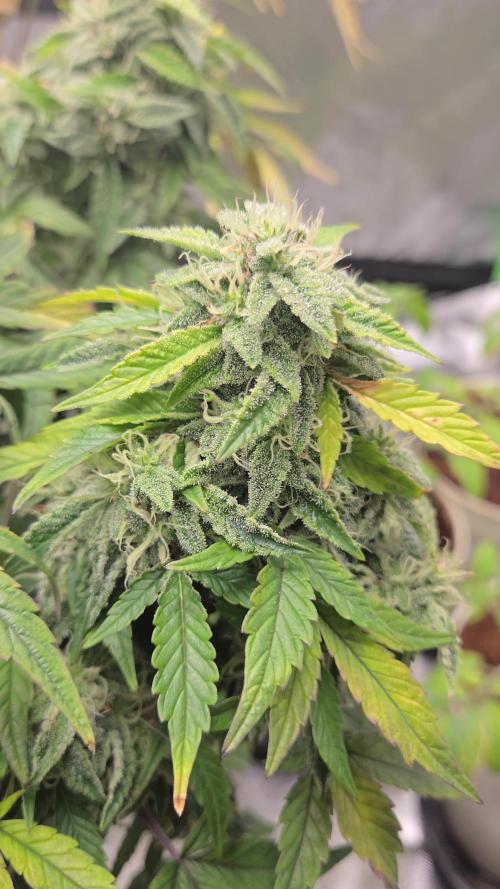
Day 91
Her Final Days are Here, few more weeks until i can harvest her
She looks Healthy overall. Nothing more to say

Processing
Likes
8
Share


@Greenbean15
Follow
Seeing lots of good development, Pineapple Express is almost there!
I went ahead and defoliated the light bleached leaves, trichomes are getting more cloudy. Spotted a few amber trichomes but not many... update- varies by bud. Trich’s appear mostly cloudy to me. Looking at harvesting maybe mid-week next week... 5 more days or so... maybe sooner if trichomes becomes more amber! Super excited to see how this Pineapple Express turns out! Went ahead and clipped the bud off her that had been pollinated, she was starting to open up some of the seed pods. Seeds look fully developed and are quite dark. Tester bud had a few seeds in it but not outrageously so, only a few.
Berry white is trucking along, lots of trichome development this week but buds still don’t seem to be swelling much. Smell coming off this little plant is fantastic!


Likes
17
Share


@Maryjane23
Follow
Ciao ragazzi!!!
Eccoci e finita la seconda settimana di fioritura le piante hanno smesso di fare lo stretching e hanno iniziato a formare i fiori.
come si vede nel video ho fatto la tecnica chiamata lollipop,ovvero defogliato ed eliminato tutto ciò che non si era ben formato o che non avrebbe preso abbastanza luce.
A livello di fertilizzante ho dato per 1.5 L di acqua
1.5ml di enzimi
2 ml di top bloom
ringrazio per la collaborazione viparspectra adesso è parecchio che utilizzo la loro lampada e devo dire che vedo i risultati. Ottima lampada led nel mio caso sto utilizzando Viparspectra XS2000 in uno spazio di coltura 100x100x200
this well-known brand offers different solutions look at the official website https://viparspectra.eu/
or Search for it on Amazon:
Amazon US: https://amzn.to/30xSTVq
Amazon Canada: https://amzn.to/38udUVe
Viparspectra UE: bit.ly/ViparspectraUE
Viparspectra USA: bit.ly/ViparspectraUS
continuate a seguirmi 💪
lasciate un like 👍
maryjane23😛


Likes
14
Share


@SkunkyDog
Follow
Hallo zusammen 🤙.
Sie wachsen sehr schön.
Sie erhalten 25 Prozent Rabatt in unserem Shop
Mindestbestellwert beträgt 75 Euro
https://greenbuzzliquids.com/en/shop/
Code: GD42025

Likes
Comments
Share

@TyRun
Follow
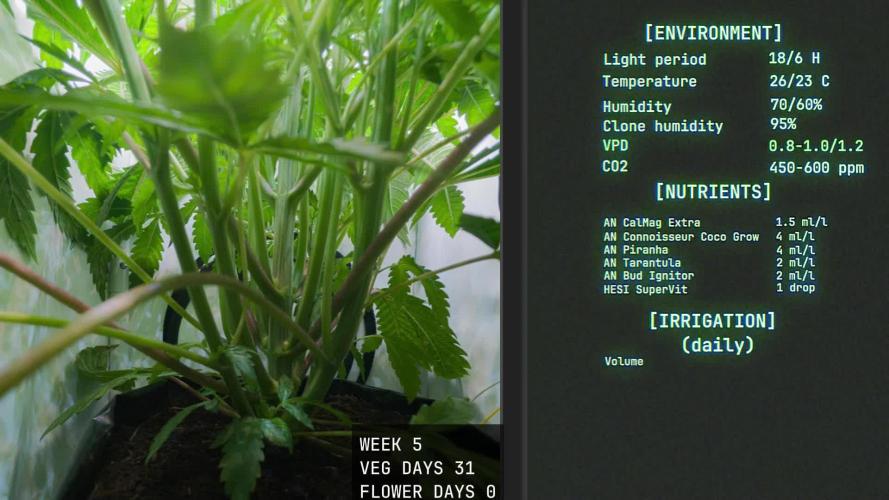
Cloning week. Mom goes to flowering, clones go to the main box for rooting.
Made 4 clone cuts. No place for mother plant in the main growbox so it goes to flowering on 32 day of Veg.
For further experiment I need only 2 clones, so lets look who'll survive. First time cloning :)
Likes
1
Share


@frigo_camelo
Follow
end of week 2 flower | took some damage | bit too close to the light | still looking fine
Likes
20
Share


@GermGrowFox
Follow
Lampe mittlerweile auf 60% hochgefahren.
Die Purple sieht gut aus, die ak macht mir immer noch Sorgen. Wird wohl zu viel Erde im Topf sein😅
Ich giese mittlerweile jeden zweiten Tag und da gute 2l pro Topf.