


Likes
Comments
Share



Likes
14
Share


@MG2009
Follow
03/20/2022
Biscotti Skunk looking lovely first four pictures.next up is lemon OG,followed by the three Grape Skunk girls middle one is my favorite so far (Middle in height)
I did a light feeding of fish and seaweed, a little extra something just incase they get hungry in final weeks.

Likes
2
Share

@Elron_mc_Bong
Follow
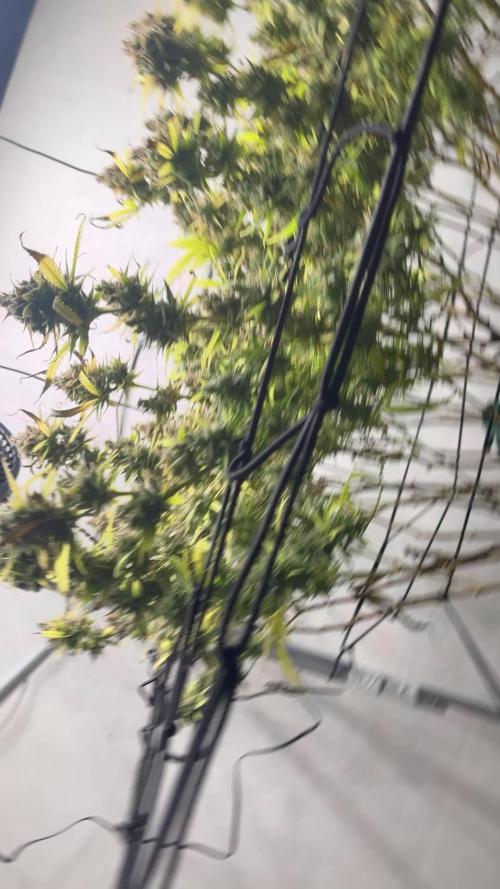
Blütetag 77 – Geduld zahlt sich aus
Drei Wochen über Herstellerangabe – und genau deshalb fühlt sich dieser Zeitpunkt richtig an.
Ich habe mich bewusst entschieden, nicht nach Kalender, sondern nach Reifegrad zu gehen. Ziel ist ein stark körperbetontes, sedierendes Endergebnis – also Geduld statt Eile.
Der Fade ist deutlich, die Blätter verlieren an Kraft, während die Buds dicht, harzig und vollständig ausgereift wirken. Jetzt geht es nicht mehr um Masse, sondern um Feinreife.
Die finale Woche beginnt.
🌿 Abschlussbericht – Franco’s Lemon Cheese 🍋🧀 | Tag 80 – Ernte
Tag 80. Heute ist der Tag, auf den ich die ganze Zeit hingearbeitet habe: Erntezeit.
Nach geduldigem Warten ist der Amber-Anteil jetzt genau da, wo ich ihn haben wollte – und damit ist für mich der perfekte Punkt erreicht, um die Schere anzusetzen.
Dieser Run war für mich vor allem eins: Kontrolle, Geduld und Feintuning. Ich hab bewusst nicht überhastet reagiert, sondern die Pflanze sauber bis zum Ende geführt. Die letzten Tage waren nochmal pures Beobachten: Trichome checken, Reife bewerten, Bauchgefühl + Lupe zusammenführen – und heute hat’s einfach „klick“ gemacht.
Was ich mitnehme aus diesem Grow
• Timing schlägt Stress: Das bisschen extra warten hat sich gelohnt – genau diese letzten Prozent machen am Ende den Unterschied.
• Reife vor Optik: Nicht nur nach „sieht fertig aus“ gehen, sondern nach dem, was die Trichome wirklich sagen.
• Stabil bis zum Schluss: Gerade die Endphase entscheidet, ob man mit einem guten Ergebnis endet oder mit einem „hätte ich mal…“.
Jetzt startet Phase 2
Ab jetzt geht’s nicht mehr um Wachstum, sondern um Qualität sichern:
Trocknung, Klima, Geduld – und dann Curing, bis die Franco’s Lemon Cheese genau das wird, was sie sein soll: hart, aromatisch, sauber, fertig.
Ich halte euch auf dem Laufenden mit den nächsten Updates zu:
• Wet Trim / Dry Trim
• Trocknungsdauer & Klima
• Erster Smoke-/Vape-Test
• Curing-Woche 1–4
Bis hierhin: Run sauber durchgezogen.
Heute wird geerntet. 🍋🧀✂️
Trocknung ist gestartet und läuft kontrolliert über den Controller:
• 60% rF
• 2% Totzone
• 16–18°C
Jetzt heißt’s: Ruhe bewahren, Klima stabil halten und langsam trocknen, damit Terps und Qualität sauber erhalten bleiben. Nächster Step: Dry-Check & Trim, sobald die Äste anfangen leicht zu “snappen”.

Likes
2
Share


@Enki_Weed
Follow
Dienstag war auch für diese Pflanze ein wichtiger Meilenstein – sie ist jetzt ebenfalls im Blüte-Modus und genießt den 12 Stunden Licht- und 12 Stunden Dunkelheit-Rhythmus. Kurz davor habe ich auch hier die Entlaubung vorgenommen, um sie optimal auf diese neue Phase vorzubereiten.
Die Wasserzufuhr wurde wie bei der anderen Pflanze angepasst und entspricht nun den Empfehlungen für die zweite Blütewoche. Ich bin wirklich erleichtert, dass das Problem mit dem pH-Wert endlich der Vergangenheit angehört und das System stabil läuft.
Diese Pflanze hatte es am Anfang wirklich schwer. Ich hatte sie leider überdüngt, was dazu führte, dass die Blattspitzen verbrannt waren und sie generell recht klein geblieben ist. Aber sie hat sich erstaunlich gut erholt und zeigt jetzt ihre ersten Blütenansätze, was mich sehr freut! Das aktuelle Sorgenkind ist allerdings die Luftfeuchtigkeit. Sie ist momentan leider viel zu hoch, und ich muss mir überlegen, wie ich das am besten in den Griff bekomme. Das ist jetzt meine nächste große Herausforderung.

Likes
7
Share


@UnkleSkunk
Follow
it's big
I must say that it has an imposing structure although it is still low and its stem is very big and mighty like the leaves
no problem to highlight here everything is ok ...
I forgot .... the bloom has already started a few days ...

Likes
142
Share


@MadeInGermany
Follow
Hi everyone 🤗
This week it looked more and more astonishing after opening the box a wonderful sweet smell wafts through the room 👍.
A few days ago the Blue Cheese Phenotype 1 was harvested and placed in the dark room :-).
This week both Kosher Tangie Kush phenotypes will be harvested 👍.
Next week the Blue Cheese phenotypes 1 and 2 will be harvested ;-) everyone else needs a while 😀.
I wish you all a nice week, stay healthy 🙏🏻 and let it grow 🌱👍


Processing
Likes
9
Share


Likes
7
Share


@HowieMcHowie
Follow
Die Blüten haben deutlich an Volumen gewonnen. An fast allen Pflanzen werden die ersten unteren Segelblätter gelb. So lange es bei diesen bleibt, werde ich nicht die Düngermenge erhöhen. Ich warte bis sie fast selbstständig abfallen und nehme sie weg. Leider ist das Wetter nicht auf unserer Seite. Da geht bestimmt noch mehr. Ein paar Wochen haben sie noch.
Zum Ende der Woche hat der Wasserbedarf deutlich abgenommen. An dem Punkt habe ich auch den Big Bud Dünger abgesetzt. Die nächste Zeit werde ich nochmals das Batboost und Bloom hochfahren.

Likes
13
Share


@smokeycropping
Follow
Ahora le dí un inoculo de papa y humato las nenas cmo comen el. Micelio proliferan excelente y se ven sanas y con unos terpenos increíbles nunca tuve problemas plagas ni nada
Likes
26
Share

@MG2009
Follow
03/13/2021
Side branches are developing nice, I may do a little more lst to help lower tops to catch up before flowering starts
Ps.
Couple videos uploaded
Day #6 doing some bending, and broke a branch off so I dipped in rooting powder,threw it in some vermiculite soaked with Bonide Garden Rich Root & Grow 4-10-3 with (IBA) Lets see if she will root! Fingers crossed🙏


Likes
37
Share


@GODSGIFT_2005_JM
Follow
For LIQUIDS & NUTES ******GREEN BUZZ NUTRIENTS***** organic.
Also i’m using their LIVING SOIL CULTURE in powder form!
MARSHYDRO ⛺️ has large openings on the sides which is useful for mid section groom room work. 🤩
☀️ MARSHYDRO FC 3000 LED 300W
💨MARSHYDRO 6” in-line EXTRACTOR with speed-variation knob, comes complete with ducting and carbon filter.

Likes
208
Share


@NO_DRAMA
Follow
Hi friends, I had some problems and now I'm back with renewed vigor, good luck to everyone 💚🇬🇪

Likes
2
Share

@IIIStonerIII
Follow
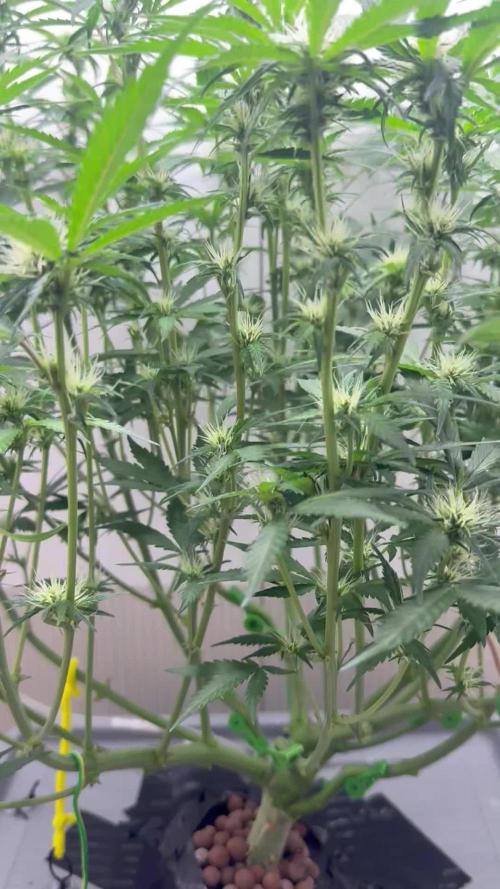
Week was pretty smooth. no ups and downs. just takin a few leaves every now and then. added Green Sensation and Hesi boost to the party. Shes drinking close to 2L per day. Or at least 10liters have been refilled over the last 5 days raising the overall EC from 0.9 to 1.2. We're heading into one of the final stages where buds will hopefully swell like crazy. Back in 7 days. Stay tuned. ✌️✌️
Likes
2
Share

@Jardineiro_Br
Follow
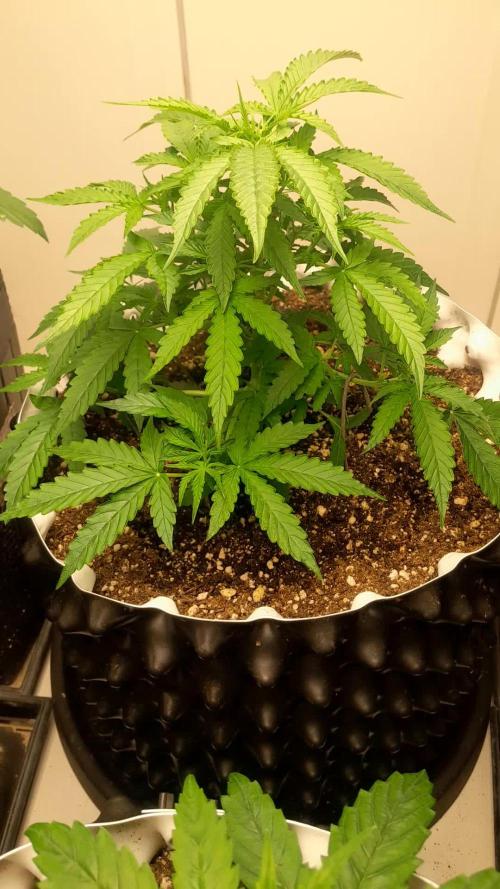
A planta está bem saudável, numa fase de Pré Floração, ja comecei a incluir fertilizante de Floração, fiz uma desfoliação de Pré Floração e ajustei os ganchos abrindo mais os galhos.
Likes
30
Share


@cheetah844
Follow
Growing well. Hoping this is a good all around strain for daytime. I've read great reviews as a medical strain for many ailments, hopefully I'll be able to find out.

Likes
5
Share


@CannaIGrow
Follow
Very few white pistols left. I have started checking tricomes now for peak harvest time (hopefully) lol. 11/9/22 Added tricome pics and video to this week. Starting to turn milky, which is what I want, so I'll be keeping an eye on her.
Likes
99
Share


@BudXs
Follow
GHL STRAIN REVIEW!!!!!!!
Shout out to @GreenHouseLab for sending me an amazing package!
Return package on the way!!!!
So stoked to have six shooter AND 2 fkn new untried cheeses to fuck with in 2021!!
See vids


Likes
42
Share


@GanjaReaper
Follow
The plant in front is still looking ugly as always haha, the buds are small, they develope really slowly, the leafs look like they never had any (N)itrogen lol,
had this from the start. Whatever I did about it, it never changed into a better plant. Some people talk about bad genetics, but lets keep that in between.
I'm already glad these are indica's and kushes, so they can stand the cold better then a sativa kind. Sativas would already been full of budrot, molts and stopped flowering.
However, the plant behind it goes really well with the colds, as expected it even got nice collors, Most of the times color will show at colder climates.
I used to trick my inside plants into bud discoloration but the outside weather did it for me.
I gave them less nutrients, because i want them to get it from the soil( old nutrients) and from the leafs. Because of this, the leafs have now many signs of deficiency/discoloration.
They really look like other plants/trees in the autumn.
It was a wise choice of me to keep adding enzymen because when it gets colder, many enzymatic proceses are slowed down or even stopped.
Therefore my plants kept drinking, flowering.
This was the end of week 7 of flowering.
Might havest them at the end of week 8, but lets see how it goes.
9 weeks of flowering would be my maximum but I'm 80% sure i will harvest them at the end of week 8.
So again, they gained beautifull colors( the pictures are ugly, will make better ones next week, they look better in real), bigger size buds and now even got decent flowers instead of pistels with leafs like most outside grows LOL.
Likes
9
Share


@Big_Worm
Follow
I was unable to use the full use of the Optic 2 LED due to height and heat issues. Which were impacting the amount of light each plant was receiving this stunting their growth.
I have now brought/installed the HLG 260w Rspec and have noticed a improvement. The new light covers the canopy well and I am now able to give the plants more light which will hopefully help them develop better buds.
The Blue Gelato #41 has responded well and has started to drink less which hopefully means she be ready for harvest in 4-5 weeks time.
Although I have stopped using my PK boost, on my next run I will start the PK at the first sign of flower as I feel from week 4 is a little late.
Happy growing 🤙🏿
