


Likes
Comments
Share


@MadeInGermany
Follow
Flowering day 37
since time change
to 12/12 h.
Hey guys :-)
The buds have developed incredibly nicely this week.
The smell is getting more and more extreme :-) .
The whole plant itself looks perfect 👍.
The growth has slowly stopped as the full energy goes into the production of the buds.
This week it was watered 3 times with 1.2 l each (nutrients see table above)
They were individually inspected and checked for their health.
Osmosis water for the coming week was refilled in a 100 l tank 👍.
Have fun reading the diary and stay healthy 💚🙏🏻
👇🏼👇🏼👇🏼👇🏼👇🏼👇🏼👇🏼👇🏼👇🏼👇🏼👇🏼👇🏼
You can buy this Nutrients at :
https://greenbuzzliquids.com/en/shop/
With the discount code: Made_in_Germany you get a discount of 15% on all products from an order value of 100 euros.
👇🏼👇🏼👇🏼👇🏼👇🏼👇🏼👇🏼👇🏼👇🏼👇🏼👇🏼👇🏼
You can buy this strain at :
https://www.exoticseed.eu/de/hanfsamen/hippie-therapy-cbd
Water 💧 💧💧
Osmosis water mixed with normal water (24 hours stale that the chlorine evaporates) to 0.2 EC. Add Cal / Mag to 0.4 Ec Ph with Organic Ph - to 5.8 - 6.5
MadeInGermany

Likes
4
Share


@CanarianGrow92
Follow
Week 4 for the Apricot from fastbuds 420
All good so far, we continue to apply addictives from xpert nutrients and add some more bloom nutrients as some of the girls are demanding a little more bloom nutrients.
All good so far and not much more weeks to go, lets see of the girls continue to swollen up a bit more

Likes
14
Share


@thebito
Follow
17/05 - Colheita realizada. Flores cortadas nas bases dos galhos para serem pesadas antes da secagem. Após isso foram removidas todas as fan leaves maiores e de fácil remoção e as flores foram deixadas em uma rede de secagem dentro da estufa.
18/05 - flores retiradas da rede e penduradas no teto da estufa com barbantes, pois estavam ficando amassadas > 21.3ºC - 22.3ºC / rh 52% - 64%
19/05 - 21.5ºC - 22.1ºC / rh 45% - 50%
20/05 - 21.7ºC - 22.3ºC / rh 46% - 51%
21/05 - 17.9ºC - 21.9ºC / rh 48% - 84%
22/05 - 20.1ºC - 23.3ºC / rh 49% - 81%
23/05 - 23.5ºC - 24.1ºC / rh 56% - 60%
24/05 - 23.5ºC - 24.0ºC / rh 46% - 65%
25/05 -
26/05 - 23.8ºC - 24.3ºC / rh 64% - 65% > flores aparadas e preparadas para a cura, sobra da poda guardada para dry sift, flores guardadas em jarros herméticos com higrômetros, ainda sem sachês de umidade


Likes
18
Share


@bono420
Follow
DAY 53
Had to take out of the room the Amnesia XXL hermaphrodite; cant take the risk of turning the rest into males too.
DAY 54
FUUUCKKK!! The wind dropped a piece of heavy wood onto the plants!!!
1 of the Moby Dick was totally broken. Some branches of the neighbour plants were affected too.
So that's 2 plants lost at the moment (the hermaphrodite and the broken one).
Day 56
Two days after the tragedy. Had to reorganize the room to prevent similar accidents in the future 🖤😢 Saved the most I could but definately this stressing event will influence the plant’s development.
Also, considering taking out the claw leaved plant, which has signs of hermaphroditism (FML again 😫).
Hope these 7 make it till the end.
PS: Also, there’s 1 Moby Dick which has no signs of flowering at day 56, cant figure out what’s happening with it. I’m starting to think that it’s an Regular Feminized seed instead of an autoflowering.

Likes
41
Share


Likes
10
Share


@OoOgAuTo
Follow
Currently on day 97.
3 plants are still flushing and 1 has been given full nutes for 1 more week. I’m not sure if this is good or not but I decided to flush again with flawless finish for 1 more week. I’m still giving the flushed plants terpinator at 10ml per gallon.
Beautiful purplish hues throughout the pheno with some deep purple flowers.
Likes
9
Share


@Oldwied
Follow
Day 63
Flower #18
The SCroG chapter closed.
The largest stretching phase is complete and the inflorescence is becoming denser. That's why I'm letting the lady grow now.
Light Power: 80 to 100% in two days
Day 61
Flower #16
Watered with 2,5L freshly brewed compost tea
Sprayed with freshly brewed compost tea


Likes
152
Share


@SlowpokeFuegobud
Follow
🍪 🍒 🍰🍩 🎀🍪 🍒 🍰🍩 🎀🍪 🍒 🍰🍩 🎀🍪 🍒 🍰🍩 🎀🍪 🍒 🍰🍩 🎀
Welcome to week 9, dear growmies!! 😘
DAY 57
Watered with 3ml humics, growzyme + bigfruits 💧
DAY 60
Watered with 4ml bloom+ 2mlpk + 4ml humics, growzyme + 3ml bigfruits+ 2ml calmag 💧
DAY 63
Watered with 3ml bloom + 4ml humics, growzyme + bigfruits + LO + 2ml calmag 💧
Thanks for showing up and supporting me and the girls, bless you, growmies!! 😘 ❤️
Shouts go out to my sponsors @GreenBuzzNutrients, thanks so much for your support!! 💚 💚 💚
If anyone would like to try their amazing organic products, you can find a generous discount code of 25% in my weekly comments! 😜 🙏
If you want a recommendation which product to get first.. BIGFRUITS!! 😍 I love the tasty terps with this one!!
https://greenbuzznutrients.com/
Thanks also of course @Kannabia, for the beautiful genetics!! 🧡🧡🧡
Pouring all my love into this grow, thank you for joining in, growmies!! 💚 💚 💚 😘 ❤️ ❤️ ❤️
Wishing you all the best for your beautiful gardens!🌱 🙏 Grower love!! 💚
_________________________________________________________
Strain Info:
https://www.kannabia.com/en/feminized-cannabis-seeds/break-up-cake
We need to talk
You’ve got to celebrate everything in this life, and that includes love and heartbreak. Since you’re all familiar with Wedding Cake feminised marijuana seeds, we’ve put a Break-up Cake in the oven at the Kannabia Seed Company – because things don’t always go well, and we sometimes need a friendly seed to lean on.
Break-Up Cake has a base of Girl Scout Cookies, one of North America’s best-known strains, which is earthy with a very potent indica effect. And we top it off with a delicious Cherry Pie which, in addition to giving it an elegant dark attire, adds a silky, deeply sweet flavour of cherries and berries. Look no further – it’s the perfect cake.
This seed will be celebrated for its ease of cultivation and abundant production. It’s one of the best investments you’ll make this year. But if it’s going to be memorable for one thing, it’s for its sweet complex flavour that’s full of contrasts. If we have to break up, let’s do it sweetly and amicably, right?
How to: Break-Up Cake
Break-Up Cake is an “all-terrain” marijuana seed, which will adapt to the place you allocate to it. An ode to independence, it’s a plant with only the most basic needs that knows how to grow by itself.
It’s a pale branching plant with tremendous dark green leaves, purple tips, and an icing sugar coating of trichomes. Its immense buds are some of the stickiest ones we’ve found in our seed bank recently.
Indoors, it needs 60 days of flowering to give no less than 600 grams per square metre. Use a Screen of Green method without hesitation, or plant it using hydroponics if you want to obtain the full benefit of its potency.
Outdoors, it reaches two metres in height with a harvest of 800 grams per plant, which is reason enough to give it a go. Like a good break-up cake, this plant doesn’t need to live with a partner, and knows how to live well in a Guerrilla plot. Between 25th and 10th October is its moment.
Taste and effect of Break-up Cake
Very relaxing but not causing lethargy, it’s a good indica-dominant plant. Its effect is mellow (we’re too old for childish games). It calms the consumer but it also gives rise to creative moments. Head on up to the top floor, later to make your way, little by little, down to the kitchen later (where you might want to give in to temptation if you need to stimulate your hunger).
The flavour is full of nuances. It will remind you of a vanilla sponge or cheese cake: you’ll notice a cherry topping, something sweet that you can’t quite distinguish, and an earthy undertone on a biscuit base… You’ve got to sample it to know it.
_____________________________________________________________________
SETUP:
80x80x180 cm Zelsius
240W Full Spectrum LED IR UV dimmable
DW240H-A6-HS
Heatsink color red
LED Chips:
512pcs SAMSUNG LM301H + 24pcs Osram 660nm + 8pcs Osram IR 730nm + 8pcs UV 385nm
Color mix: 2700K + 4000K
2,8umol/J
Driver HLG-240H-C2100B
Coverage: veg 5x3ft / flower 4x2ft
Product size: 628x205x68mm
Green Buzz Nutrients
Shouts go out to my sponsors @GreenBuzzNutrients, thanks so much for your support! 💚 💚 💚
If anyone would like to try their amazing organic products, use code GD42025 for generous 25% discount (for orders of minimum 75€) ✨
https://greenbuzznutrients.com/
Biobizz Lightmix
custom exhaust fan 320/270cm³/h
Carbon Active Granulate 240cm³/h
tab water pH 8 - EC 0,25 with Calmag to 0,5
Advanced Hydroponics pH minus Grow + Bloom to pH 6.2
🍪 🍒 🍰🍩 🎀🍪 🍒 🍰🍩 🎀🍪 🍒 🍰🍩 🎀🍪 🍒 🍰🍩 🎀🍪 🍒 🍰🍩 🎀

Likes
3
Share

@Gram_Solo
Follow
Week 7
🌴🌴🌴🌴
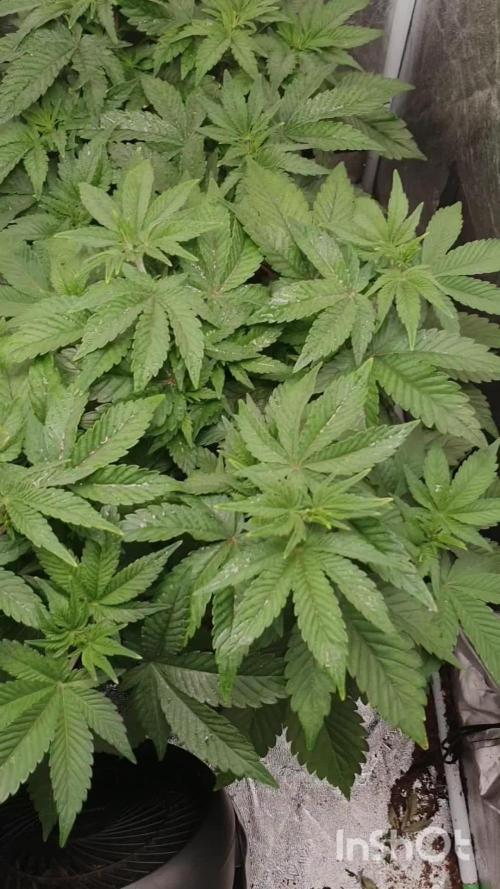
Lst has helped to keep our plants nice and compact, going to look like pro hedges when I'm done haha we gonna try and fill up the tent space as much as possible for 4 plants.
We in a 3x3 atm. But I may tf them into the 4x4 very soon.
Got some yellow tips and paleness on a few leaves. Ph may need looking at or lowering my nute feed. Il do a flush before flowering
Roll on next week
💪😎👍

Likes
27
Share


@adam_pawloski87
Follow
Today is Day 50 !! We have started flower an they are just looking amazing! We have switched up the nutrients for flower, instead of 1 tsp bloom and 3 tsp of veg , we just swap 3 tsp of bloom and 1 tsp of veg !! Can’t wait to see what these laddies do this week!!
Likes
3
Share


@LandFarm420
Follow
Dopo due settimane nel box la crescita era diventata troppo elevata e ho dovuto spostare tutto nel mio armadio ma anche qui dopo 3 giorni da 20 cm (distanza dalla pianta alle lampade) siamo passati a neanche 4 cm una crescita esponenziale. La fioritura prosegue e i risultati sono ottimi i fiori si inizia a formare e dai filamenti penso che il raccolto non sarà misero anzi credo che sarà più di quanto mi aspettavo (circa 20/25gr)

Likes
9
Share


@nurari
Follow
Сегодня решил немного освободить от листьев 3 растения чтоб свет лучше проникал, большие сильные растения не трогал, думаю их через недельку тоже буду подстригать...
как видно 1 растения вообще не удачное, 2 средние, а вот дальние 3 выглядят хорошо и думаю дадут отличный урожай... еще 3 недели цветения так что я думаю увеличатся еще сильно в объеме.
Likes
52
Share


@Rezdestroyer
Follow
Nearing the end. Defoliated and pulled apart the mass of buds that had all grown into a single main cola. I didn't notice but there were multiple buds all cramed together, blocking out light to the inside. After pulling them apart and carefully tying them down I have been able to increase the airflow, trichome, and overall size while also decreasing the excess nitrogen that had built up in those cramped bud sites. Did all this about 5 days ago and ahe is getting even better. Just a few days left. Also, I cut off a little piece yesterday just cause I'm so desperate. Lol. Next update will be harvest!
Likes
38
Share


@DaddyPrime
Follow
6/16 today was a feed day. Transplanted into 20 gal rain science mesh pots
6/19 today was a tea day. applied some LST clips to try and stretch her out more wide
Likes
3
Share


@UnicornSparklehorn
Follow
We're at the end of week 4 and she doesn't seem to have triggered flowering yet. Fortunately this is giving me time to fill up her canopy. Seedstockers claim she's an XXL plant and I hope to test that.

Likes
1
Share

@Northern_Ent
Follow
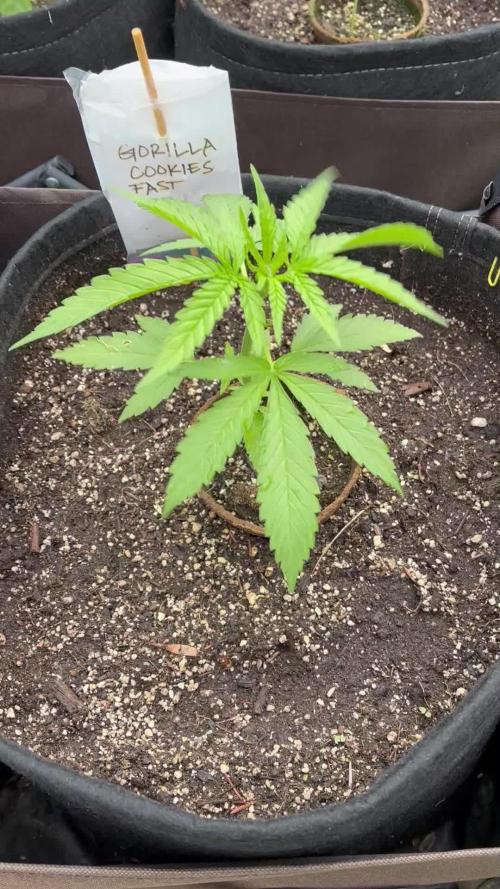
June 6 Day 36: last week was cool and rainy but growth will pickup here soon with warmer temperatures and direct sunlight. Will top it tomorrow to start the manifold. This will be a 16 cola manifold.
June 8 Day 37: plant had five nodes and I topped it back to third node and then removed lower growth tips and small leaves. This is the first of four rounds of topping needed to get 16 colas.
Likes
20
Share


@eldruida_lamota
Follow
Vamos familia que ya actualizamos la cosecha de estas lava Cake de Zamnesia .
Y es que me han sorprendido para bien , vaya flores que se han marcado repletas de tricomas y las flores se marcan aromas dulces
Temperaturas máximas en 28 y mínimas en 25 y una humedad estable en torno al 36%.
Os comento que tengo un descuento y para que compréis en la web de Zamnesia de un 20%, el código es ZAMMIGD2023
The discount 20% and the code is ZAMMIGD2023
https://www.zamnesia.com/
Agrobeta:
https://www.agrobeta.com/agrobetatiendaonline/36-abonos-canamo
Mars hydro:
Code discount: EL420
https://www.mars-hydro.com/
Espero que lo disfrutéis, buenos humos 💨💨💨

Likes
26
Share


@gottagrowsometime
Follow
Both phenoe are pushing on nicely. Really good growth from both phenos from 1 seed, 1 had more girt. So, there wasn't an exact even growth ratio. But no pheno was hammered in any way that affected its push through pre fower and into mid fattening. I expect another 3-4 weeks and I'll harvest. Atm there's a nice Lemon exotic smell. Really dank. Musky (earthy). And popping off fruits. Really lovely set of plants.
Xpert nutrients are bringing out the best in my grows. They smell, taste and pretty much everything in that regard has improved. These are my new nutrients. As hard as I've been strain hunting. I've always used a different line of Nutrients per crop. And I'm glad to say. These are by far THE BEST nutrients I've used to enhance my crop.
Feeds
Are pretty much a week in week out with change (all explained with my weeks, DLI and other factors), master root/enzymes have been pult. Master Root no longer needed. Enzymes are all gone.
Maintenance
This wk, i applied LST bamboo sticks are have done some basic node bending to get the best out of the space in the area above and around its base. Some nodes where tied back to the sticks..
Shout out to my sponsors and all who stop by.