


Likes
Comments
Share


@AllieO
Follow
2/9 NL: slow going, but going.
2/11 NL: few more weeks? Gave pH balanced water today. Pistels seems to be darkening, which is encouraging. Going to check trichomes this weekend... Hopefully mostly cloudy at this point!

Likes
17
Share


Likes
8
Share


@NoProbation4Weed
Follow
Very Nice looking and good Smelling Plant. Buds after Trim are medium dense but very tasty.
Flavourwise it goes into ripe Berrys with a hint of Citrus and Soapyness in the background.
The Plant looks exactly like on the pictures High-Giraffe-Seeds shows on their website.
All in all definetly a recommendable Plant to grow.
Likes
Comments
Share

@madlangs
Follow
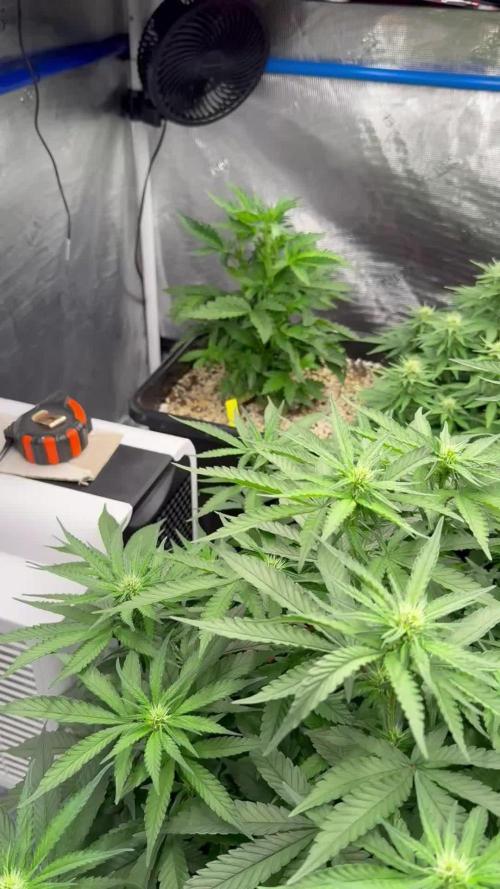
No problems
8.11.25
WW 54cm and 34cm
Pineapple 34
Afgooey 41
n lights 48cm & 67cm
Sleepy Joe 54cm
Papaya zoap 68cm
Pure glitter 26cm
Ppfd 950


Likes
12
Share


@SnarkyGoat
Follow
I wanted to title this weeks grow "How Big Are Your Balls? (root balls that is, lol)". I've been wanting to post pictures and video of the root balls for a while now, so today's the day! The temperature has been dropping here, so the plants are getting much less heat stress. In a couple of weeks the temperature should be down into the 60's and 70's during the day and all will be good.

Likes
2
Share


@GREENPHOENIX6262
Follow
Week 7 - 08/11 - Topped most of the plant so far - LST tied down all main colas - Had an issue with the PH - has since been neutralized - clean water feeds for the next 2 weeks - prepping for transplant into 7 gallon pot.


Likes
7
Share


@fabialien
Follow
Lunes 11 de marzo 7 am de 2024:
Se dejaran hidratando las semillas por 24 hrs.
Martes 12 de marzo 7 am de 2024: pasamos a papel dejamos por 24 hrs.
Miércoles 13 de marzo 10 am de 2024: revisamos las semillas y vamos preparando macetas pequeñas para transplante.
Miercoles 13 de Marzo 3:30 pm se traspasa a tierra.
Viernes 15 de marzo 11:47 pm 2024, ya que abrieron bien se pone bajo lámpara 100w a 30 cm de distancia, tienen domo protector! El lunes en la nueva semana subimos el avance, hasta el Lunes...
Sábado 16 de marzo 2024, de las 3 semillas la 1 ya abrió completamente, 2 y 3 están por abrir completamente.
Likes
35
Share


@nonick123
Follow
Día 44 (15/07) Wow! No hay shock de trasplante! 😍💥😁
Todas las ramas se han estirado hacia arriba tras el ajuste de LST y se están formando nuevos nodos rápidamente
Esta combinación de nutrientes de Lurpe + substrato de PRO-MIX HP es una maravilla 😍
Día 45 (16/07) Ayer tuvimos ola de calor (37 ºC) y han aguantado muy bien!
A última hora de la tarde (cuando ya no había sol directo) les apliqué H2O en spray foliarmente para refrescar los estomas
Hoy parece que vuelven las temperaturas estándar para esta época del año: 29 - 30 ºC en las horas centrales del día
Riego con 1 litro de H20 pH 6,5
Día 46 (17/07) Pequeños ajustes de LST
Hay algunas ramas inferiores que no se han formado / estirado mucho
Lo más probable es que haga una buena limpieza este domingo, 7 días después del trasplante, para dejar solo los brotes por encima del 4º nudo
Día 47 (18/07) Riego con 0,5 litro de H20 pH 6,5
Este domingo (día 50) haré limpieza de partes bajas y tal vez también de nuevo topping en las 4-6 ramas principales 😁
Día 48 (19/07) Día de muchísimo calor con 37 ºC. A ver como lo llevan!
Riego con 0,5 litro de H20 pH 6,5
Día 49 (20/07) Para ayudarles a llevar mejor el calor de las horas centrales del día, coloca una malla de sombreo (70%) sobre el invernadero
Lo cierto es que se nota que baja mucho la temperatura debajo de la malla! Van a estar más fresquitas! 😍
Riego con 0,5 litro de H20 pH 6,5
Día 50 (21/07) Training session!
Hago limpieza del tercio inferior de la planta, de todas las ramas y nudos que no superan la línea del dosel marcada por el 4º nudo (1er topping)
También hago topping (2º) a todas las ramas principales
La idea es tener 12 ó 14 colas principales para que no se hagan muy altas
De paso saco unos cuantos clones de las ramas inferiores eliminadas 😁💥
Para superar el estrés, hago las siguientes aplicaciones y riego:
- Riego con 1 Litro de Té Vegetativo de Lurpe Solutions. Preparación: 24 horas con bomba de aire (oxigenación) con ingredientes:
Green Sunrise 8 ml/L + Insect Frass 16 ml/L + Hummus Lombriz 8 ml/L + Melaza 1 ml/L + Kelp Hidrolizado 0,25 g/L
- Aplicación foliar Kelp hidrolizado de Lurpe Solutions a 0,25 ml/l
💦Nutrients by Lurpe Solutions - www.lurpenaturalsolutions.com
🌱Substrate PRO-MIX HP BACILLUS + MYCORRHIZAE - www.pthorticulture.com/en/products/pro-mix-hp-biostimulant-plus-mycorrhizae


Likes
40
Share


@Secretflower
Follow
Hello my friend,
...April 12, 2022..Day N°22...
First day of the fourth week for my 2 Feminized Runtz Gum, 2 Feminized zkittzy Gorilla and 2 Feminized Banana Sherbet. They are fine and they growing healthy. Two days ago I topped all of them.
My babys are under a Mars-Hydro SP 3000 at 25% of power and at 60 cm of the canopy.
www.originalsensible.com
www.mars-hydro.com
That's all for now my friends, thx for passing through here.
Wish you the best with your green projects.
See you soon..💨💨💨

Likes
57
Share


@Silverback_Guerilla
Follow
2/26:
Harvested both Black Jacks and both Gorilla Girls tonight. They got a rough live trim, then chopped, washed, and hung to drip dry.
Big, heavy, frosty buds on all 4 of them!👍
3/2:
Still drying in the closet...amazing aromas!
Likes
9
Share


@Cannabeast40
Follow
Week 3 and a repot is done and now in day 3. Finally it’s settling down after the repot, which was not pretty at all😂
Hope to get some massive plants this run 🌱
________________________________________________________________________________________
Light from @MedicGrowLED 😎
NEO 780 LED🔥
780 Watt⚡️💥
PPF of 2184 μmol/s & 2.8 μmol/J🔥
Full Spectrum V1/F1 🌈
WiFi smart connection & Smart Aura Control 😱

Likes
17
Share


@HowtoBubatz
Follow
The plants are thriving in their 4th week of flowering, and I couldn’t be happier with their progress! 🌟
Adjusting the nutrient mix for the coco substrate has really paid off, and both plants are responding beautifully.
The trichome production is impressive on both, but interestingly, the plant without LST is slightly ahead in development compared to the LST variant. 🌿💨
The buds are forming nicely, and there’s already a noticeable aroma in the grow space. It’s predominantly sweet, with hints of something deeper starting to come through. 🍭✨
So far, everything is looking on track, and I can’t wait to see how they progress in the coming weeks!💚💚💚

Likes
55
Share


@Book_of_Thoth
Follow
So these girls are now 11 weeks old, and they are well through their flowering now. Buds are starting to swell and mature (for Red Devil and Pineapple Express more than Misty Mack), and their smells are pretty powerful. The end is approaching, and as a guideline my plan is to harvest
Pineapple Express @ 13 weeks
Red Devil @ 14 weeks
Misty Mack @ 15.5 weeks
So that means Pineapple Express' two week flush begins today.

Likes
38
Share


@Haoss
Follow
The plant is male, I barely got to the desired shapes and it made such a terrible surprise to me, it smelled very good orange but disappointed me. I was eliminated in the championship in which I participated.

Likes
29
Share


@Libanese
Follow
I switched the timer on 12/12, i will do not defoliation for 2-3 days and after i will do it, no too massive but i want have as much light i can in the second bloom week.
Half week:
I modified the layout of grow room, I putted the vertical net behind the tube to earn more space for plants.
End week:
I did the first of the last 3 defoliation .
The plants has a lot of shoots, it hard to arrive to cut the 3 plants on the back, i decided to cut only the leaves and try to have more shoots possible


Likes
150
Share


@FrenchxFarmer63
Follow
Bonjour à tous ,
Comme vous pouvez le voir tout vas bien , et ça grandit de plus en plus...
Gros palissage pour la "Black Domina 0" , 3 jours sépare les deux photos , tout vas bien ! En pleine forme :-)
Rien à signaler pour cette semaine , pas d'avancer sur la floraison... Nous sommes toujours sur des plans au stade de végétation voir certains en près floraison mais c'est léger....
Likes
207
Share


@DogDoctorOfficial
Follow
One more week here we go, and this girls are ready to Flower, I’ve defoliate them a bit, gave them some foliar feeding and provably tomorrow or so i will put them to sleep for 24 h and wake them up at 12/12.
Color on the leafs is back were i like and there for the time is now, the only reason I didn’t do it yet is because i want to take some clones from them just in case something outstanding comes out of this run, better safe than sorry and this way i can save the pheno with i like the most 😇💚
As for the LED department, i believe this VIPRARSPECTRA P2000 is just perfect for this 3x3 closet, PPFD numbers are on point and my girls are loving the spectrum coming out of it. Pretty soon the real testes begin and in flower mode we will see how it goes 🤩😇💚 for now i have to admit that im pretty surprised with it all, the quality on building and materials, the amount of heat it produces,the spectrum, etc etc , the amount of photons released seems to be just perfect and the correct ones 😅🤩💚🙏 Thank you VIPARSPECTRA for this opportunity and for the quality of your product, so far i have nothing but good things to say about it 🙌🙌🙌💚💚💚🙏🙏🙏
Decided to give my girls couple days more before flipping them to 12/12, also decided that was perfect time for scrog net to go in and with it spread the canopy true the all tent and try and maximize this 3x3 space, i know they look thirsty in this last photos 😆😅 they wore watered minutes before them pictures 😆 i will post better ones asap 💚💚💚🙏🙏🙏
Better photos uploaded 😆😅💚 I normally dont let them dry to that point 😆
You can check out last week timelapse https://growdiaries.com/diaries/126067-grow-journal-by-dogdoctor/week/686411 and if you in to timelapse stuff i have just recently uploaded the Magnum auto Timelapse just for fun here https://growdiaries.com/diaries/105893-grow-journal-by-dogdoctor , hope you guys enjoy it 💚💚💚 growers love and one more week up we go 🙏🌱💚
And with enormous honor and pleasure that i start collaborating with Zamnezia and Viparspectra
For this run i will have the pleasure of growing some Runtz genetics from Zamnezia seeds that they wore kind enough to send me for test and review 🙏🙏🙏💚💚💚🙏🙏🙏 and for the testing and reviewing i was blessed with the VIPARSPECTRA model P2000💚💚💚🙏🙏🙏 they wore amazing and send me this LED light for me to do some testing and some reviews. Special thanks to Zamnezia and to Viparspectra for this opportunity, lets make magic together 💚💚💚🙏🙏🙏
All i grow is medicine for myself, for me and for my best friend with is me 😆 nothing to sell, so don’t even ask 😅💚💚💚
All info and full product details can be find in can find @
https://viparspectra.eu/collections/grow-lights DISCOUNT CODE 5% - DOGDOCTOR ( all store )
https://www.zamnesia.com DISCOUNT CODE 10% - GROWITGD ( just for seeds )
https://aptus-holland.com/
More info and updates @
https://growdiaries.com/grower/dogdoctor
https://instagram.com/dogdoctorofficial
https://youtube.com/channel/UCR7ta4DKLFMg2xxTMr2cpIg
💚💚💚Growers love to you all 💚💚💚

Likes
12
Share

@Northern_Ent
Follow
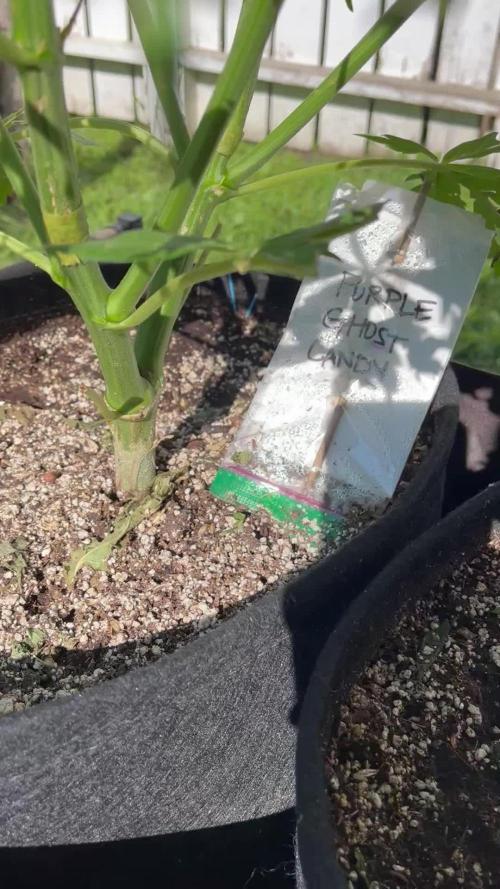
July 11: hail storm went through this afternoon and did some damage. Happened very fast, and was the next day after a big storm caused some flooding in the city and made the news.
July 15: after a few days of recovery since the hail storm, I removed more of the damaged fan leaves.
July 16: it looks like she’ll be fine after the hail storm.