




Likes
2
Share

@IIIStonerIII
Follow
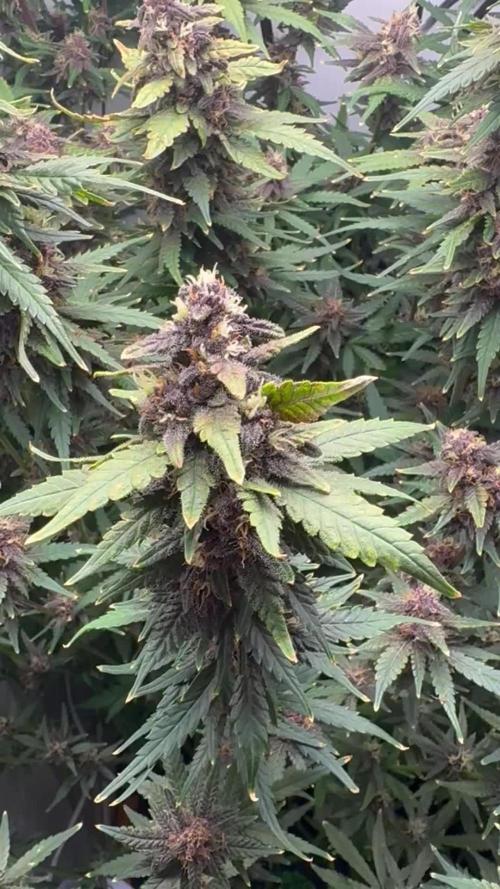
We are starting the last weeks. Ripening and trying to get them salts out before its harvest time. LSD-25 still the Star of the grow. And thats good, because its my favorite strain. 😁

Likes
4
Share

@GERGrowDesigns
Follow
Welcome to Veg Week 5 of Kannabia Zoap Rosé
I'm excited to share my grow journey with you from my
Kannabia Seeds Project . It's going to be an incredible ride, full of learning, growing, and connecting with fellow growers from all around the world!
Check out Kannabia Seeds with my link [https://www.kannabia.com/de?ref=61966] and grab the germination device or the strains I used . Trust me – it’s worth it for sure !
Get another 20% Discount at all products using the code [GGD] at the checkout.
For this Project , I’ve chosen the Feminized Photo Strain Zoap Rosé :
Here’s what I’m working with:
• 🌱 Tent: 120x60x80
• 🧑🌾 Breeder Company: Kannabia Seeds
• 💧 Humidity Range: 60
• ⏳ Flowering Time: 56-63 Days
• Strain Info: 22%THC
• 🌡️ Temperature: 26
• 🍵 Pot Size: 20
• Nutrient Brand: Hy-Pro
• ⚡ Lights : 600W x 2
A huge thank you to Kannabia Seeds for allowing me to try my Best with this amazing collection from Photo Strains they managed to Sponsore . Big thanks for supporting the grower community worldwide! Your genetics and passion speak for themselves!
Let’s grow together – and don’t forget to stop by again to see the latest updates!
Happy growing!
Stay lifted and stay curious!
Peace & Buds!

Likes
11
Share


@Sauce_XL
Follow
2.24.2024: Start of week 5 from seed. Started to flower last week. Nothing done today. Still no nutes given, still scared to defoliate. Plant is 15.5 inches tall and looks healthy. Light is 11 inches from the top and at 75% power, 112 watts. I'm clearly no expert and i'm sure there's something i should be doing(feeding) but she's chugging along.
2.25.2024: Day 37 from seed. She's so healthy, and the budsites are producing a ton of white hairs. Some of the fan leaves have purple stems and a dark green color which i think indicates something with nitrogen but she's rolling along. Still no nutes given. 64oz of 6.3ph. 19 inches from soil. Can't tell if watering lowers the soil level but since i haven't touched the light height, i'm assuming its upward growth.
2.26.2024: Day 38. Small bit of upward growth. Will feed tomorrow for the first time at 1/4 strength nutes from the fox farm trio and maybe some calmag.
2.27.2024: Day 39 from seed. Finally fed the plant, albeit small amounts. Foxfam trio at 1/4 strength of the week 5 dose plus calmag. 64oz of the solution at 6.5ph.
2.28.2024: Day 40 from seed, 36 from sprout. Humming along. Bud development is going nicely. 21 inches in height. Light at 75% 9 inches from the top.
2.29.2024: Day 41. 96oz at 6.5ph. Another .5 inch of growth. Sitting at 23 inches from soil. Bud sites are clearly defined with tons of long white pistils. At first glance, she's the winner between the two in the tent so far.
3.1.2024: End of week 6, day 42 from seed. Plant is healthy as far as i can tell. Some yellow leaf tips, some burnt leaf tips, and most likely some nitrogen toxicity but shes taking it all well. Lots of learnings so far. FFOF probably isn't ideal but its working. I've got half a bag left so i'm stuck with it for the next cycle or two. I bought the fox farm trio for nutes and given i've only used them once, and a few mililiters at that, i feel like those containers are going to last forever.

Likes
14
Share


@9LittleGrow
Follow
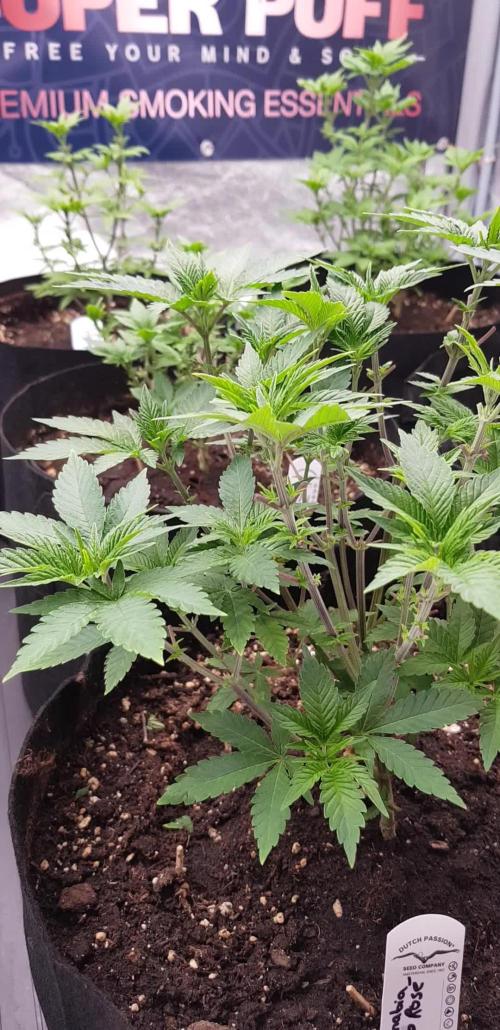
Topping and LST is used and in the first day of week 3, I transplanted them to 5 gallons grow bags so they are growing well and the methods are looking great full to my plants. In those 3 clones, 91 Octane from In House Genetics was the biggest and tallest one.


Likes
28
Share


@Fatnastyz
Follow
2-17
Pre flower is over.
2 liters ph 6.2
Silica, cal/mag and drops of balance.
Growing well.
2-21
Top dress 2 tbs Buildaflower 1/8 cup poo.
Cal/mag, drops of balance, recharge 2 liters




Likes
4
Share


@Bncgrower
Follow
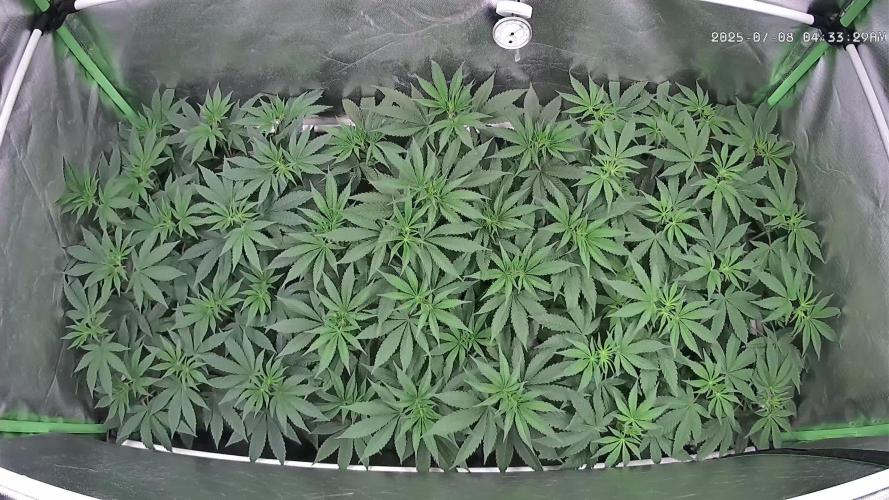
Another week is over. I haven't had much time and this week has been really busy, but here we go... apparently the girls are doing well. They've been eating a lot, they're looking pretty and they smell really delicious...
Happy growing! 🌱🌱🌿
Likes
33
Share


@Roberts
Follow
Jack Herer auto is starting to form some colas. She is looking really good for a cold air grow. She is under a Spider Farmer SF-1000, in Athena blended line nutrition. She has been drinking a lot and has been doing some stretching as well. I have been selectively defoliating the top to keep cola sites open to light. Everything is looking really good at the moment. Thank you Spider Farmer, Athena, and ILGM. 🤜🏻🤛🏻🌱🌱🌱
Thank you grow diaries community for the 👇likes👇, follows, comments, and subscriptions on my YouTube channel👇. ❄️🌱🍻
Happy Growing 🌱🌱🌱
https://youtube.com/channel/UCAhN7yRzWLpcaRHhMIQ7X4g

Likes
23
Share


@420DeepGrow
Follow
Toda esta fantasía se hace realidad gracias a Royal Queen Seeds y @James por confiar en mí. 🚀💥
Fiel a su linaje genético, la Hyperion F1 ofrece un aroma intenso que está dominado por notas frescas de pino y hierba, junto con un trasfondo terroso y un delicioso toque especiado. Aunque todos nuestros híbridos F1 producen excelentes concentraciones de cannabinoides y terpenos, no hay duda de que la Hyperion destaca entre el resto. Sus cogollos alargados y escarchados producen una resina rica y cargada de cannabinoides (sobre todo THC), y terpenos como mirceno, ocimeno, farneseno, terpinoleno, cariofileno y humuleno. Esto no solo da lugar a un aroma muy fuerte, sino también a un efecto bien equilibrado que combina una relajación física (en gran parte gracias al mirceno y al farneseno) con la euforia, risa y efecto motivador de otros terpenos. Al igual que el dios de la luz del mismo nombre, la Hyperion F1 causa un subidón esclarecedor que se puede disfrutar a cualquier hora del día.
🌻🚀 Consigue aqui tus semillas:
https://www.royalqueenseeds.es/semillas-de-marihuana-hibridas-f1/622-hyperion-f1.html
🍣🍦🌴 Xpert Nutrients es una empresa especializada en la producción y comercialización de fertilizantes líquidos y tierras, que garantizan excelentes cosechas y un crecimiento activo para sus plantas durante todas las fases de cultivo.
Consigue aqui tus Nutrientes:
https://xpertnutrients.com/es/shop/
📆 Semana 7:
Por fin se ha acabado este temporal maldito y he visto las preflores, ahora espero que crezca algo mas y se hagan unos buenos cogollos resinosos.
Todo va bien hasta ahora 😊

Likes
3
Share


@Joaka
Follow
pido disculpas por esta semana de seguimiento. estuve de vacaciones lo que no me permitio realizar un buen seguimiento. disculpas otras vez :c

Likes
3
Share

@KannaGrowing
Follow
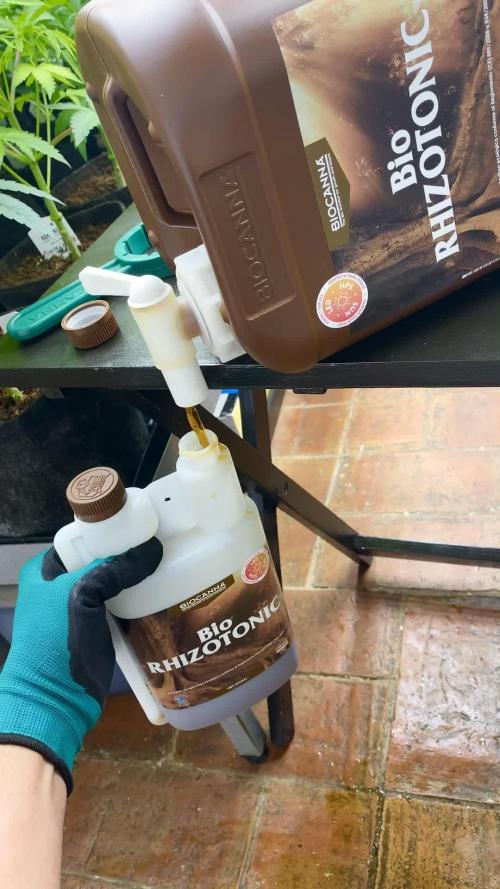
Esta será la última semana donde incorporamos Bio Vega a la dieta de alimentación.
La potencia de las luminarias al 75% y regamos cada tres días aproximadamente alternando entre fertilizante y agua.
Likes
27
Share


@RDWCGrowing
Follow
5/23/2023
Week 7- Day 1 of Flower (Day 110 overall) (Day 49 of Flower)
There was a couple of small super small sucker buds on the lower stocks that needed to be cleaned off but that was it. Just watching them Flower!!
5/24/2023
Week 7- Day 2 of Flower (Day 111 overall)
Tucked a few fan leaves below lower buds but didn't see any blatant offenders that needed to be removed. I typically do start my checks in Week 8 but since this is a new strain I decided to go ahead and do a Trichome check just to see what was what.. Just as I thought nothing but clear glassy Trichomes. I will check again in one week....
5/25/2023
Week 7- Day 3 of Flower (Day 112 overall)
Just letting them grow today!! Smell is getting stronger I would say it is a hint of Pine and a heavier fruity smell.
5/26/2023
Week 7- Day 4 of Flower (Day 113 overall)
I did Nothing but took some pics and I enjoyed it!!!! It is nice to be able to just sit back and watch them on auto pilot.. :-) Tomorrow Water Change Day!!
5/27/2023
Week 7- Day 5 of Flower (Day 114 overall)
I admit it.. I had to defoliate a little bit.. I looked in while changing the water today and there were just a couple blatant offenders blocking the light from lower bud sites and those leaves they just had to go. Other than that I changed the water and this week is where I drop everything and start preparing them for this last phase of the grow. Loving a few of these buds they are starting to beef out very nicely.
I added 36 gallons
Mammoth Silica = .5Mil/Gal= 18Mil
Root DRIP = 1Mil/Gal= 36Mil
CalMag= .5Mil/Gal= 18Mil
FloraMicro = 3.8Mil/Gal= 137Mil
FloraGro= 2.8Mil/Gal= 100Mil
FLoraBloom= 4.6Mil/Gal= 166Mil
LiquidKoolBloom= 2.5Mil/Gal= 90Mil
TPS SIGNAL= 4.0Mil/Gal= 144Mil
ORCA = .5Mil/Gal= 18Mil
Water Temp= 70.1
Tent Temp= 76
Humidity =64 ** I have two dehumidifiers running on Ink bird controllers to try and keep the humidity down, In late in flower I like to keep the humidity above 45 but below 60.
5/28/2023
Week 7- Day 6 of Flower (Day 115 overall)
Opened the back of the tent today and boy did she need some defoliation love in the back. Other than that I took off a few little sucker buds trying to form. I did start to setup my Dry space as well as did a Trichome Check today and the brown tips are coming in nicely.
5/29/2023
Week 7- Day 7 of Flower (Day 116 overall)
Found a few baby sucker buds trying to form so I removed them. Other than that I am enjoying watching her mature.
I also started my Reverse of the Clone I took 6 weeks ago in Apr from #3. I am uploading footage of the reversing process for your viewing pleasure.

Likes
16
Share


@Foggedaboudit
Follow
One pheno already reeks of overripe banana and the other two bushes are slowly coming along with the same type of sweetness/muskiness!
Likes
2
Share


@CogordoAcuatico
Follow
Las flores se van cerrando y las hojas secandose dando como resultado un final exitoso
Likes
18
Share

@Northern_Ent
Follow
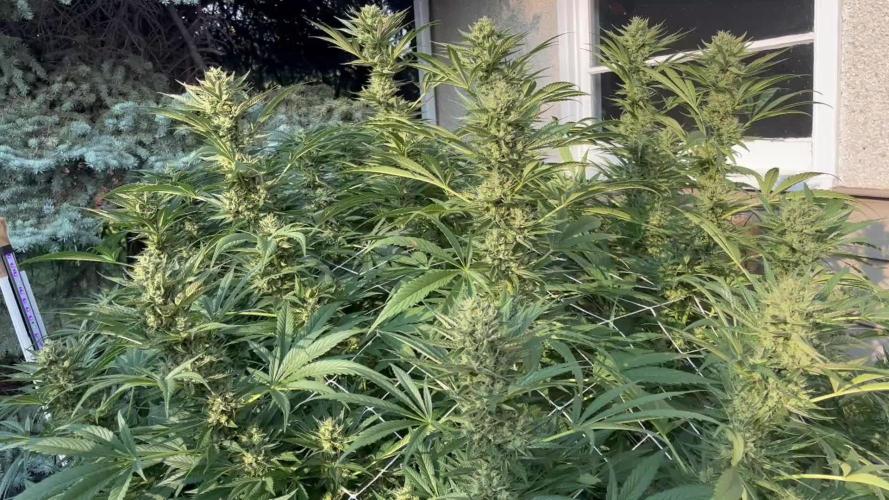
Sep 6: Tropicana Cookies FF is doing great. Maybe not as much flower maturation last week as I expected but we’re just starting week 8 of flowering. So likely the end of September which is fine for the late start on this plant.
Sep 7: decided on a final top dressing of malted barley and Power Bloom. Seems they need a bit more P.
Sep 12: don't take flash pics unless you follow it up with a far red (730 nm) light to put the plant solidly into dark mode.
Still using the far red light every night at dusk timed based in Civil Teilight as listed in timeanddate.com. Now at about 8:30 and when flowering started it was at about 10:00.
Processing
Likes
8
Share


@eldruida_lamota
Follow
Que hay familia os traemos la 3 semana de nuestras green ak xL, y es que están bastante sanas, tuve que atar las puntas a las esquinas por que la altura se nos fue de las manos.
Tienen muchos brazos laterales, que espero que en unas semanas sean largas colas de flores.
Ph controlado y humedad dentro de los parámetros aconsejables, regamos cada 2 días, y todos los riegos llevan nutrientes.
Esta variedad me tiene personalmente desconcertado, es bastante sensible a los cambios así que procuramos tenerla en una rutina alimentaria y lumínica sin nada de cambios, veremos cómo apremia en unos meses.

Likes
6
Share


@Ninjabuds
Follow
Just like the other strain from weedseedsexpress.com there starting really strong pushing the shell off without any help. Also they have some purple hue to then already always a good

Likes
2
Share


@Mr_nugs_lover_David
Follow
Very easy to grow, amazing aromas very mango strong tropical smell, very delicious, just like her sisters, I think it's a very stable genetic because 3 out of 4 were purple and the 4 of them have the same mango smell, very good automatic strain! 🌱 💚 💎

Likes
4
Share


@knnabisgrower
Follow
Empezamos la septima semana cambiando el ciclo de lúminico a 12 horas de luz y 12 horas de oscuridad para inducir la floración, también empezamos los riegos con fertilizantes para estimular la flora y aumentar la producción de tricomas, mejorar el aroma de la flor y aumentar el peso final de la cosecha.
