Check the winners The Grow Awards 2026 🏆
Likes
8
Share
@dreamLife
Follow
Se siento rico aroma en la habitación, un aroma bastante cítrico.
Likes
45
Share
@Robbaus
Follow
Ciao a tutti! Settimana fantastica, i fiori si stanno gonfiando ad una velocità incredibile, ci sono tricomi ovunque e i pistilli posso dire che mi sembrano decisamente più lunghi delle altre volte, credo dipenda dall'idroponica. Sto notando che va tutto molto più in fretta, avrei potuto tranquillamente tagliare una settimana di vegetativa e avrei avuto gli stessi apicali ma semplicemente più bassi, la prossima volta le giro in fioritura prima da tenerle più basse, ho rischiato la bruciatura da led sugli apicali più alti. Però sono veramente soddisfatto, gli advanced nutrients mi stanno regalando grandi soddisfazioni, le premesse sono di un raccolto assai abbondante, non vedo l'ora! Manca un mese scarso!
Likes
5
Share
Week 10...The plants are looking good! Took out the microscope to look at the trichomes...Starting to get milky but still another week or two before the harvest! Started flushing the plant this week!
Likes
34
Share
@rhodes68
Follow
11/15 Week 13 And things are finishing fast... almost FF10 nuets taken to near max as she is building well and want that to continue. FF9 on water only beginning to get her ready FF11 Fading well it has a few days Again we can expect about 200 grams a plant... or so we hope 😋 Some camera problems ordering another 11/16 FFt-10 Building buds like mad and soaking up the nuets, increased bloom to 12ml/gal ea Pk remains as is see no reason to increase plant wants more Nitrogen and CA FFt-9/11 Continue to finish on PHed water no rush girls just fade away slowly 😏 11/17 Very surprising amount of bud building on the FFt-10 at this late stage. It was the last strain to go into the tent prob a week behind the FFt-9 but still not close 11/19 Bud pics FF10 moving closer still keeping feed as is for now Colors on the FF9 nice surprise good purps and pinks without loofy buds cause those suckers are hard FF11/9 looking good the 9 will go longer than the 11 but there is no rush on either. Nice what you can do when nothing is pressuring you to harvest. 11/20 Will be harvesting a plant every three days now, first will be the FF11-1 (was first in the flower tent) then FF11-2, then FF9, finally FF10 should be ready by then 10 days or so depending on weather. Was going to give them longer but weather is dictating a lot right now and that first FF11 is just ready, all trics white with a few amber Dropped FFt-10 Feed to 10ml/gal ea Bloom A/B 10mk/gal PK will continue to drop it every few days 11/21 Harvest day for FFT-11-1 975 grams wet into dry 11/23 FFT-10s showing no signs of slowing leaving nuets as is Next up is the FF11-2 harvest tomorrow.
Likes
4
Share
@Soskar69
Follow
Nothing much to say. She'd reasy! She has a fantastic aroma and some beautiful colas. The leaves are becoming purple so in few days I will harvest her. I'm very excited because I think she is the most beautiful of the all plants I have.
Likes
23
Share
@Gram_Solo
Follow
Final Week for 2 of the Runtz 🔥🔥🔥 I am flushing the 2 plants at the front of the tent! they looking super frosty and feel dense! 100% ready now! I am doing all the others with same feed as last week , added overdrive aswell as there is some frost picking up and amber trichomes! Smells so good! early harvest very soon! 2 front plants will be put into drying next week for 15 days. then others should be ready to repeat 😁 Update 03/05/25 I have now put the 2 plants being flushed in the 3x3 for a 3 day dark period then we doing the Chop and dry for around 15 days Will take some snaps this weekend and pick up that frossst! update very soon! 1 looking so phat! I snapped a main stem off in early flower and its pumped into 2 massive colas!! BOOM! Nearly at the end of the grow! its been Emotional! 😎
Likes
4
Share
07/16/2024 Week 8 Update!!!! Yoo gang update lessgooo!!!!!! Sooo what's brackin gang, so we starting into week 8, officially I think it's week 6 of actual veg but that's here nor there, the girls are really coming into their own really great leaf structuring and coloration other then will keep y'all updated as the week goes on thanks for stopping by and LFG!!!!
Likes
77
Share
This girl is doing well bushing up nicely after fimming gone a bit pale so hit her with the Shogun nutes now she's settled put a video up of feed one of ec and one of pH when using Shogun i don't do it that often as it's always roughly the same just when n flower I'll switch the calmag and silicon for a pk and a boost max it goes is 2.2 ec her side branches are coming on well hoping the feed sort her colour out other than hat she seems happy not slow drinking well nice chunky stems will get some better pics when possible thanks for reading happy growing guys
Likes
11
Share
Earthbox pics of Strawberry Truffle s1 | Perpetual grow 👽🐢👽🐢 harvest coming on new moon, flipping veg tent👍
Likes
12
Share
@Kirsten
Follow
14.1.25: I've been readjusting the LST. I just took all the pegs out and reshaped her. I got some new LST equipment in the mail today, have been glad to have more pegs. I got some clips too, but they don't seem to stay on 😕 I'm currently only using the pegs, I have some thicker soft wire, but I forgot I don't have pliers to cut it! Also I'm running very low on Biobizz nutrients, so that could be bad 🤞 18.1.25: I have done another large defoliation on PPP1 and PPP2. Also, moderate defoliation on all other plants today. All LST ties and pegs are readjusted. I have turned up the light to 90%. Same distance of between 24-28 inches, depending on height of specific plant. I have increased the dosage of Biobizz Bio-Grow and Fish Mix to give an extra boost of Nitrogen as several plants were showing yellowing. They have responded very well to this. Unfortunately I ran out of my Biobizz nutrients and PH UP. I'm currently using Bicarbonate of Soda to increase the PH after the nutes PH comes out to about 4.1. Obviously, that uses a lot and I only had a 250ml bottle, which I used last run too. This run I have 9 plants. The only thing I'm worried about is the salt build up. Have you used it before? Or any other natural way to increase PH? Please let me know! I've also added Biobizz Fish Mix to help with the extra Nitrogen needed. Watering with 1ltr of dechlorinated water PH'd to 6.3 with the following nutrients;- ♡ 4ml Biobizz Fish Mix ♡ 4ml Biobizz Bio-Grow ♡ 2ml Biobizz Bloom ♡ 2ml Biobizz Top Max ♡ 2ml Cal-Mag ♡ 2ml Ecothrive Flourish. I water with this every 3 days. I did order some more Biobizz Bio-Grow and Bio Bloom. I found some at a reasonable price on Amazon. I still have about 800 ml of Biobizz Fish Mix left, too. It is fairly expensive this time as the plants are hungrier this run. I also got a new bag of Canna coco, which I may use to add a top dress with some dry amendments. Which hopefully will save some cash on the bottled nutrients and stretch out until the end of this run without having to buy anymore. I have purchased a funnel to pour the water. It is difficult, due to the shape of my LST, to water precisely. I have spilt it all over the tent several times 🙄 I've also ordered a 2 litre jug. Currently, I'm mixing water for 9 plants individually in a 1 litre jug. It's tideous. Hopefully, this will solve the issues. Cleaning the tent after watering every time isn't my idea of efficiency 😅 Thanks for checking out my diary 🍃 ✌️
Processing
Likes
33
Share
Start of Week 7! Day 44 - 12/12 Big difference in the two Cali Snow plants! The centre "Plant 1" is well along in the flowering process with obvious bud sites forming along the small amount of LST I've been able to get going. Got a bit more stretch out of it but it looks like she's settling down but the sativa flowering of this strain is noticeably behind the indica LSD-25 planted same day in my other diary. The other girl "Plant 2" that is far left and was cooked under the dome early in the grow seems to still be in a pre-flower phase and I'm actually getting a lot of decent stretch/growth in the secondary sites. I'll keep an eye on it for the next week to see if I have to set it off myself with a 12/12 cycle but there are a few pistils here and there. Hopefully it's just a little set back in its timing because it's going to turn out to be the biggest of all 3 plants I have going now. Will have the best veg base for flowering for sure. Hopefully I won't have to set it to 12/12 and rob the other two plants I have further along in flower of a few hours of light a day. Gave another feed with upped nutes but still playing it on the low side. Going up a little each feeding and no signs of burn on any of the girls yet. Making sure I'm chasing feeds with plain water and spraying the top layer with plain water here and there to keep any build up at bay; Since the girls aren't big enough for full pot runoff feeds due to small size. Day 48 - 12/16 You can see how different the timing on the two Cali Snow are. I'm loving the extra time with Plant 2 to set up bigger secondary branches and the pistils still seem to be SLOWLY forming near the top and mature sites. In an attempt to avoid switching her to 12/12 to fully trigger the flower, I've let the temperature drop down a bit to the high teens with the light on by lettering in the winter air and keeping the tent open with lights on. Hopefully the lower temp here and there over the next couple days will get it moving. Plant 1 is well along in it's flower. The bud sites are well defined and the stretch seems to be wrapping up bringing it in just a bit bigger than my small LSD-25 in my other diary going right now. Pulled it out and reset some new LST on the plant with a less drastic lean. Clipped a few fan leaves and 3 fingers from the two Cali's, anything blocking light or bunching up too much but tried to leave as much as possible for energy production. The classic Cali Snow smell I was warned about is starting to come in. Even P2 with little to no flowers is throwing off a nice scent. Still tent contained without exhaust for now so no worries on that front. Day 50 - 12/18 Gave them their biggest feeding today in both nutes and volume. Both split a mix of 1ml each PH Perfect MGB with 1tsp Molasses in a gallon of water with a half gallon plain water chase. First time the plants have been big/thirsty enough for a run-off feeding. Will spray top layer in a day to clean top layer of any residue then top with D-Earth sprinkle to let sit until next feed. These girls have gone from identical to fraternal twins. P2 on the left is looking more like the plant I wanted in terms of size and spread. The set back in flowering time has really allowed me to train it up and get lower branches up to a pseudo-canopy. It looks like it's FINALLY about to make the final switch as the still bright pre-flower tops are starting to shoot more pistils and new leaf growth has that telltale upward point as the spread comes to an end. P1 is full flower swing is chugging along nicely as I opened her up main stem up with some selective defoliation and the thin sativa bud structure is slowly but surely coming in. As a new grower, seeing the fatten/faster Indica flower of my LSD-25 right next to the Sativa on the same schedule is a great observational experience. 👽 The smell of the two Cali Snows are finally starting to ripen up. Only chance at smelling my LSD-25 right beside them is to get REAL close. Thanks for stopping in, throw down a like so I can return the favour, will update through the week! 🙌 IG: @GlazedGrow
Likes
10
Share
Black Muffin Harvest Report The Black Muffin Monster really impressed me. She grew into a beautiful and strong plant with dense, resinous buds and an amazing aroma. Unfortunately, I suspect she developed a fungal infection, probably Fusarium, which forced me to remove about four side branches. Still, the rest of the plant stayed healthy and finished strong. Overall, I’m very happy with the results and excited to see how she turns out after drying and curing. It was a great experience despite the challenges.
Likes
58
Share
Wetter war gut, nur einmal Regen, 3 fat banana sind im trockenraum, die anderen beiden kommen in den nächsten Tagen dazu.sind fast fertig. Die zz legen an buds zu, wie sie sollen, Nr.5 schon im fading... special queen macht sich langsam. Toppen war die richtige Entscheidung. Critical verzweigt sehr gut 👍. Lst funktioniert. Nächste Woche kommt der erste erntebericht... ich freu mich. Bis nächsten Freitag ✌️
Likes
19
Share
Vamos familia octava semana de floración de estás apollo black cherry de SeedStockers. Que ganas tengo de ver el progreso de esta variedad, las plantas están sanas, se ven con buen color. Ya estamos entrando en la recta final. La cantidad de agua cada 48h entre riegos. Esta semana quitamos ya los nutrientes de la gama Agrobeta. Las plantas están bastante bien subió algo la temperatura esta semana pero por el momento no les afectó, a ver si consigo bajar un poco la temperatura estas próximas semanas y acabamos todo bien.. Estas próximas semanas veremos como avanzan, terminan de engordar y madurar las flores. Mars hydro: Code discount: EL420 https://www.mars-hydro.com/ Agrobeta: https://www.agrobeta.com/agrobetatiendaonline/36-abonos-canamo Hasta aquí todo, Buenos humos 💨💨
Likes
25
Share
ANTHOCYANIN production is primarily controlled by the Cryptochrome (CR1) Photoreceptor ( !! UV and Blue Spectrums are primary drivers in the production of the pigment that replaces chlorophyll, isn't that awesome! 1. Diverse photoreceptors in plants Many civilizations, including the sun god of ancient Egypt, thought that the blessings of sunlight were the source of life. In fact, the survival of all life, including humans, is supported by the photosynthesis of plants that capture solar energy. Plants that perform photosynthesis have no means of transportation except for some algae. Therefore, it is necessary to monitor various changes in the external environment and respond appropriately to the place to survive. Among various environmental information, light is especially important information for plants that perform photosynthesis. In the process of evolution, plants acquired phytochrome, which mainly receives light in the red light region, and multiple blue light receptors, including his hytropin and phototropin, in order to sense the light environment. .. In addition to these, an ultraviolet light receptor named UVR8 was recently discovered. The latest image of the molecular structure and function of these various plant photoreceptors (Fig. 1), focusing on phytochrome and phototropin. Figure 1 Ultraviolet-visible absorption spectra of phytochrome, cryptochrome, phototropin, and UVR8. The dashed line represents each bioactive absorption spectrum. 2. Phytochrome; red-far red photoreversible molecular switch What is phytochrome? Phytochrome is a photochromic photoreceptor, and has two absorption types, a red light absorption type Pr (absorption maximum wavelength of about 665 nm) and a far-red light absorption type Pfr (730 nm). Reversible light conversion between the two by red light and far-red light, respectively(Fig. 1A, solid line and broken line). In general, Pfr is the active form that causes a physiological response. With some exceptions, phytochrome can be said to function as a photoreversible molecular switch. The background of the discovery is as follows. There are some types of plants that require light for germination (light seed germination). From that study, it was found that germination was induced by red light, the effect was inhibited by subsequent far-red light irradiation, and this could be repeated, and the existence of photoreceptors that reversibly photoconvert was predicted. In 1959, its existence was confirmed by the absorption spectrum measurement of the yellow sprout tissue, and it was named phytochrome. Why does the plant have a sensor to distinguish between such red light and far-red light? There is no big difference between the red and far-red light regions in the open-field spectrum of sunlight, but the proportion of red light is greatly reduced due to the absorption of chloroplasts in the shade of plants. Similar changes in light quality occur in the evening sunlight. Plants perceive this difference in light quality as the ratio of Pr and Pfr, recognize the light environment, and respond to it. Subsequent studies have revealed that it is responsible for various photomorphogenic reactions such as photoperiodic flowering induction, shade repellent, and deyellowing (greening). Furthermore, with the introduction of the model plant Arabidopsis thaliana (At) and the development of molecular biological analysis methods, research has progressed dramatically, and his five types of phytochromes (phyA-E) are present in Arabidopsis thaliana. all right. With the progress of the genome project, Fi’s tochrome-like photoreceptors were found in cyanobacteria, a photosynthetic prokaryotes other than plants. Furthermore, in non-photosynthetic bacteria, a homologue molecule called bacteriophytochrome photoreceptor (BphP) was found in Pseudomonas aeruginosa (Pa) and radiation-resistant bacteria (Deinococcus radiodurans, Dr). Domain structure of phytochrome molecule Phytochrome molecule can be roughly divided into N-terminal side and C-terminal side region. PAS (Per / Arndt / Sim: blue), GAF (cGMP phosphodiesterase / adenylyl cyclase / FhlA: green), PHY (phyto-chrome: purple) 3 in the N-terminal region of plant phytochrome (Fig. 2A) There are two domains and an N-terminal extension region (NTE: dark blue), and phytochromobilin (PΦB), which is one of the ring-opening tetrapyrroles, is thioether-bonded to the system stored in GAF as a chromophore. ing. PAS is a domain involved in the interaction between signal transduction-related proteins, and PHY is a phytochrome-specific domain. There are two PASs and her histidine kinase-related (HKR) domain (red) in the C-terminal region, but the histidine essential for kinase activity is not conserved. 3. Phototropin; photosynthetic efficiency optimized blue light receptor What is phototropin? Charles Darwin, who is famous for his theory of evolution, wrote in his book “The power of move-ment in plants” published in 1882 that plants bend toward blue light. Approximately 100 years later, the protein nph1 (nonphoto-tropic hypocotyl 1) encoded by one of the causative genes of Arabidopsis mutants causing phototropic abnormalities was identified as a blue photoreceptor. Later, another isotype npl1 was found and renamed phototropin 1 (phot1) and 2 (phot2), respectively. In addition to phototropism, phototropin is damaged by chloroplast photolocalization (chloroplasts move through the epidermal cells of the leaves and gather on the cell surface under appropriate light intensity for photosynthesis. As a photoreceptor for reactions such as escaping to the side of cells under dangerous strong light) and stomata (reactions that open stomata to optimize the uptake of carbon dioxide, which is the rate-determining process of photosynthetic reactions). It became clear that it worked. In this way, phototropin can be said to be a blue light receptor responsible for optimizing photosynthetic efficiency. Domain structure and LOV photoreaction of phototropin molecule Phototropin molecule has two photoreceptive domains (LOV1 and LOV2) called LOV (Light-Oxygen-Voltage sensing) on the N-terminal side, and serine / on the C-terminal side. It is a protein kinase that forms threonine kinase (STK) (Fig. 4Aa) and whose activity is regulated by light. LOV is one molecule as a chromophore, he binds FMN (flavin mononucleotide) non-covalently. The LOV forms an α/βfold, and the FMN is located on a β-sheet consisting of five antiparallel β-strands (Fig. 4B). The FMN in the ground state LOV shows the absorption spectrum of a typical oxidized flavin protein with a triplet oscillation structure and an absorption maximum wavelength of 450 nm, and is called D450 (Fig. 1C and Fig. 4E). After being excited to the singlet excited state by blue light, the FMN shifts to the triplet excited state (L660t *) due to intersystem crossing, and then the C4 (Fig. 4C) of the isoaroxazine ring of the FMN is conserved in the vicinity. It forms a transient accretionary prism with the tain (red part in Fig. 4B Eα) (S390I). When this cysteine is replaced with alanine (C / A substitution), the addition reaction does not occur. The effect of adduct formation propagates to the protein moiety, causing kinase activation (S390II). After that, the formed cysteine-flavin adduct spontaneously dissociates and returns to the original D450 (Fig. 4E, dark regression reaction). Phototropin kinase activity control mechanism by LOV2 Why does phototropin have two LOVs? Atphot1 was found as a protein that is rapidly autophosphorylated when irradiated with blue light. The effect of the above C / A substitution on this self-phosphorylation reaction and phototropism was investigated, and LOV2 is the main photomolecular switch in both self-phosphorylation and phototropism. It turns out that it functions as. After that, from experiments using artificial substrates, STK has a constitutive activity, LOV2 functions as an inhibitory domain of this activity, and the inhibition is eliminated by photoreaction, while LOV1 is kinase light. It was shown to modify the photosensitivity of the activation reaction. In addition to this, LOV1 was found to act as a dimerization site from the crystal structure and his SAXS. What kind of molecular mechanism does LOV2 use to photoregulate kinase activity? The following two modules play important roles in this intramolecular signal transduction. Figure 4 (A) Domain structure of LOV photoreceptors. a: Phototropin b: Neochrome c: FKF1 family protein d: Aureochrome (B) Crystal structure of auto barley phot1 LOV2. (C) Structure of FMN isoaroxazine ring. (D) Schematic diagram of the functional domain and module of Arabidopsis thaliana phot1. L, A’α, and Jα represent linker, A’α helix, and Jα helix, respectively. (E) LOV photoreaction. (F) Molecular structure model (mesh) of the LOV2-STK sample (black line) containing A’α of phot2 obtained based on SAXS under dark (top) and under bright (bottom). The yellow, red, and green space-filled models represent the crystal structures of LOV2-Jα, protein kinase A N-lobe, and C-robe, respectively, and black represents FMN. See the text for details. 1) Jα. LOV2 C of oat phot1-to α immediately after the terminus Rix (Jα) is present (Fig. 4D), which interacts with the β-sheet (Fig. 4B) that forms the FMN-bound scaffold of LOV2 in the dark, but unfolds and dissociates from the β-sheet with photoreaction. It was shown by NMR that it does. According to the crystal structure of LOV2-Jα, this Jα is located on the back surface of the β sheet and mainly has a hydrophobic interaction. The formation of S390II causes twisting of the isoaroxazine ring and protonation of N5 (Fig. 4C). As a result, the glutamine side chain present on his Iβ strand (Fig. 4B) in the β-sheet rotates to form a hydrogen bond with this protonated N5. Jα interacts with this his Iβ strand, and these changes are thought to cause the unfold-ing of Jα and dissociation from the β-sheet described above. Experiments such as amino acid substitution of Iβ strands revealed that kinases exhibit constitutive activity when this interaction is eliminated, and that Jα plays an important role in photoactivation of kinases. 2) A’α / Aβ gap. Recently, several results have been reported showing the involvement of amino acids near the A’α helix (Fig. 4D) located upstream of the N-terminal of LOV2 in kinase photoactivation. Therefore, he investigated the role of this A’α and its neighboring amino acids in kinase photoactivation, photoreaction, and Jα structural change for Atphot1. The LOV2-STK polypeptide (Fig. 4D, underlined in black) was used as a photocontrollable kinase for kinase activity analysis. As a result, it was found that the photoactivation of the kinase was abolished when amino acid substitution was introduced into the A’α / Aβ gap between A’α and Aβ of the LOV2 core. Interestingly, he had no effect on the structural changes in Jα examined on the peptide map due to the photoreaction of LOV2 or trypsin degradation. Therefore, the A’α / Aβ gap is considered to play an important role in intramolecular signal transduction after Jα. Structural changes detected by SAXS Structural changes of Jα have been detected by various biophysical methods other than NMR, but structural information on samples including up to STK is reported only by his results to his SAXS. Not. The SAXS measurement of the Atphot2 LOV2-STK polypeptide showed that the radius of inertia increased from 32.4 Å to 34.8 Å, and the molecular model (Fig. 4F) obtained by the ab initio modeling software GASBOR is that of LOV2 and STK. It was shown that the N lobes and C lobes lined up in tandem, and the relative position of LOV2 with respect to STK shifted by about 13 Å under light irradiation. The difference in the molecular model between the two is considered to reflect the structural changes that occur in the Jα and A’α / Aβ gaps mentioned above. Two phototropins with different photosensitivity In the phototropic reaction of Arabidopsis Arabidopsis, Arabidopsis responds to a very wide range of light intensities from 10–4 to 102 μmol photon / sec / m2. At that time, phot1 functions as an optical sensor in a wide range from low light to strong light, while phot2 reacts with light stronger than 1 μmol photon / sec / m2. What is the origin of these differences? As is well known, animal photoreceptors have a high photosensitivity due to the abundance of rhodopsin and the presence of biochemical amplification mechanisms. The exact abundance of phot1 and phot2 in vivo is unknown, but interesting results have been obtained in terms of amplification. The light intensity dependence of the photoactivation of the LOV2-STK polypeptide used in the above kinase analysis was investigated. It was found that phot1 was about 10 times more photosensitive than phot2. On the other hand, when the photochemical reactions of both were examined, it was found that the rate of the dark return reaction of phot1 was about 10 times slower than that of phot2. This result indicates that the longer the lifetime of S390II, which is in the kinase-activated state, the higher the photosensitivity of kinase activation. This correlation was further confirmed by extending the lifespan of her S390II with amino acid substitutions. This alone cannot explain the widespread differences in photosensitivity between phot1 and phot2, but it may explain some of them. Furthermore, it is necessary to investigate in detail protein modifications such as phosphorylation and the effects of phot interacting factors on photosensitivity. Other LOV photoreceptors Among fern plants and green algae, phytochrome ɾphotosensory module (PSM) on the N-terminal side and chimera photoreceptor with full-length phototropin on the C-terminal side, neochrome (Fig. There are types with 4Ab). It has been reported that some neochromes play a role in chloroplast photolocalization as a red light receiver. It is considered that fern plants have such a chimera photoreceptor in order to survive in a habitat such as undergrowth in a jungle where only red light reaches. In addition to this, plants have only one LOV domain, and three proteins involved in the degradation of photomorphogenesis-related proteins, FKF1 (Flavin-binding, Kelch repeat, F-box 1, ZTL (ZEITLUPE)), LKP2 ( There are LOV Kelch Protein2) (Fig. 4Ac) and aureochrome (Fig. 4Ad), which has a bZip domain on the N-terminal side of LOV and functions as a gene transcription factor. 4. Cryptochrome and UVR8 Cryptochrome is one of the blue photoreceptors and forms a superfamily with the DNA photoreceptor photolyase. It has FAD (flavin adenine dinucle-otide) as a chromophore and tetrahydrofolic acid, which is a condensing pigment. The ground state of FAD is considered to be the oxidized type, and the radical type (broken line in Fig. 1B) generated by blue light irradiation is considered to be the signaling state. The radical type also absorbs in the green to orange light region, and may widen the wavelength region of the plant morphogenesis reaction spectrum. Cryptochrome uses blue light to control physiological functions similar to phytochrome. It was identified as a photoreceptor from one of the causative genes of UVR8 Arabidopsis thaliana, and the chromophore is absorbed in the UVB region by a Trp triad consisting of three tryptophans (Fig. 1D). It is involved in the biosynthesis of flavonoids and anthocyanins that function as UV scavengers in plants. Conclusion It is thought that plants have acquired various photoreceptors necessary for their survival during a long evolutionary process. The photoreceptors that cover the existing far-red light to UVB mentioned here are considered to be some of them. More and more diverse photoreceptor genes are conserved in cyanobacteria and marine plankton. By examining these, it is thought that the understanding of plant photoreceptors will be further deepened.
Processing
Likes
5
Share
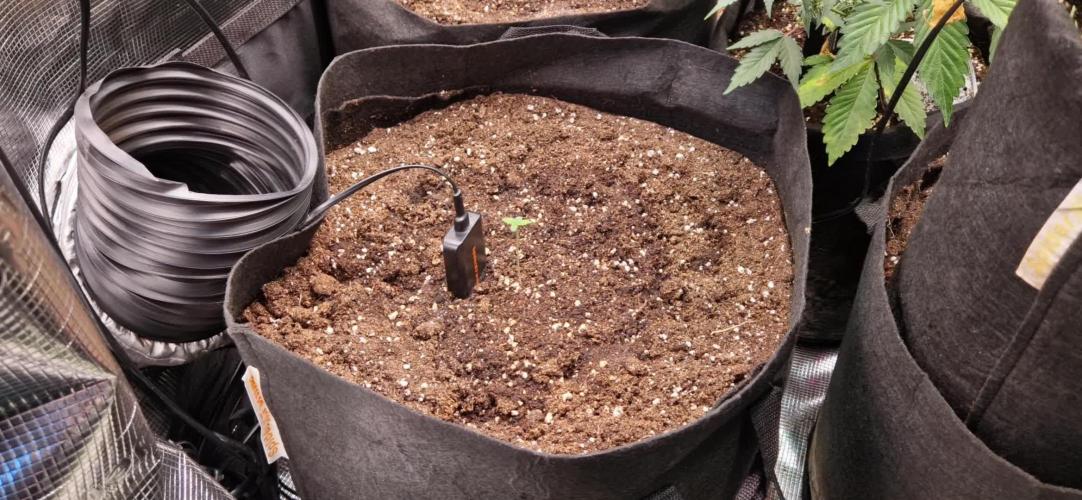
Saturday Jan 10, 2020. Germinated seeds in pH 7 water for 24 hours January 11, 2020. Soil was ammended with homemade worm castings, activated bio char, endo/ecto microhyazae, diastatic malt and high quality basalt and gypsum. After root tip emerged seed was placed in soil around 1-2in deep, root tip facing down. Day 1: January 14th. First day of seedling stage as it has risen above the soil and the chotyledons have opened.
Likes
Comments
Share
Vamos familia, actualizamos la tercera semana de floración de estas Black Rainbow de Seedstockers, salieron las 3 de 3, 100% ratio éxito. Aplicamos varios productos de Agrobeta, que son increíbles para aportar una buena alimentación a las plantas. Temperatura y humedad dentro de los rangos correctos dentro de la etapa de floración. La tierra utilizada es al mix top crop, por cambiar. De 3 ejemplares seleccioné los 2 mejores para completar el indoor y trasplanté directamente a macetas de 7 litros, cambien el fotoperiodo a 12/12 y aplique una buena poda de ramas bajas, se ven bien sanas las plantas, tienen un buen color y progresan a muy buen ritmo por el momento, ya empezaron a formarse las flores. Agrobeta: https://www.agrobeta.com/agrobetatiendaonline/36-abonos-canamo Hasta aquí todo, Buenos humos 💨💨💨
Likes
22
Share
First of all thanks to the SSSC for this opportunity, this is going to be a test grow fot the club but also a pheno hunt at the same time! We started to germinate 8 regular seeds for this first diary the 21st of august, next couple of days i will update the germination ratio! And after that the week 1 starts hopefully we get a reasonable amount of females here!