




Likes
41
Share


@Dr_Boom
Follow
Yet another exciting week to share. I flipped her to 12/12, and she responded with some praying leaves and a lush green color. I'm starting to see a little stretch, and I'm hoping to get at least 3-4 inches of new growth. Time will tell.

Processing
Likes
23
Share


@goeser
Follow
Startet the germination of this plants on 07.05.2018.
4 of 5 Royyal Gorilla Auto seeds germinated and are growing well.
They are staying in my garden and i hope that they will get more and more sun this coming week.
1 of 4 is quit strong , and ist already frosty and has good buds , hope they will get big and fat.
the other 3 plants are a bit slower and one of them is a bit small but bushy.
first "outdoor" grow for me in a not soo sunny area.

Likes
48
Share


@CapybaraProbioticTeam
Follow
Esta fue la novena semana de flora. Para ser mas específicos, hoy 25/07/2020, es el día 126 desde la germinación y el día 60 desde que la planta mostró los pistilos blancos y comenzó a florar. Creo que no falta nada para cosecharla, probablemente en los próximos días, ya que todos los tricomas están blancos, y muy muy poquitos están color ámbar. Si bien la semana anterior dije que esperaría a tener el 20% de los tricomas ámbar, esta planta en particular mostró una maduración muy pareja, que no había visto nunca, asi que es muy probable que corte en lo próximos días, con un 5-10% de tricomas ámbar.
Esta semana solo regué con agua sin cloro y con un poco de melaza. Si bien para los fermentados que utilizo para alimentarlas no es necesario hacer lavado de raíces, creo que siempre viene bien sobre el final regar solo con agua y dejar que el suelo haga lo suyo.
Esto fue todo por hoy.
Saludos!!


Likes
9
Share

@Flavors
Follow
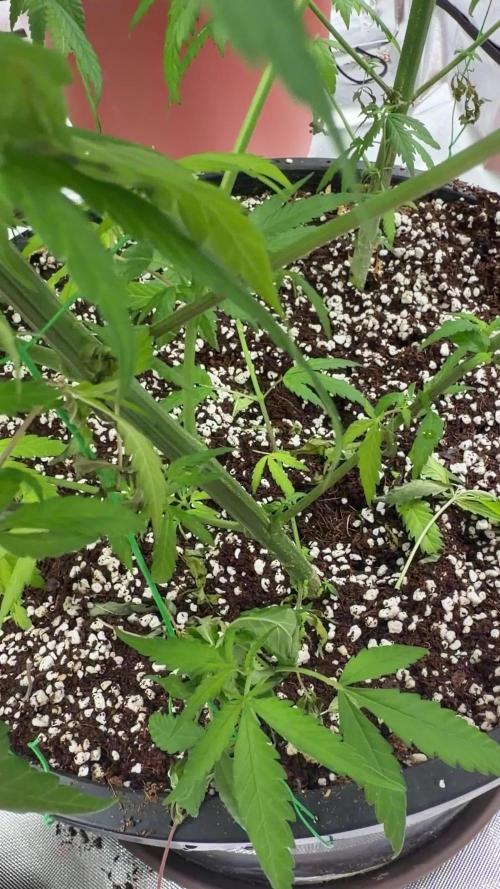
🌱 Sticky Broccoli – Grow Diary 🌱
Week 12 | Transition Week | Coco + Perlite
This week is the final stage before flower 🌸
Plant is fully mature with a dense, even canopy under the SCROG 🌐
Plan is to take clones from healthy top growth ✂️🌱
Selecting strong branches to preserve genetics before the flip.
One more defoliation will be done to clean up the canopy 🍃
Removing excess fan leaves to maximize light penetration and airflow 🌬️
Structure is dialed in—flat, wide, and ready for stretch 🚀
All bud sites are exposed and positioned evenly.
Plant remains healthy with deep green foliage 💪
No signs of stress going into transition.
Watering consistent with slight runoff 💧
Environment stable and optimized for flip.
📈 Next step: final defoliation, take clones, then flip to flower cycle 🌸🔥
Likes
3
Share


@UrbanBoer
Follow
This one has me confused, she seems to be stuck on the first week of flowering, while she revegs she seems to love defoliation or like Monday’s Blue she is in good grow medium, because Blue and Unknown share the same grow medium, she really surprised me how far she has grown, she is one of my tallest lady with less soil 2nd to Blue. The crazy part is she got a heavy trim before leaving for a month, then I defoliated again and a High Stress one, when I got back, she recovered and forced me again to give her another defoliating session a heavy one to add,and had to do it because she was depriving Mexican Peach Punch with light, resulting in her having an even bud development, one side grows faster than the other. I hope this trim will force her to focus on bud development.
Likes
5
Share

@Stoney_Stark
Follow
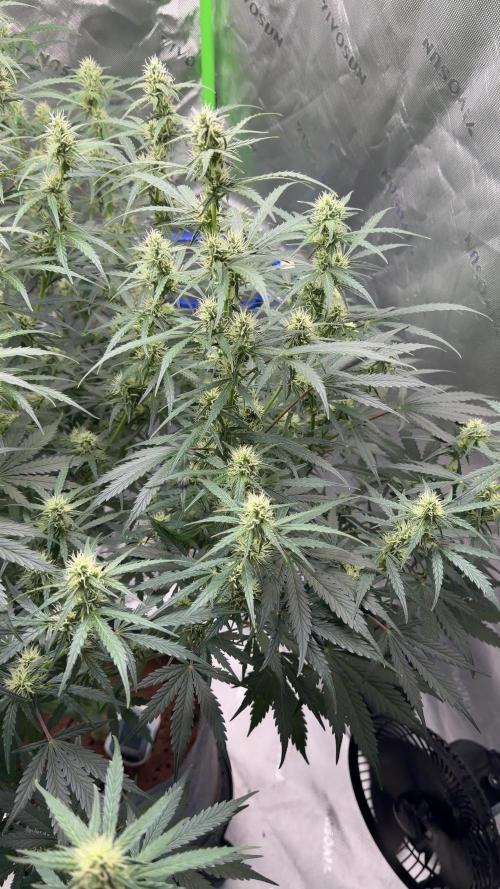
Week 9 Update — Gorilla Zkittlez (Flowering Progress)
Dates: 11/17–11/20
Medium: Coco
Water Source: RO
Grower: Stoney Stark / Little Lilly Farms
⸻
🌱 Feeding & Dry-Back Strategy
This week she only received two feedings as I’m pushing a longer dry back to strengthen the root zone and slow vertical growth.
🗓️ 11/17 & 11/20 Feeding (1 gal each)
• 4 ml Green Sensation – PK booster to enhance flower density and terp production
• 0.5 ml Silicium Bloom – Adds structural strength, helps the plant handle high-intensity light
• 14 ml Coco A – Base nutrient providing nitrogen + essential micros
• 18 ml Coco B – Boosts phosphorus & potassium for flowering development
• 4 ml Pure Zym – Enzymes that break down dead root mass & improve nutrient uptake
• 8 ml Royal Rush – Metabolic stimulant for increased vigor and resin output
• 5 ml Ruby Fulvic – Improves nutrient absorption & overall plant energy
• pH: 5.8
• PPM: ~1300
⸻
💡 Light & Canopy Management
She stretched harder than expected late into Week 9 and grew too close to the light. I had to raise the fixture, but I’m officially out of headroom — the light can’t go any higher.
• Light was raised as high as possible
• Canopy now sits just below the fixture
• Watching closely for light stress or foxtailing
Despite this, she’s handling the intensity surprisingly well.
⸻
🌿 Plant Structure & Health
She’s built like a monster this week:
• Extremely thick main stalk — easily one of the thickest of the run
• Lateral branches are sturdy and holding weight well
• No signs of nutrient burn even with 1300ppm
• Dry-back is helping keep internodes tight and reduce stretch
I’m genuinely impressed with how thick the trunk got — she’s built for heavy buds.
⸻
📸 Overall Impression
Gorilla Zkittlez is stacking nicely as Week 9 wraps up. Flowers are continuing to swell, the plant is still drinking steadily even with reduced feedings, and structure is strong enough to support chunky buds without additional stakes yet.




Likes
58
Share


@Organic_LarF
Follow
High GD community,
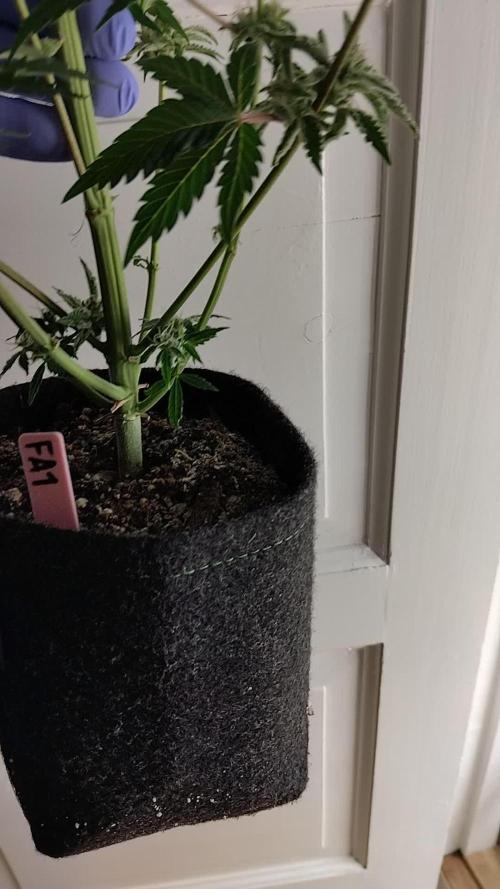
Week 14,
Probably its last week as veg. She starts a good stretch now taking 17cm in a week.
1 watering with the bokashi juice, honey and molasses . Bokashi juice is AM microbiological life.
Thats it for this week boys and girls,
Thanks for reading and passing by and 💚💚💚👏👏👏👍👍👍 for Marshydro leds. Quality/price top!
Grow safe buds and feel free to check out my other ladies doing fine thanks!
🙏🌿🌿🌿🙏
Weedseedsexpress!!!! 👏👏👏
LarfxWSE for discount at weedseedsexpress!!! 15% off!!!
Zamnesia!!! 👽👽👽
Add OrganicLarF as a code when buying your own MarsHydro LED light and get a nice reduction!!!👽🚀🛸

Processing
Likes
3
Share


@sgmKaleb
Follow
Slow to start as I remember. Have to fly forward to 8 weeks in....Sorry, found this app too late to start with it.


Likes
36
Share


@MadeInGermany
Follow
Info:
Unfortunately, I had to find out that my account is used for fake pages in social media.
I am only active here on growdiaries.
I am not on facebook instagram twitter etc All accounts except this one are fake.
Have fun with the update.
Hey everyone 😀.
Another nice week goes by with a great development :-).
Next week it will be placed in the flower chamber with a time interval of 12/12 hours.
1 g of GHSC enhancer was added per liter of water.
I sprayed neem oil again as a preventive measure, hence the dark shine :-)
The tent was completely cleaned and the humidifier was refilled.
I wish you all the best 🙏🏻
You can buy this Strain at :
https://originalsensible.com/original-sensible-seeds-zkittlez~20503
Type:
Zkittlez
☝️🏼
Genetics:
Afghan Kush Indica x Grandaddy Purple x Grapefruit hybrid
👍
Vega lamp:
2 x Todogrow Led
Quantum Board 100 W
💡
Bloom Lamp :
2 x Todogrow Led
Cxb 3590 COB 3500 K 205W
💡💡☝️🏼
Soil :
Canna Coco Professional +
☝️🏼
Fertilizer:
Green House Powder Feeding
☝️🏼🌱
Water:
Osmosis water mixed with normal water (24 hours stale that the chlorine evaporates) to 0.2 EC. Add Cal / Mag to 0.4 Ec Ph with Organic Ph - to 5.5 - 5.8 .

Likes
18
Share


@lino06000
Follow
en générale la stardawg auto de chez fastbud 420 a été très facile du début a la fin en gros une plante easy pour les amateurs


Likes
209
Share


@BioBuds
Follow
It was a week with a lot of activity. First of all, she had her first full week of flowering and did a bit of a stretch. Also I switched her to the left side of the tent, to space the plants more evenly. We are getting to a canopy, although one of her roommates probably is male and will be removed. More about this when I update my Xtrakushh Diary.
Also had time to fit the scrognet. It fits way better than last grow, much tighter.
We had some problems with the lighting. I probably hit my timer with one of my sausage fingers, making my lights turn on in the middle of the night, thank god I found it out in time. They maybe had an hour or two of light for one night. Still something she really doesn't need with this strains tendency to hermie under stress.
She still looks happy. Did some gentle leaf tucking, some LST under the net, and a little defoliation. The branches might be short but they are very sturdy and should be able to carry large and heavy buds.
And we had won the @Sweet_Seeds Halloween give-away and got to choose three of their legendary strains: Tropicanna Poison, Red Hot Cookies and Runtz XXL auto!! Thanks guys!!!
We shall see where it leads...
Thank you for checking in again and don't forget the Black Friday Superdeals on https://www.mars-hydro.com!!
See you at other diaries or next week! Hug Bud and Sunshine

Likes
37
Share


@GreenHouseLab
Follow
Stunning smell on this one, great nose and potent smoke to enjoy over the holidays
Processing
Likes
Comments
Share


@Hampoop35
Follow
This strain is still new to me. It seems like it’s starting to flower! Golden leaf! It’s been super easy to grow so far!!

Likes
18
Share


@Dunk_Junk
Follow
She's chugging along this week. A few more tirchomes on show and the buds have swelled noticeably.
Had to add some scaffolding to support some stems....
On she goes........

