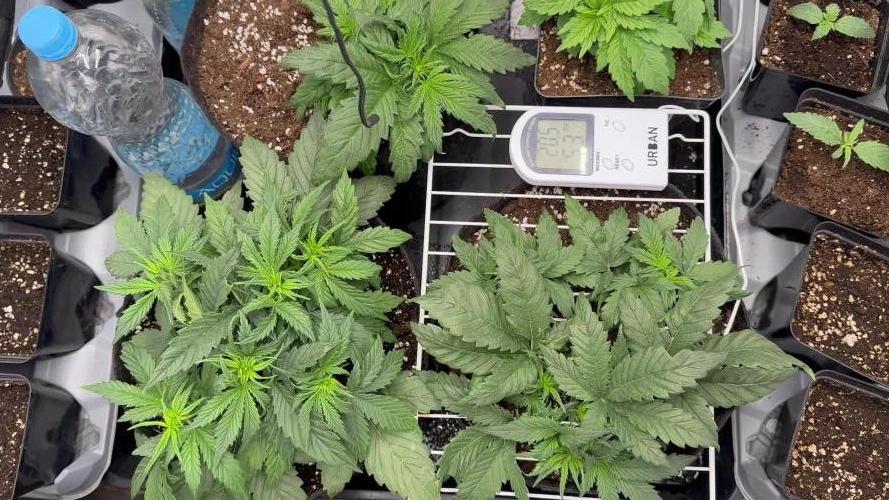
@GarciasGarden
Volgen
Sorry I couldn’t get a lot of pics this week been busy planning the drying process for this one and they are getting cut down tomorrow ! Well some of them are! Bye bye biscotti mintz 1/2 and GMO Punch #4


@Aleks555
Volgen
Our Sticky Orange XXL Automatic from Sensi Seeds is now 9 weeks old, and she’s absolutely stunning! 🌱 The buds are dense, sticky, and smell incredibly delicious. She looks amazing – a true beauty! 😍
We’ve been using Xpert Nutrients fertilizers, and they really help in growing such gorgeous plants. Seeing these results is pure joy! Thanks to Sensi Seeds for the fantastic genetics and Xpert Nutrients for the support along the way.


@RookieGrower65
Volgen
Tremendous growth since day 22. Nutes twice with watering this week. Turned all three lights to 100% on day 22.
Noticed stigmas on all four plants on day 30
Had three lights in tent from day 22 to 32: (2) Vivosun VS 1000 and (1) VS 2000. Day 32, noticed a tiny bit of light burn with tiny yellow tips on new growth at the top of two of the four plants, so I removed the larger light on day 32 and will continue with (2) VS 1000 run at 75% for a while. Defoliated 2 or 3 large fan leaves from each plant.


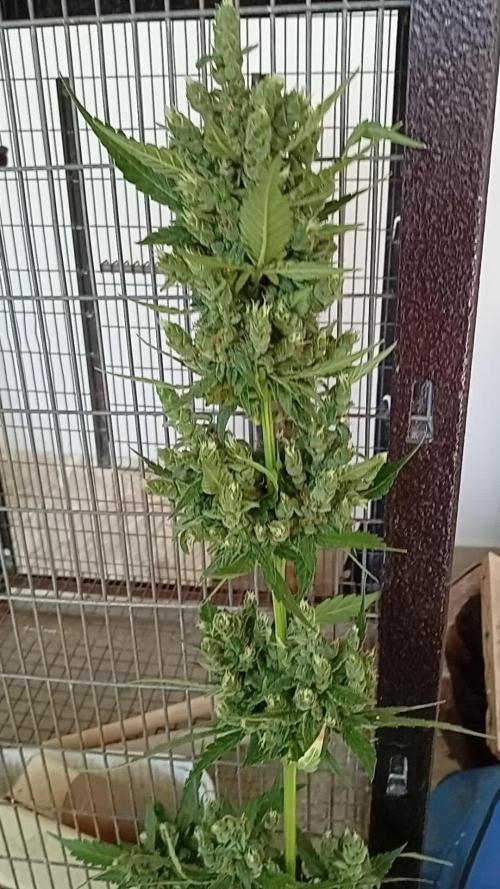

@Grasshopper96
Volgen
Raccolto oggi per approfittare di una settimana in cui le temperature non saranno 34°c, solo si fa per dire 30°c, io con il mio condizionatore riesco ad abbassarla a 24°c che è più consono per seccare l'erba
Considerazioni finali sull' esperimento all mix sotto e ligth mix sopra ( la pianta si riconosce perché ha la molletta per quando si stendono i panni sopra) che ha fatto così tante cime da piegare il tronco della pianta ( avrei forse dovuto dare silicati) è cresciuta nonostante gli abbia dato solo acqua per tutto il ciclo senza mostrare carenze o debolezze particolari,sto pensando a quando da teenager facevo così le piante per mancanza di soldi per i fertilizzanti e adesso lo ho voluto rifare ma con le competenze acquisite adesso ed il risultato è stato migliore di quando facevo le piante a sedici anni😊
Detto questo sì conclude il primo diario dell' estate povera, non vedo l'ora che l' erba sia secca per metterla nel mio chiloom e ringraziare il mio dio Shiva di avermi donato tanta erba quanta lui pensa serva a me adesso🕉️ per quello non ho pesato il prodotto fresco, forse penserò tutto da secco e pulito tra una settimana almeno, si spera che non si secchi prima




@Ultraviolet
Volgen
What's in the soil? What's not in the soil would be an easier question to answer. 16-18 DLI @ the minute. +++ as she grows.
Probably not recommended, but to get to where it needs to be, I need to start now.
Vegetative @1400ppm 0.8–1.2 kPa 80–86°F (26.7–30°C) 65–75%, LST Day 10, Fim'd Day 11
CEC (Cation Exchange Capacity):
This is a measure of a soil's ability to hold and exchange positively charged nutrients, like calcium, magnesium, and potassium. Soils with high CEC (more clay and organic matter) have more negative charges that attract and hold these essential nutrients, preventing them from leaching away.
Biochar is highly efficient at increasing cation exchange capacity (CEC) compared to many other amendments. Biochar's high CEC potential stems from its negatively charged functional groups, and studies show it can increase CEC by over 90%. Amendments like compost also increase CEC but are often more prone to rapid biodegradation, which can make biochar's effect more long-lasting. biochar acts as a long-lasting Cation Exchange Capacity (CEC) enhancer because its porous, carbon-rich structure provides sites for nutrients to bind to, effectively improving nutrient retention in soil without relying on the short-term benefits of fresh organic matter like compost or manure. Biochar's stability means these benefits last much longer than those from traditional organic amendments, making it a sustainable way to improve soil fertility, water retention, and structure over time. Needs to be charged first, similar to Coco, or it will immobilize cations, but at a much higher ratio.
a high cation exchange capacity (CEC) results in a high buffer protection, meaning the soil can better resist changes in pH and nutrient availability. This is because a high CEC soil has more negatively charged sites to hold onto essential positively charged nutrients, like calcium and magnesium, and to buffer against acid ions, such as hydrogen.
EC (Electrical Conductivity):
This measures the amount of soluble salts in the soil. High EC levels indicate a high concentration of dissolved salts and can be a sign of potential salinity issues that can harm plants.
The stored cations associated with a medium's cation exchange capacity (CEC) do not directly contribute to a real-time electrical conductivity (EC) reading. A real-time EC measurement reflects only the concentration of free, dissolved salt ions in the water solution within the medium.
98% of a plants nutrients comes directly from the water solution.
2% come directly from soil particles.
CEC is a mediums storage capacity for cations. These stored cations do not contribute to a mediums EC directly.
Electrical Conductivity (EC) does not measure salt ions adsorbed (stored) onto a Cation Exchange Capacity (CEC) site, as EC measures the conductivity of ions in solution within a soil or water sample, not those held on soil particles.
A medium releases stored cations to water by ion exchange, where a new, more desirable ion from the water solution temporarily displaces the stored cation from the medium's surface, a process also seen in plants absorbing nutrients via mass flow. For example, in water softeners, sodium ions are released from resin beads to bond with the medium's surface, displacing calcium and magnesium ions which then enter the water. This same principle applies when plants take up nutrients from the soil solution: the cations are released from the soil particles into the water in response to a concentration equilibrium, and then moved to the root surface via mass flow.
An example of ion exchange within the context of Cation Exchange Capacity (CEC) is a soil particle with a negative charge attracting and holding positively charged nutrient ions, like potassium (K+) or calcium (Ca2+), and then exchanging them for other positive ions present in the soil solution. For instance, a negatively charged clay particle in soil can hold a K+ ion and later release it to a plant's roots when a different cation, such as calcium (Ca2+), is abundant and replaces the potassium. This process of holding and swapping positively charged ions is fundamental to soil fertility, as it provides plants with essential nutrients.
Negative charges on soil particles: Soil particles, particularly clay and organic matter, have negatively charged surfaces due to their chemical structure.
Attraction of cations: These negative charges attract and hold positively charged ions, or cations, such as:
Potassium (K+)
Calcium (Ca2+)
Magnesium (Mg2+)
Sodium (Na+)
Ammonium (NH4+)
Plant roots excrete hydrogen ions (H+) through the action of proton pumps embedded in the root cell membranes, which use ATP (energy) to actively transport H+ ions from inside the root cell into the surrounding soil. This process lowers the pH of the soil, which helps to make certain mineral nutrients, such as iron, more available for uptake by the plant.
Mechanism of H+ Excretion
Proton Pumps: Root cells contain specialized proteins called proton pumps (H+-ATPases) in their cell membranes.
Active Transport: These proton pumps use energy from ATP to actively move H+ ions from the cytoplasm of the root cell into the soil, against their concentration gradient.
Role in pH Regulation: This active excretion of H+ is a major way plants regulate their internal cytoplasmic pH.
Nutrient Availability: The resulting decrease in soil pH makes certain essential mineral nutrients, like iron, more soluble and available for the root cells to absorb.
Ion Exchange: The H+ ions also displace positively charged mineral cations from the soil particles, making them available for uptake.
Iron Uptake: In response to iron deficiency stress, plants enhance H+ excretion and reductant release to lower the pH and convert Fe3+ to the more available form Fe2+. The altered pH can influence the activity and composition of beneficial microbes in the soil. The H+ gradient created by the proton pumps can also be used for other vital cell functions, such as ATP synthesis and the transport of other solutes. The hydrogen ions (H+) excreted during photosynthesis come from the splitting of water molecules. This splitting, called photolysis, occurs in Photosystem II to replace the electrons used in the light-dependent reactions. The released hydrogen ions are then pumped into the thylakoid lumen, creating a proton gradient that drives ATP synthesis.
Plants release hydrogen ions (H+) from their roots into the soil, a process that occurs in conjunction with nutrient uptake and photosynthesis. These H+ ions compete with mineral cations for the negatively charged sites on soil particles, a phenomenon known as cation exchange. By displacing beneficial mineral cations, the excreted H+ ions make these nutrients available for the plant to absorb, which can also lower the soil pH and indirectly affect its Cation Exchange Capacity (CEC) by altering the pool of exchangeable cations in the soil solution.
Plants use proton (H+) exudation, driven by the H+-ATPase enzyme, to release H+ ions into the soil, creating a more acidic rhizosphere, which enhances nutrient availability and influences nutrient cycling processes. This acidification mobilizes insoluble nutrients like iron (Fe) by breaking them down, while also facilitating the activity of beneficial microbes involved in the nutrient cycle. Therefore, H+ exudation is a critical plant strategy for nutrient acquisition and management, allowing plants to improve their access to essential elements from the soil.
A lack of water splitting during photosynthesis can affect iron uptake because the resulting energy imbalance disrupts the plant's ability to produce ATP and NADPH, which are crucial for overall photosynthetic energy conversion and can trigger a deficiency in iron homeostasis pathways. While photosynthesis uses hydrogen ions produced from water splitting for the Calvin cycle, not to create a hydrogen gas deficiency, the overall process is sensitive to nutrient availability, and iron is essential for chloroplast function.
In photosynthesis, water is split to provide electrons to replace those lost in Photosystem II, which is triggered by light absorption. These electrons then travel along a transport chain to generate ATP (energy currency) and NADPH (reducing power). Carbon Fixation: The generated ATP and NADPH are then used to convert carbon dioxide into carbohydrates in the Calvin cycle. Impaired water splitting (via water in or out) breaks the chain reaction of photosynthesis. This leads to an imbalance in ATP and NADPH levels, which disrupts the Calvin cycle and overall energy production in the plant. Plants require a sufficient supply of essential mineral elements like iron for photosynthesis. Iron is vital for chlorophyll formation and plays a crucial role in electron transport within the chloroplasts. The complex relationship between nutrient status and photosynthesis is evident when iron deficiency can be reverted by depleting other micronutrients like manganese. This highlights how nutrient homeostasis influences photosynthetic function. A lack of adequate energy and reducing power from photosynthesis, which is directly linked to water splitting, can trigger complex adaptive responses in the plant's iron uptake and distribution systems.
Plants possess receptors called transceptors that can directly detect specific nutrient concentrations in the soil or within the plant's tissues. These receptors trigger signaling pathways, sometimes involving calcium influx or changes in protein complex activity, that then influence nutrient uptake by the roots. Plants use this information to make long-term adjustments, such as Increasing root biomass to explore more soil for nutrients. Modifying metabolic pathways to make better use of available resources. Adjusting the rate of nutrient transport into the roots. That's why I keep a high EC. Abundance resonates Abundance.


@Newbiegrower420
Volgen
UPDATE: Day 1 of week 14- Thursday 19th Nov!!!!
Woop woop! We’re getting close, my magnifying lense arrived and I’ve got my first real good look at the trichomes.. All looking fairly cloudy with about 10-15% ambers coming through.
So as we’re super close now I’ve now started flushing. Not doing a run off as have been using Biobizz soil & Nutes. First flush is done and girls are looking happy. One lady seems to have really heavy colas as she’s struggling to stand up straight. So I’ve staked her to keep her more upright. Think she may bring the best yield of all four girls as it stands so far.
Final couple of weeks now, I can’t believe I’ve made it this far and really can’t wait to try my first home grown bud🍃
UPDATE: Day 2 of week 14 - Friday 20th Nov:
Had to water them early as the girls were very dry after their first flush.. I on average water them every 48 hrs, but they were ready after 36. Already noticing some slight discolouration on the leaves 🍁... Glad I didn’t jump the gun and chop them this week after seeing some amber trichomes..
A bit more LST as they had stretched a little. I’m short on lamp to plant distance but noticed what looked like a little leaf burn on one of the tallest nugs. So did what I could to bring the height of them down just a little 👌
UPDATE: Day 4 of week 14 - Sun 22nd Nov:
As soon as the lights went on today, more water seemed required at around 36hrs since the last flush. The girls seem to be loving it!
Buds do seem to be fattening up a little more each day and I think one girl is slight more ahead than the others as she has mostly orange pistils compared to the other three..
Still need to see more amber trichomes on all four ladies before they’re ready!
UPDATE: Day 5 of week 14 - Monday 23rd Nov:
Small amount of LST to keep the girls as even as poss.. Defo seeing some discolouration in the fan leaves now.. All but one of the four girls have nearly completely orange pistils now which are folding back in to the buds. But Trichomes need to be a little more amber before they’re ready.. The fourth lady however is slightly behind with less orange pistils, some white ones still to turn orange and trichomes are still a mix of milky and clear on the lower buds. When I topped this one it didn’t work as well as the others so she has one really massive cola and all the others are much smaller in comparison to the other three plants..
I think we’ve got a week to 10 days left roughly till harvest.
UPDATE: Day 6 of week 14 - Tuesday 24th Nov:
Another water flush again today.. All seems well, lower small buds still need a few more amber trichomes I think.. But gonna post a question on here to make sure.. Don’t wanna get this wrong.
Sooooooo close now and I’ll be seeing 🤩🤩🤩


@Hydro_Bins
Volgen
Excellent quality and quantity with this harvest! Will look to to control the stretching phase of flowering next grow.


@PotCasso
Volgen
Week 4 of Flower: HLG Diablo at 100% 18in from canopy.
Watered in at 800ml top dressed 2tbs bloom, 2tbs bloom2, 3 tbs barley, 2 tbs worm castings, a recharge day and a silica day.


@Troy_McClure
Volgen
Harvest Date:
- March 7 @6:45 pm
- 128 days from seed to harvest
Final Watering:
- March 4
- 1.5 gal each
36H of Darkness:
- Mar. 5 @7:00am until Mar.7 @6:45pm
Mar. 2
- bulked up nice
- dehumidifier fills up quickly meaning good transpiration
mar. 4
- ph: 7.5
- dry
- watered 2.5gal (combined) + 12ml of apple cider vinegar = ph6.5
Mar. 5
- fade has started with yellowing on the smaller older leaves
Mar. 7
- ph: 7.8
- dry
- trichomes:
- clear 10%
- cloudy 90%
- amber 0.1%
- fade is slowly coming along
UPDATED:
Harvest Date:
- March 12 @6:45 pm
- 131 days from seed to harvest
Final Watering:
- March 8
- 1.5 gal each
No darkness period, just harvest before the lights come on
Mar. 8
- A 5 gal of 6.2 and 6.4 ph water (10gal total / 5 gal each) was given to both plants to flush
- 5gal water + 30 ml of “clear” flushing agent + 30ml of blackstrap molasses + 20ml of apple cider vinegar
- 3.5 gal of run-off = 6.3
- 2nd 3.5 gal of run-off = 6.2
- plants look really good, this was the last watering so i decided to add a little flushing agent and molasses
- once dry I will harvest regardless of trichomes amber %
- Estimated day of harvest = Mar. 12 @6:45
Specifications:😎👇
Seeds:
- 2x White Widow feminized seeds from Crop King Seed
Tent:
- 4x4x6 Mammoth Grow tent
LED:
- 2x Spider Farmer SF1000 LED for veg
- 4x Spider Farmer SF1000 LED for flower (190 watts - 50-40-50-50 back left, back right, front left, front right)
Pots:
- 2x 0.5 L starter pots
- 2x 5 gal smart pots after transplant
Soil:
- Pro-mix containing mycorrhizae and perlite, used for starter pots and mixed at roughly 1:3 ratio with Ocean Forest
- Fox Farm Ocean Forest soil, used in the 5 gallon pots and mixed with roughly 3:1 ratio with pro-mix
- note: pro mix was mixed thoroughly with ocean forest in the 5 gal pot, then pro-mix was used on the top layer, in and around where the transplant will be to help the early veg stage avoid getting too "hot" via nutrients.
Nutrients:
- Fox Farm Big Bloom
- Fox Farm Big Grow
- Fox Farm Tiger Bloom
- Wholesome - Blackstrap organic unsulphured molasses
Inline Fans:
- AC Infinity CLOUDLINE T6 6" (exhaust)
- AC infinity CLOUDLINE S6 6" (active intake)
- AC infinity 6" ducting
Mini fans:
- 2x Wind Devil 6" fans
Carbon Filter:
- 2x iPower Carbon Filter on both inline fans
- note: carbon filter on intake fan as basement had mold issues in furnace room far removed but same floor, some mold issue in other room, cat litter in basement, thus, avoiding all risks and sleeping sound at night :) all mold was killed, scrubbed, cleaned, sprayed, painted, and sprayed again before setting up.
Humidifier:
- TaoTronics Cool Mist Humidifier
Dehumidifier:
- Frigidaire 30-Pint 3-Speed Dehumidifier
Timers:
- 2x VIVOSUN dual Digital Timer
- 2x Kuman Digital Timer


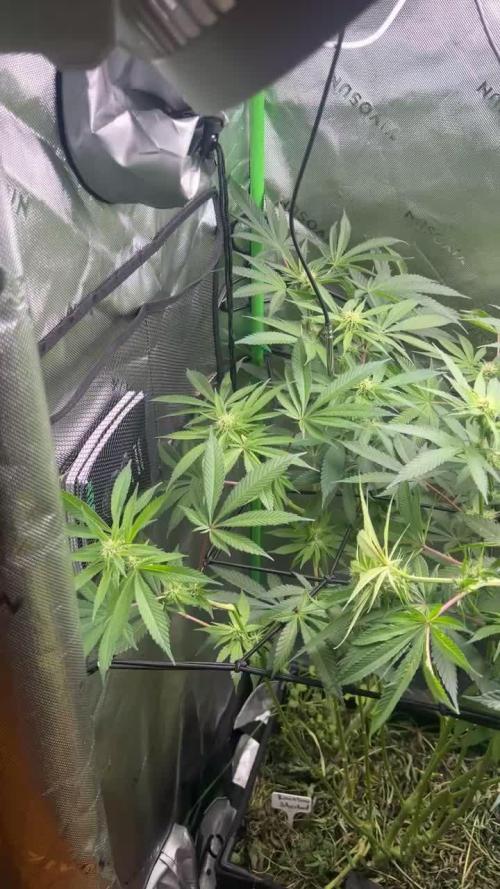

@frankensoil
Volgen
Erstes Mal supercroping anwenden müssen da mir die Pflanzen echt viel zu groß werden



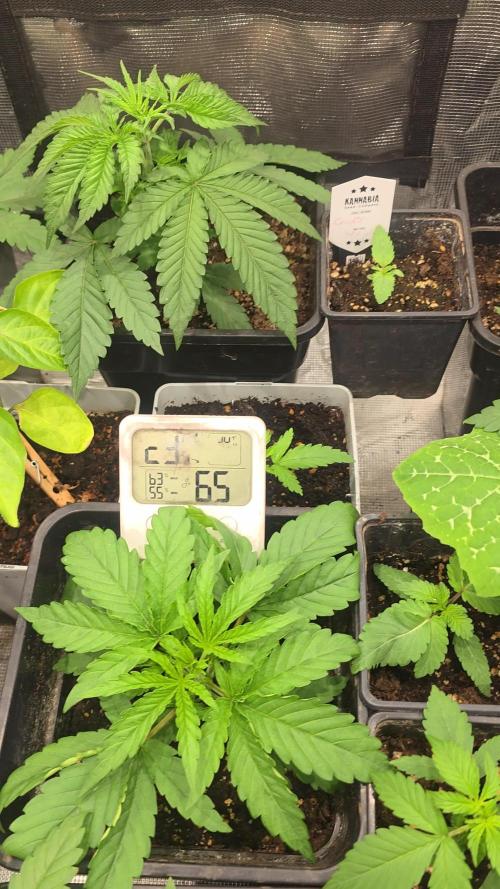




@Korinthius
Volgen
Well, this slow started lady has started to take off. Any concerns about her slow start are gone. Root system is extending nicely into her new home, She is not drinking a ton, but that is of no surprise at this age.
I can confirm, I did start her off a little low in her net pot, but next week, when she gets topped, I will be able to add some extra clay pellets for stability.


@Dr_Rook
Volgen
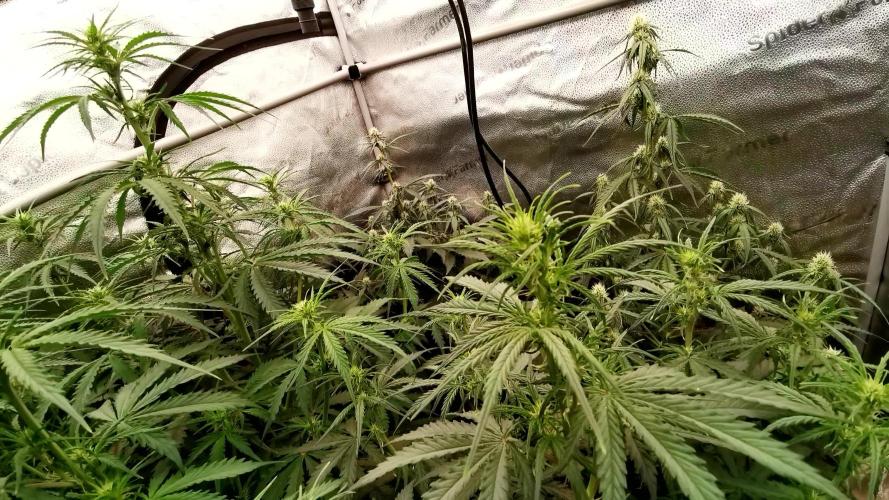
Ya casi un mes a 12/12 y entrando en su etapa más bonita.
Están resinando muy bien por todos lados y ya cada vez huelen más y mejor. Empiezan a coger color, demasiado pronto ya que a veces pasan más frío de la cuenta.
Esta semana les he alejado el foco unos centímetros. Estaban 3/4 centímetros por debajo de lo mínimo recomendado y no me fío de quemar mis primeras plantas de interior. (Ya habrá tiempo para experimentos)
La semana que entra ya deberían de entrar en la fase de engorde. Toca seguir atentos a ellas



@HowtoBubatz
Volgen
The Bruce Banner girls went wild this week! 💪
At the start of the week, all three were sitting on IFCO crates to even out the canopy, but #2 stretched so much that she had to be moved down to the floor. She’s officially the tallest now and really taking off.🚀
#1 started stretching more as well and keeps growing strong, while #3 is still a bit smaller but catching up nicely.🌿
All three look healthy and vibrant — deep green color, no signs of stress or deficiencies.💚
They got a light defoliation this week, just removing a few big fan leaves that were shading lower budsites.🍃
A proper defoliation will come once the stretch phase is over.
Environment:
Temp: 25–26 °C
RH: 55–60 %
PPFD: around 900–1000 µmol/m²/s under the Spider Farmer SE5000
Controlled by the AC Infinity AI system 🌡️
They’re drinking a lot #1 still the thirstiest one, taking about 4 L every 2 days, while #2 and #3 get the same amount roughly every 3 days.💧
Overall, they’re stretching beautifully, stacking up nicely, and looking more impressive each day. Can’t wait to see them finish the stretch and start focusing on those buds.✨🔥



@TrickzGrowz
Volgen
Servus Moin!
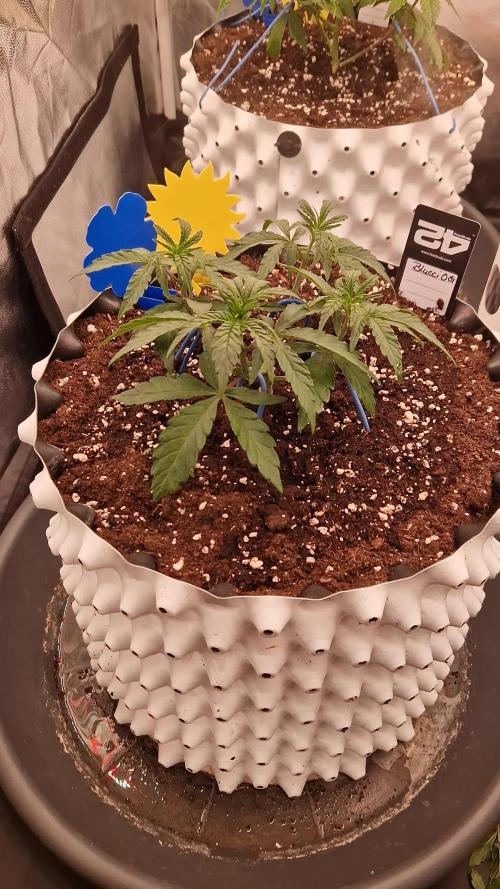
Die erste Woche im neuen Topf lief super. Die Blucci OG hat direkt wieder Wachstum hingelegt, was sich sehen lassen kann.
Am Sonntag wird die Zeit auf 12/12 umgestellt


@GodZilla_Owner
Volgen
The first week of vegetation is now behind us and the 1 liter pots are already well rooted. They will now be repotted in their final pots in the 2nd week.
Everything is still going according to plan and now all the plants will move into their final tent.


@naughtydog420
Volgen
The grow is coming along nicely I had a couple issues with fungus gnats but I got that under wraps if anyone has any issues at all with fungus gnats I'm telling you get yourself some big time exterminator and you will not have any further issues I have tried everything under the sun and this is what I have landed on the best of the best as far as I'm concerned I'll never buy another brand this was allso the only brand that didn't kill all my beneficials