




Likes
29
Share


@MadeInGermany
Follow
Info:
Unfortunately, I had to find out that my account is used for fake pages in social media.
I am only active here on growdiaries.
I am not on facebook instagram twitter etc All accounts except this one are fake.
Hey everyone :-)
Another nice week goes by and it is slowly becoming a bush from training 😊.
This week it was poured 2 times with 1 l each time (For nutrients, see the nutrient table above).
She was trained once again with topping.
You still have some time until it blooms until space is free :-).
Otherwise everything was checked and cleaned like every day.
Have fun with the update and stay healthy 🙏🏻
You can buy this Nutrients at :
https://greenbuzzliquids.com/en/shop/
With the discount code: Made_in_Germany you get a discount of 15% on all products from an order value of 100 euros.
You can buy this Strain at :
https://www.amsterdamgenetics.com/product/kosher-tangie-kush/
Type:
Kosher Tangie Kush
☝️🏼
Genetics:
Kosher Kush
X
Tangie
👍
Vega lamp:
2 x Todogrow Led
Quantum Board 100 W
💡
Bloom Lamp :
2 x Todogrow Led
Cxb 3590 COB 3500 K 205W
💡💡☝️🏼
Soil :
Canna Coco Professional +
Nutrients :
Green Buzz Liquids :
Organic Grow Liquid
Organic Bloom Liquid
Organic more PK
More Roots
Fast Buds
Humic Acid Plus
Growzyme Big Fruits
Clean Fruits
Cal / Mag
Organic Ph - Pulver
☝️🏼🌱
Water: Osmosis water mixed with normal water (24 hours stale that the chlorine evaporates) to 0.2 EC. Add Cal / Mag to 0.4 Ec Ph with Organic Ph - to 5.8

Likes
12
Share


@Kakui
Follow
Estuve un tiempo sin actualizar el diario porque me contagie de COVID, ahora un poco mejor vuelvo a actualizar.
Flower14, las plantas crecen bien, se cambió el LED de 480w por 3 LED de 240w, para un total de 720w y mejor distribución de la luz.

Likes
3
Share

@PhinolaGreen
Follow
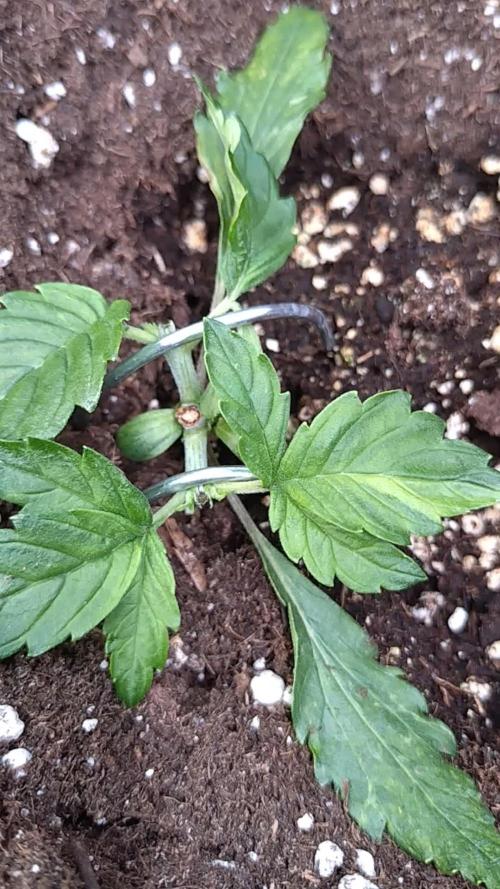
3. Woche
Bis auf das Topping ist noch nicht viel passiert.
Es gab schon mal bisschen Dünger und natürlich auch den Green Sensation von Plagron.
Joa ich werde die Woche über immer wieder neue Bilder hochladen, mal sehen wann ich mit dem Mainlining anfangen kann 😍

Likes
60
Share


@Secretflower
Follow
Hello my friends,
...May 17, 2022....Day N°65..
...Flowering day N°10...
My two Feminized Royal THCV are fine and beautiful, they are monster plants, they stretched about 30cm.
#1...100cm
#2.. 100cm
I give them water with a tablet of Easy Bloom tablet from RQS Organics Nutrients.
The HST working very well.
They are under a MarsHydro TSW 2000 at 50% of power and at 40cm of the canopy.
www.royalqueenseeds.com
www.mars-hydro.com
Thank you very much for passing by.
Wish you the best with your green projects, peace.
See you soon 💨💨💨

Likes
31
Share


@The_Bearded_Grower
Follow
Welcome to 📅 Day 43: flower 4/26/2021 she is growing so good for only 3 weeks in flower the air stone is doing great in the pot and doing just what I want it to do. The Mars Hydro TS 1000 light is really showing its stuff right now as the flowers are getting big fast The deficiency's are staying small so I guess my plan is working I just need to keep an eye on it. That's it for now Happy growing and as always keep your stick on the ice 🏒


Likes
9
Share

@eldruida_lamota
Follow
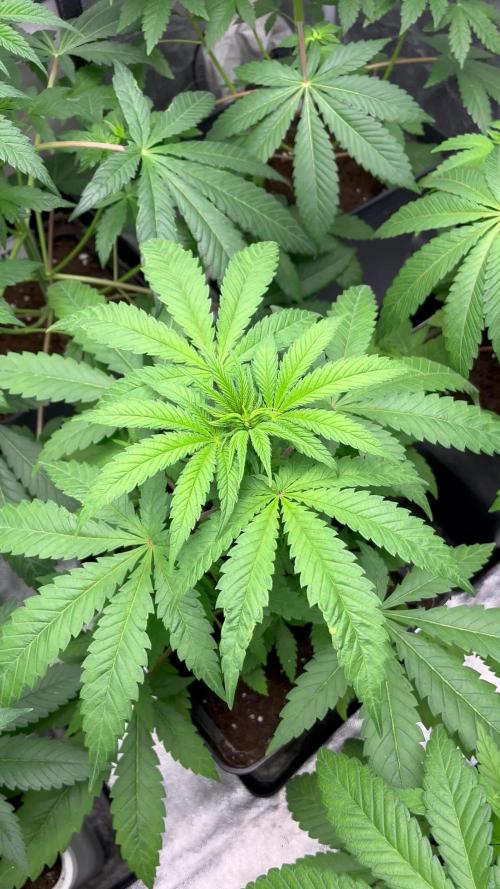
Que pasa familia, vamos con la primera semana de floración de estas Gomu Gomu Mango feminizadas de HighBreed.
Vamos al lío ,se colocaron en macetas de 7 litros definitivamente.
El ph se controla en 6.0 , la temperatura la tenemos entre 24/20 grados y la humedad ronda el 50%.
El ciclo de Floración puse 12 horas de luz, el foco está al 50% de potencia.
De momento va creciendo, tiene buen color y va progresando.
Gracias a Agrobeta por el kit para la temporada, unos jefes, siempre apoyando 💪.
- os dejo por aquí un CÓDIGO: Eldruida
Descuento para la tienda de MARS HYDRO.
https://www.mars-hydro.com
Hasta aquí todo, Buenos humos 💨💨💨
Processing
Likes
22
Share


@CenturionGrower
Follow
26/07/20 (Sunday)
Plants were starting to exhibit signs of light burn so I switched back to the 75W bulb. SVG never seemed to recover from having it's cotyledon damaged so I decided to take a risk and fed all of the seedlings 20-20-20 nutrients except the D.R. which I thought would've suffered shock, so I just watered it.
27/07/20
Decided to mist the plants with a homemade pesticide mix today because they're readying to be introduced as full time outdoor plants in a week or two so their sun basks are getting longer.
28/07/20
Noticed what looks like new growth from the first true leaves of the SVG, fingers crossed it's making progress.
29/07/20
The new growth from the SVG has split into two on both sides leading me to theorize that it's abandoned it's main stem (for now at least) and started two new stems. All other plants are working on new nodes and are showing a steady growth of .5cm a day. I've decided to revert to the 100W bulb because I believe I've misdiagnosed the light burn.
30/07/20
Today I left them outside for their longest sunbask to this point; 7 of their 18 total hours was provided by sunlight. The SVG now has two new 3-leaf true leaves on each new stem confirming my theory. Also starting to see signs of a minor mite problem on one of the leaves of my TT plant (Though it's new growth that wasn't sprayed with my homemade concoction.)
31/07/20
New growth has already begun sprouting from between the new true leaves of the SVG with no visible progress on the 'abandoned' main stem. Also had a power outage for 2 of the plants 18 hours.
01/08/20
Today the plants again stayed out in the sun for longer than previously making 8 hours in direct sunlight. I've decided to keep them in the grow tent for a further week because when I went to retrieve them the Jam was blown down flat by winds and had started to grow bent towards the light, so I doubt it's stem is ready for that daily beating. I raised the soil level and massaged it back into shape and it seems to be back on track. The D.R. is slowly beginning to bounce back from being stunted in the seedling tray and from it's third node (from the bottom up) of 3 leaf true leaves has turned into 5 leaf leaves. The SVG has made a major recovery and seems to be on it's way to even surpassing the others by the end of the week. The TT is officially the sturdiest of the younger seedlings and it's growing right behind the Jam in terms of node development. All in all this week was an overall success growth wise and I'm looking forward even more to week 3.
Likes
56
Share


@nonick123
Follow
Día 43 (02/12) CBD Auto 20:1 #1 no para con el stretch! 🚀😍 Le elimino algunas hojas de abanico que tapan la luz a los cogollos inferiores
Está empezando a pedir más agua cada día, pero no me extraña con lo grande que es!
CBD Auto 20:1 #2 está empezando a engordar y engordar los cogollos 💥😁
OG Kush Auto tiene unos erizos preciosos!
Día 44 (03/12) CBD Auto 20:1 #1 sigue imparable. Elimino algunas hojas de abanico
OG Kush Auto se empieza a mostrar más sedienta en la formación de cogollos!
Día 45 (04/12) CBD Auto 20:1 #1 sigue imparable. Elimino algunas hojas de abanico más!
OG Kush Auto también le elimino algunas hojas de abanico
Día 46 (05/12) CBD Auto 20:1 #1 Schwazzing / defoliación intensiva
OG Kush Auto Defoliación!
Día 47 (06/12) CBD Auto 20:1 #1 repetimos Schwazzing / defoliación intensiva debido a que la planta no para!
Es increíble lo que crece esta planta!
Día 48 (07/12) OG Kush Auto ha empezado a aumentar el consumo de H2O, y se muestra sedienta en esta fase. Mañana aumentaré el volumen de riego de 750 ml a 1.000 ml
Debido a que se acerca una ola de frio, hago una mejora sustancial en la tienda
Coloco un radiador de aceite + un termostato digital Wifi (controlador de temperatura) para poder controlar el radiador
Me encanta porque desde la App puedo programar eventos en función de cualquier parámetro, de modo que puedo controlar la histéresis del radiador 😁
Tras un par de días de pruebas, consigo una temperatura estable de 22 - 24 ºC con luces ON! 😁
Día 49 (08/12) CBD Auto 20:1 #1 ha crecido increiblemente esta semana comparandola con la semana anterior! Un monster pheno!
CBD Auto 20:1 #2 hago riego con 750 ml H2O RO + BIO PK 5-8 10 ml/l. ¡Un empujón para la recta final de floración!
Tiene unos colores preciosos en los cogollos! Con tonos rosas y morados en los apices! 😍
LSD-25 Auto hago riego con 750 ml H2O RO + BIO PK 5-8 10 ml/l. ¡Un empujón para la recta final de floración!
Está preciosa con ese morado casi negro que presenta en cogollos y hojas, unido a los pistilos de color naranja fuego conforme van madurando
OG Kush Auto tiene una formación de cogollos impresionante, y ha empezado a cubrir de tricomas todas las hojas que salen de los cogollos 😍
Lo unico preocupante es que ha empezado a mostrar algunas manchas marrones en las hojas de los cogollos...
Riego con 1 litro de H2O RO + 1 g/L de BACTREX para ver si le ayuda con la gestión de este exceso / deficiencia
💦Nutrients by Bio Tabs - www.biotabs.nl/en/
🌱Substrate PRO-MIX HP BACILLUS + MYCORRHIZAE - www.pthorticulture.com/en-us/products/pro-mix-hp-biofungicide-plus-mycorrhizae
"GDBT420" 15% DISCOUNT code for the BIOTABS Webshop https://biotabs.nl/en/shop/


Likes
7
Share

@Mimi420
Follow
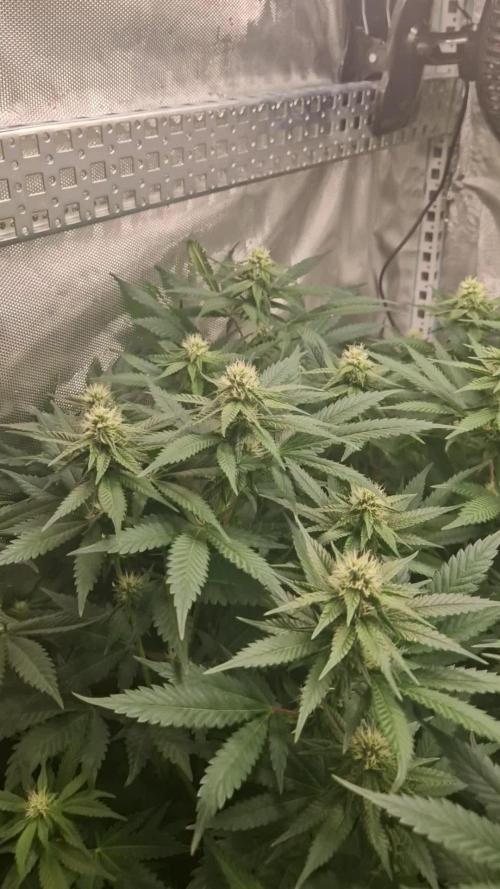
Chasing the Frost: 3 Weeks Into the Bloom"
Yo! We're officially 22 days deep into the flower cycle, and the girls are absolutely crushing it. The canopy is looking proper—everything is leveled out perfectly thanks to the SCROG setup. You can really tell the plants are hitting that "stretch-to-swell" transition; the buds are starting to get that nice, frosty stack, and the structure is solid.
Big news from the grow room—I pulled the trigger and swapped out the lights yesterday! Went for the Spider Farmer SE-1500s. Man, these things are a game-changer. The spread is insane, and I’m hitting that sweet spot of 865 µmol/m²/s without any heat issues. The plants are loving the new spectrum, and you can practically see them drinking it up.
In terms of the schedule, we're sticking to the plan we dialed in. I’m introducing the Green Sensation into the mix now—starting slow at 0.5 ml/L to make sure they handle the kick properly before ramping up. Everything else is on point: Bio-Grow, Bloom, Heaven, and Top Max are keeping them fed, while the VPD is hovering in that perfect range to get those buds packing on some serious density.
The girls are healthy, resilient, and ready to pack on the weight. The next couple of weeks are going to be all about pushing them to their max potential. It’s all about consistency now—keeping that humidity in check and letting the SE-1500s do their magic. Let’s get it!

Processing
Likes
10
Share


@GrowerGaz
Follow
This week just water from the autopots and a soil soak with some bio enhancer . Plants are really starting to smell now . Resin production on the Rado z is insane. Sadly they did not make the cut for the next drop. Happy to have been able to test them. I think they look and smell great.
Likes
23
Share


@adam_pawloski87
Follow
This week went real great , one has been getting flushed and the rest we will start flush Tomorrow! These ladies are doin so amazing! Hope you all enjoy !! Stay tuned for next week! Cheers an happy holidays!
Likes
7
Share


@Sunstonedgrows
Follow
Going onto week 2 of flower! These were taken dec28, so day 8 of flower. So far looking fine though a bit dehydrated. This one definitely is water hungry now and needs to be watered every other day now. We'll see how she comes along into the next few weeks.
D6 of this week (d13 of flower), and we can start to see flowers coming in a teensy bit. We are still watering every 2 -3 days. On D7 we did a slightly premature feed of the flower girl fertilizer.
Cheers
-Dj Sunstone


Likes
6
Share

@nonick123
Follow
Bienvenidos al diario de Gorilla Zkittlez Auto por FastBuds
Día -4 (02/05): Se coloca la semilla en tubo de ensayo con 15 ml de agua (EC 0,5) + 3 gotas agua oxigenada (H2O2) en un lugar oscuro a 25 ºC durante 48 horas
Día -2 (04/05): Se prepara una maceta (11L) con 8,8 Litros (80%) de sustrato PRO-MIX HP BACILLUS+MYCORRHIZAE + 2,2 Litros de Insect Frass (20%) + 110 gramos de Earth Vibes Super Soil (10 g/L substrato)
Se mezcla con el agua del 1er riego (EC 0,4) la parte proporcional de la probeta de microorganismos y se riega muy lentamente hasta percolación profunda
Se hace un agujero de 1 cm de profundidad, se coloca la semilla al azar en el agujero, se tapa con un poco de sustrato y se humedece ligeramente con agua en spray
Se coloca parte superior botella en la zona de germinación para mantener humedad relativa alta
Se introduce en el armario con la lampara ENCENDIDA para mantener la temperatura 20-21 ºC en las horas nocturnas
Día -1 (05/05): Se intuye que la semilla empieza a romper el top del sustrato! NO LA TOQUES! 😡🤣
💦Nutrients by Lurpe Solutions - www.lurpenaturalsolutions.com
🌱Substrate PRO-MIX HP BACILLUS + MYCORRHIZAE - www.pthorticulture.com/en/products/pro-mix-hp-biostimulant-plus-mycorrhizae
Processing
Likes
33
Share


@Floresdejesus
Follow
Very excited this week with Christmas and everything going well for my family at the end of the year! This is my entry in into the Christmas fun hope you enjoy it as my wife and I did Playing around.

Likes
54
Share


@ASCBOOGS
Follow
Still have not topped don't know wether I should or not but still doing LST and HST

Likes
4
Share


@Mr_nugs_lover_David
Follow
Tiene unos cogollos bien duros y compactos,son muy pegajosos y los pistilos son de un naranja radioactivo,tiene un aroma muy rico como terroso y mentolado
