Likes
Comments
Share
@3lementa1
Follow
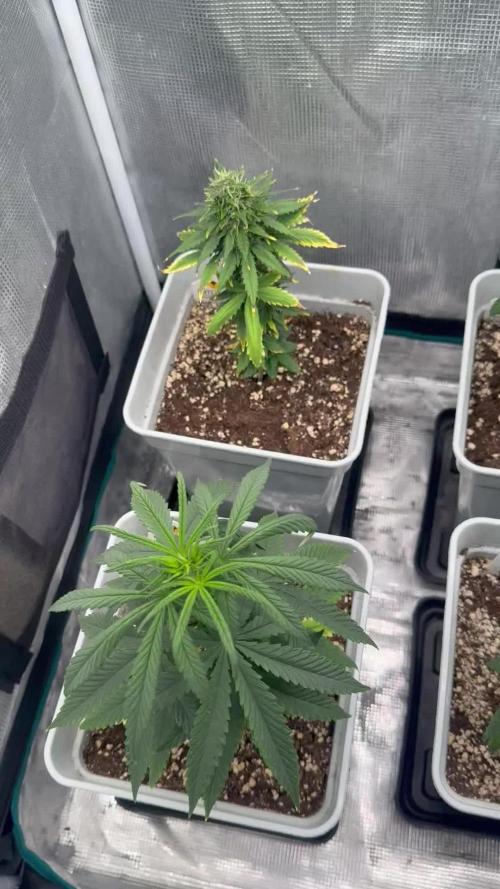
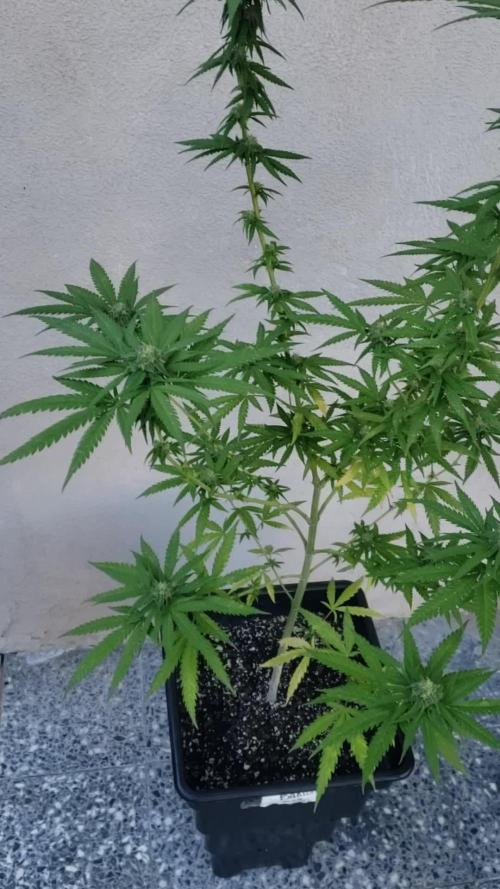
Great growth. Much more compact than the other one (10 inches shorter). Bud formation looks good.
Likes
Comments
Share
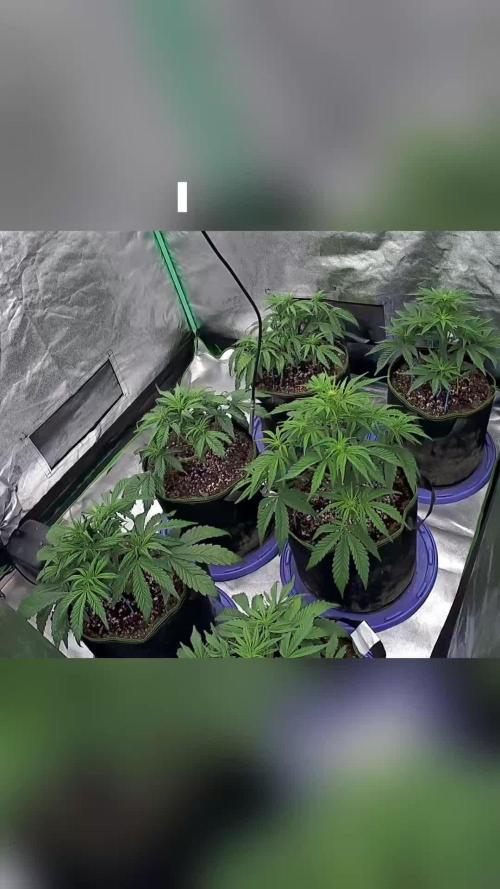
(Controlled Environment Agriculture): My Synganic living grow room, a closed-loop bioengineering-logic system. (MOP). Lights are 58 inches from the main source to the top of the pot and the soil surface. If I added up all the lights in the tent, it would be 1100w-1200w total across 12-14 lights. Using them all at once is far too much for a plant and incredibly difficult to deal with environmentally. The lights are fixed in position; side lights have dimmers, allowing for pinpoint precision of PPF. Fixed at 58 inches, cannot move them closer to increase intensity. Instead, you achieve the PPF by distributing smaller wattages across a massive, multi-fixture matrix. Triggering specific plant defenses without melting your environment or frying your canopy. What's the point/blah blah wattage? Never really go above 600W at any one time. Lights come on in the east of the tent and set in the west. At sunrise and sunset, the red-to-far-red R:FR light ratio drops because the sun's low angle scatters red light more than far-red light. This shift reduces active Pfr and increases inactive Pr, mimicking Mother Nature herself. Deployed a lighting system featuring extra 660 nm deep-red and extending the spectrum up to 780 nm achieves the full Emerson Enhancement Effect by simultaneously balancing Photosystem II (PSII) and Photosystem I (PSI) to maximize quantum yield. By pairing deep-red photons with far-red photons, you trigger a synergistic biological response where the resulting photosynthetic rate is higher than the sum of both wavelengths used individually. This practice directly leverages the updated extended Photosynthetically Active Radiation (ePAR) framework. The Emerson effect accelerates plant metabolism and heat capture; you must proactively scale up your ambient room temperature, nutrient delivery, and CO₂ supplementation to prevent the light from stalling out your cannabis plant. UVA stays high all day from morning to night, but UVB peaks at solar noon (middle of 18-hour days) when the sun is peak. Morning color starts at 2k-3k; by noon it goes to 5k- 6k and back to 2-3k for sunset, with differing P:FR at light off. The extra-blue light is to assist with photoreactivation of UVB damage. No more yield loss for me. Using extra blue light for photoreactivation is what I do. Blue/UVA light activates photolyase enzymes, which directly repair DNA damage caused by UVB radiation. But what's the point if it's not for yield? Ultraviolet (UV) radiation—specifically UVA (315–400 nm) and UVB (280–315 nm)—acts as a critical environmental signal that programs a plant's photoprotective genes to unlock its true photosynthetic potential. When growers push crops to their absolute photosynthetic maximum via high-intensity light and elevated carbon dioxide, the photosynthetic machinery easily becomes overwhelmed. Emerging photobiology research demonstrates that UV radiation prevents this limiting bottleneck; it triggers specific transcription factors and signalling networks that fortify the plant's cellular defenses, allowing it to process extreme light levels without sustaining structural damage. I've known this for years. Big middle finger to everyone for all the ridicule through the years. You know who you are. 8 Rules of plant growth: When carbon dioxide becomes the 9th limiting factor of plant growth, it shifts the growth curve from exponential to linear. The next restriction is photoprotection against reactive oxygen species (ROS), managed via non-photochemical quenching (NPQ) and the xanthophyll cycle, which bridges into precise hydrogen and redox dosing. UV radiation, particularly UVA, and the synthesis of zeaxanthin are critical for the xanthophyll cycle to function. It's not chasing purple strains... i've been chasing the limits of growth, trying to make the linear exponential, just like mathematics prefers. To do that, must control every environmental variable to compound the plant’s metabolic rate. True exponential growth means the rate of increase matches the current mass at every stage, requiring a closed-loop system where light, CO2, and nutrition lock into a synchronized upward curve. First, you must understand what restricts it. Precise hydrogen and redox dosing. Nature mathematically optimizes quantum energy transfer and light absorption efficiency within the photosynthetic machinery, as it naturally dictates energy scaling hierarchies and resonance dynamics. Most won't even understand that; once you do, it changes everything. Constructive interference occurs when two or more overlapping waves meet in phase, meaning their crests and troughs perfectly align. Their amplitudes add together, creating a new, amplified wave with greater intensity than the individual components. Constructive interference is the foundational mechanism that establishes a resonance hierarchy across physical, structural, and acoustic systems. Chromophore spacing is tuned to sub-nanometer precision to match the wavelengths of absorbed light, forcing constructive interference. Light-harvesting proteins form geometric rings and lattices. These shapes act as physical resonators, trapping and focusing the wave energy. This same principle dictates how opera singers shatter glass, how musical instruments resonate, and how bridges withstand structural vibrations.Nature uses the exact same math to harvest a photon as an engineer uses to design a concert hall. When you push high PPFD and elevated CO₂, you create a metabolic bottleneck. The plant cannot process the energy fast enough, leading to electron backup, light-induced damage, and a collapse from exponential growth into a flat, linear rate. UV light acts as the regulatory valve that prevents this collapse. In standard agronomy, Liebig's Law of the Minimum dictates that growth is limited by the scarcest resource. When you maximize water, nutrients, light, temperature, and CO₂, the bottleneck shifts to metabolic processing speed and photoprotection. By controlling the Redox state of the plant using UV, the xanthophyll cycle, and managing ROS, you can prevent the plant from hitting a hard photosynthetic ceiling. Instead of the growth curve flattening out (linear or plateauing due to photoinhibition), the plant continues to compound its metabolic rate efficiently. You are forcing the plant to operate at peak thermodynamic efficiency. By matching the UVB peak with sustained UVA and shifting Kelvin temperatures (2K to 6K), you are damaging the plant just enough to trigger defensive genes, while simultaneously providing the exact light energy needed to repair that damage instantly. UVA radiation and specific blue wavelengths accelerate this enzymatic conversion. Zeaxanthin acts as a structural sponge that absorbs excess excitation energy from chlorophyll and dissipates it safely, preventing ROS formation. Without UV signaling, the xanthophyll cycle cannot keep pace with extreme light, leading to dynamic photoinhibition (yield loss). The addition of Spirulina is primarily for zeaxanthin, as it contains a lot. But on top of that, Hawaiian Spirulina is cultivated in open ponds using a combination of 100% fresh potable water from Hawaiian aquifers and ultra-pure, deep ocean water containing all 94 trace minerals & elements. It is then gently dried using patented Ocean Chill Drying technology and cold-pressed to ensure maximum nutrient levels. Spirulina, a blue-green alga, is rich in nitrogen, phosphorus, and potassium (NPK), making it an excellent source of nutrients for plant growth. Studies have shown that Spirulina can be used as a biofertilizer, effectively replacing chemical fertilizers, especially for nitrogen, with a whopping NPK of 10% (N), 20% (P), and 20% (K). Rich in proteins, amino acids, trace minerals, and plant growth-promoting compounds. Zeaxanthin is a vital plant pigment that accumulates under intense light to drive non-photochemical quenching (NPQ), acting via thermal energy dissipation, direct singlet oxygen scavenging, and thylakoid membrane stabilization. The violaxanthin cycle (or xanthophyll cycle) reversibly converts violaxanthin to zeaxanthin via antheraxanthin to protect plants from photooxidation. Understanding this interconversion is next-level vital for optimizing non-photochemical quenching (NPQ) and pushing photosynthetic limits under high-light stress. Ascorbic acid (vitamin C) is a natural antioxidant that plants produce internally to neutralize harmful reactive oxygen species caused by photosynthesis and high light stress. Acts as a co-factor for enzymes like violaxanthin de-epoxidase in the xanthophyll cycle, which safely dissipates excess light energy. 1g ascorbic acid will neutralize 100% of chlorine in upwards of 30 gallons of tap water. If your local tap water uses chloramines (chlorine bonded with ammonia) instead of free chlorine, you will need roughly 20% to 30% more ascorbic acid to completely break the tougher chemical bond. Molecular hydrogen and hydrogen-rich water act as selective antioxidants that help lower oxidative stress. They neutralize toxic reactive oxygen species like hydroxyl radicals and boost natural antioxidant defense systems in biological and plant systems exposed to high-intensity light or abiotic stress. UVA and UVB act as stress signals that upregulate the plant's secondary metabolism. It forces the plant to build an internal "sunscreen" (flavonoids and anthocyanins) and fortify its cellular defenses before the peak solar noon crisis. This keeps the metabolic highway open. Know the precise ratio of UVA to UVB needed to maximize zeaxanthin accumulation without triggering permanent stunting. Balancing Far-Red (FR) light at "light-off" to manage the phytochrome photo-equilibrium (Pfr to Pr conversion) in tandem with the UV schedule. Omg, the logic. Hydrogen concentration and redox signaling as secondary messengers in this high-intensity loop. From here on, it gets Quantum.
Likes
100
Share
@AsNoriu
Follow
Day 111. First is ready, second week behind, third maybe even 3 weeks behind .... Plus they are LEAFY ,!!!! Trim jail ... Wet trim for all of them - no doubts !!! Day 115. Still hanging, slowly drying and result should be decent at the end ... A week more I guess, very humid in UK ... Day 118. First trimmed - 175 g. Other is chopped ! One still grows ... Day 136. Chop day for the last one !!! Long run .... Happy Growing !!!
Likes
5
Share
Some plants are showing sex always an exciting time right also did a topping and started some lst gonna keep them in 1 gallon pots awhile longer then final pots after I know how many females I’m working with
Likes
13
Share
Ooooooweeeeeee they’re all doing so good even the extras that I threw in flower with out cloning are doing great .. in just 2 more weeks I’ll throw the donor plants into flower
Likes
13
Share
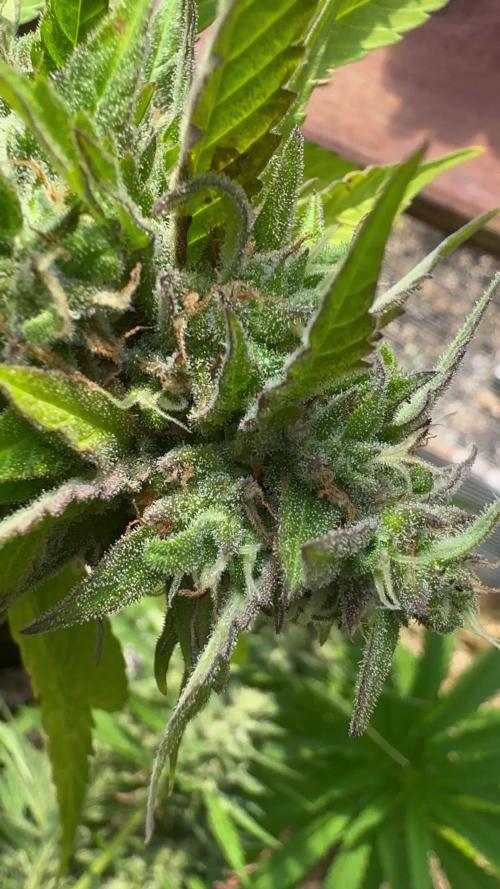
She is packing on the frost and starting to bulk she already has a sweet fruity smell that hits me as soon as I unzip the tent!
Likes
8
Share
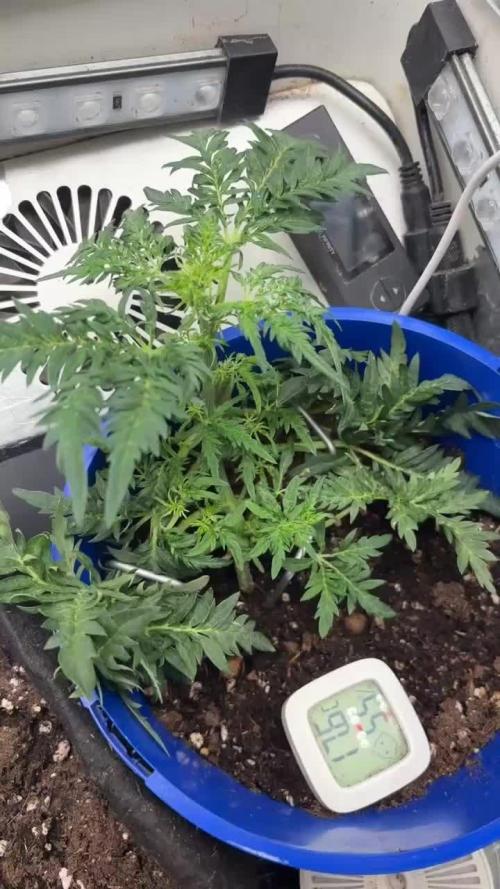
I just moved the mimosa inside a little growbox i bought 40x40x120 with a mes hydro 600. Let’s see!
Likes
2
Share
Likes
19
Share
@BLAZED
Follow
Week 15 Harvest 21-2 Temperature: 29.7 degrees (lights on) 19.9 degrees (lights off) Humidity: 67% (highest) 44% (lowest) Watering: None. 22-2 Temperature: 29.9 degrees (lights on) 19.9 degrees (lights off) Humidity: 65% (highest) 41% (lowest) Watering: None. Today is the last day, tomorrow i will harvest her. I removed all large fanleaves and took some pre-harvest pictures. 23-2 Today is harvest day! I left the buds on the branches and hang them to dry. Temperature: 18.1°c to 19.9°c Humidity: 57% to 72% 24-2 Temperature: 17°c to 18.8°c Humidity: 56% to 64% 25-2 Temperature: 16.8°c to 17.9°c Humidity: 57% to 69% 26-2 Temperature: 16.2°c to 18.1°c Humidity: 56% to 61% 27-2 Temperature: 16.2°c to 17.5°c Humidity: 55% to 61% 28-2 Temperature: 16.3°c to 17.6°c Humidity: 57% to 64% 29-2 No info. 1-3 Temperature: 17.8°c to 18.7°c Humidity: 56% to 61% 2-3 No info. 3-3 Temperature: 16.5°c to 20.3°c Humidity: 46% to 62% After 8/9 days of drying the buds are dry enough, so lets start trimming! The buds are pretty airy and foxtaily, but very resinous, she smells good, but i think the buds are a bit overdried. End results: Trim: 18.12 Gram. Popcorn buds: 37,11 Gram. Normal Buds: 70,98 Gram. Total buds: 108,09 Grams. I will post the progress of me making bubble hash in this diary very soon, so if you are interested make sure to keep an eye out!
Likes
5
Share
She has stretched quite s bit, really wonderful leafs and she's developing her flowrs little by little, let's see how this performs, I expect the best from gea seeds genetics.
Likes
24
Share
@Mathew
Follow
She's really starting to smell like lemom drops and french vanilla ice cream. Her run off water seems to be coming out alkaline even watering with tea at a ph of 5.4 she is handling it like a champ . Next soil build will include much less bone meal, crab meal, and crushed oyster shell depending on my harveat reaults, hopefully she stays looking healthy and strong!
Likes
8
Share
@SkunkyDog
Follow
Hallo zusammen 🤙. Sie wächst sehr schön und macht keine Probleme.
Likes
38
Share
9/25: Harvested them, washed and hung to dry for 5 days, then alternated from jars to brown paper bags for a several more days. Final thoughts: This strain proved to be very indica in both growth characteristics and effect. I really like it as a "medicinal" variety..great for stress/anxiety or insomnia. The buds are super "greasy" and dank while growing and once dry. They didn't stretch much, and had hardly any lateral branching, unlike their mother. They didn't take up any more space than their pots. Would have been perfect for a single-strain SOG. Very heavy for shorter, cola-only plants...buds are really really dense. Plant A: 72g Plant B: 75g Plant C: 75g Plant D: 71g Potency: 9/10 Yield: 8/10 Flavor: 8/10 Aroma: 8/10 Bag-appeal: 10/10 Ease of growing: 10/10
Likes
10
Share
From Steve seeds/steve Seedbank on facebook. Great service! 1 critical x northern lights Autoflower dropped in a glass of water for 36 hours then right into a 1 gallon final pot. This sprouted extremely fast 1 inch above soil in just 2 days flat! Really excited to see how this strain grows. It should be 1 tasty cross! Stay tuned! If anyone has any tips on this strain please feel free to share. Thanks !
Likes
6
Share
Meine pflanzen nehmen immer mehr gestalt an. Eine der zwei Diablo Rojo hat leichte Probleme, die Blätter haben gelbe Punkte. Hab es mit verschiedenen methoden versucht zu bessern ( mehr/weniger wasser und weniger Dünger) wächst aber dennoch ganz gut. Alle anderen Pflanzen sehen sehr fit aus.
Processing
Likes
7
Share
Likes
11
Share
The pics are from begin of week 5. Tomorrow i will add PK13/14 The Triangle Sherbert Kush S1 is a monster Plant. The Mac N Cheese smells amazing. The moonshine cookies habe a lot of small buds. There is a lot of time left!
Likes
23
Share
Buenas a todos familia, 4 semana ya.Recta final del periodo de crecimiento,conforme cambiemos el foco cambiamos el fotoperiodo a 12/12 . El trasplante fue un éxito, no hubo complicación ninguna. La tierrra que usamos fue PLAGON LIGHT MIX. Todo va sobre ruedas , la condiciones en crecimiento fueron óptimas , las power plant xl, aún que parezca que no, acabarán recuperando, solo les falta ese pequeño estirón y ale.
Likes
Comments
Share
We are in the 5th week of the vegative stage the plant became stunted but seems to have bounced back since the transplant from 14L waterlogged pot to the 3L pot with new lateral growth and can see the 5th-6th set of leaves coming trough