




Likes
4
Share

@xipo86
Follow
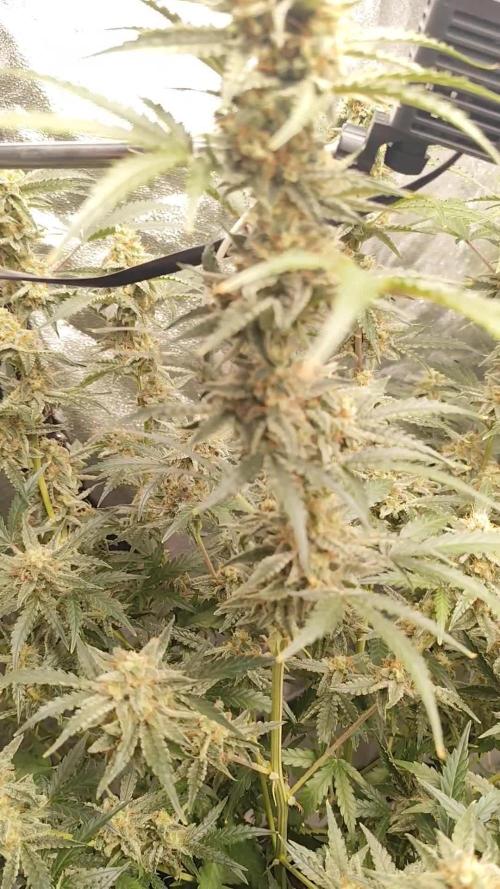
Day 76
smell just went trough the roof. wow. gettin buds fatty and sticky.. it's a matter of waiting.😎

Likes
73
Share


@Andres
Follow
I mean this genetics it's excellent ... if I would grow zombie kush again ... good job ripper seed ... she fought and was very strong against the plagues after a beginning outdoors ... she fought against the white fly. worms .. red spider and other insects ... and deserves your recognition ... it will not be the most beautiful plant with its leaves impeccable ... but she is a champion ... thank you ripper seed .. .

Likes
144
Share


@roro_204
Follow
Nothing much going on here. No LST. Didn’t really takeoff many new leaves.
I didn’t check up on the plants for a whole 24 hours. I didn’t notice when I last watered that I had missed a plant as you see in the first video.
It went back up in about 6 hours like nothing ever happened to her.
When growing many plants it’s very easy to forget to water one or two.
That’s why it’s important to water all single file from row to row , starting from the top plant to the bottom plant, all the way though the last sections. Learned the hard way lol
Likes
3
Share

@LST420
Follow
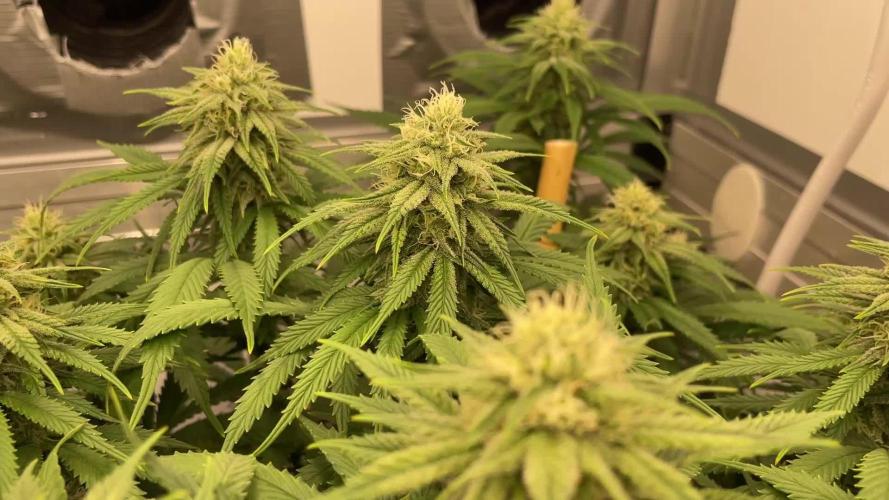
Week 12 The buds are slowly fattening up. Dutch Passion issued a warning on their website that certain strains like this one can cause them to produce male flowers when exposed to too much stress. So I only do careful rounds of minimum defoliation in order to hopefully prevent this from happening.

Likes
17
Share

@DogDoctorOfficial
Follow
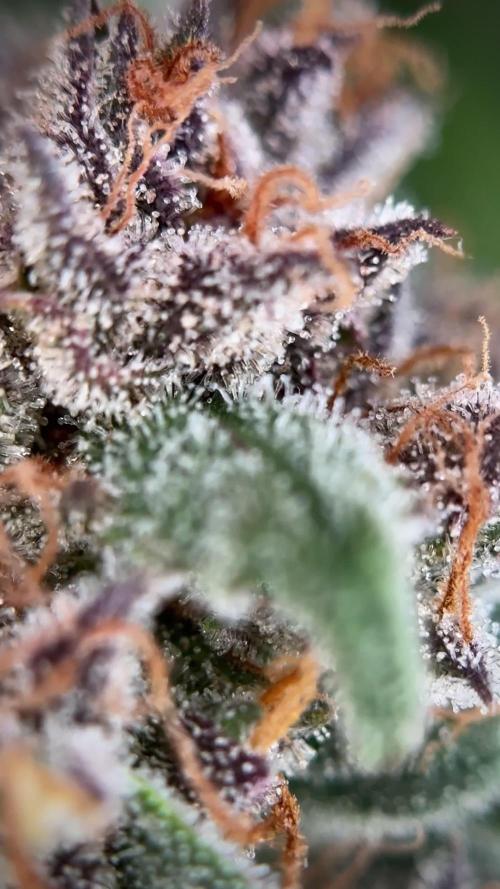
Unfortunately GrowDiaries is still acting a little funny with harvest updates, so this report is being uploaded under a normal flowering week again. But make no mistake — this is harvest time. Week 14 from seed, and these girls were ready. 🌱✂️
And honestly… what a beautiful journey this has been.
Before talking about harvest itself, I think this is the perfect moment for a quick recap of how these Amnesia Skunks reached this point.
This entire run was done The Zamnesia Way — simple, intentional, and plant-led.
12/12 from seed.
No traditional veg phase.
Very little touching.
Almost no manipulation besides some gentle leaf tucking and selective support when needed.
No chasing perfection.
No fighting the plant.
No forcing structure.
Just attention, observation, environment, light, airflow, nutrition, and letting the plants grow naturally into the PPFD instead of forcing them into it.
And somehow, through simplicity, these girls rewarded us beautifully.
Not the tallest plants.
Not the biggest yield monsters.
But wow… these buds came out incredibly dense, compact, greasy, and aromatic.
The structure on these flowers was honestly beautiful to watch during trimming. Thick stems, heavy branching, dense internals… almost like processing little pieces of timber instead of flowers. You can clearly see where the density comes from when looking at the branch structure itself.
By Week 14, the signs were all there:
fading leaves,
slowed drinking,
fully swollen flowers,
strong aroma,
mature trichomes,
and that overall feeling the plant gives you when she says:
“I’m ready.”
So harvest day arrived. ✂️
Some plants were dried whole.
Some were broken down branch by branch.
And in reality, the dry room became a mix of both methods depending on available space and plant structure.
The drying process itself is one of the most important and misunderstood parts of cultivation.
A proper dry is not just about removing water.
It’s about preserving terpenes, slowing degradation, protecting cannabinoids, and allowing the flower to transition gently instead of crashing into dryness.
These girls dried for around 7–10 days.
Temperatures stayed mostly around 18–20°C, while humidity stayed close to 60% RH overall. During the first couple of days, humidity was intentionally lowered closer to 45% to help remove the initial surface moisture and reduce the chance of trapped humidity inside these very dense flowers.
After that initial phase, the environment stabilized and the flowers were allowed to slow dry properly.
One of the simplest indicators we use is the branch “click.”
Not a complete snap.
Not bending like rubber.
But that soft internal click that tells you the outside has dried enough while the inside still contains life and moisture ready for curing.
That’s when trimming begins.
And for this run, everything was hand trimmed.
Scissors.
Trim bins.
Patience.
Love.
Care.
Every single bud handled individually.
Machine trimming is fast, but hand trimming preserves shape, resin heads, bag appeal, and overall flower integrity in a completely different way. Especially with flowers like these, covered in resin and packed tightly, hand trimming allows you to keep the flower looking and feeling natural instead of shaved down or damaged.
And underneath the trim bin… the gold. ✨
What many people call waste is actually one of the most beautiful rewards of trimming carefully.
All the tiny broken trichome heads, loose resin, micro sugar leaf coverage and fallen gland heads collect naturally at the bottom of the trim bin during the trimming process. That’s what I like to call “trim bin gold.”
Not full-melt hash but almost.
Not static sift.
Not dry sift.
But a beautiful natural resin-rich collection straight from handling properly dried flowers.
And honestly… these girls gave A LOT of it.
One of the resin balls alone came out around 0.7g after simple hand rolling from collected trim-bin resin, while the second plant also produced a very respectable amount even without bothering to weigh it properly.
Sticky.
Aromatic.
Potent.
A true pleasure after long trimming sessions. 😄
After trimming, the flowers were transferred into glass jars and also into the Zamnesia vacuum curing containers.
And these containers honestly deserve a quick explanation because they are actually very useful for curing.
Unlike normal storage, vacuum containers help reduce excess oxygen exposure around the flower while still allowing proper curing conditions inside. Less oxygen means slower terpene degradation, slower oxidation, and better long-term aroma preservation when used correctly.
The flowers are now curing slowly and properly for over a month before the final smoke report arrives.
And yes… there will absolutely be a full follow-up report very soon.
That next report will focus much more on:
the cured flower,
aroma development,
smoke quality,
effects,
terpene profile,
how the cure evolved,
and a full reflection on everything we did — and did not do — during this run.
Because sometimes what you choose NOT to do matters just as much as what you do.
As for final dry numbers after trimming and curing:
57.2g
116.3g
33.8g
85.2g
So together, both Amnesia Skunks gave you a final dry/cured/manicured total of 292.5 grams And honestly?
For two relatively compact 12/12-from-seed plants with minimal intervention… I’m more than happy.
But numbers never tell the whole story.
The smell.
The density.
The stickiness.
The trim-bin resin.
The beauty of the flowers themselves.
That’s the real reward.
And before closing this harvest chapter, I truly want to thank everybody involved in this journey.
The GrowDiaries platform.
The entire community.
The longtime followers and OGs.
The new followers discovering the page for the first time.
The curious ones.
The silent ones.
The skeptics.
The lovers.
The haters.
The people who only stopped by for 5 seconds.
And the people who stayed for the entire grow.
Thank you.
Thank you to Zamnesia for the genetics.
Thank you to Plagron for the nutrition.
Thank you to the gear that kept running day after day.
Thank you to the environment itself.
Thank you to the plants.
And thank YOU for being here with me until harvest day. 🌱
The story is not over yet.
The cure continues.
And the smoke report comes next.
📡 DELETED @ 1K Please stay tuned.we never quit https://www.youtube.com/@TheDogDoctorOfficial NEW 🙏 Thank you for your patience and continued support.
FOR DISCOUNT CODES AND MORE JUST FOLLOW THE LINK https://website.beacons.ai/dogdoctorofficial
📲 Don’t forget to Subscribe and follow me on Instagram and YouTube @DogDoctorOfficial for exclusive content, real-time updates, and behind-the-scenes magic. We’ve got so much more coming, including transplanting and all the amazing techniques that go along with it. You won’t want to miss it.
GrowDiaries Journal: https://growdiaries.com/grower/dogdoctorofficial
Instagram: https://www.instagram.com/dogdoctorofficial/
YouTube: https://www.youtube.com/@dogdoctorofficial Deleted by Youtube - https://www.youtube.com/@TheDogDoctorOfficial NEW
Vimeo : https://vimeo.com/dogdoctorofficial Under construction stay tuned
⸻
Explore the Gear that Powers My Grow
If you’re curious about the tech I’m using, check out these links:
🔆 Lighting & Environmental Control
• Future of Grow — Advanced LED lighting technology
https://www.futureofgrow.com/
DISCOUNT CODE: DOG20
• Lumiflora — Under-canopy LED lighting
https://lumiflorade.com/
• TrollMaster — Environmental controllers and automation gear (past collaboration)
⸻
Genetics
• Zamnesia Seeds — Genetics used in this project
https://www.zamnesia.com/
⸻
🌱 Soil, Substrates, Boosters & Root Support
• Plagron — Substrates, bio mixes, and supportive products
https://plagron.com/en/
⸻
🎒 Storage, Curing & Preservation
• Grove Bags — Curing and storage solutions
https://grovebags.com/
⸻
📸 Photography Equipment & Tools
(Not sponsors, but part of my creative toolkit)
• Sony A6700
• Sony full-frame macro lens + few more
• Stacking photography workflow - learning
• iPhone (for behind-the-scenes shots)
We’ve got much more coming as we move through the grow cycles. Trust me, you won’t want to miss the next steps, let’s push the boundaries of indoor horticulture together!
As always, this is shared for educational purposes, aiming to spread understanding and appreciation for this plant. Let’s celebrate it responsibly and continue to learn and grow together.
With true love comes happiness. Always believe in yourself, and always do things expecting nothing and with an open heart. Be a giver, and the universe will give back in ways you could never imagine.
💚 Growers love to all 💚
📸 P.S. – The Eye Behind the Lens
All photos in this diary (for now — except for the ones showing the camera, which I took with an iPhone) are taken with a Sony A6700 paired with a Sony full-frame macro lens and a few more.
Photography is part of the story — it’s how we share the fine textures, the glow, and the quiet details that words can’t always capture.
I’ve also started experimenting with photo stacking — a technique where multiple images, each taken at a slightly different focus point, are layered together to create one perfectly sharp image from front to back.
It’s not digital enhancement or AI; it’s pure photography — a way to reveal the plant’s beauty in microscopic depth, from trichome to petal.
You’ll even see a few shots of "ghost me" capturing the shots — camera, lens, setup — because every grow deserves not just to be cultivated, but documented like art.
FOR DISCOUNT CODES AND MORE JUST FOLLOW THE LINK https://website.beacons.ai/dogdoctorofficial
NEW DISCORD - Official Server Invite Link : https://discord.gg/ksjAkA5T74

Likes
2
Share


@Munchiesfrommars
Follow
I like the result a lot !
Not a lot of colas, but really big buds.
As I thought moon rock strain could be all white, but it is simple strain, smells like a gasoline and garbage, not anything fruity or juicy
But very beautiful !


Likes
9
Share


@newenglandgrowers
Follow
Scratch what I said at the end of last week pests are still around just had some bug fly at me and bite/sting me on the neck now a got a welt on my neck smh, not sure what the heck it was it was some sort of black bug maybe a thrip but I honestly have no idea, did another neem oil drench on the medium only and tomorrow I'm going to use a hydrogen peroxide mixture again that way I can also use it on the tops and undersides of the leaves as well. Some of the roots started to become exposed on the top soil so I added more an inch or two coco to cover the exposed roots. Another successful week I guess the plants aren't dead so onto week 9, Week 4 of flower

Likes
44
Share


@APOLLO
Follow
well well well we have 157 grams, I know they don't look it but are like little rocks, Zero popcorn ...Well happy about that 😄I certainly wasn't expecting her to cross 100g mark but she surprised me.
what a plant to grow man ! 😍 its been amazing start to finish with this one. No hard work, no fuss.
couldn't quiet give her more darkness at the end as planned due to the other white widow (pheno#2), it had 3 weeks to go yet, didn't want to disturb her.
the clone I took off the harvested WW, is 3 feet tall now. Healthy Mum with a green gelato, Next run is SOG Green gelato + White widow !! can't wait 😶
Smoke is clean. Citrus and piney with hints of sweet gassy under tones. Effect starts soon enough, giggles and munchies an then off to peaceful sleep .
Thank you everyone who checked it out, liked and commented. Its more fun this way 😎 I hope you all enjoy the pics.
Cyall next time, stay safe

Likes
1
Share

@ChronicNerve
Follow
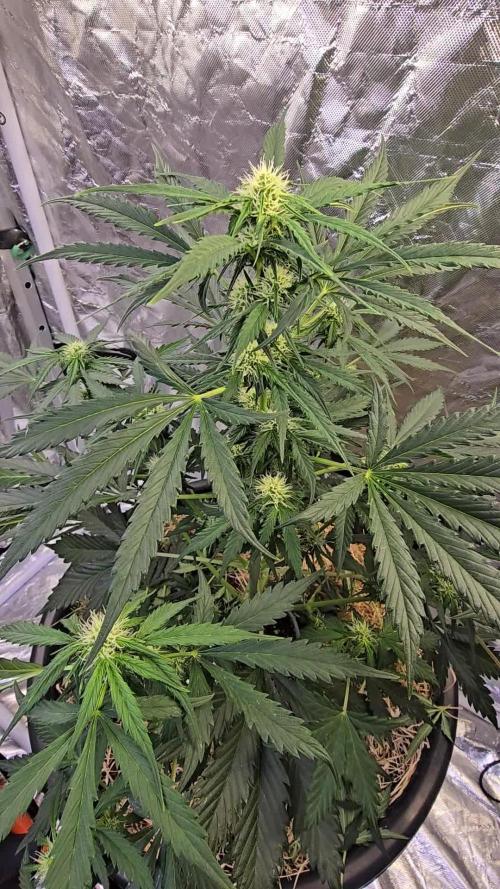
Had to do some defoliation this morning lots of fan leaves blocking air flow so gave her a tidy. The leaves are healthy and the pistils are looking perfect.
Pretty much plain sailing so far.

Likes
28
Share


@GanjaGecko
Follow
Die Woche war schonmal wieder etwas mehr Sonne. Die GorillaAuto ist die letzte der drei Ladys aus dem Report. Ich denke das sie noch 1 - 1½ Wochen stehen wird bis sie auch zum trocknen aufgehangen wird. Die Trichome sind ca 20%milchig, 75%klar und 5%amber.
Die Fanleaves werden auch langsam heller und gehen ins herbstliche.
Gegossen wird nur noch mit Wasser wenn der Topf leichter wird. An heißen Tagen waren es teilweise zwei mal täglich.
Hoffentlich überlebt sie die letzten Tage ohne schlimmere wettereinflüsse🍀
Vielen Dank fürs reinschauen 💚


Processing
Likes
5
Share


@Mr_nugs_lover_David
Follow
She's looking very healthy and strong strong, now we're getting a beautiful bushy shape with a few bud sides as you guys can see, I'm about to flip my lady to flower very soon. Let's see what happens!

Likes
49
Share


@masterofsmeagol
Follow
5/24 Woke up on payday to find that my father is in the hospital. My house was robbed a few days before so I guess the hits keep coming. The plants are doing good though. I'm glad I kept them in as we had a frost last night. I moved my cage yesterday onto the asphalt and put the big pallet in. I just need to sanitize the others before they go in the cage. I'm being super cautious. I think tomorrow will be the day I make the switch to the garage while they fill out these 3's.OK.
5/25 Plants were all moved to the garage with the door open for indirect light. It's 54 degrees. At night I'll pull them back in and give them a few more hours under the hps which will also help with heat. Knocked a stem sideways but it'll pop back. Feels good to get things moving. HST seems to being going good.
UPDATE: Went back over at one and noticed that the plant I hit with a wire (or something I didn't see what happened) was almost sideways and really loose. I had tied it to a clip with flagging. That didn't work. I asked a friend and I ended up pinching off the first true leaves then mounded happy drug up around it to keep it upright. It LOOKS much happier. Of course that shit happens to your biggest healthiest plants. Oh well all the 10th planet are doing phenomenal. Can't wait to move these girls to there final homes. Plants went under lights at seven. I'm acclimenting them to the right light schedule. I don't want to jump from 18/6 to 15 hours. They did really good in the cold Temps and wind. The big one I had to fix looks like it's doing great. Once they are hardened and fill these pots they go in their final home.
5/26 Plants did great being in direct sunlight for a few hours and staying in the garage at night. They look super healthy. I'm planning on watering tomorrow. Wondering if I should start to add some silica to strengthen the stalks. Also wondering if I should add more soil to some of the pots like I did to the other one as the stretched a little. This is something I may do tomorrow before I water.
Went back over to switch the lights on and pull the plants back and lock up at 7:30. Forgot my phone of course and these girls were looking amazing. I have to water tomorrow. I coukd add more soul to some of the pots but I'm reluctant due to stem rot. They'll get buried much deeper in there final homes. Don't want to mount up soil and then water and promote rot. Anyway plants are adapting amazing. Dialing the light closer to normal here. This is a great transition place for them to he. I've noticed a few wrinkled leaves but thats to be expected. Oh, I got my free pure Michigan seeds from premium cultivars!!!
5/27 WATERED EVERYTHING TODAY WITH HALF A Powerade BOTTLE APPROX. 16OZ. Plants are in direct light in the mornings and I haven't seem any burning yet. I noticed a small spot on one of the first true leaves but I think it's just a bite from an insect. Everything is green as hell. I'm wondering if I should add fresh soil to the pots but I didn't want to do it on a watering day. Plus the plants will be going in there final homes shortly. Very happy with progress this far.
UPDATE Went over at 1230 and everything looked great. I sanitized the cage AND the pallets. Also bought 3 more 30 gallon grow bags. Once they go in there they will explode! I can't wait. I'm considering ordering netting for moths. Depending on price i might get some. If not I'll keep using the BT.
UPDATE: Went and checked around 430. Temps were in the 70's and they had a few hours of direct sun. No burns evident as of yet. Pallets fit in the cage like puzzle pieces. Now I need to sanitize my grade stakes bamboo and trellis and setthat stuff up. I'm going to screw the grade stakes to the pallets and attach garden rods and bamboo with zip ties and I'll have a horizontal trellis. Once branches are a little bigger I'll begin LST. The plants that I topped AND the ones I FIMed are doing great. The FIMed ones with at least three colas some have four. Hoping the plants took that time growing roots.
5/28 Plants are all standing up tall. They loved that water. Haven't noticed any burns and they get direct sunlight in the mornings. Soon I can put them in the cage and start setting up my trellis and supports. Fan leaves on soms are bigger than my hands. These girls are probably the healthiest plants I've grown. I usually do clones and end up starting with problems. This is great starting with seeds and have no problems.
UPDATE: Went back around two because Temps had reached 92f and rh was only 20%. Nights cool off greatly so it's a dramatic temperature shift. Plants looked great. All standing up looking great. Put plants in at 7:30 ,and continue the light until 9 and have it turn on at 4am. Then they are out by sunrise. Did notice some burning on one of my plants a large fan leaf. What can I say? It was extremely hot. I'm surprised they did as well as they did.
5/29 Everything standing up perfectly looking great. Plantscget an extra hour of sun at night and morning and are on 19/7 with the extra added light. Trying to acclimate and finish hardening off this week. I'd love to be able to at least put them in full sunlight for the day. I think they'd be fine. I'm really impressed with how they are growing. Second guessing not HST all of them. However I think I might light dep a couple. We'll see. I've still got work to do.
UPDATE: put the plants in around 7. One of my lights shit the bed. They are just 150 watt hps but I was using them to finish hardening off my plants and slowly adjust them to the natural light. The on/off switch fell off. I'm sure my cousin can fix it bit the one is pe9bably fine as I'm only going fir a few more days. The thing about having this many plants to choose from is that I can pheno hunt and put the VERY best into the final containers and if I decide too I could light dep.
5/30 WATERED EVERYTHING TODAY WITH HALF A POWERADE BOTTLE. My cousin can probably fix the other light but I don't think it will matter. Within a week I'm going to have these girls in their final homes. I just need to sanitize the trellis and posts and then screw them to the pallets. I'll have this all taken care of before the plants go in the hole. I did notice another burn on a leaf. Def glad I'm taking the time to do this right.
UPDATE: I put the girls in the barn around 7:30 and flicked the one 150 watt HPS light I have working on. I added a half hour more of darkness to try to acclimate them quicker. Light stays on until 9 qnd came back on at four but i changed it to 4:30. I'm usually there by 5. I'm looking through my surveillance cameras and it doesn't even look like the light is on. Of course its super bright out but I should be able to see from that image. Luckily the building the go in has massive windows up top to let light in and windows on every side so the light is probably unnecessary. However due to my bullshit luck last year I'm being as cautious as I can. Tomorrow is supposed to be extremely hot again as is the next day. I think I'll leave the door down a little, open the other and move the plants back so they have no direct sunlight and adding a fan. That way they can continue to recover. They seem bigger everything I see them.
5/31 Another hot day. I figure a few more days (under a week) and I can transplant these girls! Supposed to be 85 today and 90 tomm. It was 45 when I got here. These girls are doing well handling this bipolar weather.
UPDATE: IM AN IDIOT AND THIS IS AN 8 DAY WEEK lol. Maybe I'll do a six day week next time to get back on track. Went back over at two and noticed some burns. Sent a video to a friend andcwith the sun we've had and the weather in the 90's he agreed the damage was minimal. However there was someone there working who opened more doors which let a lot more light in. It's supposed to be in the 90s tomorrow too. I may leave the doors shut. There are windows on everyside and an enormous cone at the top so the get plenty of sun. He also grows and I've been careful to not let anyone that grows go around my plants. I'm going to have to talk with family about this. To be honest I'm kinda pissed. Next watering I may add some kelp me kelp you and start a small nute regimen.
UPDATE Went back over at seven after having a panic attack. Half stoned half asleep. Stupidly I was looking at a plant and thought "shit" the FIM must not have took but in reality I was just stoned and tired so I topped a plant that had already been fimmed so we'll see how that goes. Purple punch is so far behind everything else it's not even funny. There might be one that's doing pretty well and that of course is the one with no HST. Branches on the other strains are thick and ready for LST though. What I think I'll do is transplant the 10th planets and the blueberry cheese ones that are ready and hold off on the rest for a while. Hopfully I'll be able to show plants in final homes next week.


Likes
27
Share


@Dunk_Junk
Follow
Wow isn't she looking fab this week?? 😍
Flowers are really plumping up. 😎
Few more weeks yet I think.

Likes
32
Share


@ArtisticGrown
Follow
This weeks been good, still directing some of the colas so other plants can get light. 2 of my plants are battling for the room in the tent! So 2 other plants are struggling to catch up. Over all tho things are going well! Been watering with nutrients one day and then the other ph balanced water every other day nutrients. Started oxygenate my water. Should of done that a while ago! Happy growing 🌱✨
Likes
13
Share


@Robeeriegenetics
Follow
Well, I had a speed bump nothing major but I forgot to refill my mothers reservoirs no big deal I did it one of them got a really droopy, but that’s OK. She should recover well soon I’m gonna be throwing the


Likes
10
Share


@FrulaFrulaki
Follow
The thrips infection is gone but there’re still a lot of damaged leafs as you can see in the photos/videos, but the growth hasn’t slowed down which is good.
Anyway after I did some research into the big bang strain I found out that the company that sells this strain recommends “flushing” for a few days every other week starting from day 16 of flowering. This is meant to speed up bud development and I think it really did something here as the buds got twice as big. But I didn’t exactly follow their recommendations as it calls for watering the plants with large amounts of water and letting the soil dry for a few days and I don’t feel comfortable with that, so I watered them every day but made sure the soil was dry.
