


Likes
Comments
Share


@Dbkoop
Follow
• Largest plants’ fan leaves yellowing now.
• CP(1) looking a little purple finally.

Likes
15
Share

@BLAZED
Follow
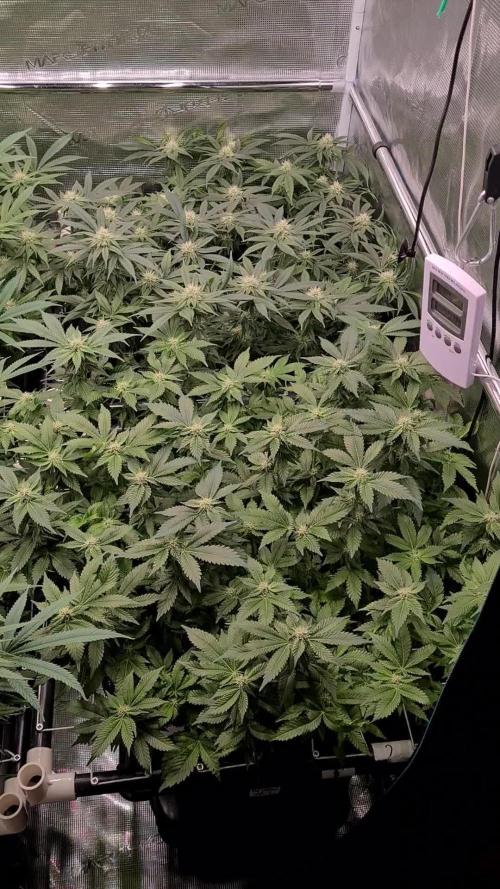
Week 13 (21-4 to 27-4)
21-4
Temps: 20 to 24.8 degrees
Humidity: 54% to 63%
Watering: Both 1000 ml. EC: 1.6
22-4
Temps: 20.8 to 24.7 degrees
Humidity: 54% to 64%
Watering: Both 1000 ml. EC: 0.4
23-4
Temps: 19.2 to 24.6 degrees
Humidity: 55% to 62%
Watering: Both 1000 ml. EC: 1.6
24-4
Temps: 19.3 to 24 degrees
Humidity: 56% to 63%
Light set from 65% to 75% strength.
25-4
Temps: 18.2 to 23.7 degrees
Humidity: 56% to 60%
Watering: Both 1000 ml. EC: 0.4
26-4
Temps: 19.1 to 24.5 degrees
Humidity: 53% to 61%
Watering: Both 1000 ml. EC: 1.6
27-4
Temps: 19.2 to 24.2 degrees
Humidity: 54% to 59%
Watering: Both 1000 ml. EC: 0.4

Likes
12
Share


@HinduGod
Follow
WOW LOOK AT DAT!!! I DEMANDED DA SUNGOD TO COME!!! HE ARRIVED FOR A FEW DAYS BUT STILL VERY VERY COLD!!! MADE A SECRET TOP DRESSING FOR DAT PLANT!!! PUT SOME WOOD CHIPS ON TOP OF DAT!!! DA WINDGOD LIKES TO BLOW DEM OFF!!!😡
PLEASE COME AGAIN!!!

Likes
12
Share


@Hawkbo
Follow
Still in the HPS tent but now they are under the LED again and doing pretty well as the roots are filling the pots out they are eating faster. Did a couple foliar feeds with the Growzyme at less than 1 ML/Gal which they seem to like. Hoping to get a little more vertical growth before they kick into flower. Also been doing some bottom feeding which I have been experimenting with a little bit. It seems to increase rate of growth and the plants seem a little happier when I do a few feeds like that in a row.
REMEMBER , IF YOUR SHOPPING FOR GEAR YOU CAN USE THE CODE “BANGDANG” FOR 10% OFF YOUR ENTIRE PURCHASE FROM ANY OF THE FOLLOWING COMPANIES.
@greenbuzzliquids
@rainscience_growbags
@gorilla_grow_tent
@growlightscience.led
*****Gorilla grow tent discounts extend to all companies affiliated with grow strong industries which include..*****
@super.closet
Lotus Nutrients
Kind LED grow lights
Likes
Comments
Share


@Afterworkweedgrowers
Follow
Plant is under very high stress. Topped again for 8 colas. The plant looks bare but will fill out soon. Plant has slowed down a lot under this training. But we will let it recover for next 2 weeks. I’ve attached time-lapse of leaves reaching for light. Hope you all like it.

Likes
47
Share


@KilgoreTrout
Follow
The smell is amazing. And amazingly strong. It’s been really humid here and my carbon filter isn’t working well. Few more weeks for the kush. Maybe 3-4 for the cbd Sativa. Getting excited. But as always not looking forward to trim.


Likes
9
Share


@Vega0284
Follow
This plant grew very well. I yielded 7 ounces from just one plant, too bad I killed her sister. Honestly the only trouble I ran into, were the problems I created for myself. I am super excited to take everything I learned from this grow and apply it to my next!~

Likes
44
Share


@Ultraviolet
Follow
The gap between where you are and where you want to be is measured in decisions, not dreams. Dopamine release is not the pursuit of happiness; it's the happiness of the pursuit.
"Mens Dei"
Cannabis buds can expand or swell in warmer conditions, but this is not necessarily a desirable effect. High temperatures can cause the buds to become airy and loose, reducing their density and potentially impacting potency and aroma.
First 4 weeks flower, blazing hot expansion of buds, 4 weeks after cool off? Why??
What can be made to expand, airy and loose, can also be made to contract, dense and tight.
Why?
Trichomes do not discriminate, although we like to think of trichomes' primary purpose as being to get us high; they are there to provide photoprotection (sunscreen). Trichomes apply themselves based on area dimensions; the more area = the more trichomes in order to protect. Different from density: Trichomes, the resinous glands on plants, are often produced in response to stress, including high light intensity. This increased production can lead to denser trichome coverage on the plant, stress, stress, stress, stress is the signal.
There is a certain beauty in watching the large water-filled buds once swollen to the brim slowly shrink during drying, as the surface areas contract, the trichomes just cluster up to form denser and denser coatings, already dense from high light intensities, UVB exposure, and IPS, and every other stressor I could tweak.
Trichomes, the resinous glands on cannabis plants, are often produced in response to various forms of stress. These stresses can be environmental, like excess light(HIL) or UV-B radiation, temperature fluctuations, or drought, or mechanical, such as wind, pruning, or even the weight of the plant's own buds. The plant reacts to these stressors by increasing trichome production as a defensive mechanism to protect itself and its valuable compounds like THC and CBD. In essence, cannabis plants perceive stress as a threat and respond by producing more trichomes as a way to protect themselves and their valuable compounds. Several studies have shown this.
Not so much a "master" grower as a master of stress. Psssst. Tip.
Trichomes fill with "antioxidants," including THC.
Ant"ox"idants,
The production of antioxidants in plants is intricately linked to their oxidative apparatus.
The plant has limited oxidative capacity/apparatus. During daytime photosynthesis, a large percentage of that oxidative capacity is tied up in protecting the plant.
During the night, plants alter their metabolic pathways. This leads to a far more focused production of specific antioxidants, like THC. Plants also produce antioxidants during the day. Excess light, for example, can trigger the production of excess antioxidants as part of their defense mechanisms against reactive oxygen species (ROS). The differential ROS production by blue and IR light can have significant biological consequences. For example, high levels of ROS induced by blue light can lead to cell damage and death, while lower levels of ROS produced by IR light may be involved in beneficial cellular signaling pathways. Long nights under the IR (very low ROS), the boost in cellular respiration, and the boost in energy production. In a perfect world, I'd give the plant a shock treatment of 60DLI in 4 hours and give her the other 20 hours to perform cellular respiration under IR. The stress of those 4 hours would be rigorous and full of stress abound, 1800-2000ppm CO2 is easy for a couple of hours during daylight, it's maintaining it that's hard, but 4 hours is very doable with nothing but a little extra "carbon sugar" in your medium every other night during the first 4 weeks of flower.
In my opinion, you only need to jack CO2 for those first 4 weeks of flower to see maximal output, after that it's all about trichome preservation, everything else comes second. Without the temps to assist with metabolism, CO2 is reduced to normal levels along with temps 4-5th week of flower.
Buds are primarily composed of water. Developing flower buds, like other plant tissues, require a significant amount of water for growth and turgor pressure, which helps maintain their structure and firmness.
Turgor pressure in plant cells is primarily generated by osmosis, but transpiration plays a crucial role in maintaining it.
The optimal internal leaf surface temperature for photosynthesis at 1800-2000ppm CO2 is likely in the upper range of 97°F, meaning ambient would need to sit at 102°F-ish or thereabout for full metabolic utilization. That's putting your transpirational pulling force x5 x6 maybe x7 of what it would be if she were cruising at 68F.
"My buds won't fatten, what can I do!!"
Crank that bitch. If your purpose was to blow up a balloon as fast as you can, as much as you can, would you use 2x force or x5 Force to do so? Bad analogy, but you get the idea. Kiss.
Optimize photosynthesis & VPD by day, cellular respiration by night.
TECHNICALLY:
"While transpiration and cellular respiration are both ongoing plant processes, they are not neatly separated into day and night. Both processes occur both day and night, though at different rates and with different emphasis. Transpiration, the release of water vapor from plant surfaces, is primarily driven by sunlight and photosynthesis during the day, but it also continues at a lower rate at night. Cellular respiration, which provides energy for the plant, occurs continuously, both day and night. "
BUT Only 10% ATP can be processed through photosynthesis and carbon capture.
90% of ATP is processed when the plant's oxidative capacity becomes available (NIGHTTIME). Cellular respiration relies on the process of oxidation to generate energy. Specifically, the final stage of cellular respiration, called oxidative phosphorylation, utilizes oxygen as the final electron acceptor to produce a substantial amount of ATP, the cell's primary energy currency.
Several environmental factors can hinder cellular respiration in plants. These include low oxygen levels, temperature extremes (both too high and too low), humidity, water stress, and the presence of toxins. These factors can impair the function of enzymes involved in respiration, disrupt the availability of substrates, or directly damage plant tissues, thus reducing the rate of cellular respiration.
Factors such as oxygen concentration, glucose availability and temperature will all impact the amount of aerobic respiration an organism will perform.
See you next grow, *twiddles thumbs*
Signum Magnum.
Signum magnum
Appáruit in caelo
Múlier amícta sole
Et luna sub pédibus ejus
Et in cápite ejus
Coróna stellárum duódecim
Cantáte dómino cánticum novum
Quia mirabília fecit
Gloria pátri, et filio, et spirítui sáncto
Sicut érat in princípio, et nunc, et semper
Et in saécula saeculórum, amen
Signum magnum
Appáruit in caelo
Múlier amícta sole
Et luna sub pédibus ejus
Et in cápite ejus
Coróna stellárum duódecim
Cantáte dómino cánticum novum
Quia mirabília fecit
Gloria pátri, et filio, et spirítui sáncto
Sicut érat in princípio, et nunc, et semper
Et in saécula saeculórum, amen
Signum magnum
Appáruit in caelo
Múlier amícta sole
Et luna sub pédibus ejus
Et in cápite ejus
Coróna stellárum duódecim
Cantáte dómino cánticum novum
Quia mirabília fecit
Gloria pátri, et filio, et spirítui sáncto
Sicut érat in princípio, et nunc, et semper
Et in saécula saeculórum, amen
Signum magnum
Appáruit in caelo
Múlier amícta sole
Et luna sub pédibus ejus
Et in cápite ejus
Coróna stellárum duódecim
Likes
16
Share

@420DeepGrow
Follow
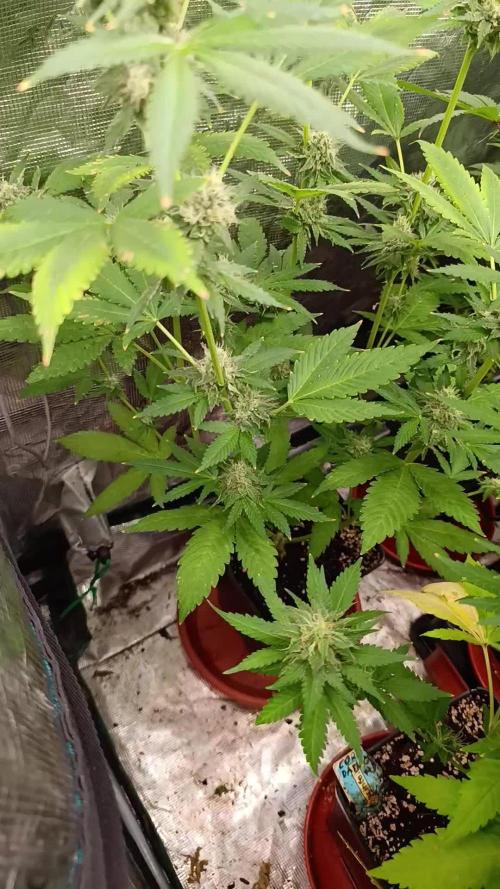
📆 Semana 7:
Los cogollos siguen ganando volumen a gran velocidad y entran en una de las fases de mayor engorde. A pesar de que todavía predominan los pistilos blancos, los cálices continúan hinchándose y apilándose, formando flores cada vez más compactas y pesadas. La producción de resina aumenta notablemente, intensificando el aroma y dejando ver todo el potencial de la genética.
⚡ EC: 1.8
💧 pH: 6.2 – 6.5
🌡️ Agua: 21°C
🌫️ Humedad: 50–55%
💡 Intensidad: 950–1050 PPFD
🔥 Nota de cultivo: Mantengo la nutrición estable y un ambiente bien controlado para favorecer el máximo engorde de los cogollos, conservando la producción de resina y la calidad de los terpenos durante esta etapa clave.
¡Seguimos creciendo fuerte! 💪

Likes
4
Share


@XxDetermined100
Follow
The plant was easy to grow overall .. it grew fast and a little on the tall side which had me nervous but I was able to raise the lights up just enough to finish, so it all worked out in the end. buds came out hard and frosty no complaints . This was a freebie seed too! didn’t expect it to come out as fire as it did man was i wrong. Straight fire 🔥
Ran into root rot in the beginning of veg but the great white and hydroguard saved my ass.🙏

Likes
6
Share

@Chubbs
Follow
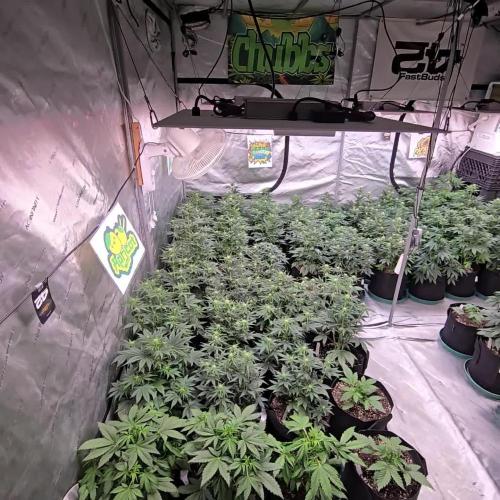
Weekly update:
Crazy how time flies when your having fun. Seems like yesterday I did last week's update. I did some defoliating and lollipoping on them this week and switched from grow nutes to bloom. Wild how fast the preflower sites grow as it looks like they're everywhere. I'm still feeding 16oz per day, some are drinking more then others but overall Happy Growing.
Likes
6
Share


@MadeInGermany
Follow
Flowering days 27
since time change
to 12 / 12 h
Hey guys :-)
The ladies look beautiful and are growing very well.
The sweet smell starts to blow through the whole tent :-) .
This week it was watered 3 times with 1l each (nutrients see table above)
Nothing else happened this week. Everything has been checked and verified.
A lot fun and stay healthy 💚🙏🏻
👇🏼👇🏼👇🏼👇🏼👇🏼👇🏼👇🏼👇🏼👇🏼👇🏼👇🏼👇🏼
You can buy this Nutrients at :
https://greenbuzzliquids.com/en/shop/
With the discount code: Made_in_Germany you get a discount of 15% on all products from an order value of 100 euros.
👇🏼👇🏼👇🏼👇🏼👇🏼👇🏼👇🏼👇🏼👇🏼👇🏼👇🏼👇🏼
You can buy this strain at :
Clearwater Seeds
Water 💧 💧💧
Osmosis water mixed with normal water (24 hours stale that the chlorine evaporates) to 0.2 EC. Add Cal / Mag to 0.4 Ec Ph with Organic Ph - to 5.8 - 6.5
MadeInGermany

Likes
8
Share


@ChitownCannaChica
Follow
Did some defoliation of the lowers. Been just dunking this lady in the water bucket daily. Have a slight deficiency going, but will wait and see since it’s the start of flower

Likes
17
Share


@cannavici
Follow
25/02/2021 - Day 139 - n/a
26/02/2021 - Day 140 - n/a
27/02/2021 - Day 141 - n/a
28/02/2021 - Day 142 - n/a
01/03/2021 - Day 143 - n/a
02/03/2021 - Day 144 - n/a
03/03/2021 - Day 145 - n/a
Likes
3
Share


@Oldwied
Follow
Everything is fine. Nothing to do.
Light Power: 90%
Day 66
Flower day 19
Photoshooting

Likes
8
Share

@Gorillagrower
Follow
A shout out to my brother's at Spliff Seeds! Without the good genetics you don't have shit! Lol 😂 Dutch Blue Automatic is a very aggressive growing strain.


Processing
Likes
4
Share


@Barcelona_Farmers710
Follow
Mientras yo me divertía en la spannabis las niñas se ponian cada vez mas resinosas farmers!! Solo basta ver la shining haze para darse cuenta que el mammoth p es brutal!!👌🏻
Likes
21
Share


@Mrryan78
Follow
So Roots have hit water and starting to take off I did a water change of 10 gallons and mixed up Jacks at
3.6 grams per gallon
2.4 grams per gallon
1.1 grams per gallon
Tree Trunk silica 1 ml per gallon added first
Southern Ag Garden Friendly Biological Fungicide At 2 ml per gallon
This brought ppm up to 750 ph6.2 I’m very pleased with the growth rate and the way I’m starting to see new growth I set light at 22 inches

Likes
12
Share


@GoodTimesOrganics
Follow
Hi liebe Community and Welcome Back! 💚🌱
Nach der fünften Blütewoche entwickelt sich die Aficianado Pflanze einfach Atemberaubend!
Sie ist in diesem Run definitiv die Beautyqueen.
Die Struktur, die Buddichte, Interniodenabstände alles perfekt! ?
Es scheint auch als würde sie eine Top Blütenperformance hinlegen. Die Trichome sprießen und dass Icing zieht sich wunderbar über die Sugarleafes.
Das süßlich- fruchtige Aroma entwickelt sich immer mehr, es hat nun auch etwas beerige Aromen.
Ab jetzt bekommt die Pflanze nur noch Wasser bis zur vollen Reife.
Die Umgebungsgegebenheiten sind aktuell gut für die Endblüte, aber die Pflanze hat sich angepasst:
—————
🌞 Temp: 27
🌚 Temp: 18°C bis 19°C
💨 RH: 49%
VPD: 1,42 kPa 🏜️
💡ppfd: 830 mpm
—————
Viele Grüße 👋