




Likes
4
Share


@CannaIGrow
Follow
Topped this girl this week. Growing pretty good so far. I’ll be potting up to 3 gal pots next week sometime. I also have a Bison Brew that I’ll be using sometime after transplant.


Likes
13
Share


@Paultemp
Follow
Hi all👊🤗
Week5 veg
Auto pot system + air dome
7gallon pot
In coco
Remo nutrients
Vivosun Mh 600w
4x8 grow tent 96x48x72
Please give a like if you want and follow for more update 🙏🤗


Likes
209
Share


@BioBuds
Follow
At the beginning of this week, I have been fighting the gnats, which are less and less now. Just some watering and gradually lowering the light and going to full power. The Orange Hill Special has been filling out great and I must say, she is a pretty plant. With some manual bending and super cropping, I'm bending the longer stalks sideways and we are off. What I actually do is more of an intuitive hybrid between mainlining (where I bend the whole plant 90 degrees at the third week), LST (where I bend branches outward slightly, without tying), HST / Super crop (where I bend the stems 90 degrees with the clips or manually), after which I keep bending outward to SOG and, put the net over to end in SCROG.
This same method gave me the canopy in my prize-winning Gelato 33 grow. Check it out if you haven't seen it, it was my first experimental accident that led to beta test of Super Soil mixture 0.7, now we are at Alpha version 1.00 and testing great so far if I say so myself. I haven't seen such lush greens in my own grows, only outdoor. They seem uber-healthy and resilient, with very sturdy stems and leaves. Way more resilient than previous strains I tested in the beta soil.
The light is performing, the natural color of it makes everything pop. Mars Hydro has a winner with the SP-3000. Check out their site: www.mars-hydro.com
Thank you @MarsHydroLED for letting me test it, hook them up for a great deal or info on their products!
Halfway through this week, I took the clips out, AND...... we switched them to go into flowering. After a day the stretch is already visible. I had to bend them again after a couple of days. Now we have almost a tent filling foundation for a maximum result canopy of buds.
I was wanting to amend the soil with flowering additions (see recipe in yellow image), but I'm holding it off for two reasons. A/ The leaves are still so green and lush, I think there is an abundance of nutes. B/ @Haoss mentions his suspicions on his OHS grow (@#CannapediaProGrowersCup Orange Hill that very sadly went hermie on him) that nutrition in this phase could have had an influence, after asking what happened to him. I would have loved to see that grow to full harvest. But it makes me a bit cautious. if Haoss (whom I consider to be one of the star growers here) couldn't prevent this, what chance have I?
I'm waiting until the girls start asking for nutrients. They'll show me what they need in their own time. For now this soil is the shizzle (also quite literally) and Im happy with how everything is going. I remember much more hassle and steering in the last grow. This grow, even the Gorilla runt seems happy.
I now water them 3 liters of water / Perma tea mixture every 4 days, every 3rd watering I don't do the tea. This makes for fewer gnats and this soil seems to hold water nicely, also due to the hydro corn.
What I like is there is always some unforeseen circumstance, a tilt of the tables, some battle to be fought which delivers in big harvests or, in worst case, no harvest at all. It makes it more exciting, when your heart is at stake, we pour a lot of love and attention in the ladies.
So with hopes, but not too high, we go into flowering. Thank you all for joining me again in this Orange adventure! I hope you all had great weeks, germed seeds, extreme growth and buds bursting with trichomes!! See you next week!
Hug Bud
PS Sunshine made her first appearance, as she promised on the Gelato 33 grow. She is still a bit camera shy, so her digital alter makes an appearance first, if you all want to see more of her and my other helpers, let me know in the comments. Sunshine will make a real appearance if yall are real nice to her.

Likes
17
Share

@StonedSteve
Follow
It wasn't a full week
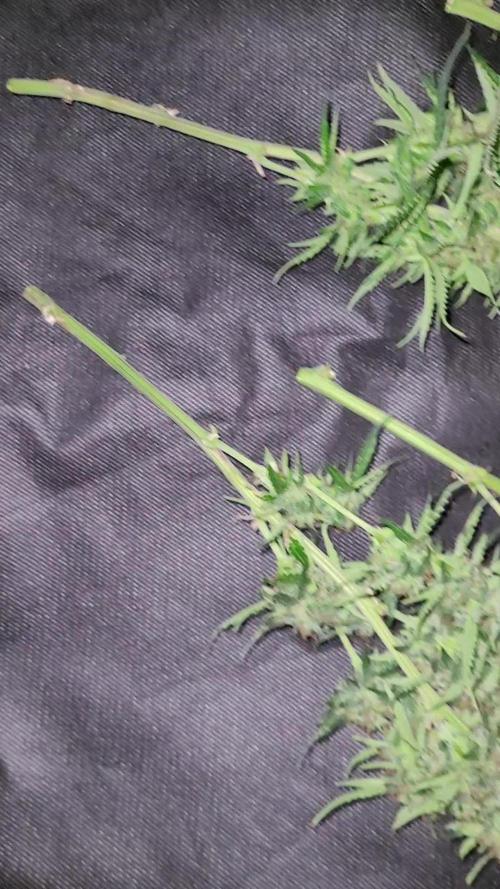
The harvest 26.3. (91day)
The last two waterings were only 4 liters of clean water.
Here are a few photos and videos from the harvest sorry about the quality, but I'm not Saudek.
This is my second grow, and I have to say it was a success. The plant has shown great potential.
I'll add more photos after the buds has dried.

Likes
5
Share

@hassehujasse
Follow
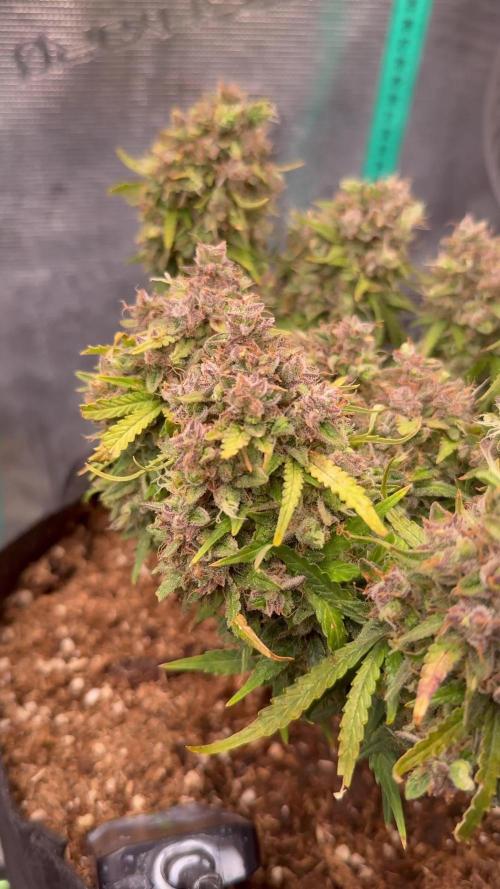
Youtube staff first for growing community
Soon my girls wake up for hard working day

Likes
52
Share


@Ultraviolet
Follow
You don't become confident by shouting affirmations in the mirror, but by having a stack of undeniable proof that you are who you say you are, outwork your self-doubt.
Nitrogen fixation is a chemical process by which molecular nitrogen (N2), which has a strong triple covalent bond, is converted into ammonia (NH3) or related nitrogenous compounds, typically in soil or aquatic systems but also in industry. The nitrogen in air is molecular dinitrogen, a relatively nonreactive molecule that is metabolically useless to all but a few microorganisms. Biological nitrogen fixation or diazotrophy is an important microbe-mediated process that converts dinitrogen (N2) gas to ammonia (NH3) using the nitrogenase protein complex (Nif).[2][3]
Nitrogen fixation is essential to life because fixed inorganic nitrogen compounds are required for the biosynthesis of all nitrogen-containing organic compounds, such as amino acids and proteins, nucleoside triphosphates and nucleic acids. As part of the nitrogen cycle, it is essential for agriculture and the manufacture of fertilizer. It is also, indirectly, relevant to the manufacture of all nitrogen chemical compounds, which include some explosives, pharmaceuticals, and dyes.
Nitrogen fixation is carried out naturally in soil by microorganisms termed diazotrophs that include bacteria, such as Azotobacter, and archaea. Some nitrogen-fixing bacteria have symbiotic relationships with plant groups, especially legumes.[4] Looser non-symbiotic relationships between diazotrophs and plants are often referred to as associative, as seen in nitrogen fixation on rice roots. Nitrogen fixation occurs between some termites and fungi.[5] It occurs naturally in the air by means of NOx production by lightning.[6][7]
All biological reactions involving the process of nitrogen fixation are catalyzed by enzymes called nitrogenases.[8] These enzymes contain iron, often with a second metal, usually molybdenum but sometimes vanadium.
Green clover (Fixation)
White clover (Fixation)
Red Clover. (Fixation)
Yellow Clover. (Fixation, deeper roots)
Sweet Thai Basil. (Terpenes)
Italian Basil. (Terpenes)
Chamomile.(Oil production)
Borage.(Pest attraction taste)
Lavender.(Pest attraction smell)
Marigold(Pest attraction visual)
Mycorrhizae are beneficial associations between mycorrhizal fungi and a plant’s root system. Mycorrhizal fungi spores germinate in the soil, creating filaments (hyphae) that penetrate the root cells, thus establishing a symbiotic relationship. This collaboration leads to the development of both intra-radical and extra-radical networks of filaments, enabling efficient exploration of the soil for enhanced access to nutrients and water. Consequently, these vital resources are transferred to the plant, resulting in numerous benefits for crop cultivation.
Various mycorrhizal products are available in diverse formulations (powder, granular, and liquid), concentrations, and qualities. Ongoing advancements in products, technologies, and research are reshaping our understanding of mycorrhizae. Despite these positive developments, certain misconceptions persist. In the following discussion, we aim to clarify the truths and dispel the myths surrounding mycorrhizae products.
MYTH #1
A HIGHER NUMBER OF MYCORRHIZAE SPECIES MEANS BETTER RESULTS.
Contrary to common belief, having a higher number of mycorrhizae species in a product does not translate to better results; in fact, it often yields the opposite outcome. A plant can sustain only one association with a particular mycorrhizal fungi species. Introducing multiple species creates competition among them, which is not advantageous for the plant. The initial colonizer does not ensure the highest success; instead, it gains precedence. It is recommended to select a product with a concentrated presence of a single mycorrhizae species known for its effective performance, rather than opting for a product with multiple species at lower concentrations.
MYTH #2
ECTOMYCORRHIZAE ARE EFFECTIVE FOR CANNABIS PLANTS.
Although ectomycorrhizae can colonize five to ten percent of plant species, cannabis is not among them. Ectomycorrhizae do not penetrate the root cells; instead, they develop around the roots and on the exterior. For cannabis plants, it is essential to seek out endomycorrhizae. Endomycorrhizae are capable of colonizing 70% to 90% of plant species, including cannabis. Unlike ectomycorrhizae, endomycorrhizae penetrate the root cells, forming structures like arbuscules for the exchange of nutrients and water with the plant.
MYTH #3
WHOLE INOCULANT (PROPAGULES) PERFORM BETTER THAN ONLY VIABLE SPORES.
The propagule count specified on most mycorrhizae products indicates the presence of spores (viable and unviable), hyphae, and root fragments. However, it is crucial to note that only viable spores, those with the capacity to germinate, can successfully colonize a plant’s root system. Spores are to mycorrhizal fungi what seeds are to cannabis plants—a fundamental component enabling fungi reproduction. Consequently, even if a mycorrhizal product boasts millions of propagules, its effectiveness hinges on the presence of viable spores. Without viable spores, the product will not contribute to plant development. Therefore, the genuine value of a mycorrhizal inoculant lies in the quantity of viable spores it contains, as only viable spores can efficiently initiate symbiosis.
MYTH #4
ALL METHODS OF APPLICATION YIELD IDENTICAL RESULTS.
To establish the symbiosis, mycorrhizal fungi spores must be close to the plant roots. The optimal recommendation is to directly apply mycorrhizal inoculant to the roots, either in powder, granular or slurry form. This method ensures maximum proximity between the spores and the roots, facilitating a rapid establishment of symbiosis. Particularly with crops like cannabis, which have a short growing cycle, employing this technique is the most effective way to obtain optimal benefits. Alternatively, techniques such as blending the inoculant with the soil are effective, but there may be a delay in the establishment of symbiosis. This is because the roots need to grow and come into contact with the dispersed spores throughout the growing media.
MYTH #5
MYCORRHIZAE CAN ONLY BE GROWN ON LIVING PLANTS.
While the predominant method for commercially producing mycorrhizae involves growing them on the root systems of living plants (in vivo production), it is not the exclusive nor the optimal technique. In fact, this production approach has notable drawbacks that the “root organ culture” method just does not have (in vitro production). In vitro production occurs in meticulously controlled, aseptic laboratory conditions, allowing for the consistent generation of products that are viable, highly concentrated, species-specific, and free from pathogens. Achieving such precision and quality is impossible when relying on the cultivation of mycorrhizal fungi on plants exposed to external conditions.
In conclusion, it is crucial to take all these factors into consideration when choosing the appropriate product for your crop to fully harness the wide array of benefits provided by a high-quality mycorrhizal product.
STRONGER PLANT – Stress resistance.
FASTER GROWTH – Improve plant structure and shorter veg time.
INCREASE YIELD – Overall more biomass.
IMPROVED QUALITY – Increase cannabinoids and terpenes content.

Processing
Likes
Comments
Share


@MG2009
Follow
08/13/2019
Another rainy day. Recovering from topping and,fimming.
Looking good for start of flower, soon.
08/18/2019
Did a little training.

Likes
Comments
Share


@TGriner420
Follow
For germination I took the seeds and did the paper towel method and then once they developed tap roots I placed them into Root Plugs. Then I placed them directly into the AC Infinity Seed Starter for best results until they reach Seedling phase.
Likes
3
Share


@Ieiogrow94
Follow
Eccoci qui...
Tutto va per il meglio, questa settimana ho eseguito Lollipopping e Defoliation per far si che le cime principali sprigionino al meglio il loro vigore.
Siamo verso la fine del progetto ora bisogna solo aspettare la fine...
Grazie a tutti per il supporto🔥🌲❤️


Likes
16
Share


@DeepRootsGrowTrees
Follow
GORILLA KING AUTO / KANNABIA
WEEK #10 OVERALL
WEEK#5 FLOWER
This week all is well and she's doing good buds are getting frosty 😀!! She's got a sweet aroma to her!! Stay Growing!!
Thank you for stopping by and taking a look it's much appreciated!!
Thank You KANNABIA!!
GORILLA KING AUTO / KANNABIA

Likes
20
Share


@GrowmieDeLaStreet
Follow
A lot has been going on this week.
I performed a slurry test at the start of the week to get updates on the soil. pH is way too low and it's starting to miss nutrients, so I started feeding again once a week at low dosage.
I noticed that the new leaves are slowly yellowing probably because of the low pH. I plan a curative flush at high pH to reset it. The runoff should give better readings on what's going on than the slurry test. I built an elevated platform made from metal trays I found at the dollar store to collect it more easily. Game changer really.
LST has begun. Stems are chunky and already hard to bend but the job was easy with the new floral wire I use. I used to have a very thin one that I couldn't stick in the ground.
The irrigation system Is fully working now and all automatic. I still need to adjust the time it's on and off to get the perfect watering. The algae problem is solved and I didn't have to use any algaecide or filtration system. I simply put 0,5ml/L of 29% H2O2 in my reservoir. Hydrogen peroxide is antibacterial and it also helps with the oxygen levels of the water. With continuous aeration, protection from light and H2O2, the water in the tank is good for at least 5 days. 7 in fact if I count the 2 days for chlorine evaporation.
I also now have a 3000L/h water pump and the sprinklers can respectfully be called by their real name. The video shows what it was before with an 800L/h pump. I didn't had the chance to record with the new system.

Likes
10
Share


@KcKush
Follow
*Ppm stayed the same around 1050PPM
* Week 5 of flower.
*Nothing drastic changes just defoliating a little. Did remove some popcorn nuggets on the bottom. Wonder if that will affect yield.
Likes
1
Share


@Mr_nugs_lover_David
Follow
This wedding cake is looking as healthy as her sister however she's in a bigger pot 25 liters. Let's see if she does as good as her sister,she's enjoying life right I don't think I'll have any type of issue,she's being fed 100% organically,with lactobacillus liquid made by me,liquid bat guano,and she has in her soil florians living organics and more bat guano and seaweed,mycorrizae,humic and fulvic acids,beneficial bacteria and fungus. She's gonna be a wonderful plant at the end I'm sure. Stay tuned guys! 💚🌱✌️

Likes
3
Share


@GrowBro87
Follow
Es geht gegen Ende hin. Bin sehr gespannt auf das Ergebnis. Hoffe sie ist jetzt bald fertig.

Likes
36
Share


@Salokin
Follow
Week went again very uneventful, she is not very hungry anymore and had to constantly refill the reservoir with water to keep the ec in check. Trichomes are all cloudy and start to turn amber. She has developed that amazing purple hue and is sticky to the max, so definitely showing her glue heritable ;) I will continue to feed her until Wednesday this week and then start the flushing and darkness. Harvest will be next week end.

Likes
21
Share


@Top_shelf_grower
Follow
She’s just getting frostier and heavier by the day now. In love with the main long thick big cola
Likes
Comments
Share

@BluLions
Follow
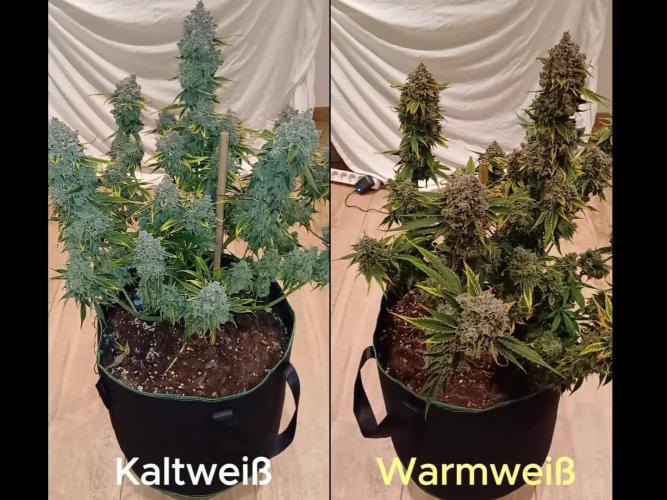
Erntetag, ein schöner Tag! ;)
Ich bin sehr zufrieden mit der Lady. Trotz meines groben Fehlers zum Start hat Sie alles super gemacht!
Schöne Dame mit wie ich finde mäßigen Geruch... Kompakte Pflanze und sehr schöne kompakte Buds.
Servus ihr Lieben