


Likes
Comments
Share


@negrowsoil
Follow
Second week of flower has started
They really grew after a heavy feeding
Had to move my lights way up . LEDs tooo bright ..leaves were slightly curling

Likes
8
Share

@CalGonJim
Follow
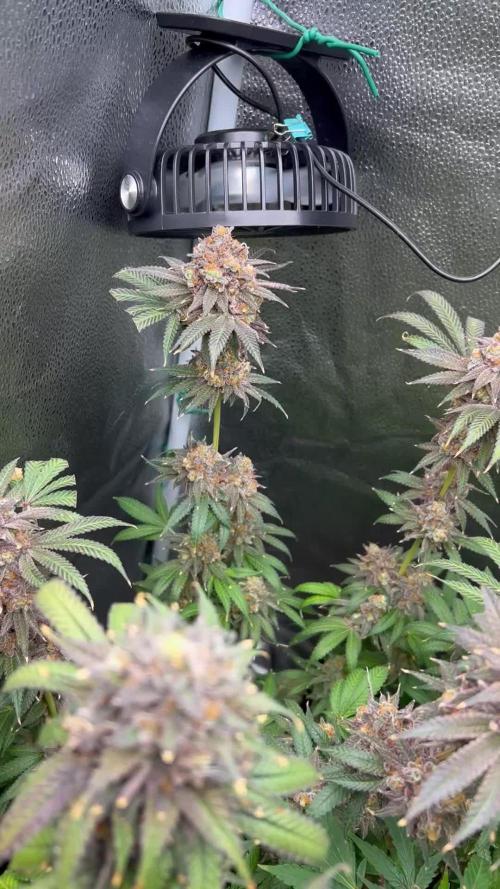
4/13 11AM MONDAY RQS Gelatto 44 and Punch Pie Tyson 2.0 are Finished!!! I will let them go a couple weeks longer but they are good to go! 9/10 Srong, good in coco/ no problems at all!
MONTEL DREAM WIDOW 11/10 ANOTHER WINNER!! So much resin, AMAZING BUDS SHAPED LIKE SPIDERS...SO GREAT. My ICE t is a little small, I didnt have enough space so she stayed compact and perfect small. Bubbles, Julinan and Ricky are doing better than ever
4/14 4:09 AM I just had an idea flash for my next grow so I need to make some notes. I have a cutting I took from a gorilla gas F1 fast flower by seedsmen I did it last year. I took the cutting when she was in flower. I put her in an organic grow plug that I got from seats man as well and I tortured her and I forgot to water it and I left it in there and then I put her in 1 gallon and I haven’t tried to do anything but she survived everything so I’m gonna grow her out into a full-size plant. I’ll probably put it in a bigger pot and do a small smaller grow not so many plants next time I think she’ll really be something.
4/14 1;23pm I turned the light up to 114 W and I’m just under 120. I’m trying to feel the driver and keep it cool so it doesn’t heat the room up. I have some plants in there that I didn’t veg right so they’re kind of screwed up and I have too many of them. I’m gonna have to take some down. The extra plants are preventing the better plants from growing so my experiment making my own seeds, it actually worked, but it’s still not as good as getting it from the actual breeders. And I have a series of medical problems that disable me for several days at a time so plans not look good and then I get behind a little bit so that.
4/18 1:30 PM I used floor clean and did a heavy flush on the Tyson plants gelato 44 and punch pie. I also used a little bit of it on the Montell Williams plant, which is amazing. Montel‘s dream widow is just incredible and she’s growing in an unusually small container and doing very well corkscrew auto however, was not an auto flower from Royal Queen seeds, but she’s behaving like a normal photo and her color is going great so even though it’s not an auto at 12:12 she did develop photo traits and is going to grow very successfully. I think as a photo she’s doing really good and I have a bubbles blueberry in there. I grew her terribly so she’s not doing as good as she could, but that’s on me.


Likes
2
Share

@PharmaZ
Follow
Saturday 25th July (day 28) 9pm
This time I could be home at lights on so they will have a mixed feed with a little PK.
EC still low and will be upping the base nutrients starting tomorrow.
0.5ml/L - Nirvana
0.5ml/L - Calmag
1ml/L - Canna A&B
0.5ml/L - Big Bud
0.5ml/L - Big Fruits
0.5ml/L - Growzyme
PH5.8 EC1.1
Run off BBM PH6.5 EC0.9
Run off Cheese PH6.5 EC0.7
Sunday 26th July (day 29) 9pm
5L of nutrients made.
It is nice to be able to feed when the lights come on makes a massive difference in my management of this grow.
Hopefully fingers crossed and praying to God we can get to harvest.
In a few weeks i have some time off so i can really try to dial it all in.
1ml/L - Nirvana
0.5ml/L - Calmag
1.5ml/L - Canna A&B
0.2ml/L - Big Bud
0.5ml/L - Big Fruits
1ml/L - Humic Acid Plus
PH5.8 EC1.2
Run off BBM PH6.5 EC1.3
Run off Cheese PH6.5 EC0.9
Wednesday 29th July (day 32-39)
1ml/L - Organic Bloom Liquid
2ml/L - Big Bud
1ml/L - Big Fruits
1ml/L - Fast Buds
2ml/L - Humic Acid Plus
PH6.2 EC0.9
Run off BBM PH6.5 EC1.2
Run off Cheese PH6.5 EC1.1
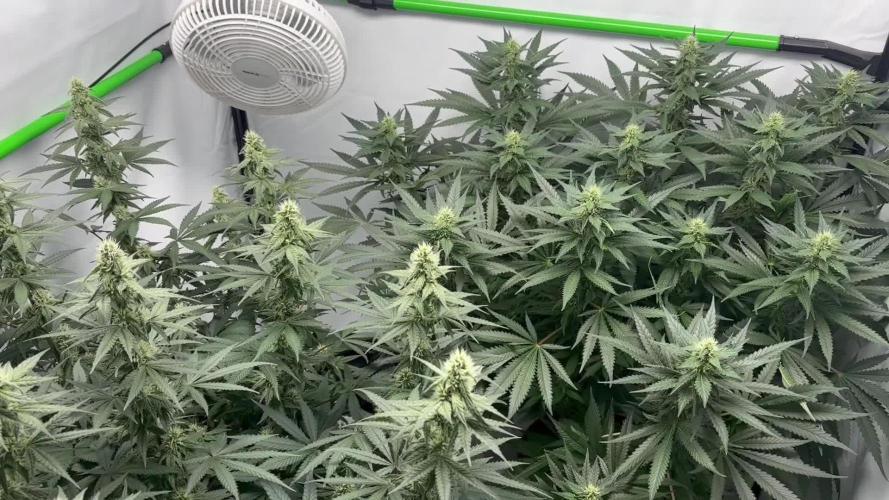
The above feed is to offset the nitrogen in the coco. I have been adding EcoThrive charge too much which has cause lockout due to excess nitrogen in the soil, at first I thought it could have been PK but some research and listening to Brandon Rust I have come to my conclusion that it is a nitrogen toxicity. I was adding far too much organic microbes and supplements.
Basically nitrogen locked out Calmag that caused tip burn, the plants or on the edge of a nitrogen toxicity but because they’re in Coco and have had a mixture of organic and synthetic the organic side has acquired to much nitrates locking out calcium to the tips of the leaves
The BBM has had tip burn the cheese looks too green, both are dark green but the Cheese has more foliage to store the nitrogen hence why little tip burn but more of a vegetative colour, the BBM has hardly any fan leaves left after a strip early in flower. I also think I defoliated too early, but then to second guess I believe if I didn’t feed to much organics the flowers would be much further along.
After the previous 2 feeds I can notice the buds picking back up again. Hopefully I can continue with this mix I’m using now and get some consistent bud growth over the next week. I’ll be glad when this one is over. The summer heatwaves are just tiring when you’re growing especially in coco.
I remember years ago I had issues like this and I said to myself never start a grow in the summer…
https://www.youtube.com/live/qbeT6JAbMe4?is=QqnXHUBAE09fLDUQ
Thursday 30th July (day 33)
1ml/L - Organic Bloom Liquid
1ml/L - Big Bud
2ml/L - Big Fruits
1ml/L - Fast Buds
2ml/L - Humic Acid Plus
PH6.2 EC0.7
Run off BBM PH6.49 EC1.2
Run off Cheese PH6.47 EC1.0
Messed up my measurements a little and only realised after. Big Bud I only put 1ml/L and big fruits I did 2ml/L should have been the other way round…
Otherwise looking ok, returned home the temp was 35c and humidity 78% that is not good…
Tomorrow I will try to get everything In order again, still going to feed this current program for another week, then I will go back to a more balanced feed using more organics for the final push.
Friday 31st July (day 34)
1ml/L - Organic Bloom Liquid
2ml/L - Big Bud
2ml/L - Big Fruits
1ml/L - Fast Buds
2ml/L - Humic Acid Plus
PH6.0 EC0.9)
Run off BBM PH6.49 EC1.3
Run off Cheese PH6.47 EC1.0
Saturday 1st August (day 35) 2am
Scraped the top layer of coco exposing roots, applied some great white after doing another flush and feed.
As you can see I’m imputing a low EC and the run off is gradually spiking up everyday.
Only way to reduce it is to do massive amounts of nutrients.
2ml/L - Organic Bloom Liquid
2ml/L - Big Bud
3ml/L - Big Fruits
1ml/L - Growzyme
PH5.9 EC1.1
Run off BBM PH6.35 EC1.8
Run off Cheese PH6.35 EC1.3
2nd time
Run off BBM PH6.25 EC1.8
Run off Cheese PH6.2 EC1.1

Likes
7
Share

@GREENPHOENIX6262
Follow
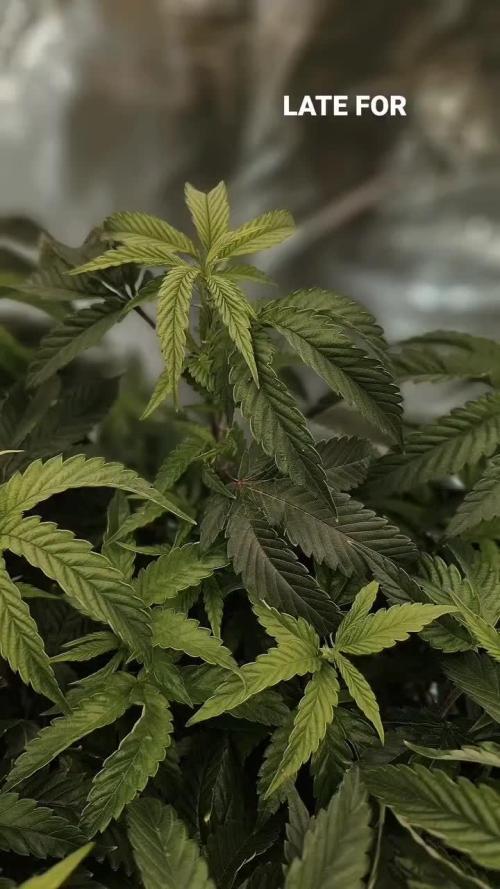
01/26 - (Clone mother) - She got a little funky last week and was in recovery mode for about 2 days - She has since then recovered (24hrs) and is performing amazingly - Running high temps High humidity - 2 part feed (Clean/Nute) on micro-dose program.

Likes
6
Share

@Inside_growlab
Follow
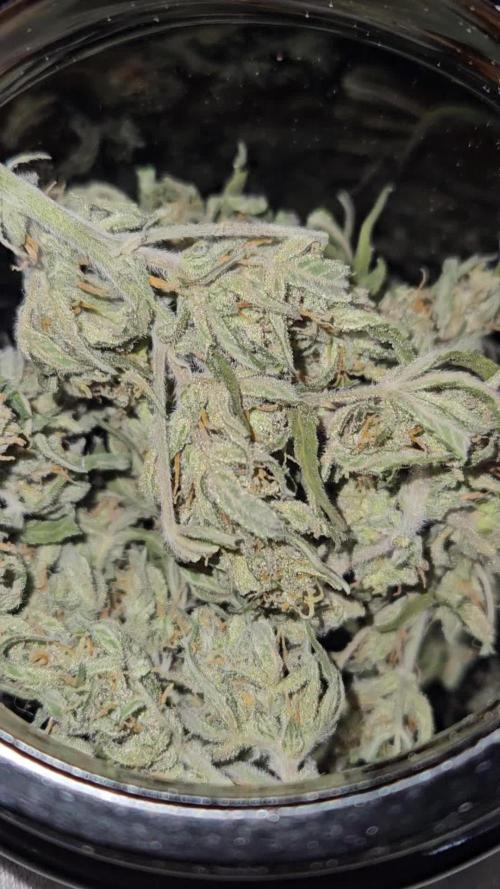
Unfortunately I've harvested way too early because I wanted to restart my whole setup and everything. But the finished Product looks very very juicy and smells also like the other one very citrus lasting. All of all I'm more than overwhelmed with this terpen profile!


Likes
15
Share


@Herbinator
Follow
Tricky week. I've over complicated things by trying to incorporate CO2 into the grow. The main problem is the Airbomz unit is crap! 😂The timer seems to release CO2 at random intervals...I kept an eye on it and it sprayed anywhere between 1hr20 and 1hr50 with no kind of pattern...definitely not the regular 2hr interval I had selected.
I'm switching to a mushroom bag, which will sit by my intake vent and flood the tent with CO2 night and day :) A much cheaper and simpler option!
Advantage of this is that I can keep things simple with my ventilation. I've been switching on and off to allow CO2 to absorb, and the result is huge spikes in temp and humidity. I'm now extracting 24hrs a day and switching the intake fan on and off with the lights, and my temp and humidity has stabilised.
However I'm still up at 70% all day and night....which seems a bit high! I'll have to keep an eye on it.

Likes
84
Share


@bioaccessory
Follow
Хотелось побыстрее, а получилось как всегда 😄 К 38 дню от каски растишка только показала пол, и вошла в стадию предцвета, поэтому начало цветения ожидаю на следующей неделе. В остальном же всё прекрасно, кушает хорошо, я постепенно повышаю дозу базовых удобрений, и видимо дойду до табличных значений AN.
upd. Конец недели, убрал все растяжки - к началу цветения готовы. 😎
Спасибо, что заглянули, и будьте здоровы! 🙏
Продолжение следует ...😶

Likes
5
Share


@GrowFunMD
Follow
I am now putting my weekly comments in the videos. Watch the videos for updates.

Processing
Likes
1
Share


@DocChronic420
Follow
Couldn’t be happier with how the growing going right now except for the heating issues which has caused the temperatures to rise tremendously next week I will be putting in my efforts to dial down temperature and humidity and hopefully make it so the AC doesn’t run 24 seven
Likes
11
Share


@CocoLogic
Follow
August 23th: (F6)
Fertigation once a day with same recipe (1150 EC 6.1 PH) watered until 10-20% run-off
August 24th: (F7)
Fertigation once a day with same recipe (1150 EC 6.1 PH) watered until 10-20% run-off
August 25th: (F8)
Fertigation once a day with same recipe (1150 EC 6.2 PH) watered until 10-20% run-off
August 26th: (F9)
Fertigation once a day with same recipe (1150 EC 6.2 PH) watered until 10-20% run-off
August 27th: (F10)
Fertigation once a day with same recipe (1150 EC 6.2 PH) watered until 10-20% run-off
August 28th: (F11)
Fertigation once a day with same recipe (1150 EC 6.2 PH) watered until 10-20% run-off
August 29th: (F12)
Fertigation once a day with same recipe (1150 EC 6.2 PH) watered until 10-20% run-off
Supercropped the 4 taller branches on the PE2 as a test and to get them at same level
Note: The Tut height is at the EXTREME limit had to remove the tray to gain 2 inch, will have to get the light at the roof of the tent and hope it will do it, first run of my life in 48 inch height space will learn from it for the next runs! :)


Likes
6
Share


@DeepRootsGrowTrees
Follow
Week#11 Gnomo Auto By Kannabia
Week#11 Jan. 6th-13th
Gnomo Auto is a superb 👌 strain to grow for any grower. She is covered in trichomes and her buds are dense she has a nice aroma to her and she looks amazing 👏.

Likes
16
Share


@Naujas
Follow
girl, from the beginning she was watered with water from the tap, the value of which is almost 350ppm. and a lot of lime, which prevents me from growing it bigger, but I'm happy with the result :) it's a small pot and only 50 w :) the flowers look very beautiful and sticky :) super
Likes
11
Share


@TechDCo
Follow
Week 1
27/01/2025
TF and MS
Feed HydroSol: Increased to 8ml/5L
28/01/2025
TF and MS
Light Increased: 313watts
DLi: 35
Rapid Growth has started again.
Feed Increased: HydroSol 10ml/5L
HP 12%: 1ml/5L
Uploaded today's pictures and yesterday's for comparison on how HydroSol is doing?
I topped MS. Hopefully by doing this now TF will catch up but that's not why I topped her. She's known for being bushy; so will be good to bring her up to her second level before branching. Giving the rate she is growing; we haven't to worry about stunting Growth.
H202 is also know to to cause mutations at high levels. I tried to start this diary with HP 12% from seed and it worked until micro-organisms in the air and water; what distillation has missed the "vocs" the cardon didn't catch. Caused them to later on because of free radicals and this is why high levels of HP can cause mutations and cancer when it steals atoms by ripping them apart. "Call the bomb swaddles" when mixed correctly or 'incorrectly 💣 lol
28th Today
Little VT of the 5L jerry can starter pots (DiY)
I think this process is allowing for optimization of Air/feed pks.
I'm at least 2-3weeks ahead from a normal grow because of this style growing.
I know, I know, I lost 3weeks from the first failed attempts. But it's okay 👍 I'm okay with that. Now I know and it's logged in the dairy for future reference I can quickly glance over before I start another one. Like hey 👋 "Time is valuable, read ya diaries" honestly, I don't have dementia i have human forgetfulness/error.
Its still in the experimentental phase.
Took tf out the propagator
31/01/2024
Nothing much to see
I've did everything for TF and still looking droopy. Exactly the same as MS.
I think she'll grow out of it!
01/02/2025
I know, I know what ya thinking, it looks like spider mites on MS only leaf but honestly I think its of the h202. I deffolled her only leaf. Sprayed it with h202 and no reactions happen. No mites.
The Future TF is looking much more lively.
Oh well. No speed-run this time round!
I shouldn't of took 4wks off from growing. Rhythmic nature of thing and getting in the swing off it. It's easy to do but I am always in two minds with everything I do. I can't help but cause "Self sabotage' every time I get to ahead of myself, by running my mouth 💯 blah blah blah; always beside myself.
Aye' they say "God is next to Cleanliness" if that's true it'll be impossible for me to be beside myself haha 😄
Its all fun and games 🎮 🙃
01/02/2025
Midday
Light Increased: 560watts (max) for this power supply. I disconnected the 1200watts one for each light is 600watts. It's currently half-power with 600watts max for two lights at 300watts each. Better than having mishaps with the full power supply 1200 being turned up accidently say in a not ventilated enough little tent. I'd rather pass on that anxiety 🙃
Plants: Under jerry cans with dli at 20.
This should by dinfintion let them gather themselves for 3days; while the sun is blazing outside the can. Even though I could lower the light. I think the high light intensity outside the cans the plants know.
Midday VT
MS looks likes shes a clone 😳 👀 but she ain't!
One day I will get these protocols right. But atm ; atlas, it's all in jest n fun!
MS defiantly looks like a clone but she's not; i have taken pictures since she hatched everyday
03/02/2025
Midday
Freaky Pablo and The future 2 germinated
Sprayed with weak solution of Hydroclonic Acid + h202 very mild.
Now the fun begins!


Likes
4
Share

@Jardineiro_Br
Follow
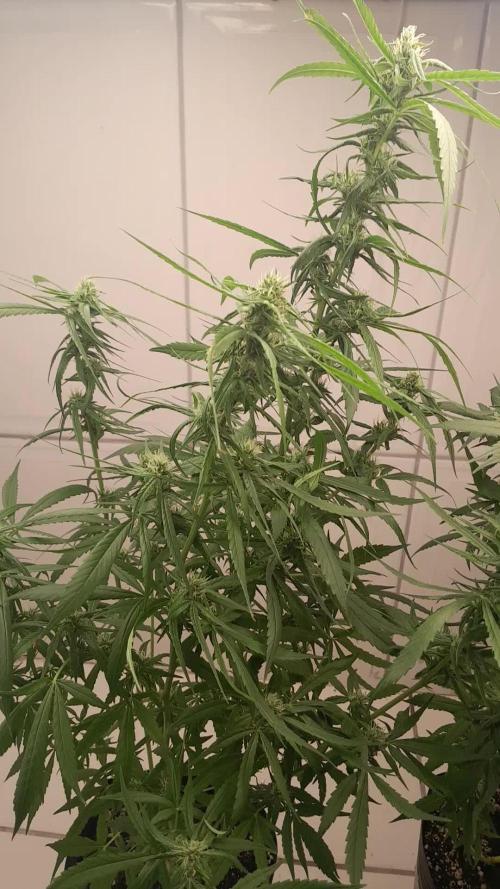
As duas plantas estão bem perfumadas e começaram a engordar os botões, estao saudáveis e estou dando mais fertilizante em concentração e em regas.
Likes
11
Share


@Paradox_1ste1
Follow
Up to now they looking pretty good and strong, even tho some of the plants are not as dense and is maybe a bit late to date with the other ones. Ill have to give them another 1 or 2 other weeks until harvest. The trichromes look preety good even tho.in the picture dosent show well. They starting to consume less water and the leaf colour is starting to fade slightly .
Likes
13
Share


@Robeeriegenetics
Follow
Final day of veg flipping the flower today I’m excited to see how these tests go I have lots of hope for the ones and I may only create s1’s


