


Likes
Comments
Share


@Greensoul920
Follow
Lady’s are doing great even if the temp are really really high! Scare of powder mildiu and botritis I add a couple of more fan for more ventilation and oidio killer from agrobacteria. Today I’ll take out of the box the plant tiny plant


Likes
8
Share

@MrGrowDiarie
Follow
Day 35
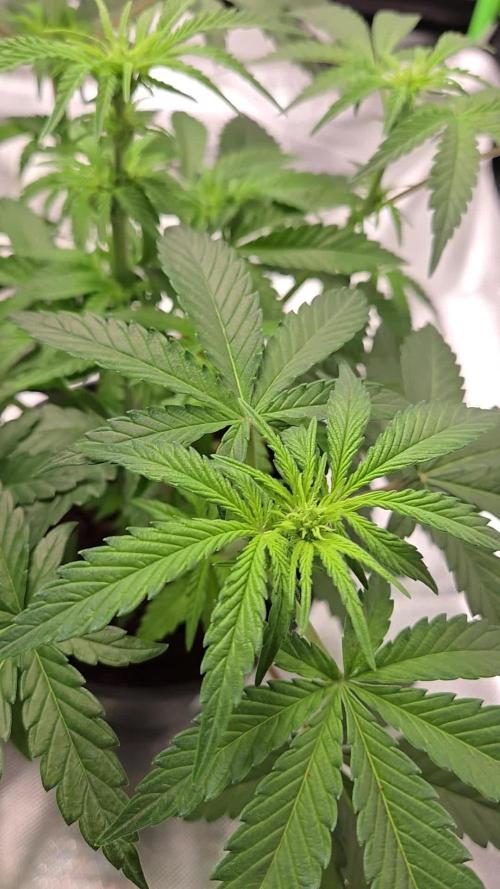
The canopy is developing rapidly, and the plant has adopted a dense, bushy form. The central stem is thick and sturdy, a sign of excellent early care and strong genetics. The leaves are huge—the classic fan leaves are wide and a deep, healthy green, indicating that it’s efficiently capturing light and is well-fed. Every node is tight and stacked, with new auxiliary branches shooting out quickly, ready to become major bud sites once flowering begins. This is exactly the kind of vigorous structure that i want
💦💦💦Watering💦💦💦
11.10.2025 – Watering 0 ml
12.10.2025 – Watering 0 ml
13.10.2025 – Watering 1000ml
14.10.2025 – Watering 0 ml
15.10.2025 – Watering 0 ml
16.10.2025 – Watering 0 ml
17.10.2025 – Watering 2000ml


Likes
Comments
Share


Likes
10
Share


@Roberts
Follow
Auto black Opium is growing good. She had a rough start, but is cruising now. Everything is looking good. I did some more lst on her and defoliation as well. Thank you Spider Farmer, Divine Seeds, and Athena nutrition. 🤜🏻🤛🏻🌱🌱🌱
Thank you grow diaries community for the 👇likes👇, follows, comments, and subscriptions on my YouTube channel👇.
❄️🌱🍻 Happy Growing 🌱🌱🌱
https://youtube.com/channel/UCAhN7yRzWLpcaRHhMIQ7X4g.

Likes
2
Share


@DrBud420
Follow
Today they got a flawless finish for the second time since the last update, the weather should be like this until the end of the month, without rain, that's what I hope for, so we'll see...
all in all, the girls are close, it's time to finish this season, I hope for good weather for at least another 10 days and then I can finish this seasom😁


Likes
1
Share
@4hundert20
Follow
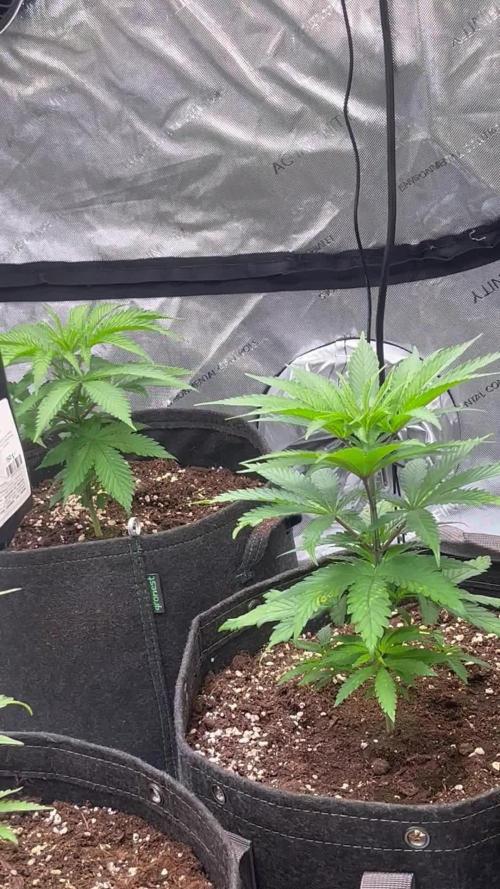
Endlich steht alles und die Parameter pendeln sich ein..
Das sieht man den Pflanzen aber auch an.
Ich entferne nach und nach die nekrotischen Blätter und muss mir überlegen, wann und wie ich anfangen werde, die Pflanzen breit zu bekommen.
Ertragen die nochmal ein radikales Topping? Oder lieber behutsam knicken bzw runterbinden?
Likes
6
Share


@xXNoShowXx
Follow
Normally I allow two days in the paper towel germination. This one after only 24 hours.
Likes
11
Share


@BruWeed
Follow
🍀21/07 - Ya se encuentra en etapa de secado.
🍀El lunes le agregue 30L de agua y 10ml de Top Wash.
🍀Esta planta se encuentra mas resinosa y densa que la otra que también cultive.
🍀Todo fue perfecto desde el momento uno, no tuvo ningún problema en toda su etapa de vida.
🍀Tiene mucho olor, a caramelo o crema, todos sus cocos son densos y gordos.
🍀En total dio 163g.
🍀En estos días seguiré subiendo mas imágenes de como viene.
😶🌫️🇦🇷🍀Podes seguirme en Insta gram como @bruweed_arg🍀😶🌫️🇦🇷


Likes
36
Share


@GYOweed
Follow
Stem rubs are light lemon cake. Some have no taste. 3 are pretty big, 1 no smell nothing special. One is unwinding twisted root but has tight nodes lots of new growth but no stem rub.
They all nice n hairy good immunity some are very fast and nice smell!
Culled the two shortest ones after snell n node test they were just nothing special. Down to 3 with one lanky one small nodes but hairy n good smell gonna give her a week n see.

Likes
15
Share


@tokesly
Follow
Everyone says the plants smell amazing but I can't smell them! fml. They're supposed to smell like guava candy. Just gotta rest up more till my smell is back, honestly the worst thing about covid. Started flush this week, going to flush for 10 days including a 48 hour darkness period. The darkness period is when the buds can reproduce the trichome coating. It's normally used as sunscreen for light protection but much is burned off during intense day times. This is why it's best to harvest after a period of darkness.


Likes
19
Share


@Grow420pice
Follow
Kommen jetzt langsam in die Wachstumsphase.
Beginne leicht mit 2ml pro Liter Root juice.
Hauptlichter auch an, aber mit 50cm Abstand.
Update 15.12.2020
Sie wachsen alle sehr gut.

Likes
244
Share


@DogDoctorOfficial
Follow
And the time for Le Madame Freak Le Chick to come down as arrived!!! This was a wild ride , super emotional and repleted with amazing views, i totally advise everyone to try and grow this wild card , she is a treat and a blessing in our lives
As always thank you all for stopping by , for the love and for it all, i fell blessed to have you all with me for one more love journey, and a different one form the rest i did so far <3 <3 <3 Thank you Thank you Thank you , you guys are great and have been amazing , thank you for everything <3<3<3
#aptus #aptusplanttech #aptusgang #aptusfamily #aptustrueplantscience #inbalancewithnature #trueplantscience #dogdoctorofficial #growerslove
With true love comes happiness , Always believe in your self and always do things expecting nothing and with an open heart , be a giver and the universe will give back to you in ways you could not even imagine so <3 <3 <3
<3 <3 <3 Growers love to you all <3 <3 <3
Here are the words from this peace of art from nature creator Shapeshifter's @ HI-ELEVATION GENETICS <3 <3 <3
"FREQUENTLY ASKED QUESTIONS
Q. How did you create/breed Freakshow?
A. Methodical selection, line breeding, and culling is the short answer. Read our About page for more details.
Q. Is it an indoor or outdoor type?
A. Everything I've ever worked has been outdoors, including of course Freakshow. It has been our experience that outdoor (or sun grown, as it's recently being referred to) cultivars seem to perform extremely well under artificial conditions. This is true of seed starts or clones made from seed starts. The opposite is not always true; indoor clones often give an outdoor grower headaches because they don't always make the transition smoothly. This is due to light spectrum, temperature, and/or photoperiod changes. Yes, Freakshow will do exceedingly well indoors, and will thrive and mature just fine in a wide variety of natural environments as well, so it's definitely both and I think might even prove to be more resilient to those sorts of transitions.
Q. What are the potency and terpenoid levels?
A. Average 18-20% THCa, THC; negligible CBD, CBN with terps variable, averaging 2.5-3.5, primarily limonene and pinene, but this is variable, there was a lot of diversity in terp combinations and compositions in all the prior generations, it's just something that was left "as is" for now. The different parallel lines that we are developing can be directed in a few different pathways flavorwise.
Q. Why are the seeds white?
A. Why is the sky blue? No, the mature seeds are shrouded by a rice paper thin membrane which has coloring and mottling on it, but it's so fragile that it disintegrates in the process of shucking. Stripped of the outer layer the seeds are very pale, nearly white. It came as no surprise that this plant would have abnormal seeds.
Q. Is it a GMO?
A. Wow...? Well, it's seriously "modified" and the modifications are definitely genetic, and it is an organism. (Genuinely Modified Organically!) Uh, no. No radiation, no recombinant DNA, no gene splicing or editing, no TALEN or CRISPR! These biotechnologies don't belong in the food and medicine plant industries. Sadly, in the near future it will become commonplace and widespread in cannabis and other medicinal plants as it is already is with food crops and ornamentals. I'll avoid discussion on this topic for now, but we hope some people enjoy consuming Frankenbud!
Q. What's the floral period length?
A. 8-9 wks, finishes early Oct. at most latitudes and elevations.
Q. Is it a big producer?
A. Freakshow will produce nice, fat, dense colas (see gallery) with remarkable trichome coverage, and you can expect yields according to your veg. time, root space, and general knowledge and expertise as a gardener. The same set of variables apply to expected outcomes regarding cannabinoid levels and terpene profiles.
Q.What is the lineage?
A. (Bigbud x Skunk#1) x (Big Sur Holy Weed x Banana Kush). NLD("Sativa") dominant, but the afghanica influence is apparent. I'm pretty sure that Freakshow contains some Trainwreck and some Maui Wowie based on some research I did on the origins of the Pineapple Express. Interestingly Big Sur Holyweed, OG Kush, Banana, Trainwreck, and Maui Wowie are all of unclear origins. We have to remember that these are all just names and that they don't really mean much. The exact heritage of any cultivar today is impossible to determine accurately. Also, considering the amount of continuous shameless hybridization that has occurred in the last 40 yrs., any modern kind could easily contain over 40 kinds. In the case of Freakshow, it's much more limited because the ancestry is largely older "Sativas" that didn't go through as much outcrossing. In the 70s in Santa Cruz, Haze was a favorite among surfers for the pure energy and I still have (greatly improved) stock of it around, simply because even when I made hybrids with it I always kept the original in pure form for obvious reasons.
Q. What is the psychoactive effect like?
A. Like the flavors, many people have commented that the "buzz" is somewhat different than other mainstream types out there. It's not entirely out of the scope of imagination that given that this strain has new alleles in so many other respects, that it could also contain new, unique cannabinoids, as well as new and unique terpenoids, some of which may not even be among the standard 16 or so that the average lab is testing for. Aside from the up, cerebral, energetic boost, some report a mild time/space warp effect. Creativity and idea induction should be mentioned, for sure. Freakshow has the pure energy effect and greatly alters perception to the positive side, so definitely destroys depression. Appetite suppression is a side effect, but the enjoyment of food is enhanced. I personally will attest to all of the above. We all have different receptor profiles, so these are just generalizations. Couch unlock.
Q. Is it pest and mildew resistant?
A. Indeed it is. On many occasions in the last few years, it has been observed that when pest and mildew issues were affecting other plants adjacent to in the vicinity of Freakshow plants, for unknown reasons the freaks remained entirely unaffected. This includes 0botritis, PM, various mites and insects, soil fungus, etc. We haven't heard any complaints along those lines so far, so if anyone has any problems, especially with a rigorous IPM regimen in place, we would like to hear about it. And if anyone can attest to the extreme level of resistance it seems to have we'd love to hear about that as well.
Q. Does it contain web-leaf genetics?
A. I thought I better clarify this because there are a few people thinking that because of an article "Growing Marijuana that Doesn't look like Marijuana" that mentions that I had worked web-leaf types years ago and had eventually turned that into Freakshow. This is incorrect and I'm needing to get ahold of the writer to have him change it. When I read the piece and saw the mistake I figured it didn't matter that much, that the actual method of breeding could just remain a "trade secret". Recently, I noticed online that a posting, "Freakshow only exists because of duckfoot" by Curious Cannabis Connoisseur, where he explains how I developed Freakshow using Duckfoot. Let me explain, about 20 yrs. ago a friend gave me a jar of seeds labeled "BC Bigbud" and I sprouted flats of hundreds to look for oddities and had found one web-leaf pheno which we named Webster. It was a female so I bred it to a normal leaf male and began selecting and stabilizing a line of Webster. About 5 or 6 generations later I had nailed it to 100% webs and had also stabilized it for a deep purple color and a nice "gingerbread" terp profile. I was busy working other lines at that point so I put Webster in the library. Also, I was having a hell of a time getting a pheno of it that flowered to my satisfaction. (it seemed to finish with a limited number of calyxes). I knew I would have to outcross it to something with a big tasty bud and restabilize it for web-leaf, and I no longer had the original BC Bigbud. I still have the Webster seeds, and trust me the thought has crossed my mind to make the cross with Freakshow, but why? Why mess around crossing things just to create something even weirder? I have heard that the "Duckfoot" also doesn't bud up well so maybe there's a correlation there. Anyway, people can do what they want to and I will too, but crossing Freakshow with some low-THC crap like ABC is in my opinion idiotic. I worked extremely hard stabilizing and perfecting a beautiful new subspecies and I believe it should be kept pure. I won't go on a rant here about the rampant crossing and the lack of line-breeding in the cannabis world in the last several decades, or where this will eventually lead us, but I will say that it's not in a good direction. Bottom line....Freakshow has no web-leaf genes, it was made using top-grade tropical narrow-leaf drug (NLD) cultivars.
Q.Why is Freakshow patented?
A. Although I and most others (including all the folks at HSC) believe in and subscribe to the concept of "open sourcing" because sharing in cannabis genetics was always the cultural norm, it was decided that Freakshow should be protected (1) because it is a novel and unique, not a preexisting strain (or even subspecies), (2) To keep the greedy corporate big boys from exploiting it, (3) To maintain control of the genetic refinement of it in all future generations. We really can't wait to share it with the entire collective world of cannabis enthusiasts and invite experimental breeding for personal use and curiosity."
source https://freakshowcannabis.com

Likes
7
Share


@HegauHillsFarmers_M11
Follow
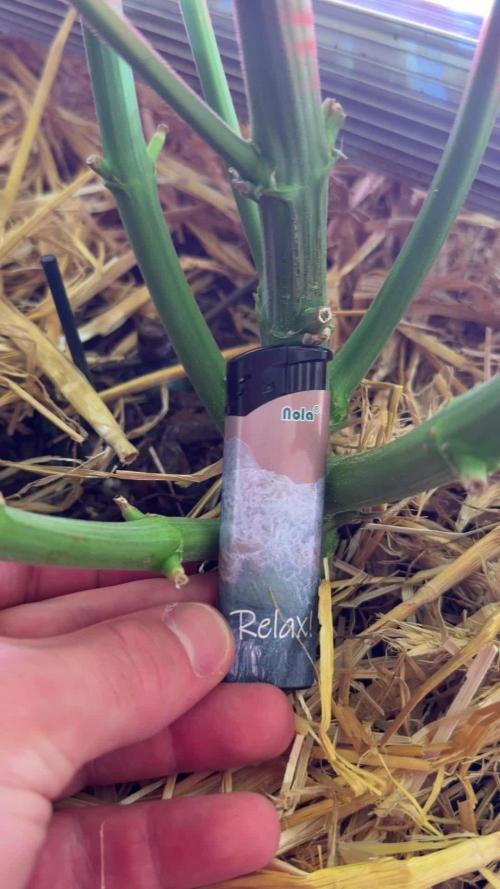
Tag 35 - Beginn der 6 Woche.
Die Pflanze hat sich nochmal stark gestreckt und der intensive Wachstum der Blüte beginnt.
Der Dünger wurde letzte Woche erhöht und ich habe das Gefühl, dass es ihr gut getan hat.
Je nach dem, wie sie sich entwickelt, werde ich in der kommenden Woche noch 1-2 Blätter entfernen um die Luftzirkulation nochmal zu erhöhen.
Gedüngt wurde an Tag 30 der letzten Woche.
Nährstofflösung:
1 ml/l - Big Bud Advanced Nutrients
1 ml/l - Bud Candy Advanced Nutrients.
1 ml/l - B-52 Advanced Nutrients.
2 ml/l - pH Perfect Sensi Bloom Part A.
2 ml/l - pH Perfect Sensi Bloom Part B.

Likes
4
Share

@MasterGrowda88
Follow
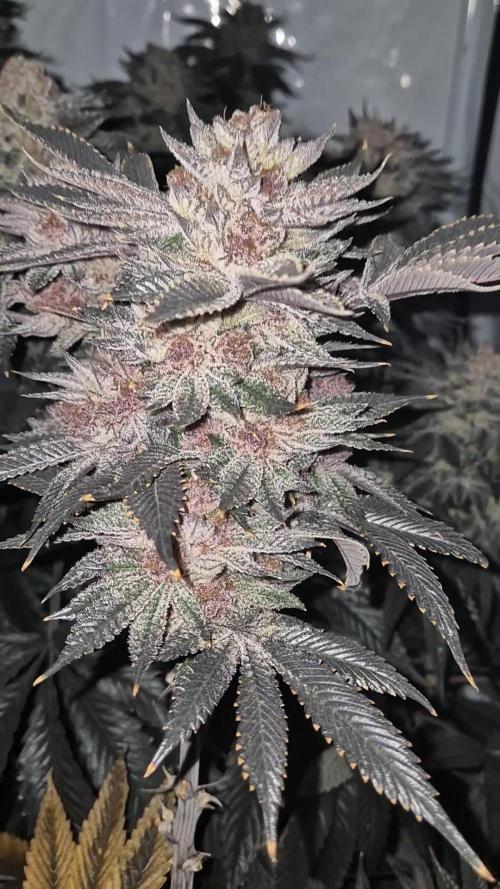
I've owned this wonderful red lady for about six years. She was my first plant imported from the States, and to this day, she's one of the best genetics I have here. Very robust, can withstand anything, likes to be trained, and the smell is very strong even before flowering.

Likes
70
Share


@Mosquito_Haarlem
Follow
We zijn in week 8 🤘
Ze heeft het naar haar zin ondanks dat de luchtvochtigheid iets aan de hoge kant is.
Ze groeit lekker door en de bloemen worden dikker en dikker.
Ben begonnen met het geven van green sensation en een beetje calmag.
Laten we kijken hoe ze zich deze week ontwikkeld.
Ik zal gedurende de week nog verse foto's updaten dus hou het in de gaten 🧐

Likes
46
Share


@The_Bearded_Grower
Follow
welcome to 📅 Day 8 of flower 7/12/2021 they are growing very well and are drinking lots 10 gal a week I'm hoping that they stop the stretch and start to fatted up as I am running out of space lol. next update on thurs till then happy growing and as always keep your stick on the ice 🏒
I would like to say a few words about Mars Hydro. the TS 1000 is a great light and I love the fact that the power supply is capable of being separated from the light and located outside of the tent to keep the heat down. I also like the fact that you can control the light intensity and daisy chain with another light witch is what I plan on doing.
